






















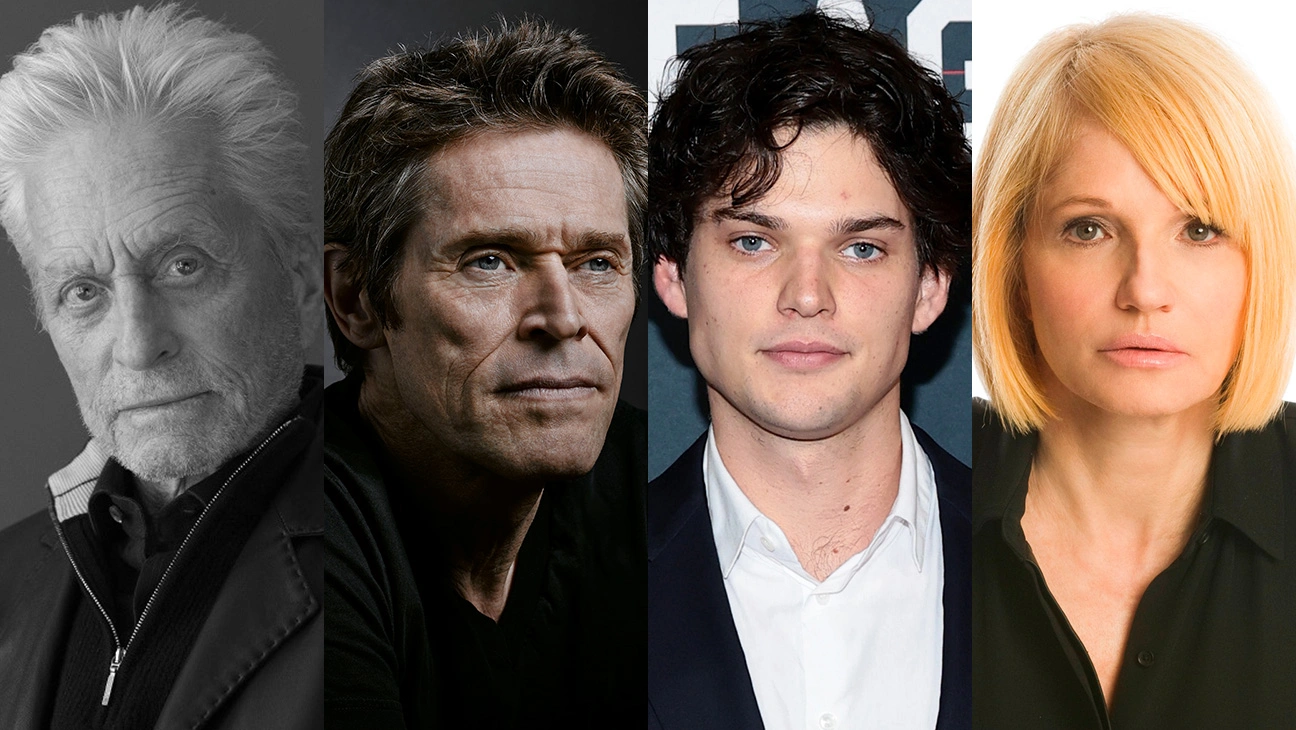

Oliver Stone has wrapped principal photography on White Lies, his first fiction feature in a decade, with Michael Douglas, Willem Dafoe, and Ellen Barkin joining Josh Hartnett in the ensemble cast of a multigenerational family drama that marks one of the most storied reunions in recent Hollywood memory.
The film brings together Stone with Douglas, who won an Oscar for their collaboration on Wall Street, and with Dafoe, a four-time Oscar nominee who appeared in Stone’s Platoon and Born on the Fourth of July. It also reunites Douglas and Dafoe onscreen for the first time since the 1993 erotic thriller Body of Evidence.
Stone described the shoot warmly: “The cast was a delight from beginning to end. And the Italian crew was the warmest I ever worked with. I’m profoundly grateful for this opportunity.”
The story follows Jack Freeman, played by Hartnett, a child of divorce who has repeated his parents’ mistakes in his own marriage. Feeling trapped, he pursues a reckless escape, only to spiral deeper into confusion — until a chance encounter with a woman whose life stands in complete contrast to his own sets him on a path toward rediscovery. Told across three generations, the film explores family, loss, and how love shifts shape over a lifetime.
Barkin, Homer Gere, and Yvonne Chapman round out the ensemble, with Leila George also among the cast. Production traveled through Rome, Bangkok, and Sofia.
Stone has been candid that a decade spent making documentaries — on subjects ranging from JFK to Putin to the climate crisis — was partly a product of feeling effectively blacklisted from Hollywood following controversial political stances. Returning to fiction, he said: “After nearly 10 years away from features, I feel really like I’m starting again, as when I made Platoon and Salvador in 1986.”
White Lies has been in development for over a decade; an earlier version had Benicio Del Toro attached to star. The project is produced by Fernando Sulichin’s New Element Media, which also backed Snowden, with Eagle Pictures among the executive producers.
Hartnett, who rebuilt his profile through Oppenheimer and M. Night Shyamalan’s Trap, called the project “personal and entirely new material from a filmmaker I have long admired.” For Stone, at 79, it reads as a deliberate pivot — away from the political bombast that defined his reputation and toward something quieter, more domestic, and, by his own account, more personal.