
























![Kingdom Hearts Collection [I-III] Review](https://gazettely.com/wp-content/uploads/2026/10/Kingdom-Hearts-Collection-I-III-1-360x180.webp "Kingdom Hearts Collection [I-III] Review: KHII Holds Steady as Newer Entries Fluctuate 37")



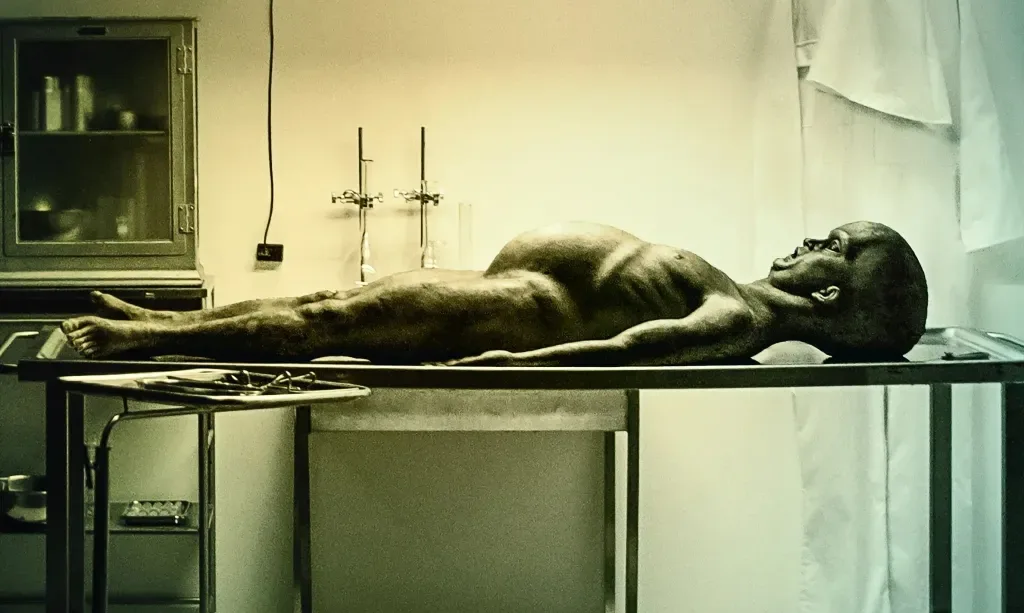

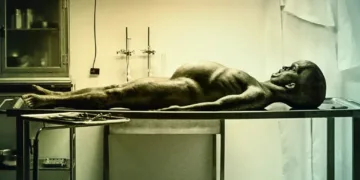
The Alien Autopsy Scandal returns to one of the strangest media artifacts of the 1990s: the black-and-white footage that claimed to show an alien body being cut open after the Roswell crash. The image is hard to forget once seen.
Anonymous figures in protective suits lean over a pale, swollen humanoid form, treating it with the stiff seriousness of a classified ritual. It looked absurd, uncanny, and somehow perfectly suited to an age when television could still make a rumor feel official.
The three-part documentary approaches that footage with a grin, a scalpel, and a raised eyebrow. The “alien” was made in London, filled with animal parts, and filmed in a Camden living room, which should settle the matter. Yet the story refuses to behave.
Ray Santilli and Gary Shoefield, the music entrepreneurs who sold the world on the footage, claim their version was a recreation of genuine material that had been damaged beyond use. That claim gives the series its unstable charge. The fake is confirmed, while the myth keeps twitching.
Farce in the Shape of an Investigation
Director John Dower builds the series like a conspiracy dossier that has wandered into a British comedy of bad decisions. The documentary moves with brisk confidence from the staged autopsy itself to the Roswell legend, then into the increasingly elastic explanations offered by Santilli and Shoefield. Their story has the rhythm of a pub anecdote that has grown too large to retract.
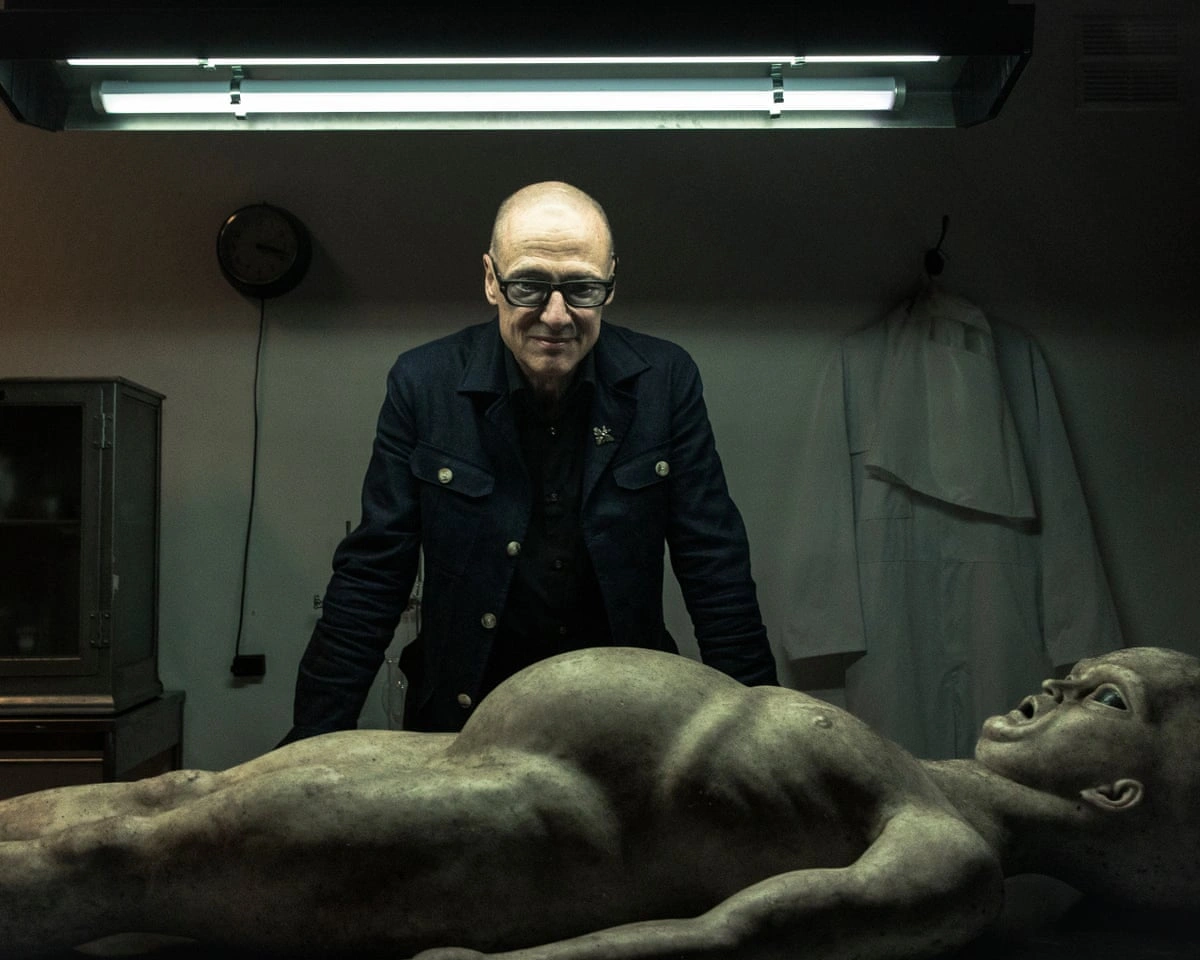
The key narrative move is simple and effective: the series does not stop at exposure. Many documentaries would treat the revelation of fakery as the finish line. Dower treats it as the opening wound. How was the body made? Who supplied the entrails? Who shot the footage? Who sold it? Who wanted to believe it? Each question produces another character, another evasion, another faintly ridiculous detail.
There is the alleged Florida cameraman, apparently the source of the original Roswell film. There is the ruined film stock, supposedly oxidized before it could be properly shown. There is the loaded word “restoration,” used by Santilli and Shoefield to describe what most people would call a fabrication. There are stand-ins, special effects contributors, angry television producers, devoted UFO believers, and a magician who becomes part of the story through theatrical indirection rather than ordinary testimony.
Across three episodes, the series keeps finding fresh life in contradiction. The alien body is fake, the procedure is staged, the commercial machinery is clear. Still, the surrounding claims keep multiplying. Former military voices add strange new weight to the Roswell myth, while Santilli continues to speak with the conviction of a man who has built a house of fog and now insists it has foundations. The result is funny, slippery, and faintly melancholy.
The Human Oddness Behind the Myth
The richest material in The Alien Autopsy Scandal is human rather than extraterrestrial. Santilli is the documentary’s most fascinating figure: evasive, polished, wounded, charming, and oddly loyal to his own mythology. He does not quite perform innocence, nor does he fully accept guilt. He occupies a third state, somewhere between salesman, believer, and man trapped inside his best trick.
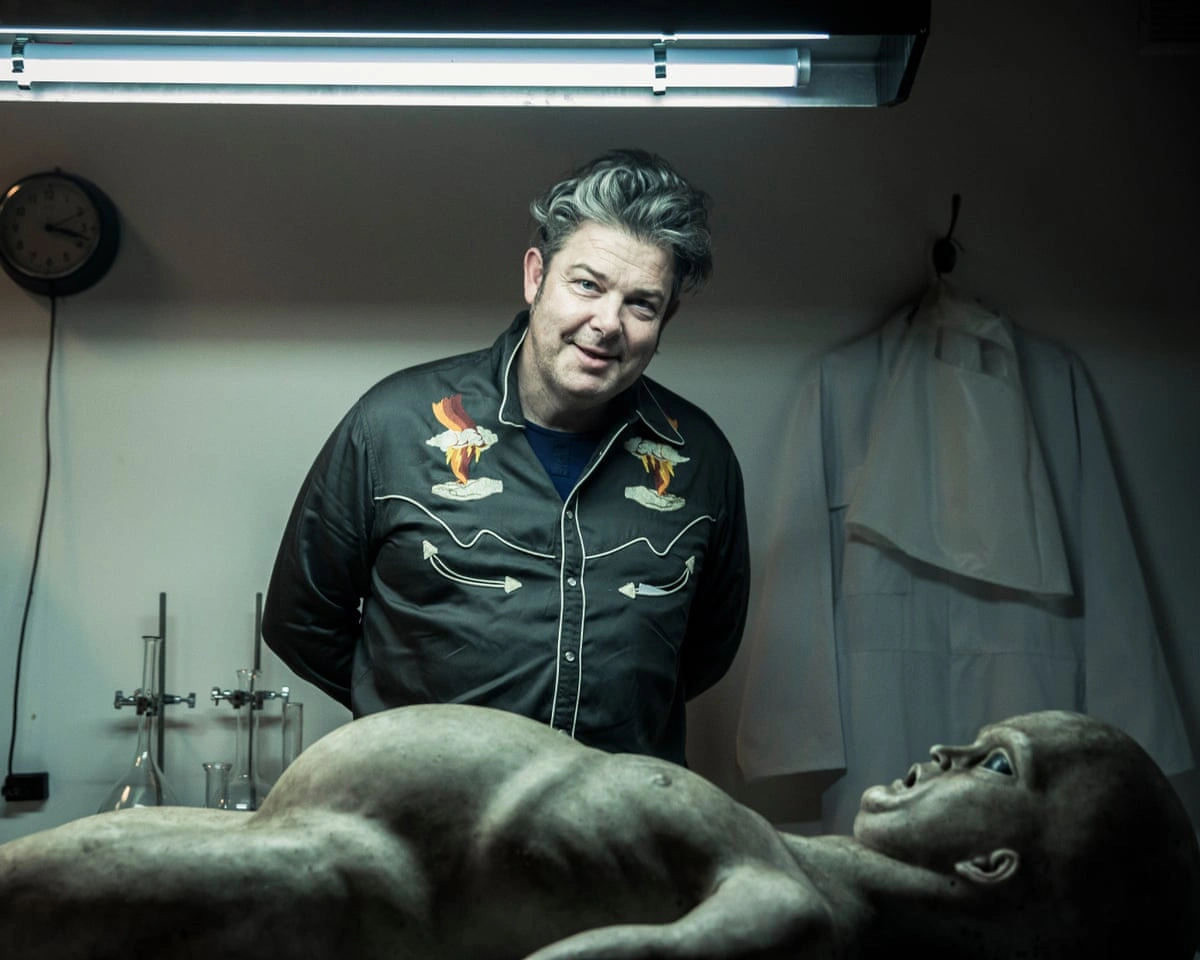
Gary Shoefield brings a different energy. He appears less haunted by the affair, speaking with a blunt pragmatism that makes the whole saga feel both seedier and funnier. His attitude suggests a man who sees scandal as weather: inconvenient, noisy, survivable. Together, the pair have the comic texture of small-time operators who accidentally touched a global nerve.
The documentary’s humor often comes from matter. Lamb brains, pig eyes, offal, fake secrecy, motel-room deception, and a handmade alien body all give the series a grubby physicality. The myth of Roswell may point toward the stars, yet this version smells of butcher counters and rented rooms. Trevor the butcher becomes one of the documentary’s great supporting presences, a reminder that history can be shaped by a man supplying entrails for reasons he does not fully question.
Still, the film avoids sneering at belief itself. That restraint matters. UFO culture is easy to mock, especially when its sacred texts include a rubber corpse packed with meat. The series understands that belief can come from wonder, distrust, loneliness, curiosity, and the hunger for hidden meaning. People wanted the footage to be real because the world felt larger with it inside. The con worked because it offered awe in a shabby container.
Before the Deepfake, There Was the Grainy Tape
The most quietly valuable aspect of The Alien Autopsy Scandal is its portrait of media gullibility before the AI age. The 1995 footage now carries a strange innocence. It belongs to a time when degraded images could gain authority through their imperfections. Grain looked like evidence. Silence felt ominous. A shaky frame suggested danger, secrecy, authenticity.
The series turns that media texture into cultural analysis. A tape, a broadcast, a rumor of military suppression, and a few entrepreneurial men were enough to create a worldwide spectacle. Mystery became product. Doubt became marketing. The alien body was fake, yet the commercial ecosystem around it was very real.
Roswell remains the perfect host for this kind of story because it is less a case than a civic religion of suspicion. It survives correction because correction rarely touches the emotional center of conspiracy belief. Official denial can feed the myth. Debunking can become part of the cover-up. A fake autopsy can be dismissed while the larger dream of hidden contact remains intact.
Dower’s craft supports that idea with wit and control. Archival footage, talking heads, staged flourishes, close study of the autopsy film, and mischievous editing give the series momentum without cheapening its odd sadness. The tone is macabre, playful, and alert to ambiguity. Gore, nostalgia, fraud, and wonder sit in the same frame, each contaminating the other.
The Alien Autopsy Scandal works because it treats the fake footage as the start of the story. What follows is a study of performance, profit, belief, and the strange comfort people find in mysteries that refuse to die.
The three-part documentary series premiered recently on June 12, 2026, and is available to watch on Sky Documentaries and the NOW streaming platform in the United Kingdom. This stranger-than-fiction series uncovers the bizarre story behind the infamous 1995 video that purported to show a military dissection of an extraterrestrial creature recovered from the 1947 Roswell crash site. The episodes follow the two British music entrepreneurs who masterminded the global media sensation from a small flat in Camden, London, utilizing animal organs from a local butcher and a sculptor from Doctor Who.
Full Credits
Title: The Alien Autopsy Scandal
Distributor: Sky Documentaries, NOW
Release date: June 12, 2026
Rating: TV-MA
Running time: 48–50 minutes per episode
Director: John Dower
Writers: John Dower
Producers and Executive Producers: Louis Theroux, Arron Fellows, Emma Whitehead, Rebecca Chapman, Hayley Reynolds
Cast: Ray Santilli, Gary Shoefield, John Humphries, Trevor the butcher, Bob Kiviat
Director of Photography (Cinematographer): Carl Burke
Editors: Paul Holland
Composer: Anne Nikitin
The Review
The Alien Autopsy Scandal
The Alien Autopsy Scandal is a sharp, funny, and strangely poignant documentary about fakery, faith, and the media machinery that turns absurdity into history. Its greatest strength is its tonal control: it laughs at the hoax without flattening the human longing behind it. Brisk, eccentric, and culturally alert, it turns a rubber alien packed with offal into a rich study of belief.
PROS
- Witty, agile direction
- Fascinating central figures
- Strong balance of comedy and unease
- Smart cultural commentary on media gullibility
- Brisk editing and rich archival material
CONS
- Some ambiguity may frustrate viewers wanting firm answers
- Three episodes can feel slightly stretched
- Certain supporting threads deserve deeper exploration







