























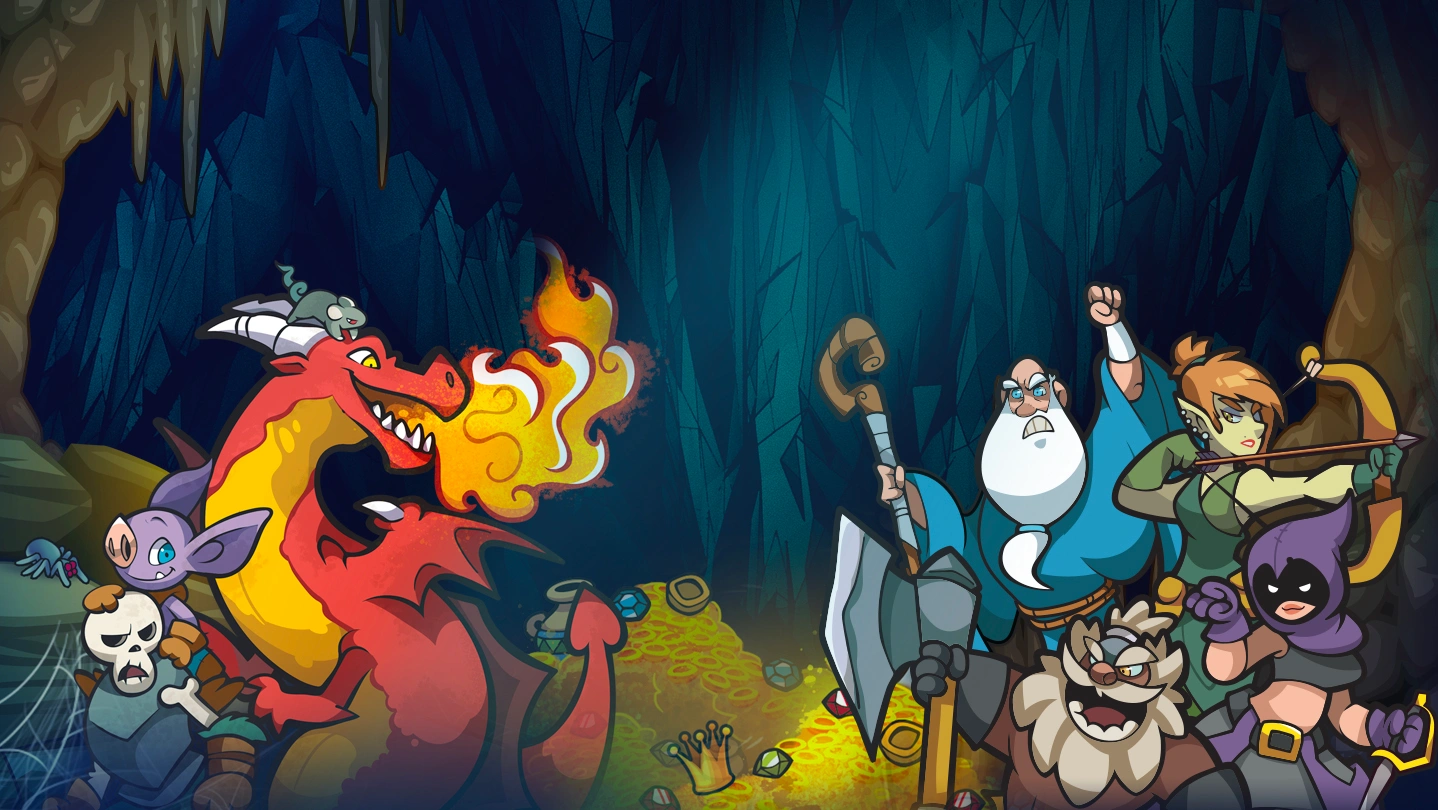

The best joke here is tactical rather than verbal: every noble adventurer who enters the dungeon behaves like a pest problem with a sword. Keep The Heroes Out turns the usual fantasy contract inside out, casting players as monsters guarding a vault from heroes who have arrived to steal treasure under the moral cover of bravery.
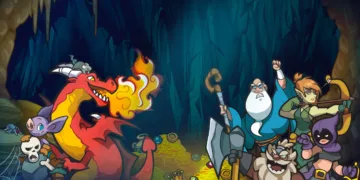
The digital adaptation from Bitten Toast Games and YarnCat Games keeps the tabletop spirit intact, from its chunky monster pieces to its bright dungeon rooms, then uses the screen to make solo, local co-op, and online play easier to manage.
The premise has an old board-game pleasure to it. A vault sits at the center of the threat. Heroes pour in through room cards. Monsters scramble to block routes, build traps, craft items, and survive through the second wave of the Guild Deck. The tone is comic, but the structure is merciless once heroes start waking each other up across rooms.
A Small Deck With Sharp Teeth
Keep The Heroes Out works because its deck-building stays lean. Each monster begins with a compact deck, usually around 10 cards, and a turn asks players to squeeze movement, attacks, summoning, trap placement, item delivery, and room actions out of whatever hand appears.
Many digital card games chase power through accumulation. This one understands the pleasure of restriction. A new scroll card earned by carrying a book from the library matters because it will return soon, not vanish into a bloated pile of marginal upgrades.
That small-deck logic gives the game a pleasing tabletop discipline. Cards can move a monster into a room, let it strike a hero, open a portal, or interact with the dungeon’s production spaces. Resources move between rooms, then become new tools. Portals turn a sprawling board into a tactical network. Traps make future invasions less frightening. A good turn feels like solving a messy little logistics problem with claws.
Also Read





The heroes make that problem nastier. Archers shoot into neighboring rooms before they brawl. Mages entering the cells can free prisoners. Rogues remove traps, which is particularly rude after the Imp has spent half a turn preparing the room. Warriors discard resources, breaking the supply chain just as a player starts planning a new card purchase. Rookies are weaker, but their defeat can drop useful resources, which makes even the smallest intruder part of the economy.
The system’s sharpest idea is inspiration. When a hero enters a room, others there can activate, attack, plunder, or move again. One unlucky Guild Card can turn a manageable corridor into a parade of thieves. A side chest may trigger a curse. The main vault cannot be treated so casually.
Monsters With Different Cultural Jobs
The monster roster gives the game its real identity. The Dragon is the blunt mythic answer, a creature built for direct domination. It charges into rooms and burns clustered heroes, turning fantasy’s most famous hoarder into the defender of domestic order. In a game about protecting space from outsiders, that joke lands cleanly.
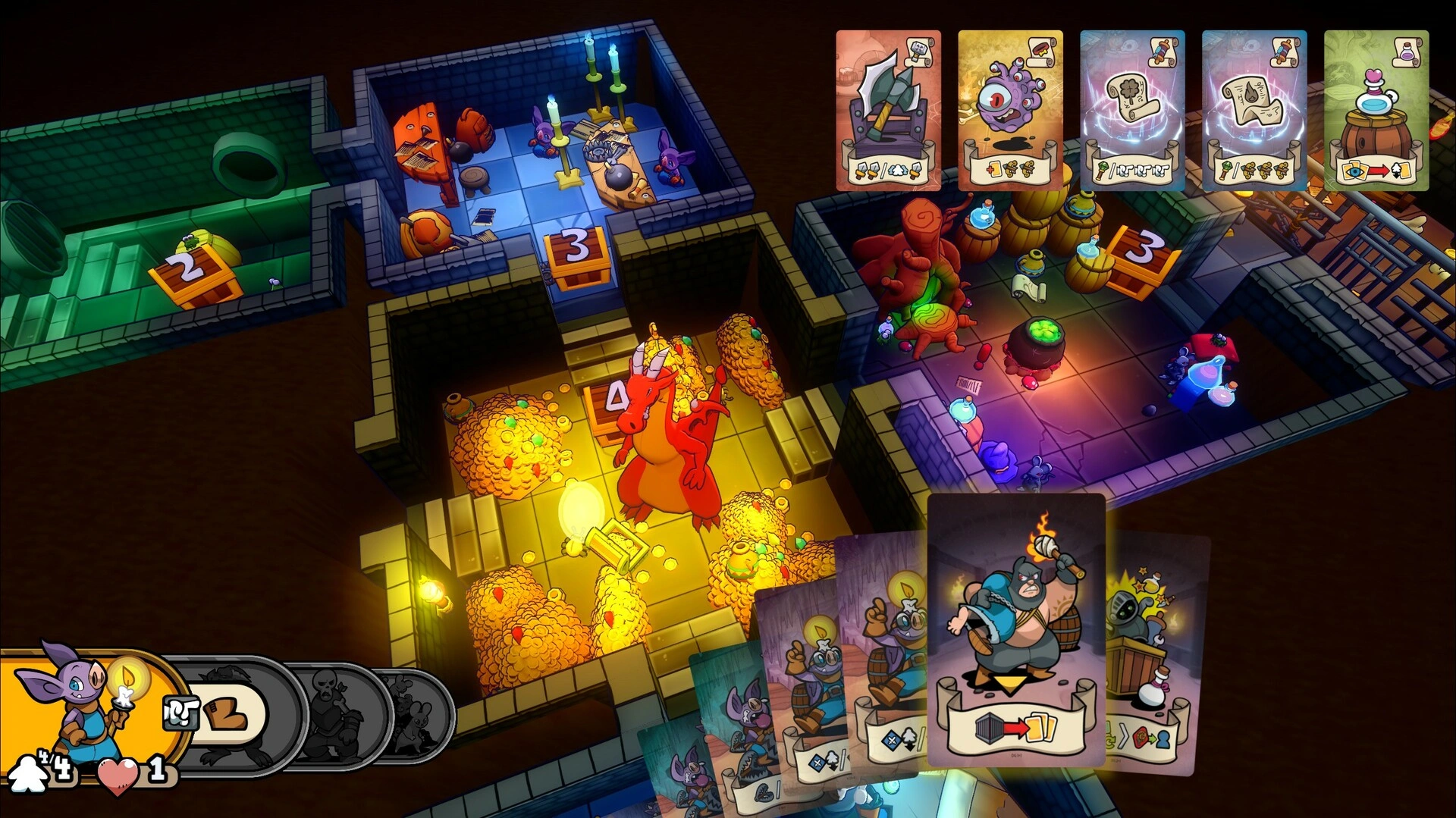
The other clans create different rhythms. The Imp is all speed and preparation, darting around to seed traps in rooms before the next invasion. The Witch gives the dungeon a transport culture, opening portals that let slower allies respond to distant threats.
The Skeleton changes the meaning of combat by converting fallen heroes into undead support. The Slime splits into bodies, making defense feel like territorial spread rather than simple attack power. Ratkin swarm. Poltergeists slip through walls to move items. Gnolls loot the looters for coins.
This range matters most in co-op. A strong team turn might have the Witch open a portal, the Dragon clear a cluster near a chest, and the Imp trap the room where archers are likely to appear. The board becomes a negotiated space, and the pleasure comes from watching several monster cultures solve the same invasion through incompatible habits.
The imbalance is visible. The Dragon feels easier and stronger than many other clans, while Witches and Slugs tend to offer cleaner paths to control. Some monsters demand specific cards or tighter planning to reach the same impact. In a competitive game this would be a larger wound. Here, it can become group texture, provided players enjoy experimenting rather than defaulting to the fire-breathing solution every time.
The Board Game Survives the Screen
As a digital board-game adaptation, Keep The Heroes Out succeeds by respecting its source format instead of hiding it. The rooms still feel like tiles with jobs. Production rooms create resources. Crafting rooms transform those resources into deck growth. Special rooms bend movement and defense. The screen adds convenience through tutorials, reference tools, saving mid-run, and the simple relief of not setting up piles of components before play.
The presentation helps. The monster designs have a toy-like warmth that suits the reversal of the hero story. These are not nightmare beasts. They are adorable union workers defending property rights. The bright 3D look also keeps the hero snowball from feeling grim, which matters when three activations in a row have just emptied a chest and scattered your plan.
The price of preserving the board-game brain is pacing. Turns can stretch, especially solo or with a group that wants to optimize every card. A player might draw extra cards, chain movement into attacks, trigger room powers, move resources, refresh loot, then debate a portal route before the heroes even enter. That density gives the game its satisfaction, but it can slow the digital version into a long committee meeting with goblins.
Randomness also cuts both ways. Treasure effects can land as mild annoyances or brutal reversals. Prison outcomes can reward a clever capture or punish it with a chain reaction. When the team is ahead, trap networks and upgraded cards can make the dungeon feel secure. When the team falls behind, hero activations multiply so quickly that turns become emergency cleanup.
Keep The Heroes Out is at its best when that panic becomes choreography: a portal opens, a trap catches a rogue, a Dragon burns the room that would have cracked the vault, and the table laughs because the monsters barely passed for organized.
The Review
Keep The Heroes Out
Keep The Heroes Out carries its tabletop ancestry onto the screen with wit, tactical bite, and a monster roster that makes co-op feel like a meeting of different dungeon cultures. Its small-deck design keeps every card meaningful, and the hero AI creates delicious panic when one invasion wakes the whole room. Some clan imbalance, swingy chest effects, and long turns keep it from true elegance, but the vault remains worth defending.
PROS
- Smart small-deck design
- Strong co-op planning
- Distinct monster roles
- Charming digital board-game feel
- High scenario variety
CONS
- Dragon feels too dominant
- Some swingy random events
- Long turns in solo play
- Occasional unclear rule flow