




























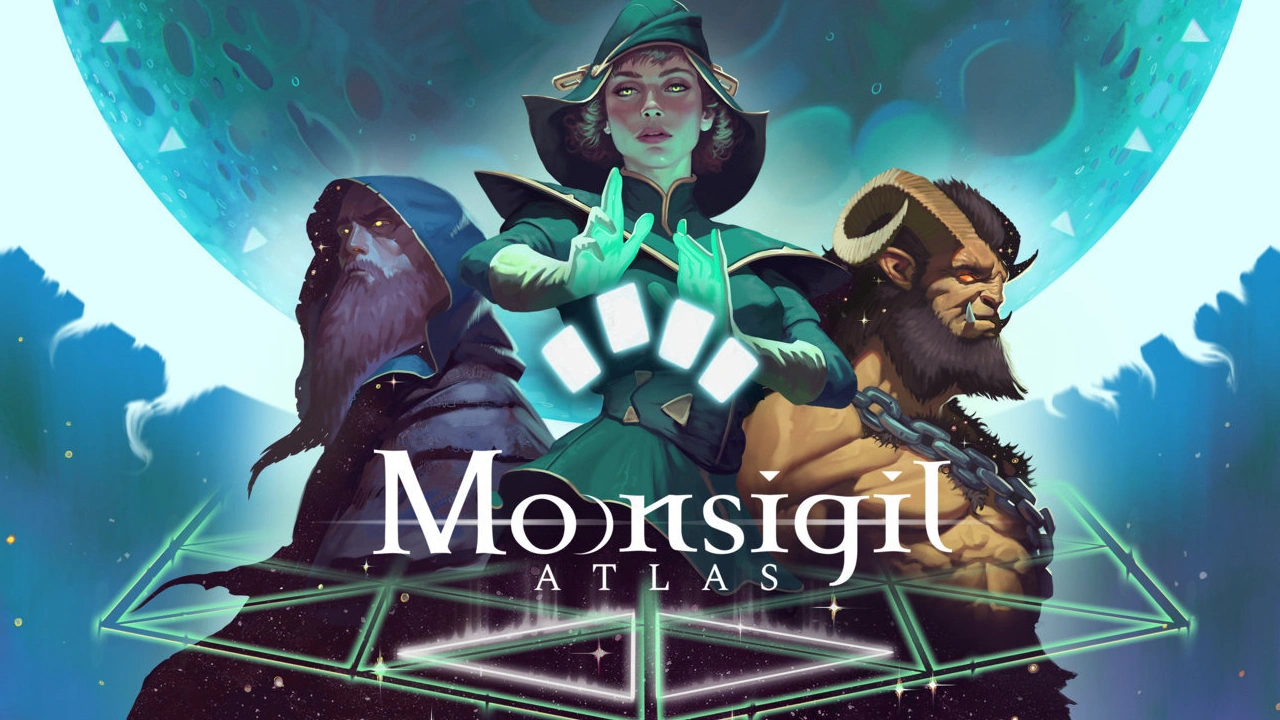

Moonsigil Atlas begins with a premise that sounds grand enough for a full cosmic RPG: three mages are drawn into a fight to protect the moon from star-eating monsters and colossal Titans. Snake Tower Games uses that setup less as a story engine than as a mood generator, letting card text, hero backstories, and enemy designs suggest a universe full of old celestial violence.
That restraint works because the game knows where its strongest language lives. This is a deckbuilding roguelike on PC, published by Twin Sails Interactive, and its real poetry is spatial. It does the familiar things the genre asks for: branching paths, card rewards, relics, upgrades, bosses, failed runs, and fresh attempts. Then it removes the one rule most of these games are built around.
There is no energy meter. That single absence changes the emotional texture of every fight. You are not asking what you can afford. You are asking what you can fit.
The Moon Is the Resource
Each card in Moonsigil Atlas has a physical shape, built from triangular pieces, and every turn asks you to place those shapes onto a moon-shaped board. The first few fights make this feel almost generous. A small bolt slides into a gap. A chunky attack covers a wide patch of space. A shield card buys safety if its rune lands where an enemy strike can be blocked.
Then the system starts tightening its fingers. A strong attack can become a mistake if it fills the spot where a defensive rune needed to land. A card that damages all enemies at the start of each turn feels wonderful until it stays on the board and leaves less room for the next hand. A monster group can turn a clean plan into a little crisis, since blocking four enemies means thinking about direction, placement, card order, and remaining space in one breath.
That is where the game finds its rhythm. The turn does not feel like a math problem with artwork attached. It feels like arranging a constellation under pressure. You scan enemy intent, check the hand, rotate possibilities in your head, then realize the perfect card has the wrong shape. Few deckbuilders make the physical act of playing a card feel this important.
Bosses push that idea hardest. Titans do not simply arrive with bigger health bars. They interfere with the board, bring allies into the fight, restrict access to spaces, or force a strategy that worked beautifully five minutes earlier to suddenly look clumsy. The best encounters make survival feel like a puzzle that keeps changing after you have already committed half the answer.
Buildcraft With Sharp Edges
The three playable heroes give the system enough personality to keep runs from folding into one another. Feldrin, for example, leans naturally toward careful defense and shield planning, especially when paired with cards that deal damage at the beginning of turns. Other decks encourage faster damage chains, focus-based boosts, or strategies built around smaller cards that leave room for late-turn finishers.
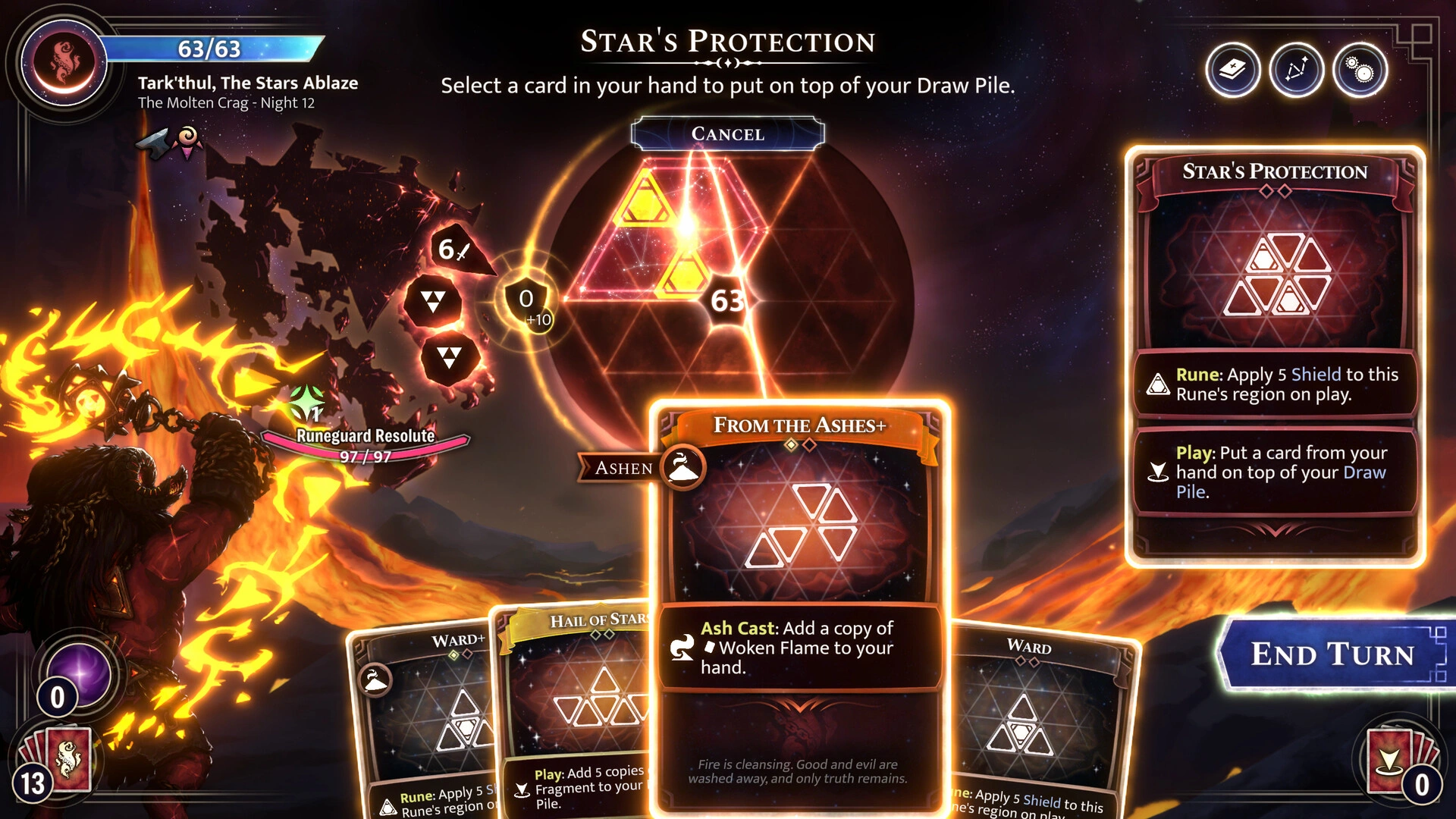
The pleasure is in finding a plan and then watching the board test it. A deck full of small cards sounds safe until it lacks finishing power. A deck built around huge attacks can flatten normal enemies, then panic when a boss blocks the spaces those attacks require. Relics and keywords can push these plans into delightful territory, especially when one upgraded card becomes the piece every turn begins to orbit around.
The in-run upgrade system is at its best when it changes a card’s shape or role. Shrinking a powerful card can make it playable in turns that used to shut it out. Adding a keyword can turn a plain attack into part of a larger chain. Making a card appear in the opening hand can give a build the consistency it was missing.
Some rewards have less spark. Adding a single shield rune to a card can help, but it rarely gives the same rush as reshaping a card so it suddenly fits into half the board states that used to reject it. Since Moonsigil Atlas is so good at making placement feel meaningful, the weaker upgrade nodes stand out because they feel oddly small beside the combat system’s imagination.
The mastery progression is similarly mixed. Unlocking new cards for each hero gives failed runs a useful afterlife, and that matters when a boss sends a promising deck into the void. Yet there are moments when the game feels like it is holding back pieces that would have made early experimentation richer. The reward loop works. It could be braver.
A Beautiful System Waiting for a Wider Sky
Visually, Moonsigil Atlas understands clarity. The cards are readable at a glance, the board communicates space cleanly, and enemy intent is available enough to support planning, even if certain moments could use sharper explanation. In a game where one misplaced card can collapse a turn, that readability is not cosmetic. It is mercy.
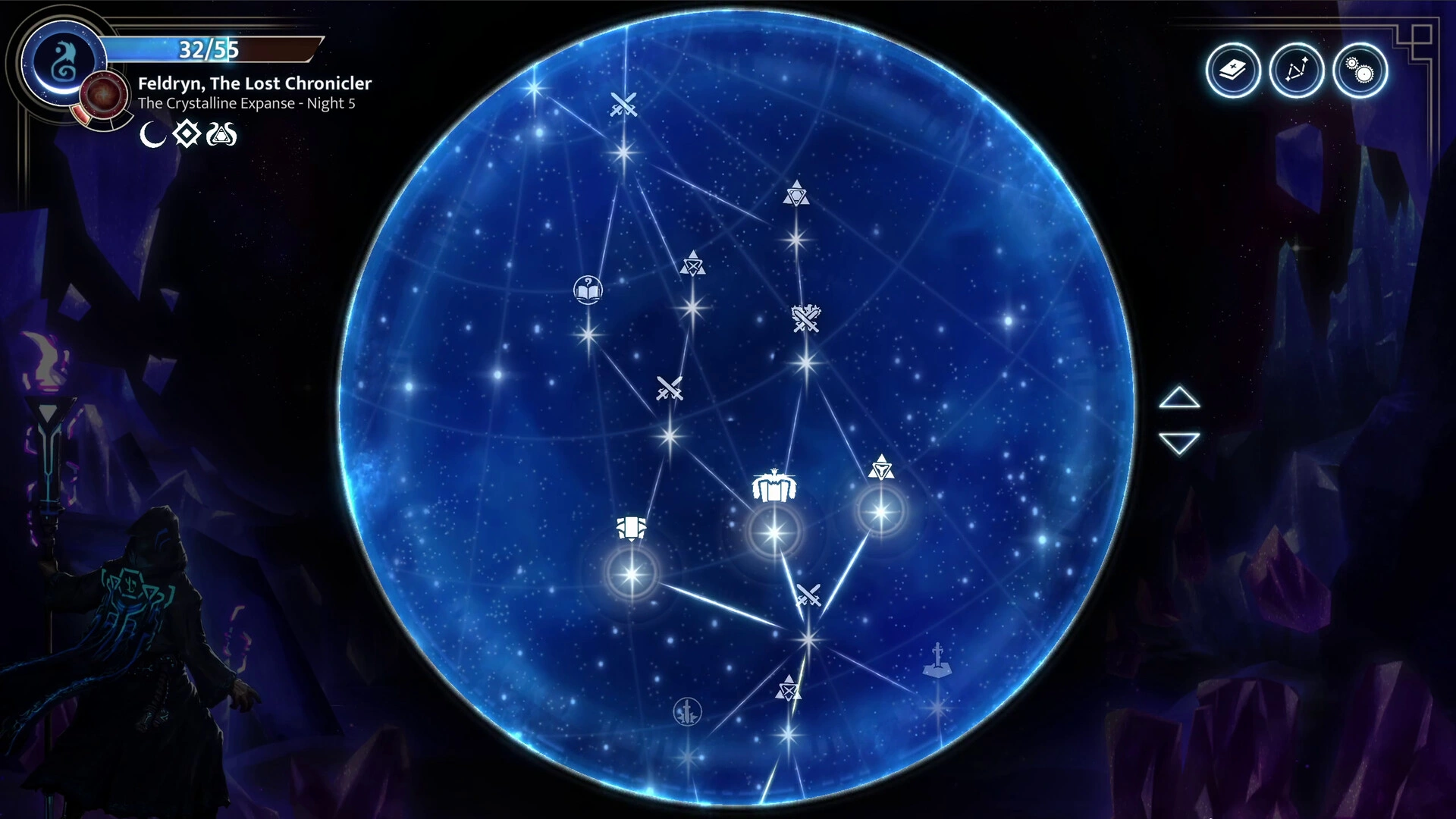
The art gives the game a dreamy cosmic-horror identity without drowning the interface in decoration. Enemies look like things pulled from old galaxies and bad dreams, with the Titans giving boss fights a needed sense of scale. The cards themselves carry enough personality to sell the fantasy of casting signs across the moon, which is exactly the feeling the mechanics are trying to create.
The sound is less memorable. The soundtrack suits the astral tone, but longer runs expose its limited range. Combat effects give feedback without making attacks feel especially forceful, and the absence of voice acting leaves the world slightly quieter than its premise deserves. Since runs can stretch close to two hours, that repetition becomes easier to notice.
The larger issue is content depth. The shape-based combat is strong enough that the mind starts asking for more places to use it: more bosses, more hero styles, more narrative events that let this strange universe breathe between fights. That desire comes from affection rather than frustration. Moonsigil Atlas has the rare deckbuilder hook that changes how a turn feels in your hands, and once it clicks, the moon starts looking too small for all the ideas trying to fit on it.
The Review
Moonsigil Atlas
Moonsigil Atlas turns deckbuilding into spatial anxiety, where every card carries emotional weight because it must earn its place on the moon. Its shape-based combat feels fresh, tense, and beautifully tied to its cosmic premise, while the heroes and upgrades give each run enough tactical pull. It needs more bosses, richer narrative events, and stronger audio texture, but its central system is strong enough to make familiar roguelike habits feel alive again.
PROS
- Brilliant shape-based card play
- Strong cosmic atmosphere
- Distinct hero playstyles
- Clear card and board readability
- Smart boss disruptions
CONS
- Limited boss variety
- Some weak upgrade rewards
- Repetitive soundscape
- Story stays too thin







