
























![Kingdom Hearts Collection [I-III] Review](https://gazettely.com/wp-content/uploads/2026/10/Kingdom-Hearts-Collection-I-III-1-360x180.webp "Kingdom Hearts Collection [I-III] Review: KHII Holds Steady as Newer Entries Fluctuate 37")



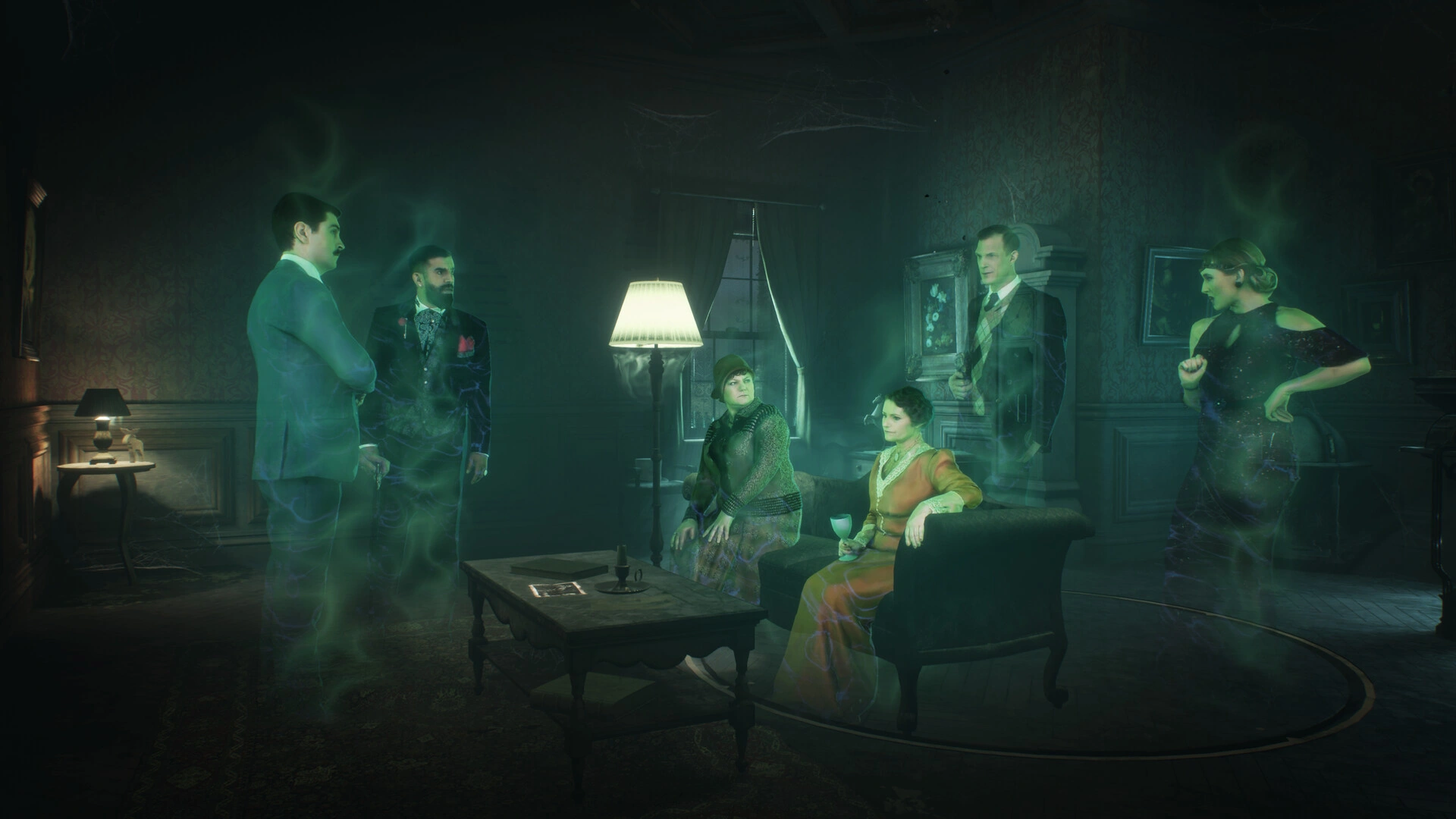

The 7th Guest Remake returns to Henry Stauf’s mansion with the strange confidence of an old ghost trying on a sharper suit. This modern reworking of the 1993 CD-ROM puzzle adventure first took shape as a VR game in 2023, then arrived in flatscreen form for PC, PS5, Xbox Series X/S, and Nintendo Switch.
The new version keeps the first-person haunted-house framework, yet rebuilds the experience around a fully explorable 3D mansion, redesigned puzzles, fresh performances, and a spirit lantern that exposes memories, clues, and grotesque little secrets hiding in the decor.
This is horror by way of parlor trick and escape room, rather than survival panic. No stalker enemy patrols the halls, no combat system waits behind the next door, and no character build determines your odds of escape. The player’s agency sits in observation, deduction, and patience. Each solved puzzle becomes a small act of excavation, pulling the story of six vanished guests closer to the surface.
At roughly five to seven hours, it is compact, dense, and pleasingly old-fashioned in its priorities: a mansion, a mystery, and a long trail of mechanical riddles left by a deeply unpleasant toymaker.
Henry Stauf’s Mansion as a Puzzle Box
The story sends an unnamed protagonist into the abandoned home of Henry Stauf, an eccentric inventor whose toys once promised delight and now feel touched by rot. Years earlier, six guests entered the mansion after being tempted by wealth and reward.
Their night became a supernatural contest filled with puzzles, manipulation, and buried sins. The player arrives after the damage has already been done, moving through dust, cobwebs, insects, and locked rooms while spectral memories replay fragments of that doomed gathering.
Stauf’s mansion works because it treats environment design as narrative design. Every room feels like an extension of its owner’s mind: theatrical, cruel, childish, ornate, and faintly ridiculous. It has the structure of a puzzle box and the temperament of a stage magician who never learned mercy. The themed rooms give the game a clean progression system, yet they also turn the house into a character with moods, habits, and a nasty sense of humor.
The remake’s volumetric performances replace the old flat FMV effect with ghostly actors placed inside the 3D space. This makes conversations and memories feel physically tied to the rooms rather than pasted across them. The performances carry a deliberate campiness, with enough emotional detail to keep the guests from becoming pure caricature. It is closer to a haunted attraction with tragic undertones than a nightmare meant to genuinely terrify.
That polish does create a tradeoff. The original’s primitive video, stiff acting, and early-technology strangeness gave it an accidental unease. This remake tells the tale with greater clarity, yet its cleaner surfaces soften some of that unstable, feverish quality.
The Best Reason to Enter the House
The strongest system in The 7th Guest Remake is its puzzle flow. The game is linear in a way that serves it well: a few rooms open, their puzzles are solved, new areas become available, and new scenes fill in the history of Stauf’s guests.
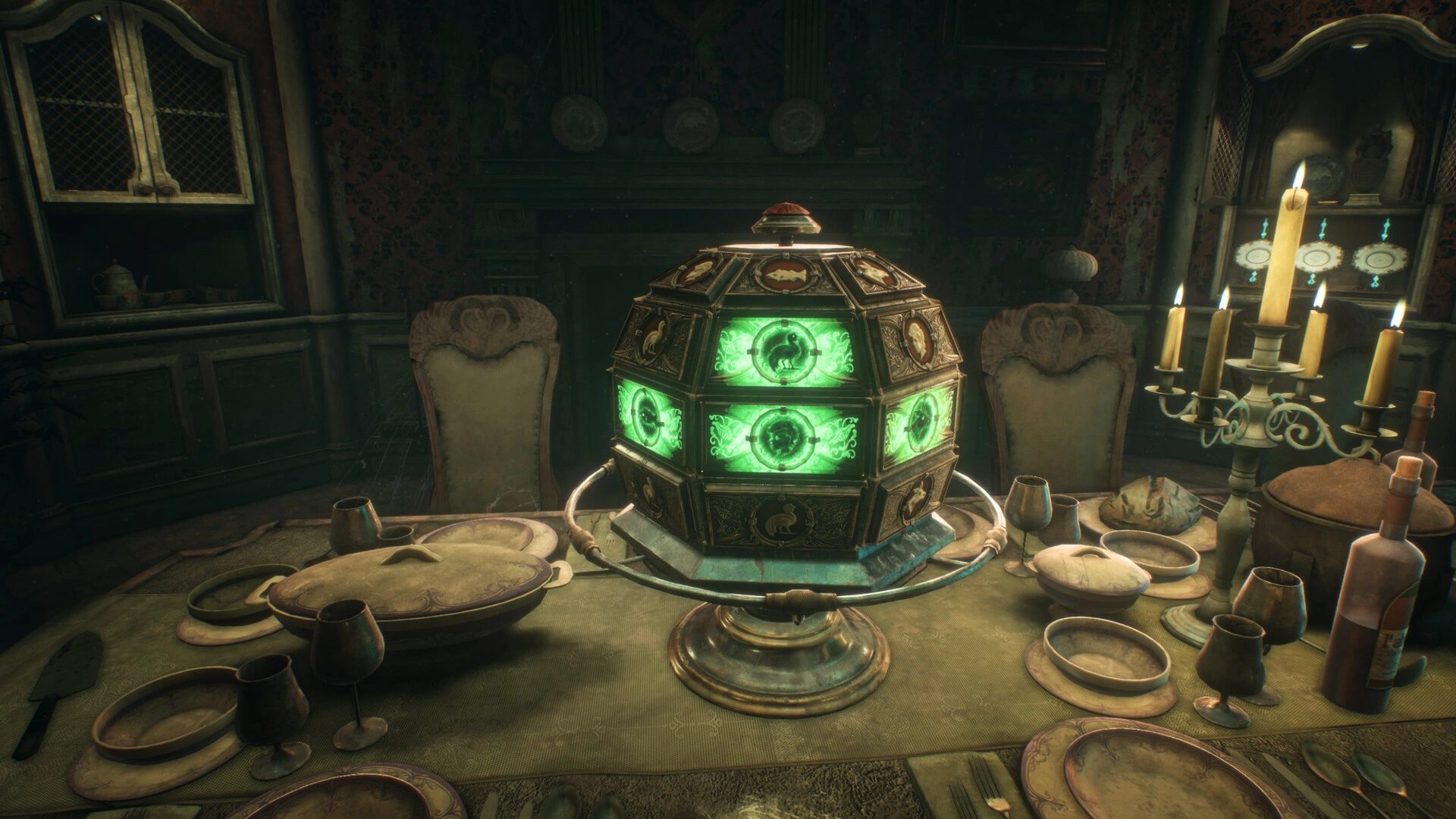
This structure avoids the common adventure-game problem of wondering which forgotten object belongs to which distant lock. There is no bulky inventory to manage, no pile of unrelated items waiting for absurd combinations. The game keeps the player close to the current room, current clue, and current mechanism.
That focus gives the remake a rhythm similar to Myst or The Room, where the pleasure comes from studying the immediate space until its logic begins to click. Interaction is simple: examine objects, manipulate devices, search for clues, and use the spirit lantern.
The lantern is the remake’s smartest mechanical addition. It reveals past states of objects, exposes hidden traces, and transforms paintings or decorations into more sinister versions. It makes observation feel active. Looking is no longer passive camera movement; it becomes the central verb of play.
The puzzles themselves range across logic problems, spatial reasoning, symbol matching, simple math, mechanical contraptions, object manipulation, and compact mini-game challenges. Many are clearly inspired by the older game, yet they have been rebuilt with cleaner rules and fairer solutions.
A good puzzle game teaches its language without sounding like a lecture, and The 7th Guest Remake often succeeds at that. The player learns by touching, testing, rotating, failing, and noticing one detail that was sitting in plain sight.
Choice and consequence are limited here, at least in the RPG sense. You are not shaping Stauf’s story through branching decisions, and the ghosts do not react to moral stances. The meaningful choice lies in how much help you accept. Hidden Stauf coins can be spent on puzzle solutions or auto-solves, with achievement consequences attached to the latter. It is a small system, yet it matters because it respects different patience levels without erasing the value of solving things yourself.
Some puzzles linger past their best idea, and a few object interactions can make the solution feel clumsier than the logic behind it. Still, the loop is quietly dangerous: finish one room, open another, promise to inspect it for a minute, then realize an hour has vanished into hinges, symbols, and one suspicious painting.
A Strong Remake with Visible VR Roots
Presentation gives the remake much of its immediate appeal. The mansion is richly dressed with 1920s-inspired detail, heavy shadows, ornate furniture, insect life, old dust, and rooms that look designed for both hospitality and entrapment.

Lighting does a lot of storytelling work, especially when the lantern casts its eerie green glow across objects that seem harmless until the past starts bleeding through. The soundscape and music lean into gothic playfulness rather than pure menace, which suits a game built around cursed toys and theatrical ghosts.
The new performances also help the story land with greater emotional clarity. Characters such as desperate spouses, performers, and opportunists are sketched through broad but readable strokes. Their scenes do not need heavy player choice to support the narrative design, because the player’s role is investigative rather than authorial. The story has already happened. The interaction comes from reconstructing it piece by piece, room by room, puzzle by puzzle.
The flatscreen port, however, carries visible VR fingerprints. Some devices were plainly built for hands moving freely in space. Rotating objects, lining up pieces, reaching into contraptions, or handling items through a controller and cursor can feel slightly compromised. Certain keyboard inputs, especially actions mapped around Q and E, feel less natural than direct mouse movement would have. The issue rarely ruins a puzzle, yet it can pull attention away from the cleverness of the design.
Movement has similar small irritations. Walking and running work well enough, while crouching snaps the viewpoint downward without much grace. A few camera angles and object interactions feel awkward, and minor bugs or visual oddities appear around the edges. These flaws are easy to forgive because the central design remains strong.
The remake improves the original’s accessibility, story clarity, puzzle fairness, and production value. It also loses a little of the older game’s strange digital grime. For players without VR, this flatscreen release remains a smart and atmospheric way to enter Stauf’s mansion, with just enough awkwardness to remind you that some doors were first built for virtual hands.
The Review
The 7th Guest Remake
The 7th Guest Remake is a smart, atmospheric rebuild of a puzzle classic, with sharper storytelling, elegant room-based challenges, and a richly detailed mansion that rewards close observation. Its flatscreen version still carries a few awkward VR leftovers, especially in object handling and movement, yet the core experience remains absorbing. The story has lost some of the original’s uncanny weirdness, but the remake gains clarity, polish, and stronger puzzle design.
PROS
- Excellent room-based puzzle design
- Strong gothic mansion atmosphere
- Clever spirit lantern mechanic
- Improved story clarity and performances
- Compact, focused pacing
CONS
- Some controls feel awkward outside VR
- A few puzzles overstay their welcome
- Minor bugs and clumsy movement touches
- Less strange than the 1993 original