



























Marie Gillespie’s recollection of northern soul carries an attachment that the passing decades have done little to loosen. Listening to her in Alan Byron’s Northern Soul: Still Burning, one senses how inadequately the word “hobby” would describe those nights. A ballroom could occupy a permanent place in a person’s understanding of being alive. Byron’s interviews allow that feeling to persist in the present tense, even as his archive returns us to the young bodies that once sustained it. Gillespie remembers; the dancers on film are still dancing.
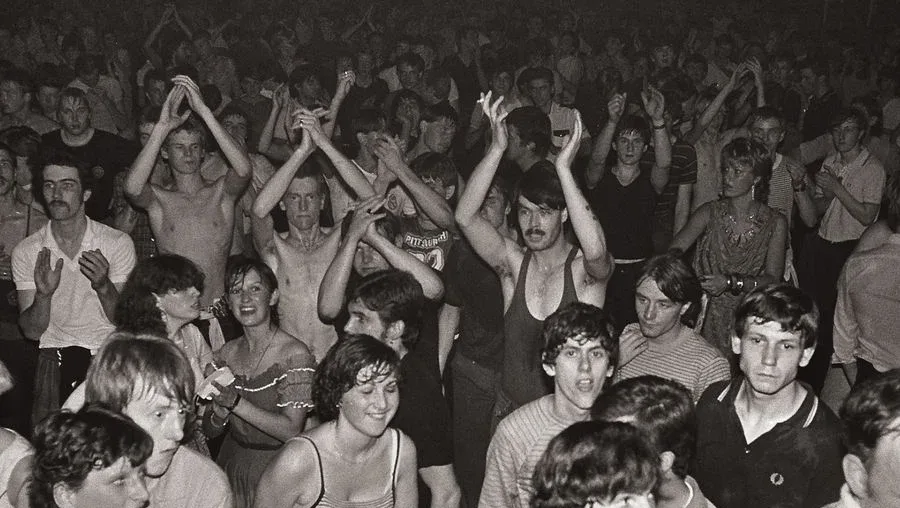
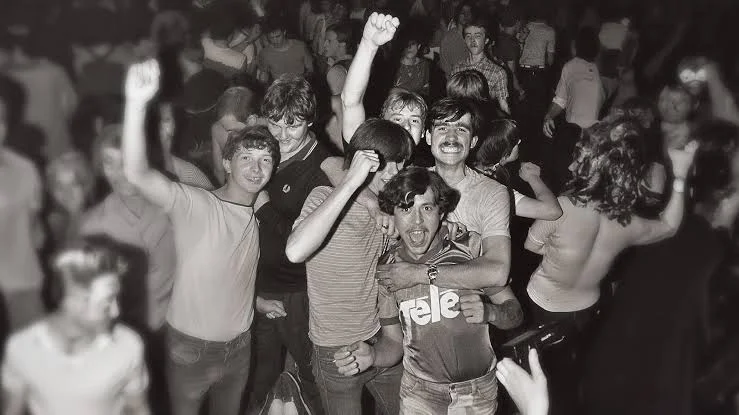
Their movement gives the recollections a physical vocabulary. Leather soles slide across talcum powder, loose clothes make room for exertion, and spins and drops belong to people dancing individually within a crowded hall. One woman remembers sweat dripping from the ceiling.
The detail is almost unpleasant, which makes it valuable: devotion has temperature, congestion, bodily cost. With soul records continually accompanying the testimony and historical footage, Byron lets the film breathe some of that crowded air. Its pleasure survives the transfer to a screen, though the screen cannot supply the exhaustion of staying there until eight in the morning.
Wigan Casino is the principal gathering place in this roughly ninety-minute account of a culture that took hold across northern England and the Midlands. Its all-nighters ran from two until eight, hours that placed an entire social existence inside the interval when much of the country was asleep. Byron follows dancers and DJs who made that interval their own. The comfortable clothes and solitary flourishes have a practical intimacy that fashion histories can miss: these were things people wore and did to inhabit a room together. The film understands the attraction through use, through the repeated decision to return.
That return depended on records that had travelled an unlikely distance. British DJs searched American warehouses and discarded stocks of seven-inch vinyl, bringing neglected soul recordings into clubs where possession of a rare original could confer considerable standing. Gloria Jones’s “Tainted Love” reached the scene through a discovery in Philadelphia. The account gives discarded objects a second history, written by the listeners who found a need for them. A recording could fail to find its audience in one place and become indispensable elsewhere, its apparent commercial exhaustion concealing an emotional life still to come.
Byron is particularly attentive to the collectors’ pride, their hunts for originals, the record stalls and sales surrounding the nights. Scarcity made listening an appointment with a place. If a DJ held the only available copy, a song could require travel, admission, patience, the company of strangers. There is tenderness in that dependence, and possessiveness too. The person who brought listeners together also controlled their access to what they loved. The documentary preserves enough of this competitive pleasure to keep its community from becoming an entirely frictionless memory.
Yet the American musicians remain at a distance. We learn much about the British desire to find these records and comparatively little about the people who made them, the circumstances of their creation, or the meaning of recognition arriving later from another country. The soundtrack keeps their work close while the account keeps their experience remote. That imbalance matters to a film so concerned with attachment: the dancers’ lives become legible through the songs, but the lives behind those songs are scarcely opened to us. The warehouse discovery is described; the original act of making the record receives far less attention.
The historical setting is similarly less assured than the recollections. Byron places northern soul beside industrial decline, labour unrest and economic hardship, yet some witnesses remember good jobs and apprenticeships. Others describe escape from everyday life, while some reject that description because the nights were themselves the life they valued.
Those accounts need not cancel one another. Their differences suggest the range of needs a dancefloor could answer. The film’s juxtaposition of hardship and pleasure supplies an explanation faster than its interviews can establish one, leaving the particular relation between employment, place and participation underdeveloped.
Amphetamines complicate the remembered physical freedom without receiving much sustained examination. Their presence belongs to the account of prolonged exertion, crowded nights and bodies refusing sleep. One contributor challenges recollections that have scrubbed away drugs and violence, a useful disturbance in a film inclined toward affection.
Byron acknowledges the pills, but acknowledgment gives us little sense of how they shaped the experience his witnesses cherish. The ceiling sweat remains easier to feel than the chemical conditions of endurance. Here the documentary’s eagerness to preserve an atmosphere limits its inquiry into how that atmosphere was produced.
Preservation itself carries a sharper contradiction in Tony Palmer’s archival footage. Regulars remember the cameras and lights as an intrusion, and describe television exposure bringing newcomers who altered the room’s character. The images Byron now draws upon came from an encounter some participants would rather have prevented. Watching the dancing, one is grateful for a record whose making unsettled the people it records. The archive allows their gestures to survive while their complaints preserve something the images cannot: the sense of an atmosphere changing under observation.
The Casino’s closure in 1981 gives that unease a finality the interviews still struggle to absorb. “I was devastated. I thought my life had ended,” one participant recalls. The accounts of returning week after week give the grief a shape: an anticipated night has disappeared from all the weeks ahead.
Contemporary northern soul nights in Deptford, and Ady Croasdell’s all-nighters at London’s 100 Club, introduce people and places beyond the vanished ballroom. Among the older participants, some welcome continued evolution and others guard the inheritance closely. The younger dancers enter a culture whose survivors are still negotiating what can be passed on and what remains inseparable from having been there.
Northern Soul: Still Burning premiered in cinemas across the United Kingdom on May 15, 2026, following its initial screening run through Screenbound Pictures and Munro Film Services. Directed by Alan Byron, the British music documentary examines the enduring legacy and ongoing cultural reinvention of the Northern Soul subculture from its origins in the late 1960s to its modern-day global revival.
Full Credits
Title: Northern Soul: Still Burning
Distributor: Screenbound Pictures, Munro Film Services
Release date: April 24, 2026 (UK Premiere), May 15, 2026 (UK Theatrical)
Rating: Cert 15 (UK)
Running time: 1 hour 31 minutes (91 minutes)
Director: Alan Byron
Writers: Alan Byron
Producers and Executive Producers: Alan Byron, Screenbound Pictures
Cast: Tony Blackburn, Elaine Constantine, Ian Levine, Russ Winstanley, Richard Searling, Kev Roberts, Levanna McLean, Tony Palmer
The Review
Northern Soul: Still Burning
Byron captures the bodily pleasure of northern soul and the ache of losing the place that sustained it. Testimony, dancing and rare-record discoveries give devotion a tangible form. His inquiry is thinner around the American musicians, the scene’s social conditions and amphetamine use. The archival footage holds the film’s richest contradiction: cameras once resented by dancers now allow their movements to survive.
PROS
- Moving testimony preserves the scene’s enduring emotional significance.
- Dancing footage and music convey physical exhilaration.
- Record collecting reveals both communal devotion and competitive pride.
- Archival material exposes the tensions within preservation.
CONS
- Limited attention to the American musicians behind the records.
- Economic hardship is insufficiently connected to participants’ differing experiences.
- Amphetamine use receives little sustained examination.







