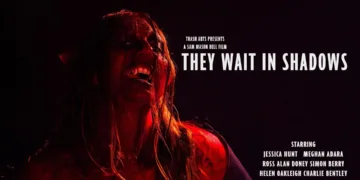
























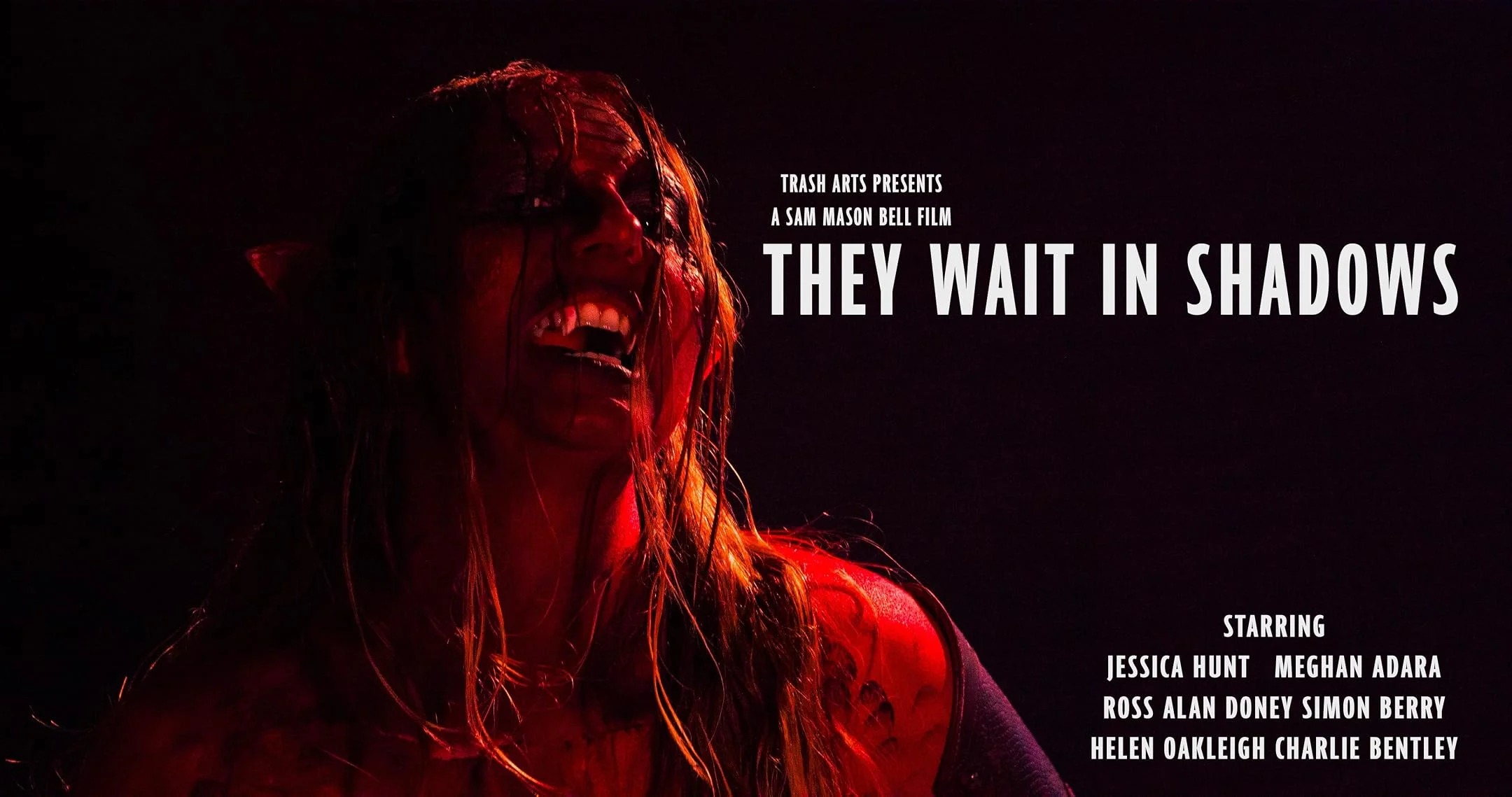

Ingrid and Jenny’s strained politeness is uncomfortable because Jessica Hunt and Meghan Adara make their familiarity so believable. Returning to their childhood home after their mother’s death, the estranged sisters have possessions to sort through and a past they struggle to discuss.
In Sam Mason-Bell’s They Wait in Shadows, their conversations retain the easy recognition of sibling talk even as resentment interrupts it. You can believe these women once shared a home, and you can feel the effort involved in sharing one again. That gives the house an emotional charge before its supernatural occupants become a problem.
Hunt makes Ingrid’s guilt feel like something that has accompanied her into adulthood. Her divorce supplies present-day trouble, but her unresolved childhood experience keeps pulling her attention backward. Jenny, caught in another unstable relationship with Ray, brings a different kind of agitation.
Adara gives her a restlessness that makes sitting with the past difficult. Their disagreement over childhood memories matters because neither sister can simply borrow the other’s explanation and feel better. Watching them together creates a hope that they might find some common understanding, even when their exchanges offer little encouragement.
The nightmares threaten that hope in a particularly direct way. Monsters the sisters had dismissed as childhood inventions return, while the discovery of an old Ouija board reconnects the haunting with their earlier experiences. The familiar horror setup gives their inability to leave the past behind a physical expression.
It also places a demanding burden on the film: the creatures need to frighten us while remaining attached to the women whose distress gives them meaning. The strongest stretches preserve that connection. The nightmare carries the discomfort of finding something you thought you had outgrown still waiting for you.
There is pleasure, too, in seeing a small horror film commit to creatures built from makeup, prosthetics, puppetry, and animatronic work. Their handmade surfaces give the nightmares a tactile quality, recalling the strange inhabitants of older video-shop horror.
For viewers with an affection for that tradition, the visible craft offers its own invitation to keep watching. The unevenness of the effects becomes part of the experience, though it cuts both ways. A creature can seem unpleasantly present in one appearance and conspicuously rubbery in another. Once your attention shifts toward its construction, concern for the sisters briefly gives way to inspecting the monster.
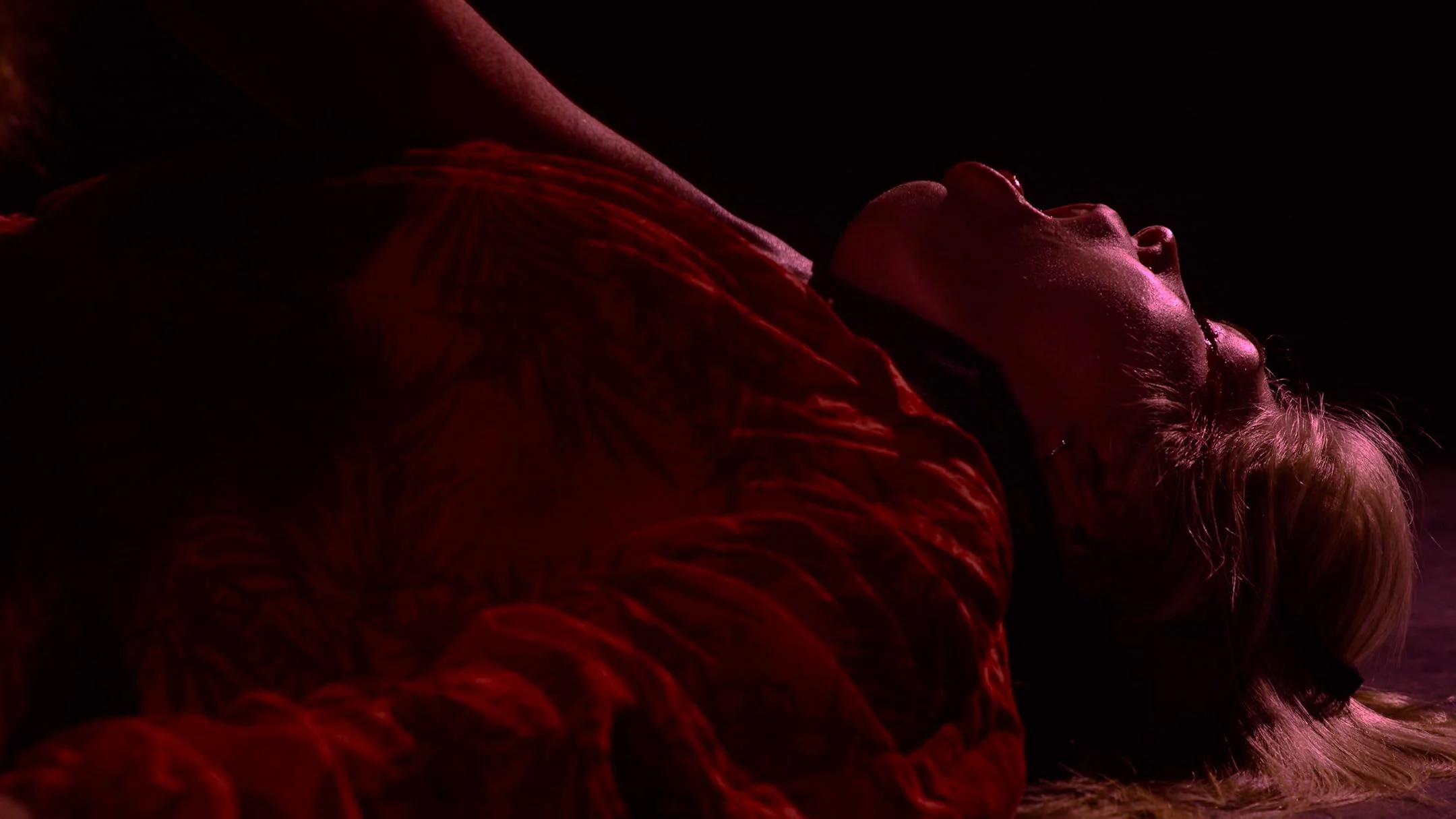
The nighttime treatment has a similar effect. Heavy blue filtering and limited illumination sometimes conceal enough of the creatures to make them disturbing. A partially visible shape allows fear to occupy the detail the image withholds. Elsewhere, the blue becomes so conspicuous that it is difficult to forget the filter.
The ordinary house then looks dressed for a nightmare rather than transformed by one. Its plainness could have been an advantage: a familiar domestic space becoming unsafe is an accessible fear. The daylight exteriors and beach visit retain that everyday quality, but the nighttime images do not consistently make it feel threatened.
What weakens the horror most is the difficulty of holding onto anxiety between these encounters. The sisters’ conversation about chips at the beach is believable as ordinary sibling chatter. People dealing with grief still complain about lunch. Yet the scene also exposes the limits of naturalistic dialogue: recognition alone cannot sustain attention indefinitely.
With long stretches separating the scares, the film needs its everyday exchanges to change our understanding of Ingrid and Jenny or make their return home increasingly uncomfortable. Too often, familiar complaints occupy the space where that pressure could be growing.
Their repeated arguments create a related problem. Being abrasive does not make the sisters unworthy of sympathy, and their difficulty speaking to each other has a credible basis. Hunt and Adara keep that credibility alive. But repeated friction offers diminishing emotional rewards when the relationship seems to remain in place.
I wanted the next exchange to alter what one sister could ask of the other, or what either could bear to admit. Instead, the recurrence of hostility can make the audience tired of spending time with them. The performances establish an attachment that the pacing repeatedly asks us to renew.
The sound occasionally supplies an immediate jolt when that attachment has weakened. Musical stings help individual scares register, and some of the makeup remains unsettling enough to hold attention through the film’s rougher passages. Uneven sound quality and editing, however, make the surrounding atmosphere less dependable.
A sudden scare can wake you up without leaving you anxious about the next quiet moment. Here, the gaps between horror sequences and the recurring bickering often allow that alertness to subside. The film earns brief reactions with greater consistency than it earns sustained apprehension.
That makes the ending’s emphasis especially frustrating. The supernatural resolution receives attention that the sisters’ disagreement has taught us to expect for their relationship. As the story approaches its major revelation, its growing untidiness also makes it harder to stay connected to the guilt and conflicting memories beneath the haunting.
The disappointment comes from having cared about Ingrid and Jenny, thanks largely to Hunt and Adara, and wanting their shared ordeal to affect how they understand each other. Resolving the immediate threat leaves a further emotional demand: these women still need to live with a history they cannot comfortably share. The film gives that prospect too little room after spending so much time making their conversations difficult.
They Wait in Shadows was released on digital streaming platforms in May 2026 via Cleopatra Entertainment, followed by a UK release through Miracle Media. The horror film follows two estranged sisters who return to their isolated family home after their mother’s death, only to find themselves confronted by terrifying supernatural entities conjured by a childhood Ouija board.
Where to Watch They Wait in Shadows (2026) Online






Full Credits
Title: They Wait in Shadows
Distributor: Cleopatra Entertainment, Miracle Media
Release date: May 12, 2026 (United States), July 20, 2026 (United Kingdom)
Rating: TV-MA
Running time: 1 hour 32 minutes (92 minutes)
Director: Sam Mason-Bell
Writers: Sam Mason-Bell
Producers and Executive Producers: Sam Mason-Bell, Hazel Mason-Bell
Cast: Jessica Hunt, Meghan Adara, Ross Alan Doney, Simon Berry, Helen Oakleigh, Charlie Bentley, Russell Churcher
Director of Photography (Cinematographer): Sam Mason-Bell
Editors: Sam Mason-Bell
Composer: Alberto Masoni
The Review
They Wait in Shadows
They Wait in Shadows gives us two believable sisters and a reason to care about what frightens them. Hunt and Adara’s rapport, tactile creatures, and occasional unsettling images reward that investment. Repetitive exchanges and uneven atmosphere make the fear difficult to sustain, while the ending leaves the sisters’ emotional conflict underserved. Handmade horror enthusiasts will find moments to appreciate, but the attachment these performances create deserves a stronger payoff.
PROS
- Believable sibling chemistry from Hunt and Adara.
- Tactile makeup, puppetry, and creature effects.
- Effective scares when darkness conceals the monsters.
CONS
- Repetitive dialogue and long gaps weaken tension.
- Conspicuous filtering and exposed effects disrupt immersion.
- Uneven sound quality and editing.
- Supernatural closure outweighs the sisters’ emotional payoff.







