






















Ernesto Martínez Bucio’s The Devil Smokes (and Saves the Burnt Matches in the Same Box) arrives as a debut feature marked by an uneasy brilliance, crowned with the top prize in Berlinale’s Perspectives strand. Set in sweltering Mexico City during the early 1990s, it drapes the screen in heat‑hazed tension, each frame humming with latent menace.
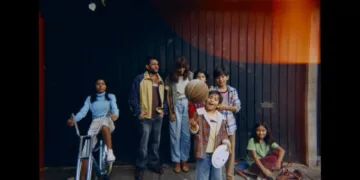
Five siblings—Vanessa, Victor, Elsa, Marisol and Tomas—find themselves orphaned in all but name when their parents vanish, leaving only five new pairs of shoes and a gnawing absence. Into this void steps Romana, their grandmother, whose fearful incantations of devilish invasion and rituals of barricaded windows forge a strange covenant between protection and persecution.
From its opening shot—hands piecing together a jagged mosaic of torn family photographs—to the final glow of a spent match, the film balances psychological drama with spectral suggestion, its narrative unfolding in fragments that mirror a child’s half‑understood nightmare.
Martínez Bucio resists tidy explanations, instead inviting us into a world where candlelight prayers to an unseen presence feel as natural as a child’s plea for comfort. The tone is at once intimate and suffocating, a hall of mirrors in which reality blurs with fevered fantasy. Here, every flutter of fly‑paper and sepia‑tinted memory pulses with questions about abandonment, belief and the fragile architecture of family.
Fractured Time, Fractured Souls
The Devil Smokes shatters linearity with its first breath: children’s small fingers press torn photographs into a jagged collage, as if trying to stitch together a self that has splintered. These opening frames, intimate and unsettling, establish a filmic language of broken mirrors—where glimpses of home‑movie flashbacks rewind and fast‑forward like fractured consciousness. Memory here is a wound, not a comfort: every abrupt cut whispers of what has been lost, every glitch a tremor in perception.
From that collage emerges the void left by five pairs of shoes on the doorstep—an unspoken promise of abandonment and the catalyst that propels the siblings into Romana’s paranoid dominion. As the grandmother’s muttered warnings of devilish invasion grow fevered, the children perform clandestine rituals: Tomas’s hushed prayers by candlelight, Marisol’s silent submersion beneath cold water, Victor’s furtive theft of a neighbor’s jersey. Each episode feels self‑contained yet reverberates through the whole, deepening our sense of their interior landscapes—fear, hope, and yearning interlaced.
Also Read




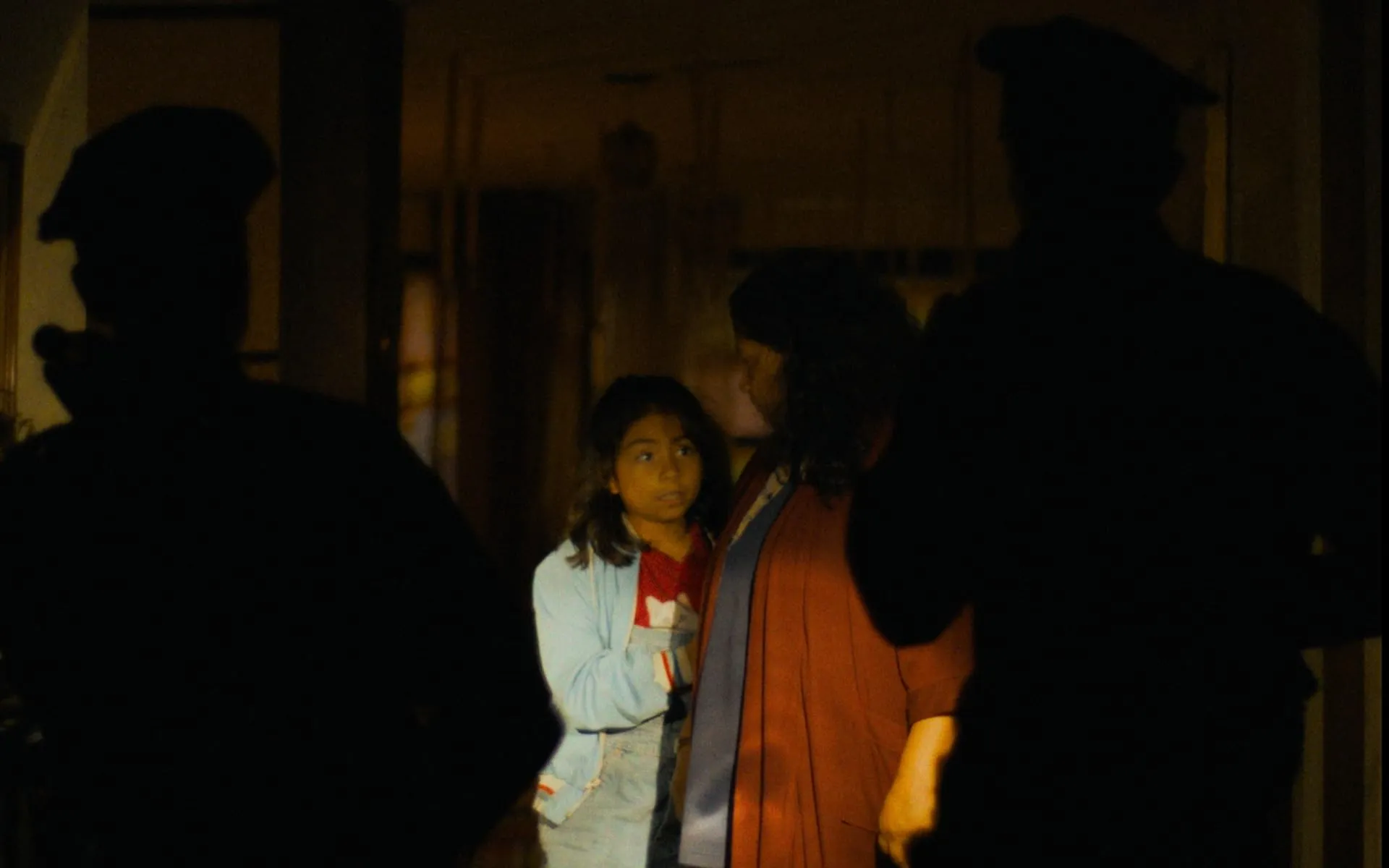
The narrative arc accumulates like an itch beneath the skin. A sudden blackout drives Vanessa to call the police, and the looming arrival of social services cuts through the house’s stifling atmosphere with a promise of light—and of judgment. Yet the film refuses to offer relief. Its final ceremony, the burning of each child’s precious object, unfolds without explanation, flickering into the credits with a riddle of faith and loss.
Moments of disorientation are woven into the fabric of the film. We struggle to distinguish one child’s anguish from another’s, to discern why the parents vanished or what fractures lie buried in Romana’s mind. This deliberate withholding of backstory is not neglect—it is a philosophical gesture. By surrendering certainty, The Devil Smokes asks us to confront the eerie spaces between understanding and oblivion, where childhood horror and adult regret entwine.
Portraits in Shadow
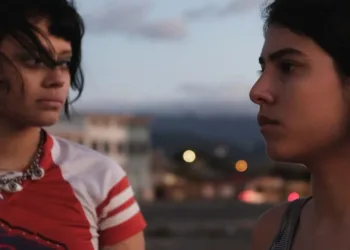
Each of the five children in The Devil Smokes carries a private tremor of dread and longing, as though their voices might shatter if spoken too loudly. Vanessa, played with gentle gravity by Laura Uribe Rojas, moves through the house like a tired sentinel, determined to replicate her mother’s nursing care even as the absence of Judith grows into its own presence. Donovan Said’s Victor wears responsibility like a second skin—his hesitation and fierce protectiveness entwined in a quiet ache.
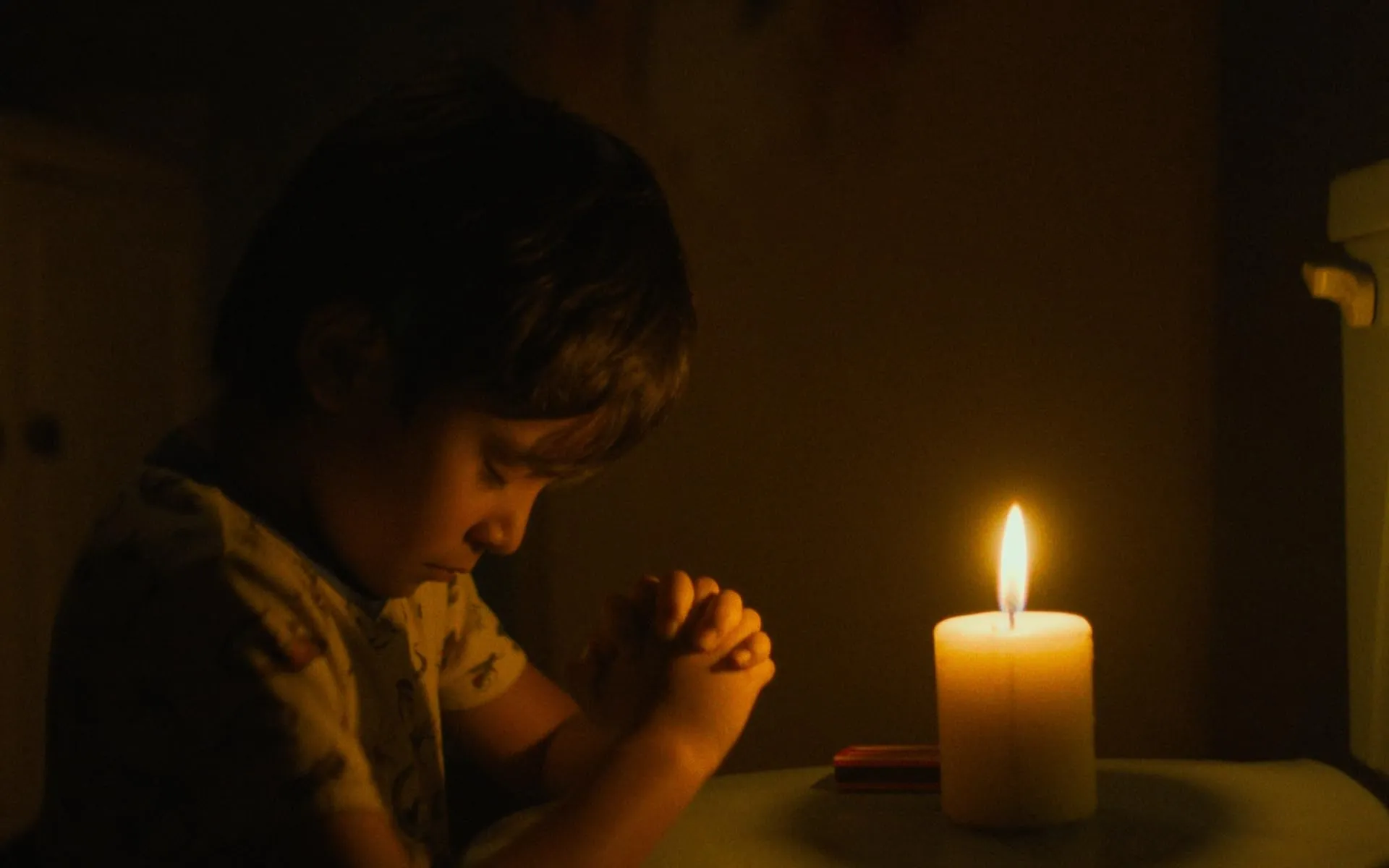
Elsa, Marisol and Tomas—each younger, each carved from the same fear‑tinged clay—inhabit with startling clarity the spaces between innocence and premonition. Elsa’s wide‑eyed wonder becomes unsettling when she repeats her grandmother’s riddles; Marisol drifts through her bucket‑submersion ritual as if testing whether water can drown memory; Tomas’s candlelit whispers to an unseen force tremble with both hope and despair. In their hands, ordinary objects become fetishes of belief—yet their performances never feel rehearsed, only lived.
Carmen Ramos’s Romana stands at the film’s fulcrum: remote, cryptic, a guardian who builds walls with both love and terror. Her devotion to devilish lore reads less like fanaticism than the desperate attempt of a mind unmoored. Each ritual she enacts—barricading doors, covering windows—becomes both shield and prison for the children caught in her orbit.
The ghost of absent parents lingers in Judith’s silent retreat and Emiliano’s wordless departure. Their fleeting appearances are more spectral than narrative; they hover in doorways of memory, never quite stepping into light.
Martínez Bucio’s method—immersing his young cast in shared quarters off‑camera—bears fruit on screen. The children move with unforced intimacy, their laughter and terror blending into a single breath. In these performances lies the film’s true gravity: proof that authenticity can carve cracks even through the thickest walls of artifice.
Emblems of a Shattered Haven
The absence of Judith and Emiliano hovers like a void that echoes with accusation, each unclaimed shoe a relic of emotional violence. To abandon a child is to fracture the very concept of home; here, parental “ghosting” forces Vanessa and Victor into ragged roles of provider and protector. Their small hands learn resolve before they learn play, as survival becomes a silent, solemn pact born of neglect.

Within this forsaken household, fantasy and squalor entwine in uneasy communion. Romana’s whispers of devilish visitors spur candlelit ceremonies that flicker against peeling wallpaper. Meanwhile, the children’s collages—ripped photographs reconfigured into grotesque mosaics—stand as fragile bridges between what was and what might be. These homemade artworks are both shield and confession, artifice propping up a reality too harsh for unguarded innocence.
Paranoia courses through Romana’s veins, a legacy passed from mother to granddaughter. Her deranged rituals and sudden outbursts trace a map of unresolved trauma, suggesting that mental illness can be as contagious as any fever. When Judith momentarily reappears on home‑video—cheerful at first, then breaking down in tears—the fragility of adult stability spills into the children’s own psyche, leaving them to navigate the ruins of calm.
Echoes of faith and dread echo through each frame. News clips of Pope John Paul II’s impending visit flicker on a dusty television, a reminder of distant hope and collective ritual. By contrast, burnt matches—snuffed light in a child’s palm—speak of extinguished belief. Candles become confessional urns, their smoke trails curling into questions of salvation and damnation. Even the discarded shoes glint like sacrificial offerings on the threshold of despair.
The house itself becomes a symbol of captivity. Windows are draped in newsprint, doors barricaded with scavenged furniture, and strips of flypaper hang like silent sentinels. These layers of protection transform the space into a self‑imposed prison, where fear of the outside world outweighs any promise it might hold. In this cocoon of dread, every barrier is also a mirror, reflecting the children’s own terror back at them.
Shadows Painted in Sepia
The film’s palette feels as though memory itself has been left to rot under the sun: sepia washes and singed edges bleed across the frame, suggesting that what we see is not life but its afterimage. These sun‑faded hues do more than evoke a bygone era—they insist that the past is forever on fire, its ashes drifting through every corridor and corner.
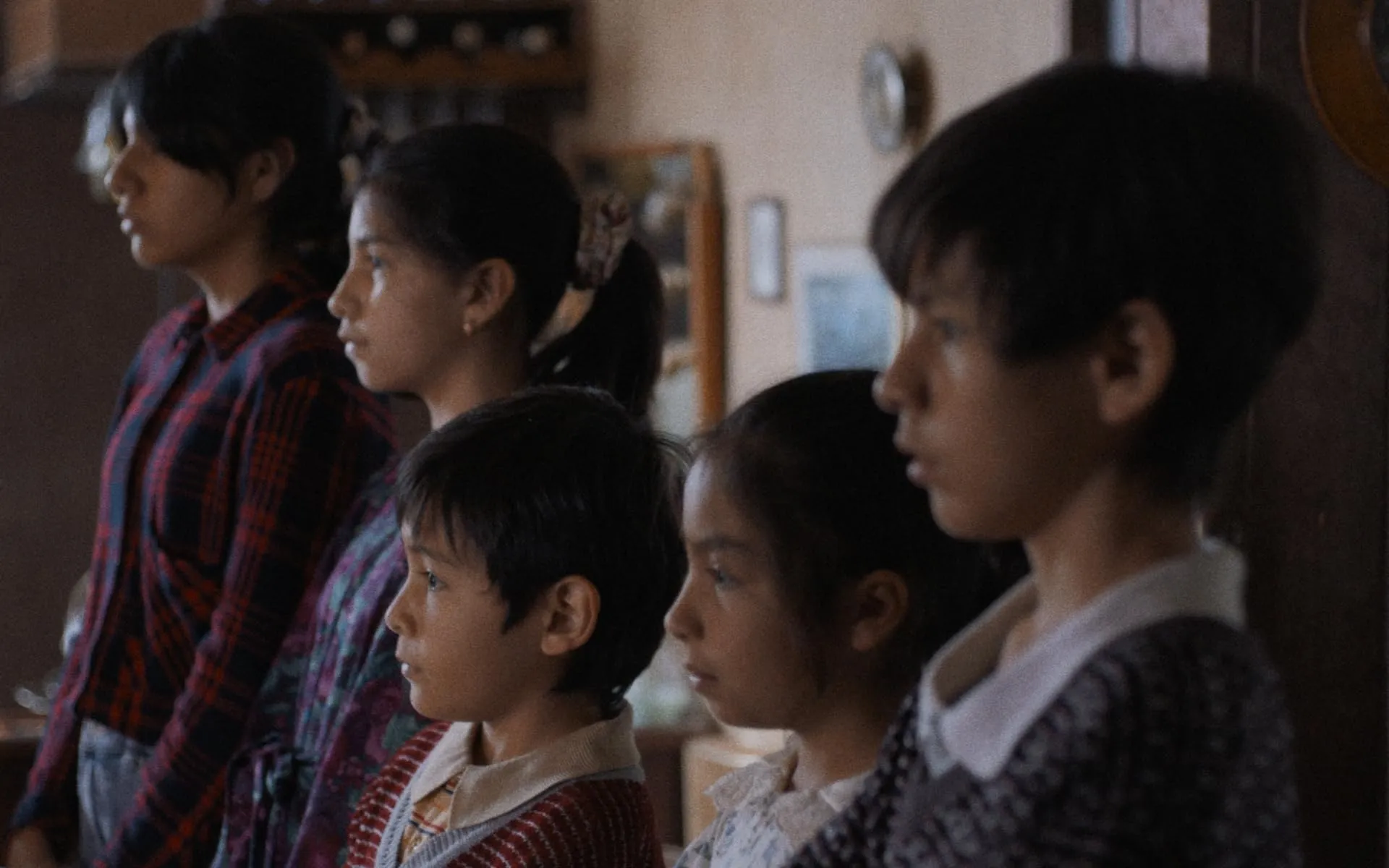
Handheld camera work creeps like a restless spirit, its jittering close‑ups pressing in on the children’s faces until their eyes fill the entire frame. Each shot feels intimate to the point of breathlessness, as if the lens itself is straining to peer into a child’s private terror. And yet, when the frame pulls back in a sudden wide shot, the house yawns vast and empty—its cavernous rooms echoing with the absence of safety.
Production design turns the domestic into the uncanny. Windows swathed in newsprint admit no light, while fly‑paper strips hang like silent sentinels. Mismatched furniture and scattered toys create a dreamscape of disordered memory, where a child’s crude collage on the wall stands in stark relief against Romana’s rigid occult paraphernalia. Every object carries weight, each cluttered tableau whispering of neglect and fragile hope.
Editing fractures time itself. Elliptical cuts snap us between moments of hushed dread and playful innocence without warning. A slow‑motion flame trembling in the darkness; a sudden freeze that arrests a child’s scream—these jolts are philosophical provocations, asking: where does one moment end and the next begin? In this rhythm of rupture, the film becomes a meditation on the fragility of perception, on how easily reality can splinter beneath our feet.
Echoes in the Empty Room
The Devil Smokes unfolds in a soundscape that feels less like accompaniment and more like a living presence. Household creaks and the distant hum of traffic seep through thin walls, while cicadas or a relentless fan drone under the blistering heat, reminding us that stillness can be its own kind of weight. Then, in the hush, silence arrives—not as relief but as an urgent void, a space where fear grows louder in its absence.
Television broadcasts of John Paul II’s visit flicker through static, a distant ritual that mirrors the children’s whispered prayers to an unseen devil. These diegetic voices fold history and imagination into the same breath, asking whether faith and madness might not be strangers after all.
Music, when it appears, is sparse—an almost imperceptible pulse that retreats before we can take comfort. In its restraint, the score becomes a philosophical gesture: sometimes the most profound truths lie not in sound, but in the hush that follows.
Rhythms of Dread and Wonder
From its first hazy frame, the film envelops us in a dreamlike fugue, where innocence dissolves into trembling doubt. Moments of fragile wonder—children chasing sunbeams through newsprint‑filtered windows—give way to sudden jolts of terror.

The pacing unfolds like a slow exhalation, measured build‑up punctuated by episodic peaks: Tomas’s whispered incantations, Marisol’s submerged stare, the hush before the blackout. Each lull carries the weight of anticipation; each crescendo, a rupture in calm.
Emotion swells and recedes in uneven tides: bewilderment yields to brittle hope, only to be swallowed by utter dread. That arc feels as organic as breathing in poisoned air. Narrative, image, and sound coalesce into a single organism, pulling us deeper into a moral grey zone where the line between protection and imprisonment blurs. The film’s heartbeat is ambiguity itself—a pulse we cannot escape. Time itself feels porous, leaking the boundaries between what is remembered and what is feared.
Full Credits
Director: Ernesto Martínez Bucio
Writers: Ernesto Martínez Bucio, Karen Plata
Producers: Carlos Hernández Vázquez, Gabriela Gavica Marrufo, Alejandro Durán
Cast: Mariapau Bravo Aviña (Elsa), Rafael Nieto Martínez (Tomás), Regina Alejandra (Marisol), Donovan Said (Víctor), Laura Uribe Rojas (Vanessa), Carmen Ramos (Romana), Bernardo Gamboa (Emiliano), Micaela Gramajo (Judith)
Director of Photography (Cinematographer): Odei Zabaleta
Editor: Ernesto Martínez Bucio
Composer: Emilio Hinojosa
The Review
The Devil Smokes
In The Devil Smokes, Ernesto Martínez Bucio crafts a feverish meditation on abandonment, faith, and fractured innocence. Through visceral imagery and an elliptical narrative that mirrors a child’s raw consciousness, this debut immerses us in a claustrophobic psyche where reality and nightmare entwine. Though its deliberate ambiguities may test patience, the film’s haunting performances and lingering dread carve themselves into memory. A bold exploration of broken homes and haunted minds, it resonates long after the final match is extinguished.
PROS
- Intensely immersive atmosphere
- Natural, affecting child performances
- Lyrical, memory‑scarred cinematography
- Poignant exploration of abandonment
- Bold formal experimentation
CONS
- Deliberate ambiguity can frustrate
- Slow pacing may test patience
- Sibling distinctions sometimes blur
- Occasional narrative opacity