






























Emi Martínez: The Kid Who Stops Time approaches Emiliano “Dibu” Martínez from a softer angle than many football documentaries might choose. The public figure is easy to identify: Argentina’s World Cup-winning goalkeeper, penalty-box provocateur, emotional lightning rod, and master of the shootout’s psychological theater. Gustavo Cova’s film looks past that familiar image and searches for the child who came before it.
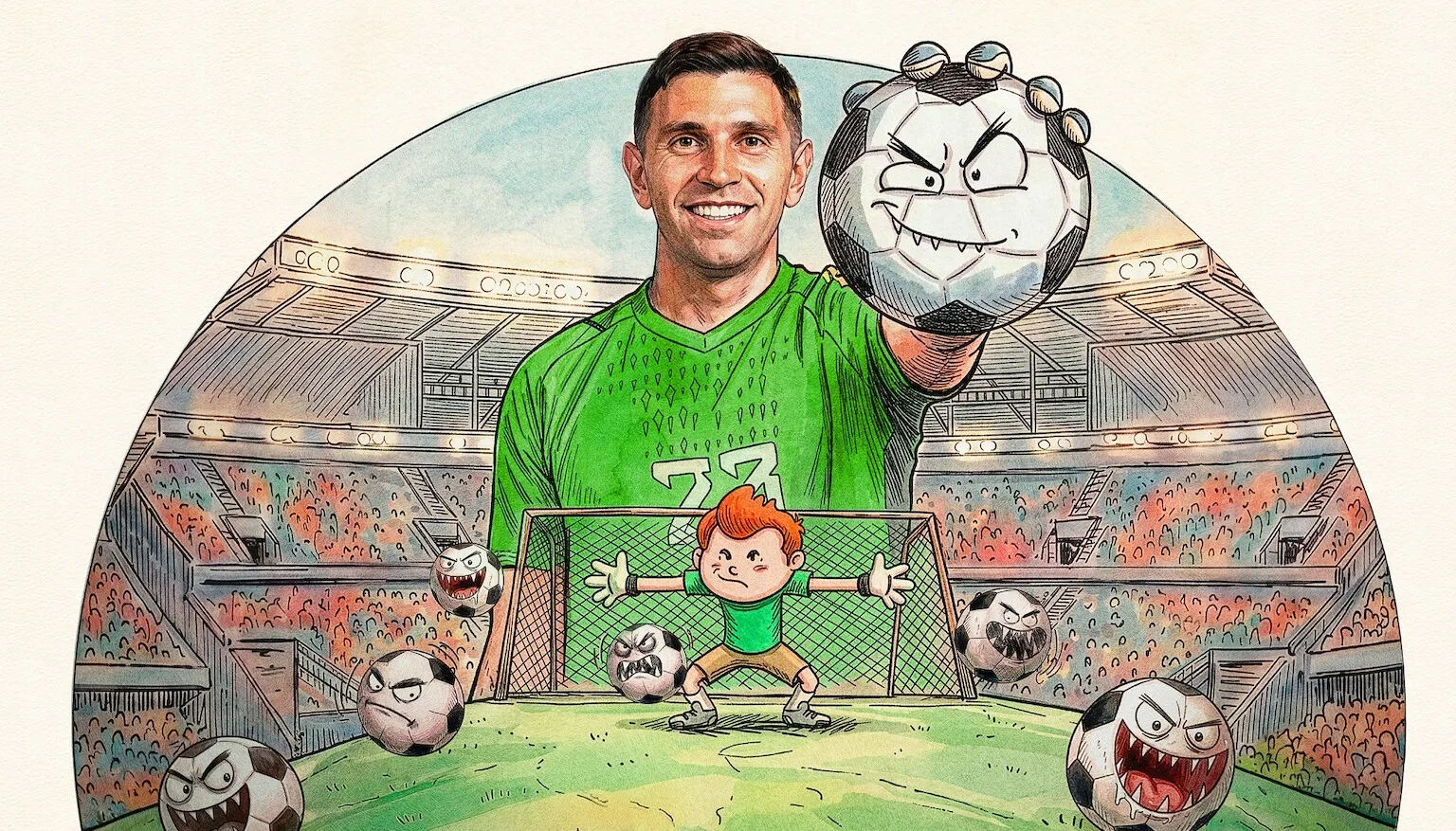
The documentary follows Martínez from Mar del Plata to global recognition, using interviews, archive footage, and animated storytelling to trace a life shaped by distance, hunger, sacrifice, and belief. Its central conceit imagines young Emi with the power to stop time, turning a goalkeeper’s split-second reading of danger into something closer to childhood fantasy. That choice gives the film its family-friendly character. The penalty save becomes a small miracle of attention, fear, instinct, and imagination.
Football fans will recognize the Copa América and World Cup milestones, yet the film’s emotional interest sits elsewhere. It wants to understand how a shy boy with gloves became a national symbol, and how that transformation was carried by a family long before the world was watching.
Animation as a Language for Pressure
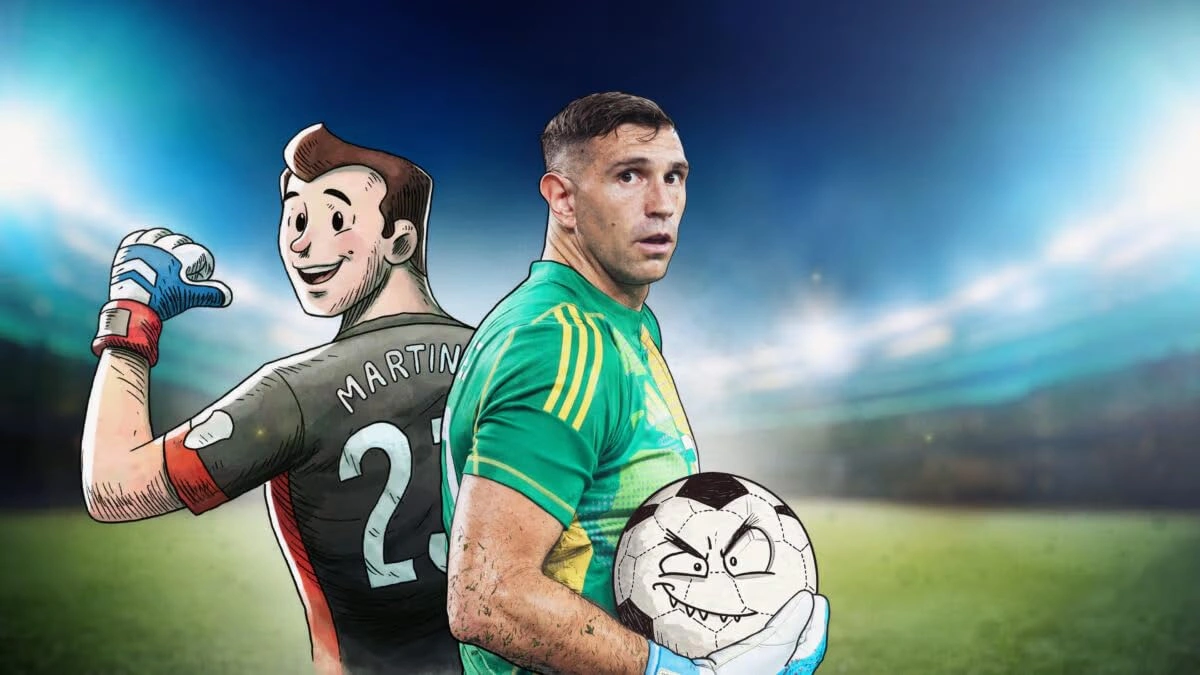
The film’s most memorable stylistic choice is its use of animation, which gives Martínez’s story a visual grammar that standard sports footage could not provide on its own. The illustrations are gentle, playful, and openly aimed at younger viewers, yet they never feel disposable. They create a space where childhood memory and sporting instinct can meet without needing heavy explanation.
The idea that Emi can stop time works as a clear metaphor for goalkeeping. A penalty kick is a violent little drama, built around a fraction of a second. The kicker moves, the goalkeeper reads, and the crowd only sees the result. Animation lets the film linger inside that hidden instant. It turns anticipation into image, pressure into rhythm, and mental calculation into a form children can grasp.
This is where the documentary finds a useful link between Argentine sporting myth and global screen language. Like many sports stories from Argentina, it treats football as family history, neighborhood memory, and national feeling. The animated football that follows Emi gives the film a folk-tale quality, while the archive footage grounds it in the shared language of modern sports media.
The film avoids deep tactical explanation. It does not study angles, positioning, or penalty data with much rigor. That may frustrate viewers seeking a technical portrait, yet it also keeps the documentary open to families and younger audiences. Its visual method values emotional clarity over analysis, and that choice gives the film much of its charm.
The Family Story Behind the Sporting Persona
The documentary is strongest when it leaves the stadium noise behind and listens to the people closest to Martínez. Interviews with his parents, brother, wife, friends, and Emi himself shape the film into a story about the cost of ambition. Leaving home young, moving through unfamiliar clubs, waiting for a chance, and carrying the emotional weight of a family’s hopes become the film’s real subject.
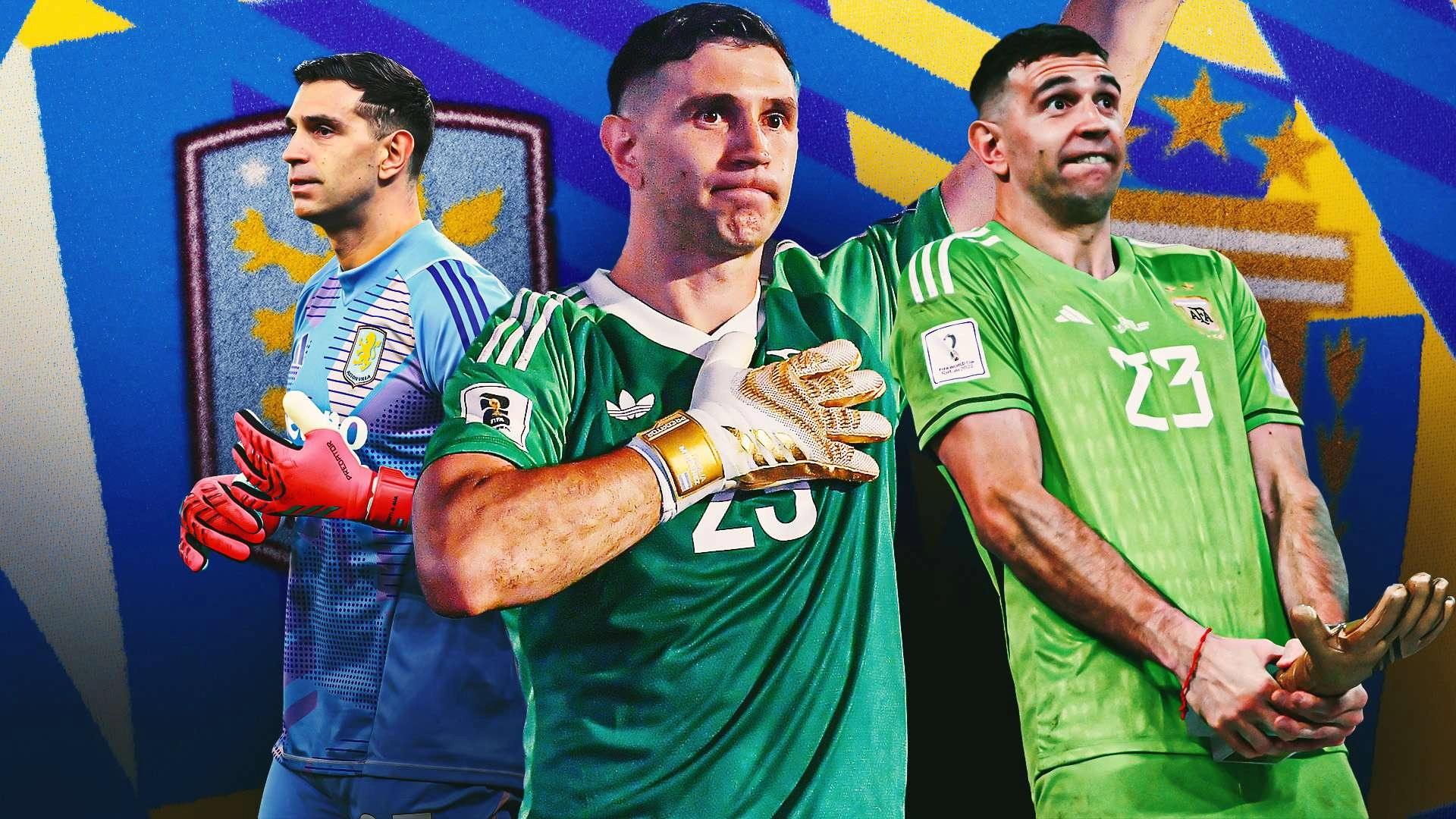
Martínez’s father provides some of the most affecting material. His memories bring a directness that cuts through the polish of the production. The pride, pain, and tenderness in those moments help the film explain why football in Argentina can feel so personal. Success is rarely framed as individual triumph alone. It belongs to parents, siblings, streets, local clubs, and everyone who remembers the years before the breakthrough.
That cultural texture gives the film wider appeal. Viewers outside Argentina may not share the same national memory of Copa América 2021 or Qatar 2022, yet they can understand a parent watching a child fight for recognition. The documentary uses Dibu’s fame as an entry point, then turns toward a familiar migrant story: a young talent leaves home, absorbs loneliness, and tries to make a life abroad without losing the emotional map of where he came from.
The family scenes also complicate Martínez’s public image. On the pitch, he can seem loud, theatrical, and deliberately disruptive. Here, the film presents a quieter figure shaped by separation, discipline, and vulnerability. That shift gives the portrait its warmth.
A Moving Portrait With an Incomplete Football Record
The documentary’s main limitation is the shape of its career coverage. It gives generous room to Martínez’s childhood and early formation, then compresses much of his professional life into a rushed final stretch. His years in England, his struggle to become Arsenal’s first-choice goalkeeper, his loan spells, and the long wait before his rise are all present, yet often sketched rather than fully explored.
That imbalance matters because Martínez’s career is built on delay. His story is not a clean line from promise to glory. It is full of interruptions, temporary clubs, missed timing, and late recognition. A deeper look at those years could have given the film a stronger dramatic spine. The documentary knows that he suffered for his place, but it rarely stays long enough with the professional details to let that struggle breathe.
The limited attention given to Aston Villa is the most noticeable gap. Villa is central to the modern Martínez story, the club where trust, responsibility, and elite status finally came together. For many football fans, that chapter is the bridge between gifted backup and world-class goalkeeper. The film’s light treatment of it makes the career portrait feel incomplete.
The pacing reflects the same issue. Childhood and family material unfold with patience, supported by warm animation and intimate testimony. The later milestones, including major international victories, arrive quickly. A short miniseries might have served the material better, with separate space for Mar del Plata, the difficult English years, and the Argentina peak.
Still, Emi Martínez: The Kid Who Stops Time succeeds on its chosen terms. It is an emotional, accessible, visually tender documentary about belief, family, and the childhood roots of sporting greatness. As a full account of Martínez’s career, it leaves too much outside the frame. As a family portrait built around one of football’s most recognizable goalkeepers, it has real feeling.
Emi Martínez: The Kid Who Stops Time premiered on Netflix on May 28, 2026. The Argentine sports documentary follows Emiliano “Dibu” Martínez from his childhood in Mar del Plata to his rise as one of Argentina’s most celebrated football figures. Directed by Gustavo Cova and written from material connected to Hernán Casciari’s story, the film combines animation, archive footage, and interviews with Martínez’s family, friends, and teammates. As of May 30, 2026, the movie is available to watch on Netflix.
Where to Watch Emi Martínez: The Kid Who Stops Time (2026) Online


Full Credits
- Title: Emi Martínez: The Kid Who Stops Time
- Distributor: Netflix
- Release date: May 28, 2026
- Rating: TV-PG
- Running time: 77 minutes
- Director: Gustavo Cova
- Writers: Ariel Fernandez, Gustavo Cova, Andrés Emilio, Hernán Casciari, Christian Basilis
- Producers and Executive Producers: Agustín Pichot, Juan Makintach, Sergio Ferraro, Alejandro Greco
- Cast: Emiliano “Dibu” Martínez, Lionel Scaloni, Lionel Messi, Agustín Aristarán, Susana Romero, Fernando Miró, Benjamín Otero, Lolo Muñoz
- Director of Photography (Cinematographer): Fernando Lorenzale, Javier Di Catarina
- Composer: Pablo Sala
The Review
Emi Martínez: The Kid Who Stops Time
Emi Martínez: The Kid Who Stops Time is a tender, family-friendly documentary that finds its strongest material in childhood memories, family testimony, and playful animation. Its time-stopping conceit gives the film a charming way to express the inner pressure of goalkeeping, while the emotional interviews reveal a softer side of Dibu Martínez. The film loses strength when it rushes through his club career and gives Aston Villa too little attention, yet it remains a warm, accessible portrait of sacrifice, belief, and sporting identity.
PROS
- Warm, accessible tone for families and younger viewers
- Charming animation that gives the film a clear identity
- Emotional family interviews, especially with Martínez’s father
- Strong focus on childhood, sacrifice, and personal growth
- Effective use of football highlights without letting them dominate the film
CONS
- Career coverage feels too compressed
- Aston Villa receives surprisingly little attention
- Lacks deeper analysis of Martínez’s goalkeeping evolution
- Final act moves too quickly through major achievements
- Viewers wanting a detailed football documentary may feel underserved