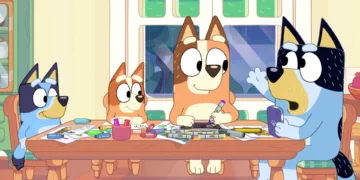
























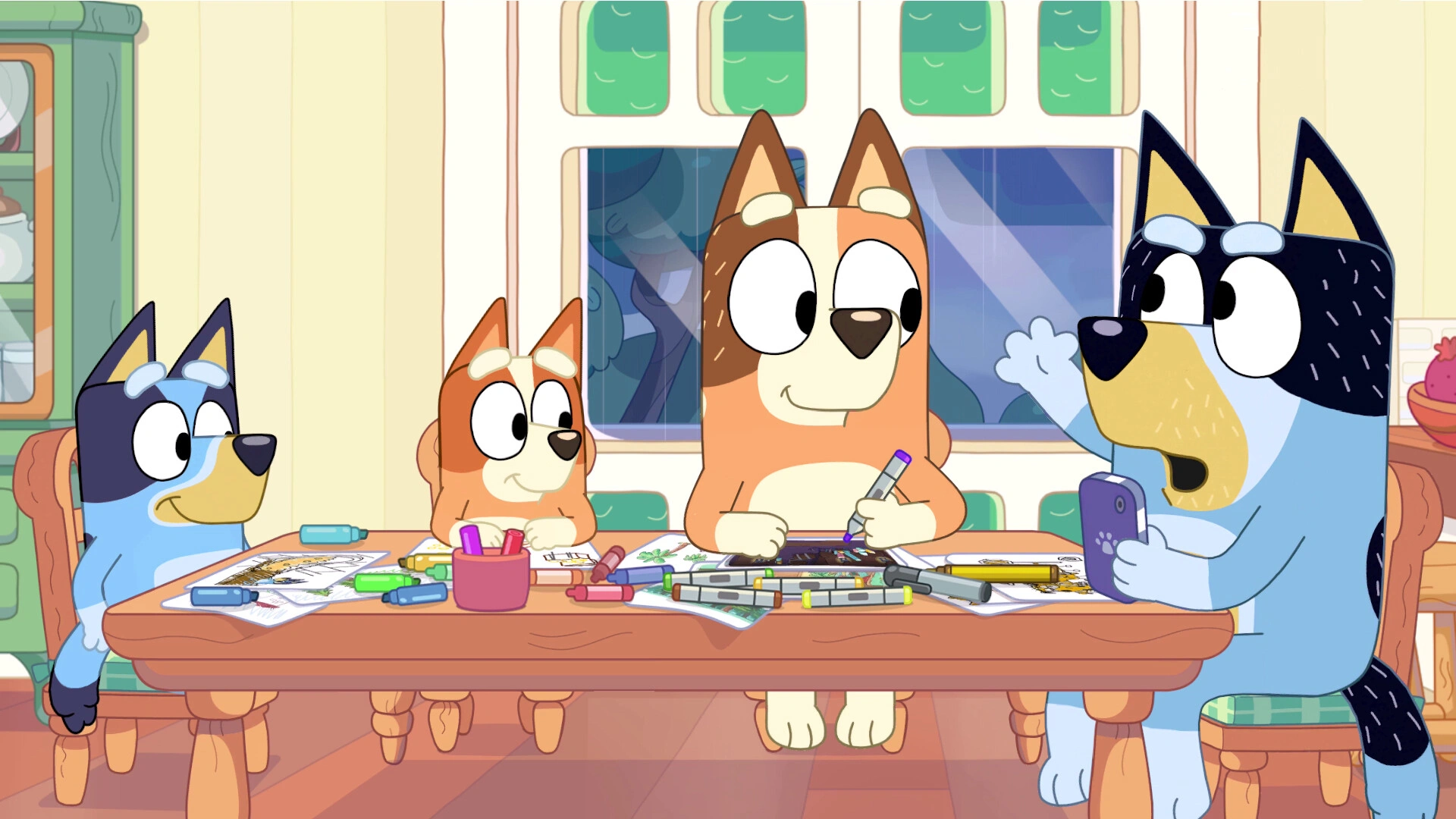

Bluey’s Quest for the Gold Pen understands its audience from the opening minutes. This is a family-friendly adventure from Halfbrick that turns a simple bit of Heeler household play into a full fantasy quest. Bluey and Bingo begin at the kitchen table, drawing together, before Bandit steals the Gold Pen and casts himself as the story’s cheeky villain. Chilli takes on the role of World Creator, drawing the places Bluey and Bingo must cross to get the pen back.
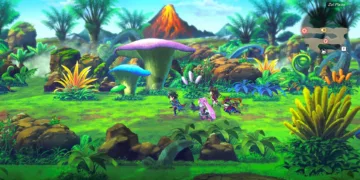
That setup gives the game a smart excuse to move away from ordinary Bluey locations. Rather than asking players to run around familiar rooms and streets, it places them inside imagined crayon worlds filled with forests, snowy paths, deserts, water areas, and stranger spaces. Bingo joins the adventure as Bingoose, a flying helper who stays near Bluey during exploration.
The result feels closer to an interactive Bluey play session than a traditional licensed platformer. It is gentle, bright, and easy to understand, with simple controls and puzzles aimed at younger players. Compared with many children’s games that rely on thin activities and brand recognition, this one has a clearer identity. It knows that a Bluey game should feel like make-believe first, then a collectathon second.
Family Play, Hand-Drawn Charm, and Familiar Mischief
The story works because it follows the rhythm of the show’s best family games. Bandit creates the conflict, Chilli shapes the rules, and the children accept the fantasy with total commitment. The Gold Pen itself is a small object, yet in Bluey logic, that is enough. A household joke becomes a quest with guardians, creatures, gates, and new lands.
The game keeps that narrative light. It does not bury young players under lore or long explanations. Each new area is framed through animated scenes where the Heeler family decides what the next drawn world will look like. That structure gives the adventure a pleasant episode-like pace. It moves quickly from setup to action, which suits a game made for children who want to start playing rather than sit through heavy story scenes.
The hand-drawn art style is one of the game’s strongest choices. Bluey, Bingo, and the family appear in a looser sketchbook form, with thin limbs, imperfect outlines, and colors that feel playfully uneven. It gives the characters a childlike energy without losing their recognizable personalities. The environments are cleaner and easier to read than the characters, which helps with navigation. Important objects stand out, paths remain clear, and the game rarely feels visually confusing.
That clarity matters. Younger players need to understand what they can touch, collect, activate, or follow. Bluey’s Quest for the Gold Pen handles that with bright shapes, readable layouts, and a cheerful tone that rarely leans into danger. Its humor comes from oddball creatures, silly gatekeepers, and the Heelers taking a pretend problem very seriously.
The voice work also helps maintain the Bluey feel. Spoken story moments give the game warmth, and the cast’s presence makes the adventure feel connected to the series rather than a loose imitation. The stakes stay low, and some older players may want sharper story beats, yet the softer approach fits the game’s pretend-play frame.
Collecting, Wand Tricks, and Gentle Puzzle Design
At its mechanical base, Bluey’s Quest for the Gold Pen is a light collectathon with platforming puzzles. Each world asks Bluey to gather a main progress item, often goose food, then use it to help Bingoose and open the way forward. Around that main task, the game scatters smaller trinkets, beads, insects, lost creatures, workers, and other side objectives. Some of these can be traded or turned in for the items needed to progress.
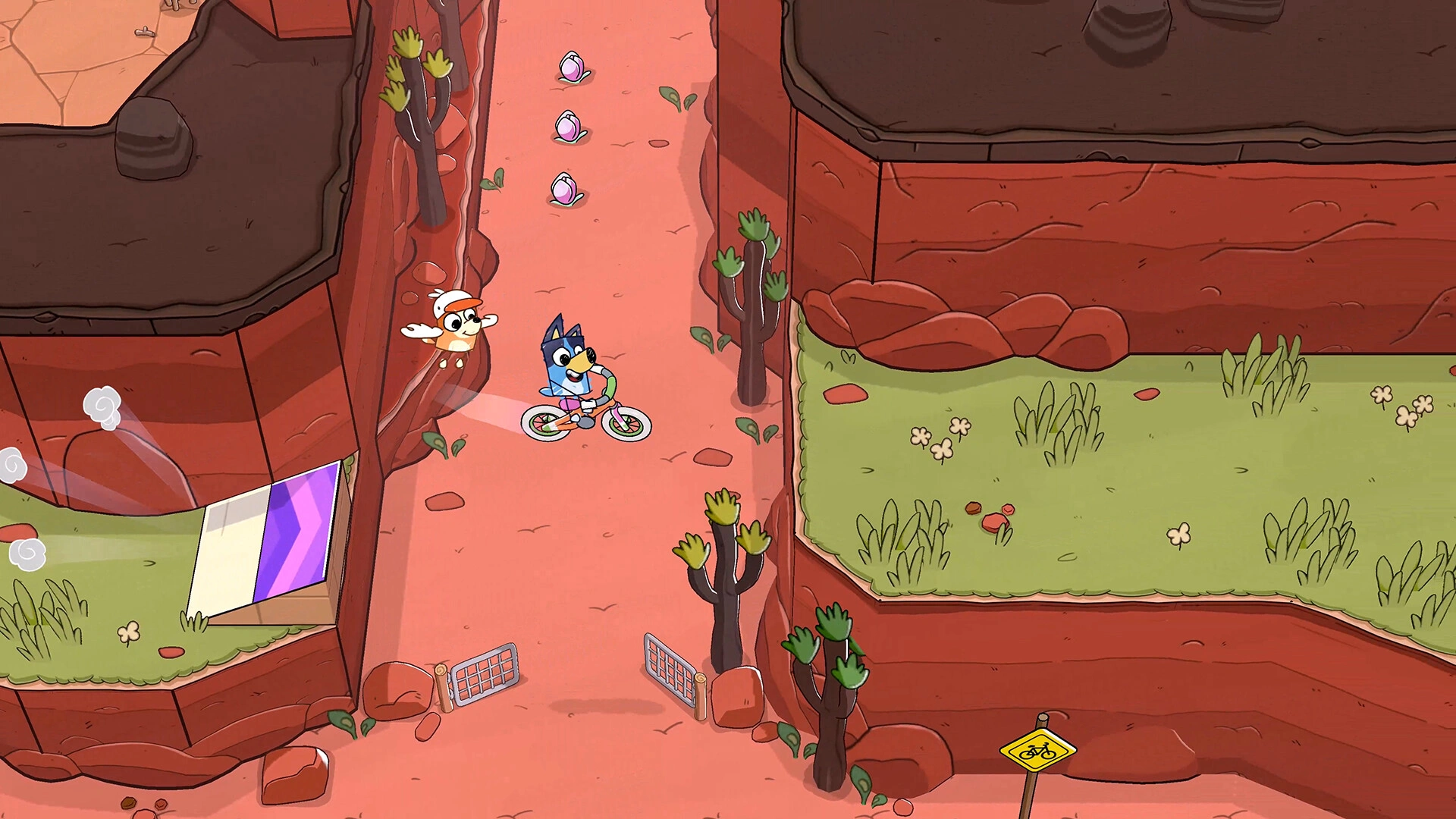
That structure is simple, yet it serves the intended audience well. The game gives players extra items beyond the required amount, so a child does not need to clear every challenge to continue. This is a smart design choice. It lowers frustration without removing the pleasure of discovery. A young player can wander, grab what they see, solve a few puzzles, and still make steady progress. A completionist can stay behind and clean up each map.
Bluey’s magic wand gives the game most of its puzzle language. It can activate platforms, break fragile rocks, trigger objects, and interact with the environment in ways that are easy to grasp. Some areas adjust the moveset through context-based actions. On ice, Bluey can perform twirling jumps. In other spaces, she can glide across gaps, launch upward with rockets, ride minecarts, or use hookshot-like movement to cross hazards.
The best puzzles ask children to observe rather than react blindly. One task might involve counting statues that face specific directions. Another uses colored dialogue clues to guide a rock-paper-scissors choice. Timed platforms ask players to aim the wand at crystals or eggs before crossing. Crumbling platforms and star-collecting sequences add mild pressure, and the minecart moments shift the camera into a side-view setup that gives the familiar loop a little spark.
There are clear echoes of other child-friendly platformers here, especially the relaxed collecting of games like Paw Patrol World or the gentle exploration found in Kirby’s friendlier outings. The hand-drawn fantasy angle gives it a closer link to games built around storybook spaces, though the puzzle depth stays modest. It never reaches the layered invention of a Mario platformer or the toy-box flexibility of Sackboy: A Big Adventure, yet that is not the target. This is built for children who are still learning how to read spaces, follow clues, and connect actions to outcomes.
Bingoose is useful within that framework. She cannot be controlled by another player, which is a shame, yet her guidance is helpful. She flies toward fast-travel signs, hidden objects, and points of interest, then honks to draw attention. It is a soft hint system rather than a loud tutorial voice. That makes exploration smoother without making the player feel dragged through the map.
The worlds are also larger than expected. Fast-travel signs make sense once the maps open up, and the extra space gives children room to roam. The pleasure here often comes from wandering, digging up trinkets, noticing a clue, or chasing a small goal across the landscape.
Repetition, Reading Skills, and the Missing Co-op Opportunity
The main weakness is repetition. Most worlds follow the same basic chain: collect small items, trade them or use them to gain goose food, solve a set of light puzzles, help a few side characters, feed Bingoose, then unlock the next gate. The scenery changes, and the game adds new movement gimmicks, yet the underlying checklist remains steady.
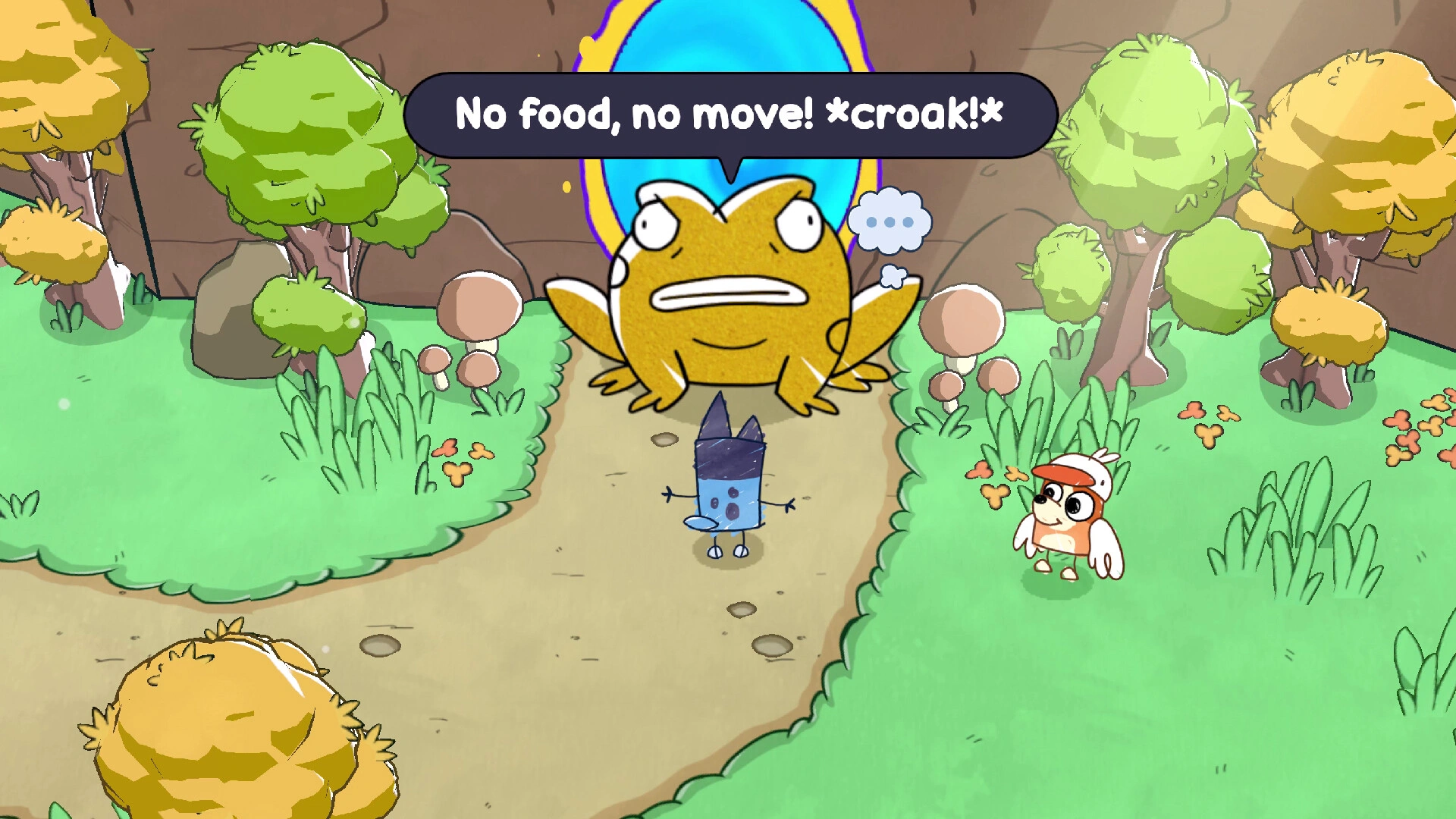
For adults, that loop can start to feel thin. Each new map may bring a fresh visual theme, then quickly ask for the same habits again. Pick up beads. Find food. Help a creature. Search for insects or workers. Move to the next gate. A few puzzle ideas stand out, but many tasks repeat with new dressing.
For children, that same consistency can be a strength. Bluey’s Quest for the Gold Pen gives young players goals they can understand, repeat, and master. The pattern teaches them how the game works, then lets each new area add small variations. That creates confidence, especially for players with limited experience. The forgiving item requirements also mean they can miss a few puzzles and still keep moving.
The game also uses reading in a thoughtful way. Some dialogue includes clues, and colored words help young players notice key information. That gives the adventure a light educational edge. Children practice reading, following instructions, and paying attention to details. Parents or older siblings may still need to help with clue-based tasks, which fits the family nature of the game.
The biggest missed chance is the lack of proper two-player co-op. Bluey and Bingo travel together for the entire adventure, and Bingoose already has a visible role in the world. Letting a second player control Bingo would have made the game a stronger shared experience for siblings or for a parent and child. For a franchise so tied to family play, that absence feels strange.
Bluey’s Quest for the Gold Pen remains a warm, accessible, and thoughtfully made adventure for young Bluey fans. It lacks the variety older players may expect from a full collectathon, yet its charm, readable design, and gentle puzzles make it a strong fit for children learning how games work.
The Review
Bluey's Quest for the Gold Pen
Bluey’s Quest for the Gold Pen is a charming, gentle adventure that understands young players better than most licensed kids’ games. Its hand-drawn worlds, simple puzzles, warm humor, and forgiving collectathon design make it an easy recommendation for Bluey fans and families. The repetition is noticeable, and the lack of two-player co-op feels like a missed chance, yet the game’s cheerful personality and thoughtful accessibility keep it enjoyable.
PROS
- Lovely hand-drawn visual style
- Faithful Bluey tone and family-play spirit
- Simple, accessible controls for children
- Forgiving collectathon structure
- Helpful Bingoose guidance system
- Light puzzles that encourage reading and observation
CONS
- Repetitive world structure
- No proper two-player co-op
- Limited depth for older players
- Some abilities feel underused
- Story stakes remain very light