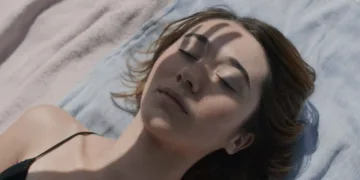
















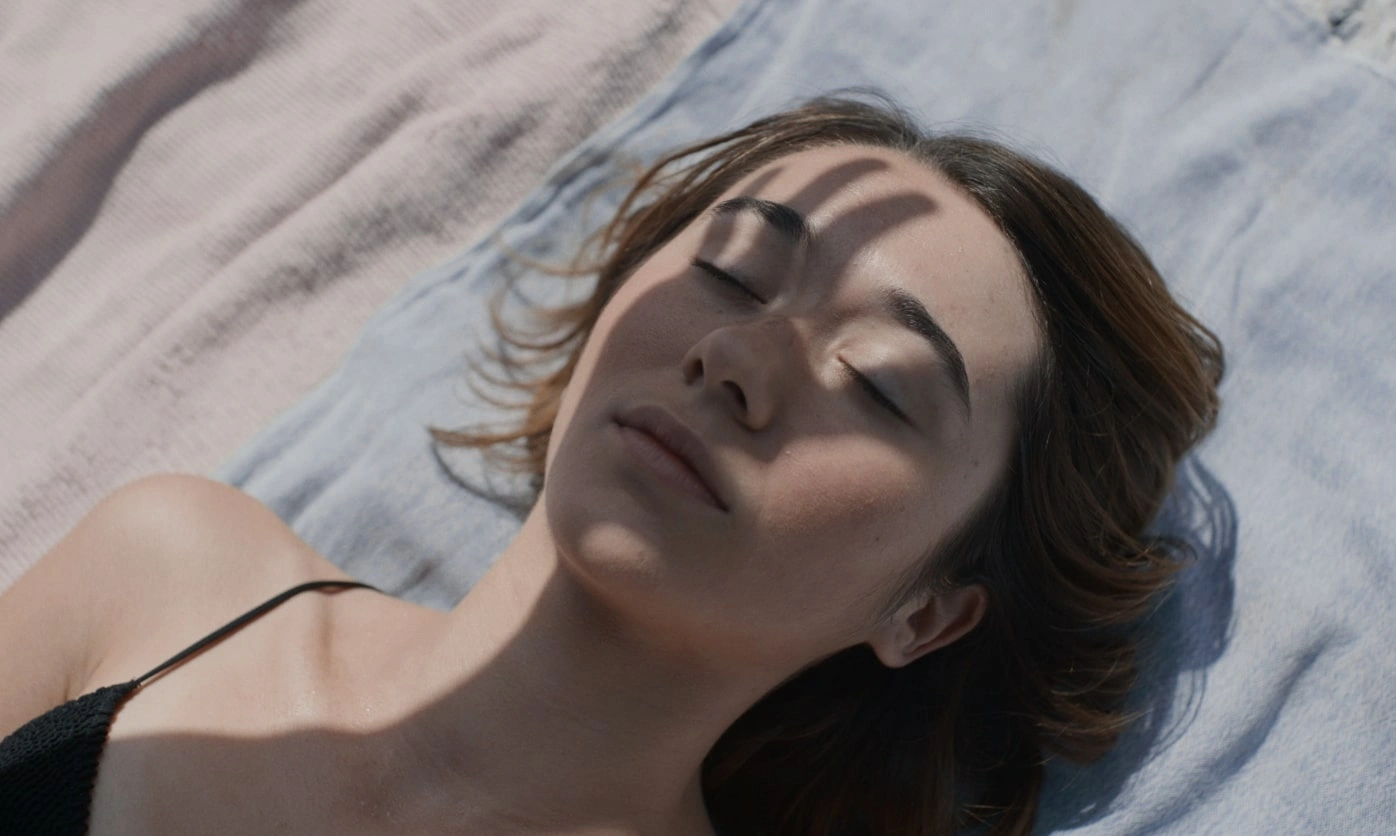

Lucía Aleñar Iglesias’ Forastera begins in the deceptive calm of a Mallorca summer, where sea air, family routine, and adolescent boredom seem to promise a modest coming-of-age drama. The promise is a trap, politely set. Cata, played by Zoe Stein, arrives as a sharp teenager with a gift for invention. She lies lightly at first, almost playfully, claiming a dolphin swam beside her kayak. The detail matters because the film quickly turns imagination into a moral and metaphysical hazard.
Cata is spending the season with her grandparents, Catalina and Tomeu, in a house by the water. After Catalina dies in a sudden accident, the home’s brightness starts to curdle. Grief does not enter like a storm. It spreads through rooms, clothing, voices, and habits. Cata begins wearing her grandmother’s dresses, copying her gestures, and slipping into her place beside Tomeu. The title, meaning “stranger” or “foreigner,” fits like a warning label. Someone familiar has become unfamiliar. Or perhaps something unfamiliar has found a body.
Grief, Identity, and the Ethics of Becoming
The film’s narrative structure is built around a slow substitution. Catalina’s death does not simply leave a gap in the family. It creates a role, and Cata, for reasons both tender and alarming, steps into it. Tomeu retreats into sorrow, Pepa tries to impose order, Eva watches her sister drift away from ordinary teenage cruelty into something harder to name. Cata wants time to stop. Since time refuses, with its usual lack of manners, she attempts a smaller miracle: she becomes the dead woman everyone misses.
Her actions are troubling because they appear chosen. They are understandable because choice itself becomes slippery. Is Cata performing for her grandfather, soothing him with a cruel kindness? Is she inventing herself through grief, using Catalina as an adult shape to grow into?
Or is she being inhabited by memory in a way that crosses into the supernatural? Forastera keeps these possibilities alive through repetition and tiny distortions. A phone call becomes impersonation. A dress becomes evidence. A gesture becomes possession.
The film’s philosophical unease lies in the question of agency. Cata may be acting freely, yet her freedom seems guided by family myth, inherited grief, and the force of a name shared across generations. Becoming an adult here means encountering the ethical gray zone between care and manipulation. She helps Tomeu. She wounds Eva. She resists Pepa. She preserves Catalina and erases herself. Adolescence has rarely looked so sunny and so legally inadvisable.
Light as Haunting, Space as Trap
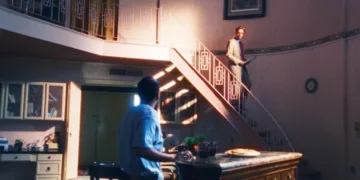
Aleñar Iglesias directs with the patience of a filmmaker who trusts the viewer to notice a room before fearing it. Forastera creates tension through composition, silence, and the strange authority of sunlight. Mallorca’s coastal beauty is never postcard-simple. The seaside house, with its airy rooms, tiled surfaces, terraces, and glass railings, first appears open and serene. Gradually, that openness starts to feel exposed. There is nowhere for grief to hide, so it stands in plain sight.
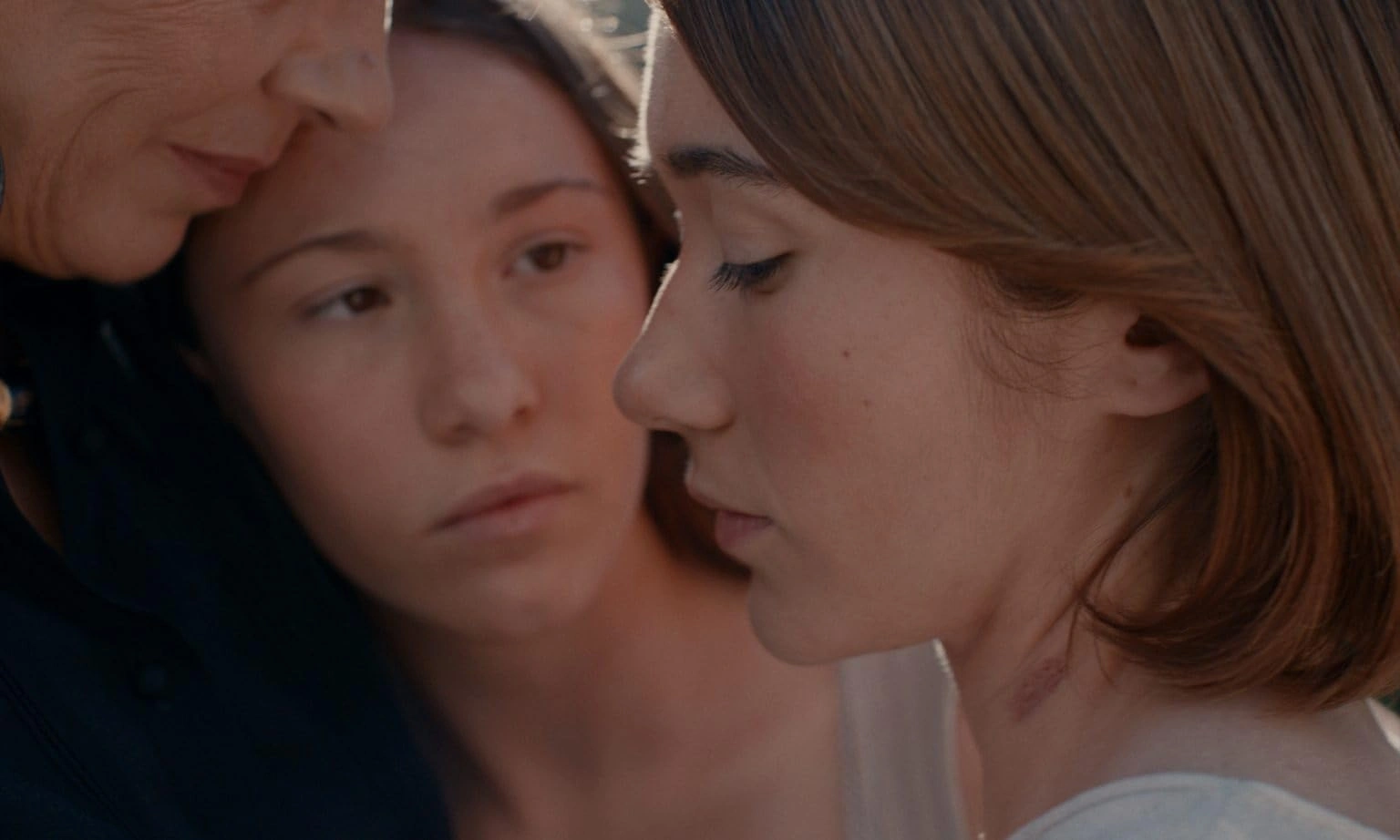
Agnès Piqué’s cinematography gives the film its most eloquent language. Light washes across faces and interiors with an almost expressionistic force, replacing classic noir’s hard chiaroscuro with a Mediterranean variation: glare instead of shadow, overexposure instead of darkness. The result is a sunlit neo-noir of the psyche. Moral uncertainty does not lurk in alleys. It sits at breakfast, wears a dead woman’s dress, and looks out at the sea.
Shot composition often places Cata between identities. Doorways, mirrors, railings, and domestic thresholds frame her as someone crossing from girlhood into a borrowed adulthood. The fire scene crystallizes this visual logic. Cata moves behind the flames while a boy watches her, his view broken by heat and movement. It suggests rebirth, danger, seduction, and perhaps a practical reminder that teenage flirtation rarely improves under symbolic combustion.
The score’s tense melancholy deepens the uncertainty. It nudges the viewer toward dread, then leaves enough room for doubt. Ants on the ceiling and ghostly reflections made of light imply supernatural visitation, yet the film never insists. Its restraint is its sharpest instrument.
Bodies, Voices, and Family Damage
Zoe Stein’s performance holds the film’s ambiguity in place with remarkable control. Her Cata does not transform through grand theatrical gestures. The shift is physical, precise, and incremental. She straightens her posture. She changes the angle of her head. Her voice settles differently in her throat. Her smiles begin to carry private knowledge. When she addresses Tomeu with a familiarity that feels too old for her face, the effect is quietly chilling.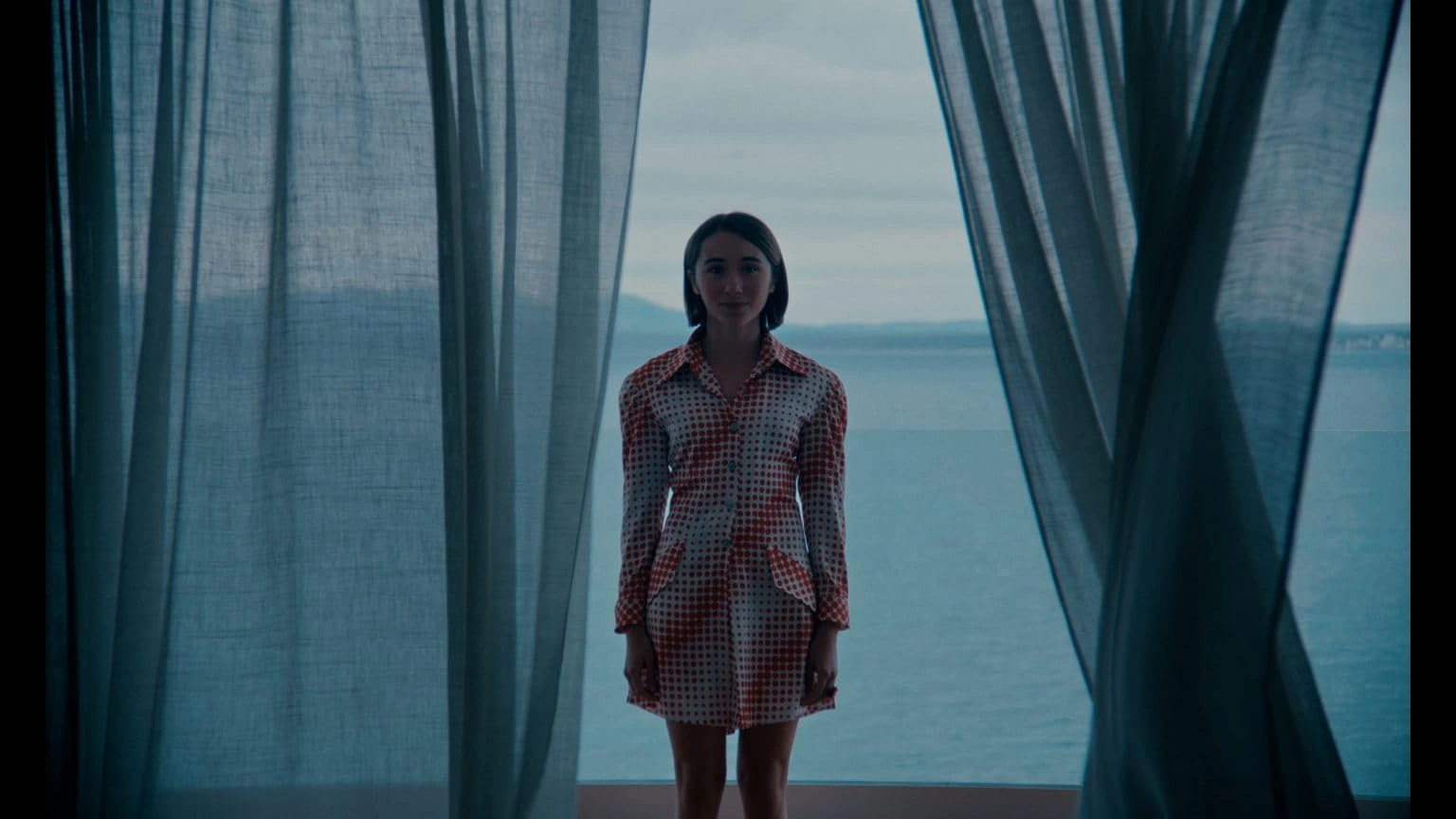 Stein understands that imitation can be an act of love, a weapon, and a symptom. Often all three arrive in the same glance. She keeps Cata recognizably teenage, flirtatious, wounded, evasive, while allowing another presence to flicker through her behavior. The performance works because it never clarifies too much. Cata may be lying. She may be grieving. She may be possessed by the role she thought she controlled.
Lluís Homar gives Tomeu a sorrow that is tender, stubborn, and faintly unnerving. His comfort in Cata’s imitation of Catalina creates the film’s most delicate discomfort. The relationship avoids cheap provocation, yet it never becomes safe. Tomeu knows, or half-knows, that the girl before him is not his wife. Need does the rest. Grief can be a poor moral adviser, and here it gives terrible counsel in a very soft voice.
Núria Prims brings necessary friction as Pepa, whose alarm has the shape of maternal authority and buried guilt. Martina Garcia’s Eva gives the family drama a sharper edge, since her resentment exposes the damage Cata’s transformation causes beyond Tomeu’s room. The ensemble keeps the supernatural thread grounded in domestic pain. A ghost story works best when the living are already haunted.
Forastera is a 2025 Spanish, Swedish, and Italian drama written and directed by Lucía Aleñar Iglesias. The film premiered in the Discovery section of the Toronto International Film Festival on September 8, 2025, before opening in limited U.S. theaters through Grasshopper Film on May 29, 2026. The story follows teenager Cata during a summer stay at her grandparents’ house in Mallorca, where the sudden death of her grandmother pushes her into a strange and unsettling imitation of the woman she has lost. As of May 30, 2026, Forastera is playing in select U.S. theaters, with JustWatch also listing it as available to stream for free on Vimeo in the United States.
Where to Watch Forastera (2025) Online

Full Credits
- Title: Forastera
- Distributor: Grasshopper Film, Atalante Cinema, Folkets Bio, Starcat
- Release date: September 8, 2025 at the Toronto International Film Festival, May 29, 2026 in limited U.S. theaters
- Running time: 97 minutes
- Director: Lucía Aleñar Iglesias
- Writers: Lucía Aleñar Iglesias
- Producers and Executive Producers: Tono Folguera, Olivier Guerpillon, Marta Reguera, Giovanni Pompili, Bàrbara Ferrer, Cesc Mulet, Ariadna Dot, Marta Cruañas
- Cast: Zoe Stein, Lluís Homar, Núria Prims, Marta Angelat, Nonni Ardal Hammarström, Martina Garcia, Miquel Gelabert, Caterina Alorda
- Director of Photography (Cinematographer): Agnès Piqué
- Editors: Paola Freddi
- Composer: Anna von Hausswolff, Filip Leyman
The Review
Forastera
Forastera is a hushed, beautifully controlled psychological drama that turns grief into a question of identity. Lucía Aleñar Iglesias uses light, space, silence, and repetition to create a ghost story that may exist only in the mind, which makes it stronger. Zoe Stein gives a remarkable performance, full of tiny physical shifts and moral unease. The film’s pace is patient, sometimes severe, yet its emotional pull is hard to shake.
PROS
- Stunning cinematography and lighting
- Excellent lead performance from Zoe Stein
- Rich ambiguity around grief, memory, and possession
- Strong use of Mallorca’s setting
- Subtle psychological tension
CONS
- Slow pacing may test some viewers
- Ambiguity may frustrate those wanting clear answers
- The restrained style can feel emotionally distant at times