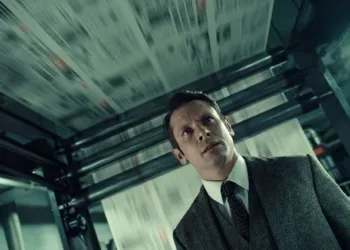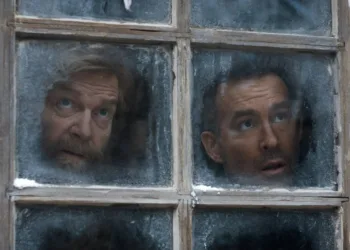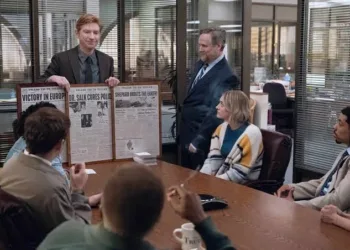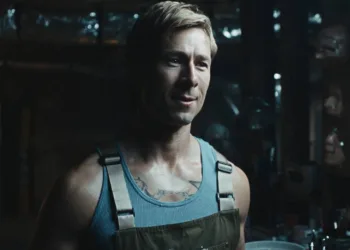

























Henry Johnson unfolds as David Mamet’s screen adaptation of his 2023 play, marking his return to feature filmmaking after an eighteen‑year absence. Mamet wears both writer’s and director’s hats, coaxing from the stage-bound material a pulse that feels almost cinematic. At the center stands Evan Jonigkeit, whose measured stillness anchors each confrontation, joined by Chris Bauer’s razor‑sharp lawyer‑interrogator, Shia LaBeouf’s magnetic prison philosopher, and Dominic Hoffman’s weary guard.
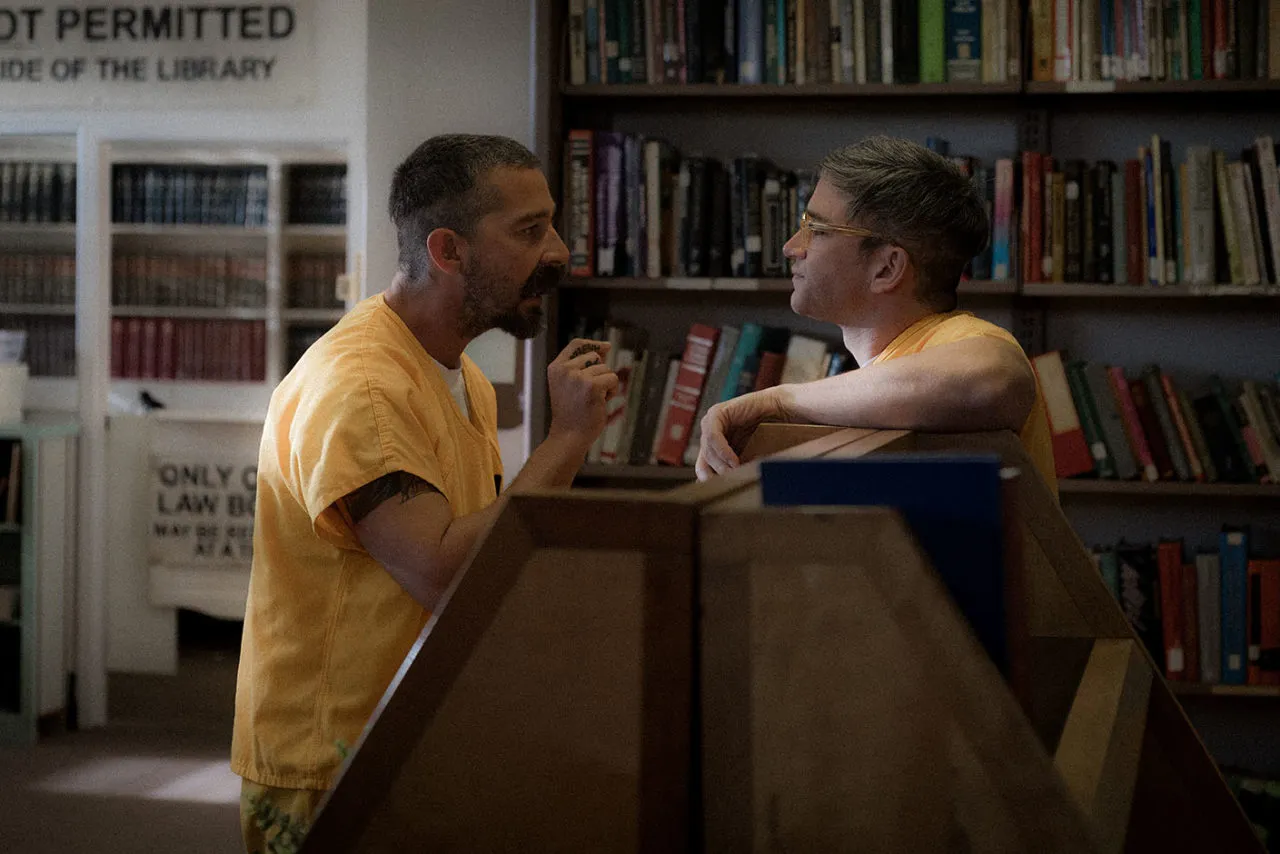
The film’s architecture is spare: four two‑character scenes set in an office, a cell and a library, stitched together by silent ellipses that swallow days or weeks. Conversation becomes currency, each line a probe deeper into Henry’s moral core. What begins as a simple workplace favor unravels into an interrogation that propels him behind bars, then into the tangled politics of confinement, and finally into a hostage‑standoff that tests the limits of trust.
Mamet resists embellishment—the missing connective tissue feels intentional, a void into which our own questions seep. The result is a drama of atmospheric intensity, available for rental and in select theaters beginning May 9, where the walls themselves seem to whisper about control, submission and the prey we choose to become.
Fractured Time and Tightening Tension
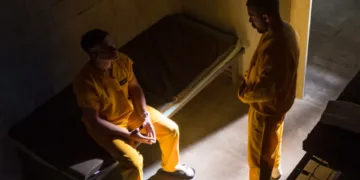
The film unfolds in four compact duets: an office interrogation, a prison introduction, a library assignment, and a hostage standoff in that same library. Each sequence bleeds into the next through silent ellipses that swallow entire days. Viewers inhabit the spaces between events, where unanswered questions echo like distant footsteps.
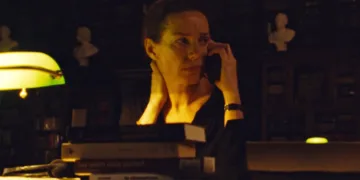
That leap from a lamp‑lit law office to the concrete chill of a cell fractures Henry’s world. It feels as though gravity itself has shifted beneath him—existence thrust into an abyss of unspoken consequence. Time becomes a void we traverse on instinct, haunted by what we’ve missed.
Dialogue serves as both compass and blade. Lines arrive in staccato bursts or long, winding monologues, each phrase carving away at certainty. A single look can carry the weight of untold hours; a pause can reverberate like thunder. Cinematic lenses drift close, capturing trembling fingers or a flicker of doubt in the eyes. In these moments, the film both embraces its theatrical roots and claims its own visual poetry.
There’s no indulgence in backstory. Flashed memories would dilute the tension; Mamet pares everything to its skeletal truth. Exposition slips through half‑spoken threats and loaded silences. The real sets—office shelves, iron bars, library stacks—anchor that stark minimalism in a tangible world. In the interplay of spoken precision and ghostly absence, the narrative’s pulse quickens, inviting us to fill the void with our own anxieties.
Masks of Influence
Henry Johnson arrives as a cipher in human form. Evan Jonigkeit inhabits that opacity, his posture slumped like Sisyphus beneath an invisible boulder. His speech splinters, each word a hesitant step in a maze of guilt. Does he bear the weight of another’s sins or revel in his own complicity? That question hovers, an existential mirror reflecting our own struggles with agency and moral accountability.
Chris Bauer’s Mr. Barnes slices through this gloom with the precision of a Nietzschean will to power. Every legal term becomes a probe, every question a scalpel cutting into Henry’s defenses. He oscillates between father‑figure and inquisitor, demonstrating how authority can mutate into subjugation. In his calm, we glimpse the abyss of judgment: is there mercy in law, or only another form of domination?
Shia LaBeouf’s Gene radiates as a storm‑born prophet of resentment. His voice snakes through the prison cell like dark electricity, promising empowerment yet dispensing a harsher creed of obedience. He taps into a corrosive ideology—an echo of toxic manifestos—where selfhood dissolves beneath charismatic coercion. His micro‑expressions flicker between invitation and threat, each pause pregnant with peril.
Dominic Hoffman’s Jerry operates like a twilight sentinel. His anecdotes of riot‑scarred yards and bygone freedoms offer Henry a fragile tether to memory. Underneath those gentle recollections, though, lies a subtle form of control: he shapes Henry’s world with stories that blend cautionary fable and veiled threat. Where Gene crashes in like thunder, Jerry settles around Henry like dusk, coaxing compliance with soft authority.
Hovering at the edges are the unseen college friend—specter of past betrayal—and the prison counselor—a silent promise of solace. Their absence resonates more loudly than any monologue, reminding us how the unseen can shape destiny. In their shadows, Henry’s fate is sealed, an echo of every human life molded by forces both spoken and secret.
Anatomy of Dominion
Power moves like a silent predator through Mamet’s world. In the boardroom, Mr. Barnes circles Henry with surgical calm; in the cellblock, Gene storms in like a force of nature. Each setting reflects a hierarchy of hunter and hunted, where submission becomes a choice laced with dread.
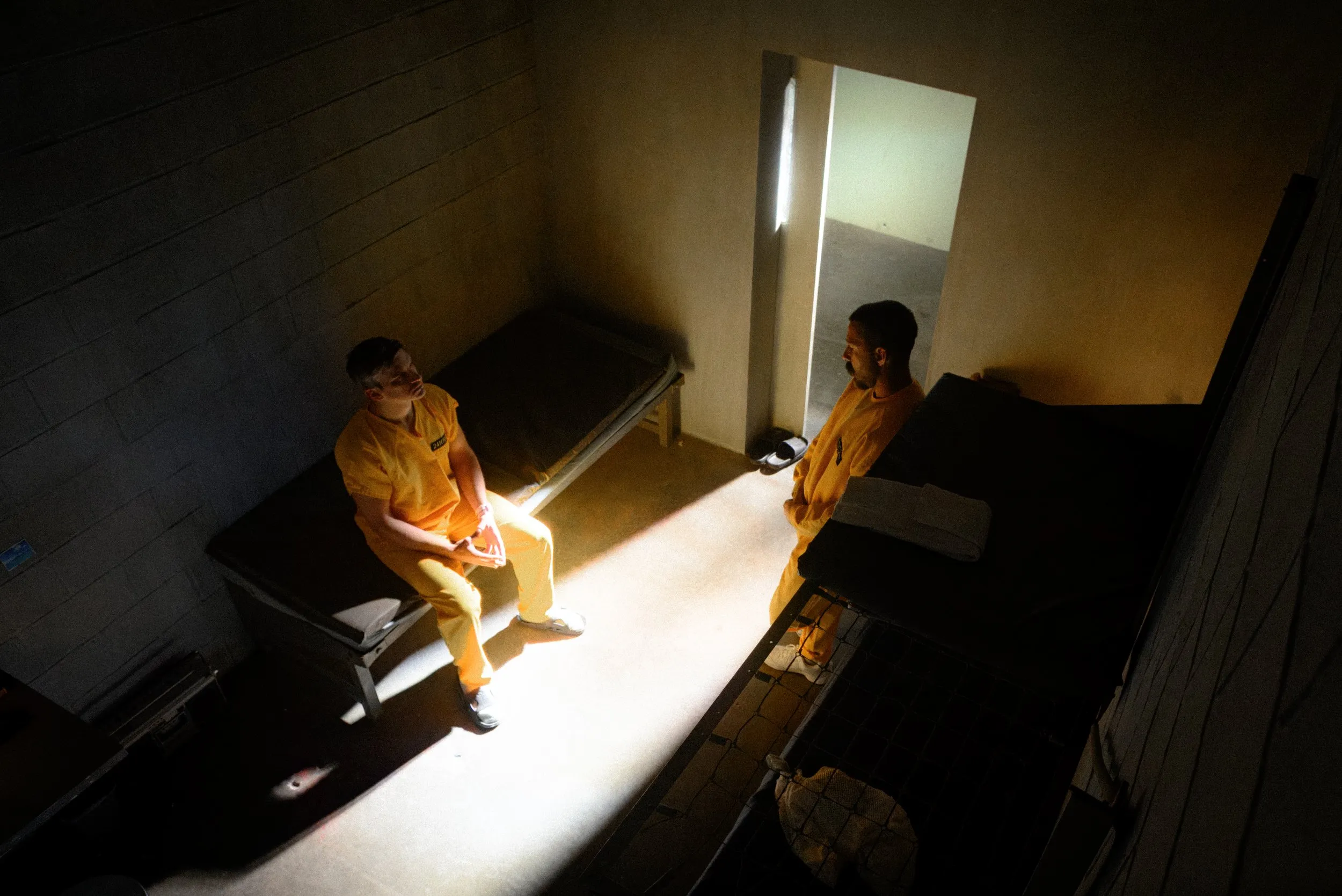
Words emerge as sharpened steel. Mamet’s dialogue cracks and whips across the screen, each phrase calibrated to unbalance. Lines double as enticements and traps. A single question can slice through pretense, revealing the raw subtext of desire and fear. Language here is less a means of understanding than a ritual of domination.
Masculinity fractures under the glare. Henry embodies the precarious weak link—his awkward deference and fluttering doubts laid bare. Opposite him, Barnes exerts an austere authority, while Gene channels a darker theatrics of “strength,” promising power in exchange for obedience. Their contrasting appeals expose the fragile architecture of self‑worth built on posturing and coercion.
Guilt hangs around Henry like a second skin. Early complicity in a friend’s monstrous act taints every interaction that follows. He shifts from unknowing pawn to conscious collaborator, and back again—an embodiment of moral vertigo. His oscillation forces us to ask if true innocence can survive in a world designed for exploitation.
Mamet refuses cinematic ornament. The play’s bare‑bones staging is preserved in real offices, cells and library aisles, where the actors’ presence becomes the spectacle. That tension between theatric ritual and lived reality unnerves: a reminder that performance and truth often wear the same mask.
Figures we never see exert profound gravity. The absent college friend casts a long shadow over Henry’s choices; the silent counselor, glimpsed at a distance, offers comfort as both promise and provocation. Their invisibility becomes its own language—one of ghosts who shape the living with unseen hands.
Even the smallest details carry weight. The translucent orange glasses worn by Henry, Barnes and Jerry hint at filtered vision—who may see clearly, and who remains blinded. Prison garb contrasts with library’s muted wood tones, marking the shift from confinement to confrontation. In these subtle strokes, Mamet paints an austere portrait of dominion writ small.
Architecture of Tension
David Mamet’s stewardship is an act of disciplined asceticism. He declines the lure of cinematic expansion, preferring to let his script breathe in confined frames. The result is an austere communion between word and image, where the stage’s bare intensity migrates intact to screen.
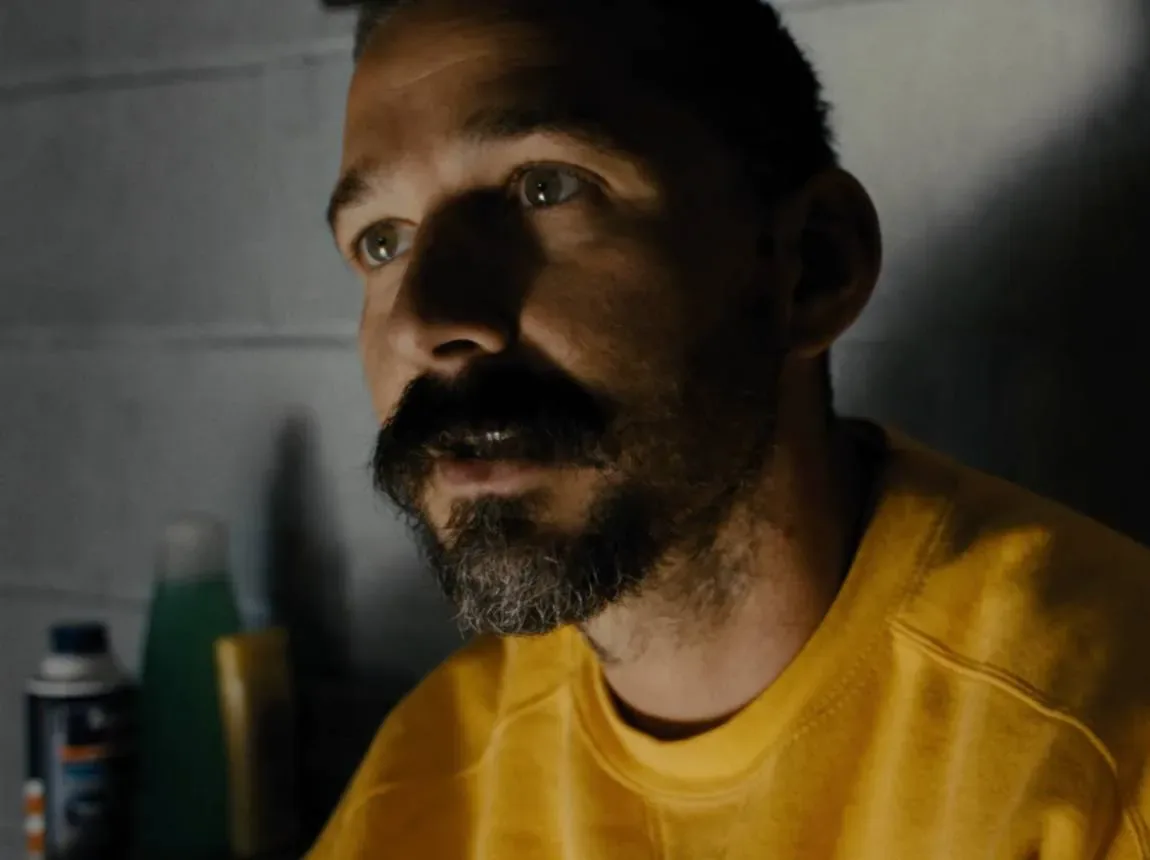
Sing Howe Yam’s lens operates as a silent witness. At times, the camera presses so close it catches the tremor of doubt in Henry’s glance; at others, it recedes, framing two figures within a void of walls. Light and shadow carve the actors into sculptural apparitions—each gesture charged with latent meaning. Close‑ups become rituals of revelation, exposing syllables as sacred incantations.
Banner Gwin’s cuts pulse with conversational heartbeat. Dialogue flows in streams of staccato exchange before snapping off in mid‑breath, leaving the viewer suspended between thought and reply. In moments of high tension, editing shards slice through the frame, jolting us into the emotional breach between speaker and listener. There is a commerce of sound and silence, a cadence that mirrors Henry’s own faltering resolve.
Jay Wadley’s music threads through that void like a slow pulse. Jittery percussion stalks the margins, a pendulum counting the seconds of looming threat. Pensive strings swell at moments when conscience tilts precariously, pressing us into Henry’s internal struggle. Sound here is more than accompaniment; it becomes a living commentary on power’s unseen currents.
Production design grounds this minimalism with quiet assurance. The office’s polished surfaces, the cell’s raw concrete, the library’s orderly shelves—all serve as silent characters in an unfolding drama. Props are sparse, yet each holds symbolic weight: a single whiskey glass, a barred window’s faint reflection, the spines of neglected volumes waiting for Henry’s trembling hand.
In their sparseness, we confront the void that lies between speech and silence, where the true fracture of self emerges. The interplay of space and stillness becomes an existential test: how much can a man endure before his own voice betrays him?
Mirror to a Fractured Land
Henry Johnson arrives at a moment in American life split between winners and losers, exploiters and the exploited. Each exchange feels like a glimpse into power’s anatomy, where dominance is both spectacle and ritual. The four confined scenes unfold like a hall of mirrors, reflecting the grit of corporate corridors and the cold calculus of prison yards.

This drama holds up a lens to our age of persuasive influencers and echo‑chamber ideologies. Words carry the weight of algorithms, coaxing loyalty with fractured truths. We watch Henry, adrift in conversations that promise belonging yet breed isolation, and recognize the same currents that swirl through our own feeds.
David Mamet’s public persona, sharpened by years of outspoken politics, seeps into the moral undercurrent without ever declaring a banner. His skeptical gaze hovers over each gesture and revelation, asking whether conviction can survive when doubt is weaponized.
At its edge, the film engages with debates on criminal justice and systemic power. Prison cells and boardrooms become twin arenas of judgment, where loyalty is measured in broken promises. What does it mean to turn against a friend, a counselor, even oneself? In these unanswered questions, Henry Johnson captures the uneasy solidarity of a nation unsure which face of authority to trust.
Final Act of Uncertainty
Henry Johnson plays out as both distilled theater and a standalone film. Mamet’s choice to resist expanding the story preserves the immediacy of live performance, while Sing Howe Yam’s watchful lens and Jay Wadley’s restless rhythms breathe cinematic life into each confined frame.
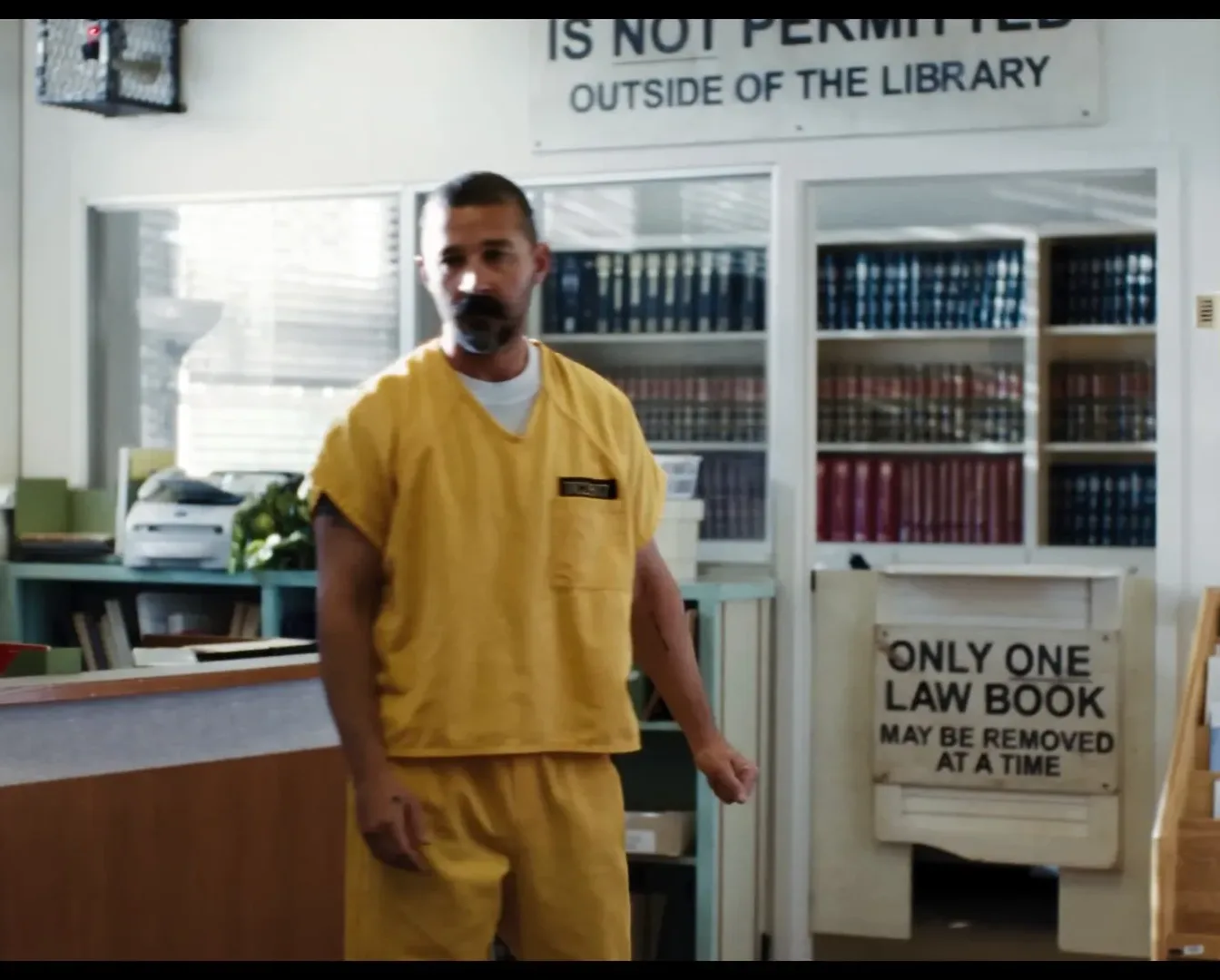
The cast delivers at every turn: Jonigkeit’s haunted stillness anchors Henry’s moral drift; Bauer’s interrogation lands with the precision of a sculpted blow; LaBeouf’s Gene exudes a dark magnetism, teaching coercion as a philosophy; Hoffman’s Jerry offers restraint that unsettles as much as thunder. Dialogue flows like lifeblood, each phrase weighted with threat and doubt. Such a monologue‑driven design may verge on repetitiveness, asking patience of its audience, yet in that economy of words it forges an existential pulse.
Within Mamet’s oeuvre, this work feels less an innovation and more a reckoning with the power of linguistic spectacle—a return to what once revolutionized dramatic form. Theater aficionados and lovers of verbal sparring will find this film in their element; those seeking visceral motion may struggle with its deliberate stillness. It is a meditation on trust and betrayal, an invitation to consider how easily the spoken word can reshape our fate. As the credits rise, the lingering image of Henry’s uncertain gaze invites reflection: when words become weapons, who can claim true agency?
Full Credits
Director: David Mamet
Writer: David Mamet
Producers: Evan Jonigkeit, Lije Sarki
Executive Producers: Peter Baxter, Marcel Bonn-Miller, Sheldon Stone
Cast: Evan Jonigkeit, Shia LaBeouf, Chris Bauer, Dominic Hoffman
Director of Photography: Sing Howe Yam
Editor: Banner Gwin
Composer: Jay Wadley
The Review
Henry Johnson
Henry Johnson brings Mamet’s stagecraft to film with raw performances and taut dialogue, forging an intimate examination of power, guilt and identity. While its pared‑down structure may test patience, the cast delivers raw intensity that sustains existential dread. In Mamet’s return to directing, the film stands as a rigorous study of manipulation and moral ambiguity, rewarding viewers attuned to linguistic precision and psychological texture.
PROS
- Potent dialogue shaped by Mamet’s precision
- Performances that brim with psychological tension
- Cinematic framing enhancing intimacy and unease
- Score and editing that underscore emotional stakes
- Minimalist design amplifying focus on character
CONS
- Limited narrative motion may test patience
- Repetitive monologues can feel dense
- Sparse sets sometimes slip into stagebound territory
- Moral ambiguity offers no clear resolution
- Pacing lulls in the central scenes