


















A film’s opening moments often function as a declaration of intent. In My Oxford Year, the declaration is a familiar one. We meet Anna De La Vega, a young woman caught in a classically modern dilemma: a secured future in finance at Goldman Sachs versus a year of intellectual indulgence studying Victorian poetry at Oxford.
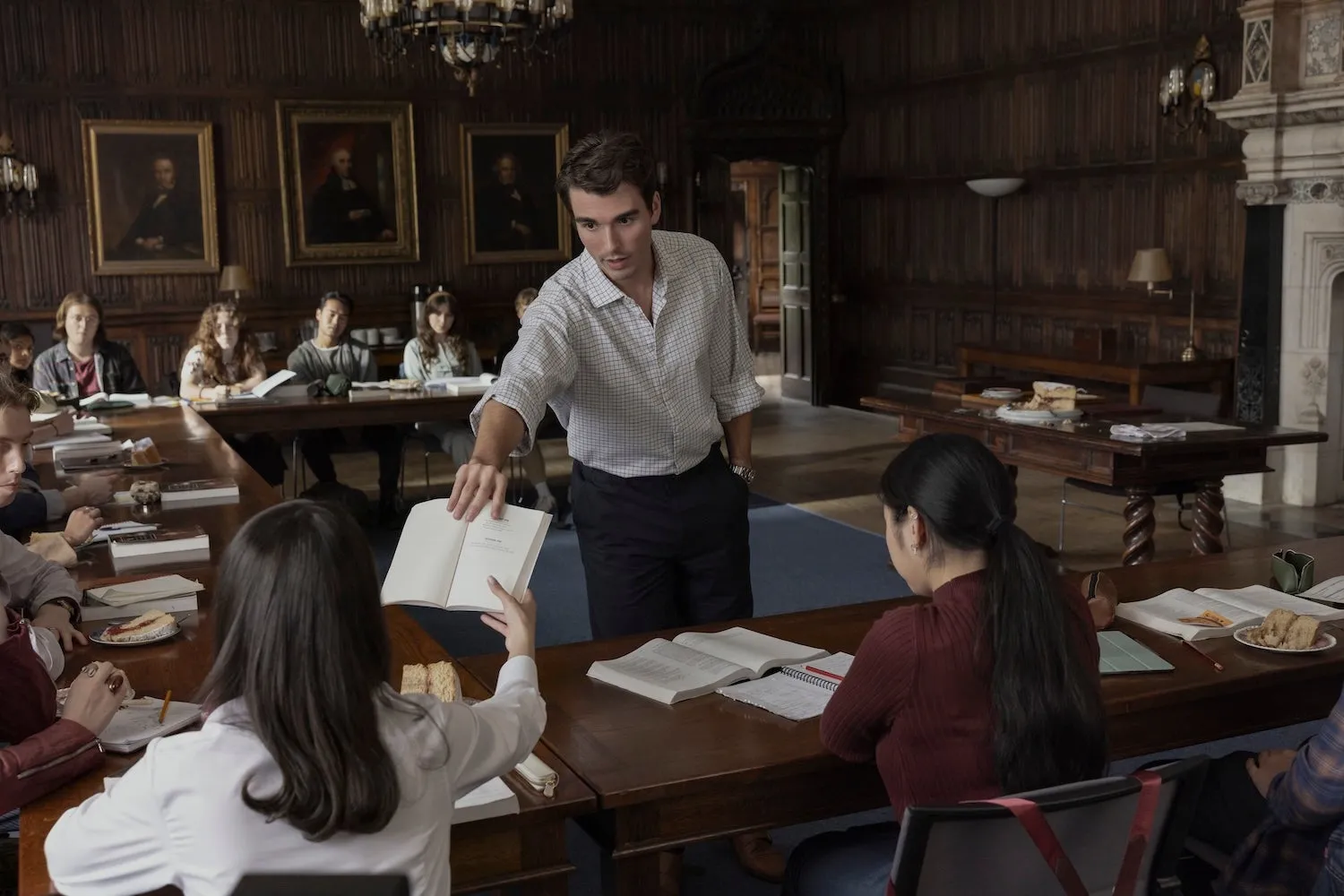
The university itself is rendered not as a place but as an ideal, a fantasy of stone spires and hushed libraries captured in soft, reverent light. It is a backdrop practically begging for a romance to disrupt its academic calm. The disruption arrives in the form of Jamie Davenport, a doctoral student whose charming arrogance is as tailored to the genre as his tweed jacket. He becomes her professor, and the film sets its coordinates for a conventional campus romance.
Yet, a shadow hangs over this bright construction. The film begins as one thing but reveals itself to be another, executing a sudden pivot from romantic comedy to somber melodrama. The question is not whether a film can occupy two territories, but whether the bridge between them is structurally sound or destined to collapse.
The Architecture of Attraction
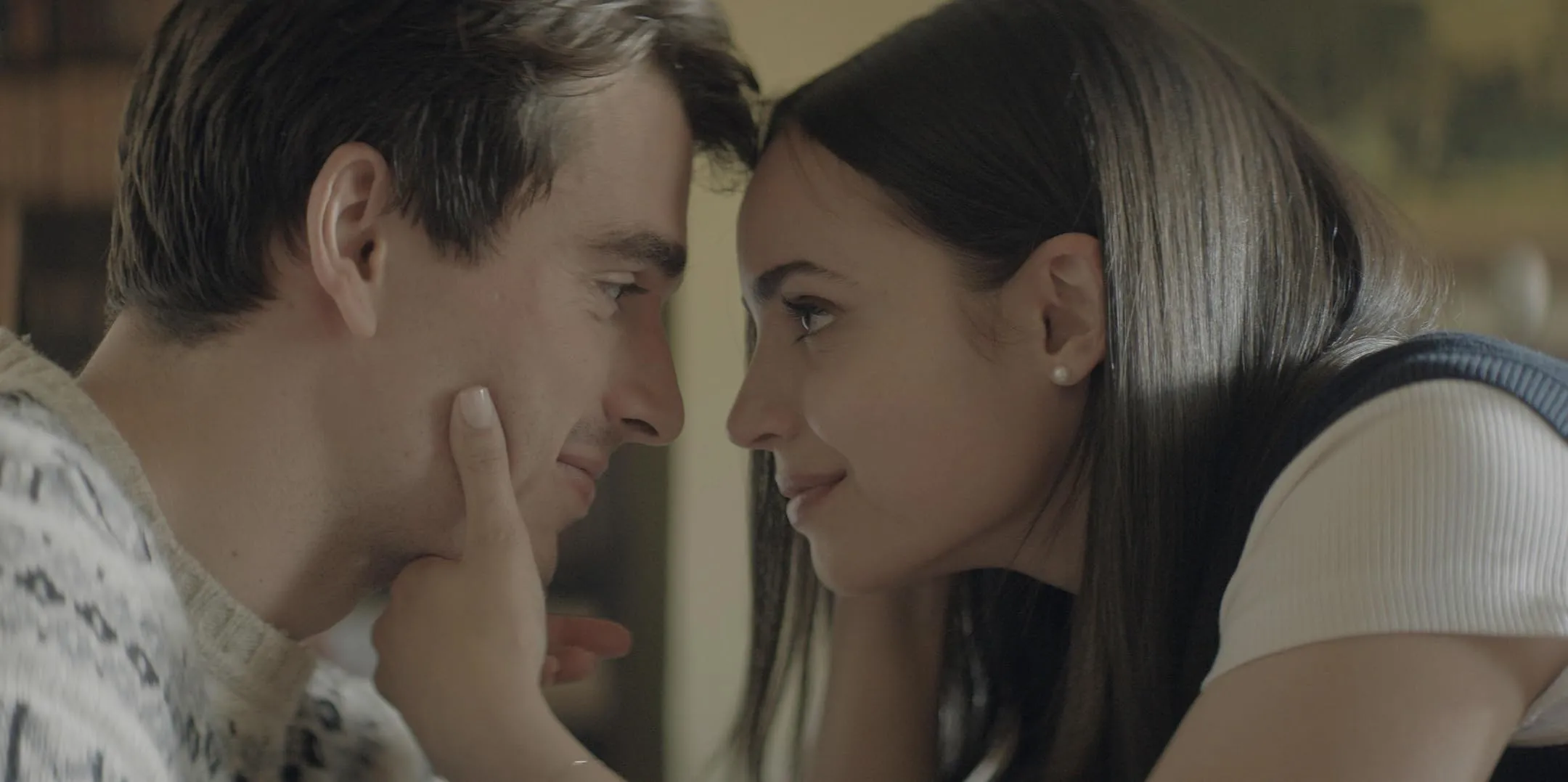
At the center of the narrative machinery are two figures engineered for collision. Anna, played by Sofia Carson, embodies an existential conflict between the pre-written life of security and the unwritten life of authentic passion. Her ambition is her anchor, yet the romantic currents of Oxford pull at it relentlessly, forcing a confrontation with the future she believed was set in stone. Opposite her is Corey Mylchreest’s Jamie, an enigma wrapped in Byronic charm.
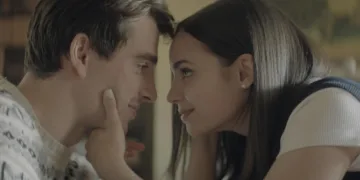
He is the catalyst, the handsome, dangerous variable introduced into Anna’s carefully controlled experiment of a life. His wit and privilege conceal a carefully guarded secret, a classic noir staple transplanted into a sunnier climate, promising a disruption she is ill-equipped to handle. The two performers possess an undeniable screen presence, a kinetic energy that provides the necessary voltage for the film’s first act.
The camera often frames them in tight two-shots, creating a visual intimacy that precedes their emotional one. This palpable chemistry becomes the primary justification for the plot, a force strong enough to make an audience momentarily disregard the script’s more mechanical elements and invest in their fated pairing.
The film then proceeds with an almost ritualistic adherence to the romantic comedy blueprint, a kind of cinematic choreography designed to lull the viewer. The meet-cute is a sequence of escalating contrivances: a comically large puddle, a misunderstanding in a fish-and-chips shop, the final reveal in the lecture hall. It is a transparently engineered sequence, tapping into a collective cinematic memory that makes the audience complicit in the fantasy.
The courtship that follows is a montage of prescribed romantic beats—pub karaoke, philosophical debates over kebabs, the introduction of a rival to manufacture jealousy. Each scene is a calculated step, shot in consistently bright, high-key lighting that reinforces the illusion of a world without consequence. This is storytelling as a comforting formula, expertly constructing a familiar and stable reality before pulling the rug out.
The Ghost in the Machine
For a film so preoccupied with the life of the mind, its own intellectual pulse is disappointingly faint. The screenplay, from Allison Burnett and Melissa Osborne, provides its literary-minded characters with dialogue that rarely rises above the functional, trading in lines that feel less like human speech and more like plot-advancement placeholders.
There is a curious lack of texture, a missing layer of wit one expects from a story steeped in academic life. This flatness extends to the film’s thematic explorations, which are stated but never truly dissected. Anna’s choice between a life of commerce and a life of art becomes a background detail rather than a driving internal conflict that shapes her actions in meaningful ways.
Worse is the film’s failure of narrative ethics in its handling of Anna’s background. Her identity as the daughter of immigrants is reduced to a clumsy, stereotypical shorthand—stilted Spanglish, a mother working as a cleaner—that substitutes for genuine character examination. It is a lazy choice, robbing her of specificity and reducing a complex cultural identity to a decorative trait. This lack of dimension is most apparent in the supporting cast, who operate like archetypal automatons.
There is the quippy gay friend, Charlie, and the supportive but bland girlfriend, Maggie. They are human mirrors, existing only to reflect the protagonist’s emotional state back at her. They appear on cue to offer advice or absorb Anna’s anxieties, their dialogue a chorus of affirmations. The world they inhabit feels strangely small and sparsely populated, a soundstage built for two, with cardboard cutouts positioned just out of focus.
The Fatal Reveal
Every story has a point of no return, a moment when the truth is exposed and the characters must confront a new, harsher reality. In My Oxford Year, it arrives not with a whisper but with the crashing finality of a medical diagnosis. The film reveals Jamie’s secret illness, and in doing so, it intentionally ruptures its own narrative.
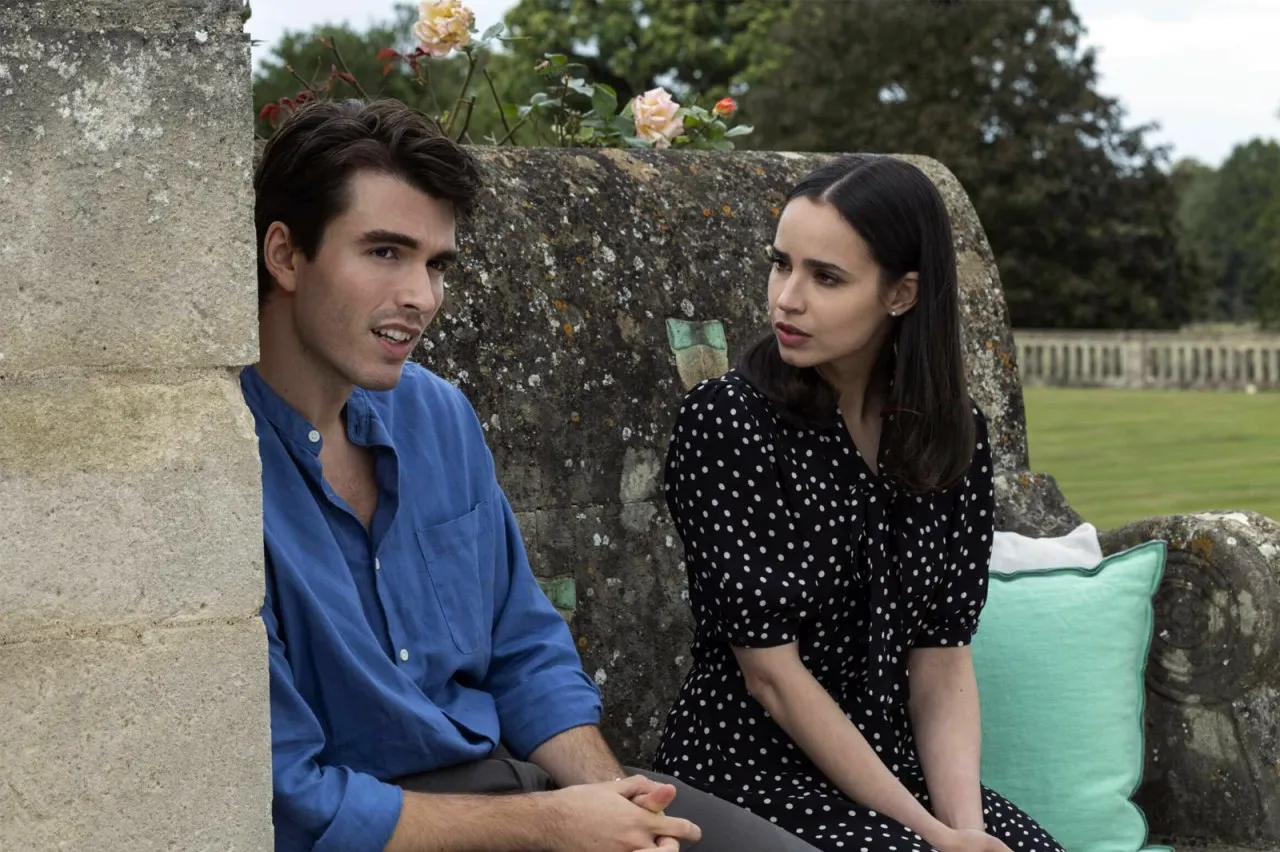
The light, airy structure of the romantic comedy collapses, and from the wreckage emerges a grim, heavy melodrama. This is the story’s true face. The shift is not a subtle modulation of tone; it is a violent gear change from which there is no recovery. The first half of the film is revealed to be a grand misdirection, a false alibi for a story that was always about tragedy.
The consequences of this narrative gambit are profound. The film’s focus pivots entirely to Jamie’s predetermined fate, and Anna’s agency is systematically dismantled. Her journey, her ambitions, her very identity—all are subjugated to the deterministic pull of his tragedy. She ceases to be a protagonist navigating her own choices and becomes a contingent being, a witness whose will is subordinated to his.
The story abandons the question of what she will become in favor of showing what she will endure. This is where the film’s emotional logic becomes suspect. The turn feels less like an organic development and more like a calculated manipulation, deploying the well-worn tropes of the “sick lit” genre to coerce a tearful response from the audience. Because the trajectory is so familiar, every beat becomes predictable. There is no suspense, only a grim march toward an inevitable end.
Glimmers in the Gloom
Despite its narrative fractures, the film is not without its aesthetic merits. Cinematographer Remi Adefarasin lenses Oxford with a warm, diffuse light, creating a perpetual golden hour that bathes the scenery in a hyper-real glow. It is a hermetically sealed fantasy, and the camera glides through ancient quadrangles and along the River Cherwell with a tourist’s reverence, effectively selling the dream even when the script cannot.
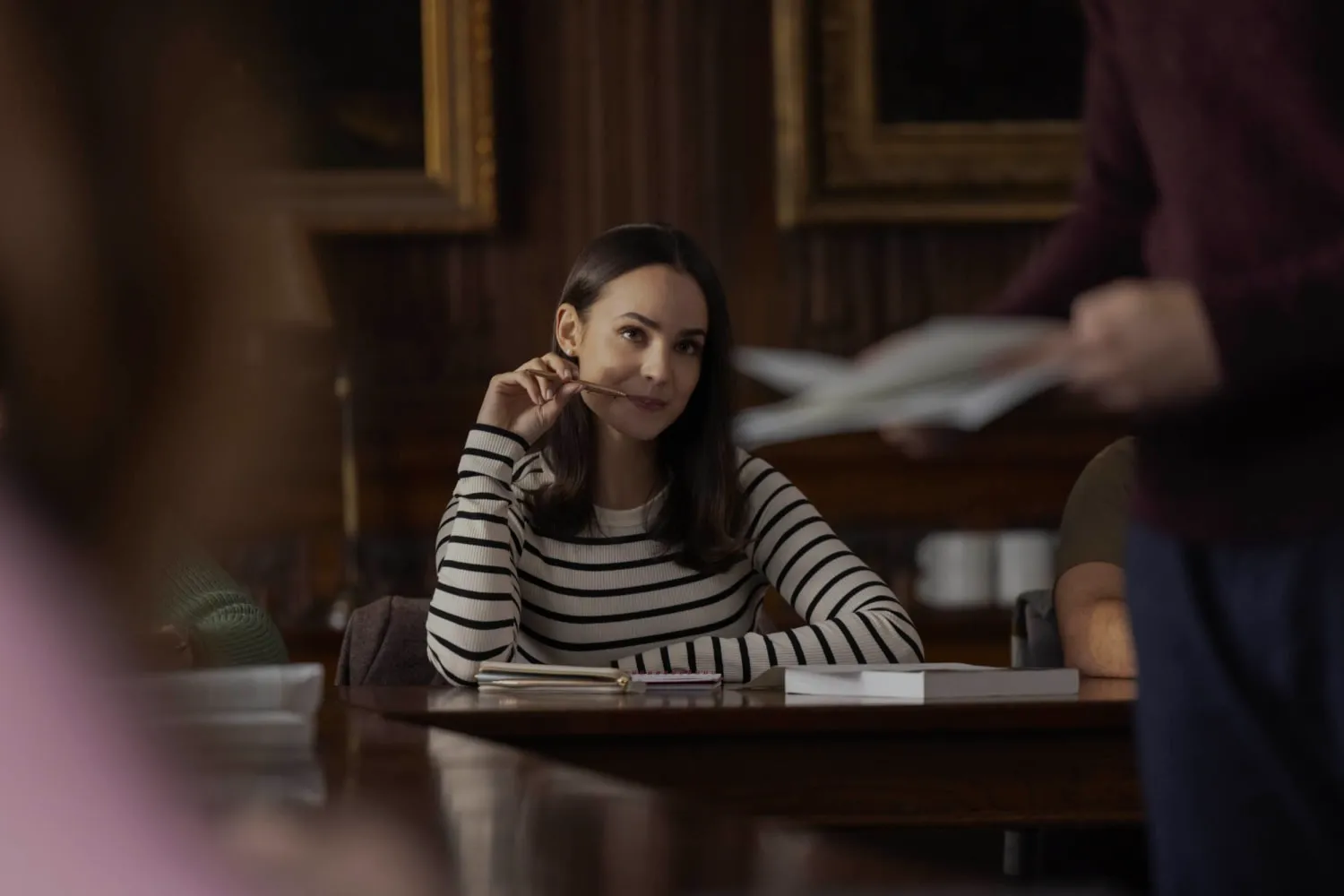
The editing, particularly in the early montages, injects a necessary energy, creating a bubbly, effervescent rhythm for the couple’s courtship. These sequences function as a form of subjective reality, compressing time to show us their romance as they wish to remember it, all propelled by a conventionally swelling score. There are also moments of life from the supporting players.
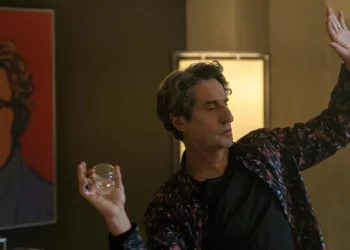
Harry Trevaldwyn, as the comedic sidekick Charlie, is a welcome disruption of the film’s otherwise placid emotional surface, attacking his role with a verve that momentarily lifts the film out of its lethargy. Even veteran actors Dougray Scott and Catherine McCormack, as Jamie’s tormented parents, manage to find a raw, believable tension in their few scenes, briefly anchoring the film in a recognizable reality of familial pain that makes the surrounding artifice all the more apparent.
Full Credits
Director: Iain Morris
Writers: Allison Burnett, Melissa Osborne
Producers and Executive Producers: Marty Bowen, Wyck Godfrey, Laura Quicksilver, Isaac Klausner, Laura Char Carson, Sofia Carson, Caroline Levy
Cast: Sofia Carson, Corey Mylchreest, Dougray Scott, Catherine McCormack, Harry Trevaldwyn, Esmé Kingdom, Nikhil Parmar, Poppy Gilbert, Romina Cocca, Yadier Fernández, Nia Anisah, Hugh Coles
Director of Photography (Cinematographer): Remi Adefarasin
Editors: Victoria Boydell, Kristina Hetherington
Composer: Isabella Summers
The Review
My Oxford Year
My Oxford Year begins as a charming, if conventional, romantic fantasy, buoyed by the potent chemistry of its leads and the postcard beauty of its setting. However, the film self-sabotages with a jarring and emotionally manipulative pivot into melodrama. This tonal whiplash exposes a hollow script and underdeveloped characters, transforming a promising premise into a predictable and ultimately forgettable exercise in formula. It’s a film fatally divided against itself.
PROS
- Strong on-screen chemistry between leads Sofia Carson and Corey Mylchreest.
- Beautiful cinematography that captures an idealized, enchanting vision of Oxford.
- Memorable comedic relief from supporting actor Harry Trevaldwyn.
- Brief but effective dramatic scenes from veteran actors Dougray Scott and Catherine McCormack.
CONS
- A jarring and poorly executed tonal shift from romantic comedy to melodrama.
- The central plot twist is predictable, manipulative, and emotionally unearned.
- One-dimensional supporting characters and clichéd handling of the protagonist's background.
- Underdeveloped themes and a script that lacks literary polish.