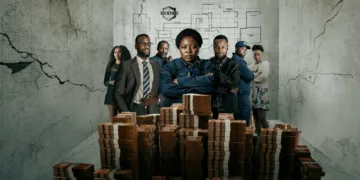





















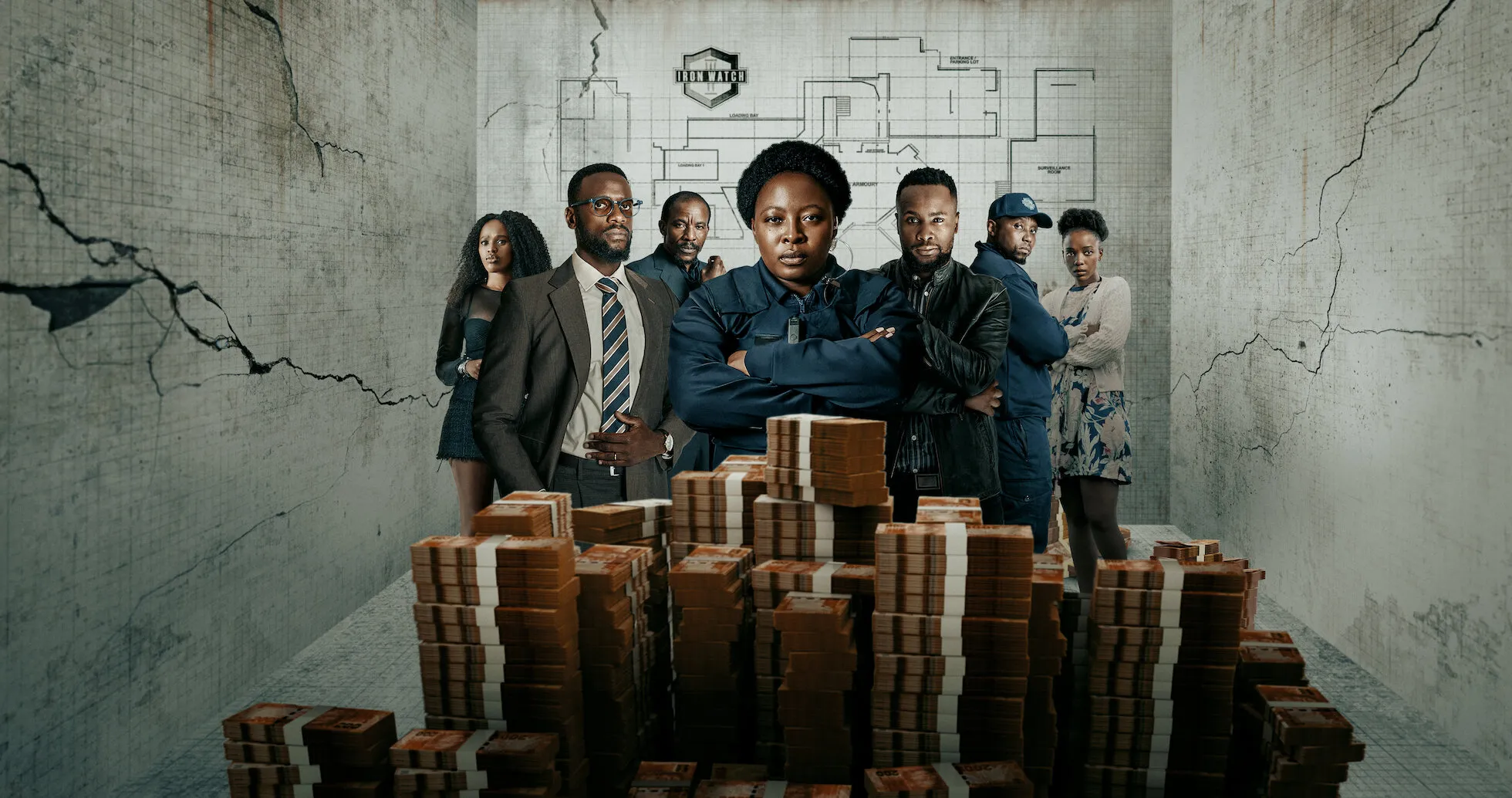

In the ever-expanding catalog of global streaming, a certain type of story has become a familiar signpost of our times: the tale of the ordinary person pushed into criminality by systemic failure. South Africa’s Marked places itself firmly in this genre, introducing us to Babalwa (a magnetic Lerato Mvelase), a woman of immense competence and quiet faith.
She is a top driver for the armored truck company Iron Watch, a model of professionalism. Her world fractures when her daughter, Palesa, is diagnosed with cancer, requiring a surgery with a price tag of 1.2 million rand. Babalwa’s appeals for help are met with closed doors; her church offers prayers, and her boss, Zechariah, offers empty platitudes.
This rejection by the very institutions meant to provide a safety net serves as a powerful indictment of a society where piety and profit offer no real salvation. Her subsequent decision to plot a heist against her employer with gangster Baba G feels less like a fall from grace and more like a calculated, logical step in a world where the righteous path leads to a dead end.
Prayer in the Face of Precarity
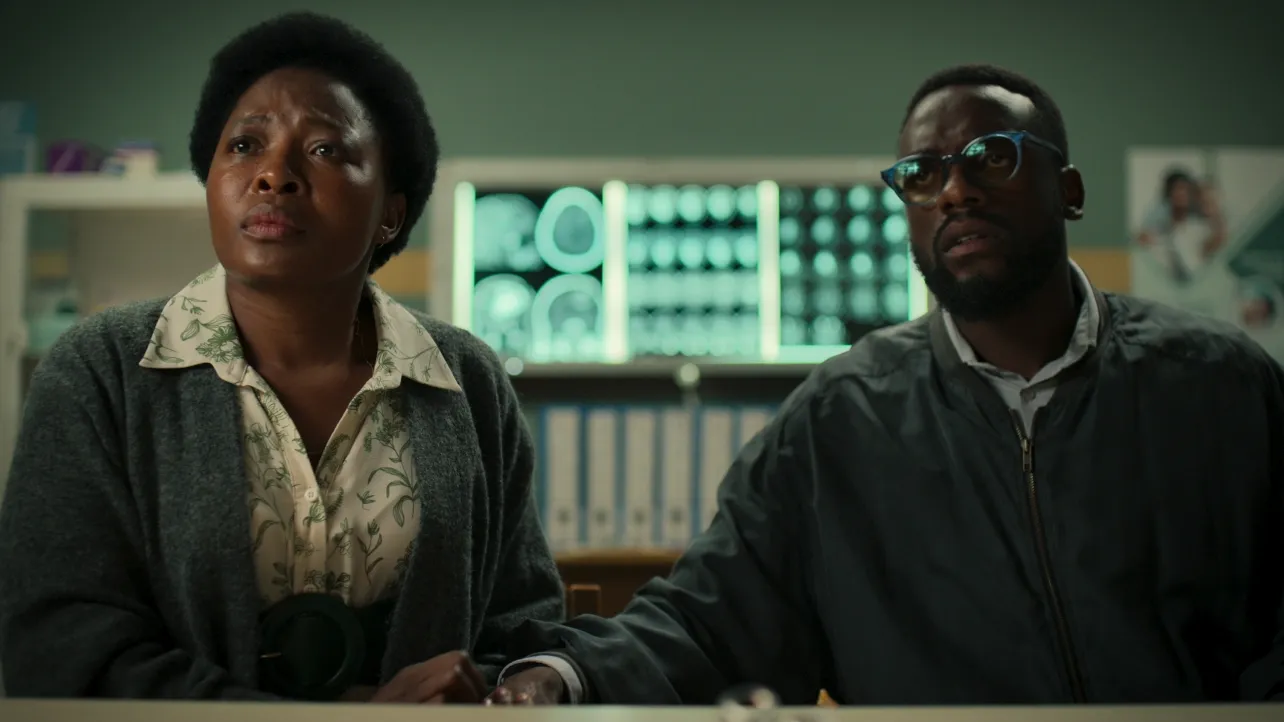
The series grounds its social commentary in the potent domestic conflict between Babalwa and her husband, Lungile (Bonko Khoza). Their diverging responses to crisis form the show’s ideological spine, creating a deeply resonant examination of how socio-economic pressure tests the limits of love, partnership, and belief.
Babalwa represents a modern, pragmatic form of faith; her belief in God does not preclude her from taking decisive, material action. Her journey is not a simple switch from good to bad. It is a slow, agonizing erosion of principle, where each criminal act is justified as a necessary tool for a righteous goal. Lerato Mvelase portrays this internal war with extraordinary subtlety.
In her performance, a quiet prayer for forgiveness can precede a meeting with a gangster, and a look of fierce maternal protection can harden into the cold gaze of a conspirator. She embodies a specific type of contemporary anti-heroine increasingly visible on streaming platforms: the woman who adopts the ruthless tools of a patriarchal system not for power, but for preservation. Her path reflects a grim reality where female agency is forged in the crucible of impossible choices.
In stark opposition stands Lungile, a character who could have easily been a one-dimensional obstacle. Instead, the script and Bonko Khoza’s sensitive portrayal give him a tragic depth. As a pastor, his identity is inextricably linked to the power of faith. For him to accept that prayer is insufficient would be to accept his own professional and spiritual bankruptcy.
He retreats into a fortress of scripture, his insistence on divine intervention becoming more frantic as the situation worsens. This is not depicted as a lack of love, but as a profound and paralyzing fear. He is terrified of the world’s brutal mechanics and of his own powerlessness within them. His faith is the only shield he possesses, and he clings to it with the desperation of a drowning man.
Their kitchen-table arguments thus become a microcosm of a larger cultural debate, particularly relevant in communities grappling with widespread economic hardship. Is salvation found through spiritual endurance and the hope of a miracle, a sentiment often amplified by charismatic churches?
Or does it demand a radical, dangerous engagement with the material world, even if it means sacrificing one’s soul? The show refuses to give an easy answer, presenting both paths as fraught with their own forms of peril.
The Heist as a MacGuffin
It becomes apparent quite quickly that Marked is using the heist genre as a Trojan horse. The actual crime, the supposed engine of the plot, is often treated as a secondary concern, a structural frame on which to hang a much quieter, more contemplative social drama. This approach is both a strength and a significant weakness, revealing much about contemporary television production.
The series suffers from a bad case of “streaming bloat,” a condition where a story with the narrative density of a two-hour film is stretched to fill a six-episode season. This results in significant pacing problems that dilute the story’s tension. The narrative often meanders, losing its sense of propulsive urgency for long stretches.
Conversations repeat themselves, stakes are restated instead of raised, and entire subplots feel like detours designed to fill time rather than enrich the world. The central heist plot, which should be a ticking clock, frequently stops ticking altogether.
This structural looseness extends to the supporting cast. The amateur crew Babalwa assembles are meant to represent a cross-section of a desperate society, yet they often feel more like narrative functions than fully realized individuals. Zweli, the ambitious young gangster, embodies a nihilistic ambition, a man unburdened by Babalwa’s moral qualms.
His dangerous affair with the boss’s daughter, Nelisa, is a subplot rich with potential, suggesting a world where intimacy is just another transaction. The execution, however, feels rushed and underdeveloped. Likewise, Babalwa’s coworker Tebza occupies the shaky middle ground, a friend torn between loyalty and his own survival instinct, but his internal conflict is given too little screen time to land with the weight it deserves. The show’s identity crisis is most evident in its jarring tonal shifts.
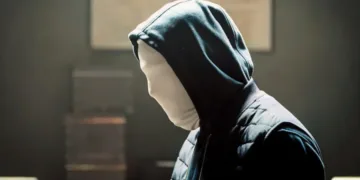
Moments of grim, existential dread are sometimes followed by scenes of awkward, almost slapstick humor, such as the bizarre opening with costumed mimes attempting a robbery. This suggests a directorial failure to commit to the bleakness of the story’s premise. It feels as if the creators were afraid of their own serious subject matter, attempting to leaven the grim social critique with genre flair.
The result is not a clever synthesis but a dissonant clash, making the viewing experience feel uneven and unfocused. The heist, in the end, is a MacGuffin whose true purpose is to force its characters into a moral pressure cooker, yet the cooker itself seems to have a faulty valve.
A Powerful Statement Muffled by Its Own Structure
The series is anchored, and nearly saved, by the sheer force of Lerato Mvelase’s central performance. She is the unwavering gravitational center around which the show’s wobbly elements orbit. Mvelase carries the weight of Babalwa’s transformation in her physicality. We watch her posture straighten with resolve, her soft-spoken pleas harden into curt commands, and her expressive eyes shift from hopeful to haunted.
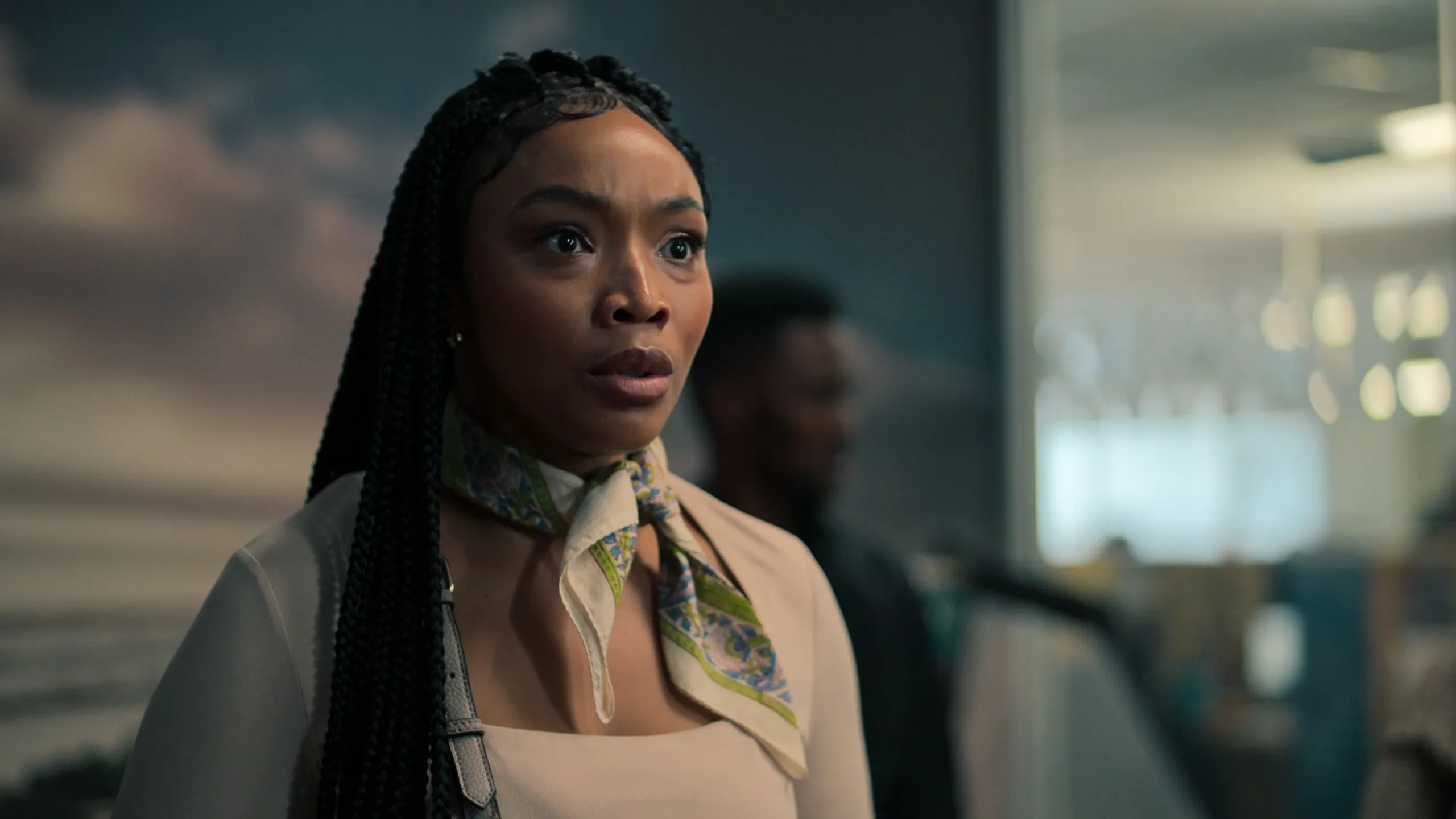
She communicates a universe of internal conflict with the slightest gesture, ensuring that even when the plot falters, Babalwa’s emotional truth remains perfectly clear. It is a masterful portrayal of a good woman slowly, methodically, learning to become a monster in order to remain a mother.
The show’s ambition is likewise admirable. It seeks to dissect the cruel intersection of economic precarity, systemic failure, and personal morality. Its critique of a society that offers its citizens impossible choices is sharp, timely, and deeply felt.
This makes the finale’s flawed execution all the more frustrating. The brutal, cosmic irony of the ending is a stroke of genius on a conceptual level. Babalwa, having successfully orchestrated the heist, is forced to kill her boss, Zechariah, to protect her new accomplice.
In the immediate aftermath, she receives a text from her husband: the money has been secured, a miracle has occurred. The audience is shown the source of this miracle—an anonymous donation from Zechariah himself. The man representing the system that failed her was also her secret savior. Her violent, soul-altering act was, in the end, completely unnecessary. This is a devastating commentary on the chaos and moral ambiguity of the real world.
It suggests that our tragedies are often born not from pure malice, but from a lack of information, from actions taken in a darkness created by inequality. The power of this final, gut-wrenching twist is unfortunately diminished by the very structural issues that plague the series.
The sluggish build-up and the unfocused, anticlimactic crime plot drain the conclusion of the momentum it needs to land its knockout punch. The powerful idea is there, but it feels unearned, a brilliant destination reached via a rambling, unsatisfying road. Marked gestures toward greatness, but it leaves one with the lingering feeling of what could have been.
Full Credits
Director: Akin Omotoso, Matshepo Maja, Jono Hall
Writers: Sydney Dire, Wendy Gumede, Charlene Ntsane
Producers and Executive Producers: Harriet Gavshon, Odirile Mekwa, JP Potgieter, Akin Omotoso, Tammy Lee Houghton
Cast: Bonko Khoza, Lerato Mvelase, Natasha Thahane
Director of Photography (Cinematographer): Fahema Hendricks
Composer: Joel Assaizky
The Review
Marked
Marked is built on a powerful, socially relevant premise and features a truly commanding lead performance from Lerato Mvelase. Its exploration of faith versus pragmatism in the face of systemic failure is both intelligent and timely. The series is unfortunately hampered by significant structural flaws, including poor pacing and an underdeveloped heist plot that cannot sustain its six-episode runtime. Its ambitious ideas are present but are ultimately muffled by a narrative that feels stretched too thin, leaving its potential feeling unfulfilled.
PROS
- A captivating and nuanced lead performance by Lerato Mvelase.
- A thoughtful and potent exploration of economic desperation and moral compromise.
- The central conflict between faith and direct action provides a strong thematic core.
CONS
- Slow narrative pacing makes the series feel drawn out.
- The central heist plot is underdeveloped and lacks tension.
- An inconsistent tone that shifts awkwardly between grim drama and misplaced humor.
- Supporting characters and subplots often feel underdeveloped.