




























Bon Appétit, Your Majesty serves a premise that feels perfectly engineered for the current streaming era. The series drops a celebrated 21st-century Michelin-starred chef, Yeon Ji-yeong, into the rigid political landscape of the Joseon dynasty.
Her modern expertise and professional ambition become unconventional tools for survival in a world where her fate rests in the hands of King Lee Yi Heon, a ruler known to history as a fearsome tyrant. Ji-yeong must please his palate to protect her life, forcing her to navigate a court where a single misplaced ingredient could be as fatal as a treasonous word.
This imaginative setup deftly combines the high stakes of historical drama with the specific anxieties of a contemporary career woman stripped of her familiar environment. The show immediately establishes its unique flavor, promising a story that mixes palace intrigue, fish-out-of-water comedy, and the slow-burn romance between two people separated by centuries of change.
The Professional as Political Disruptor
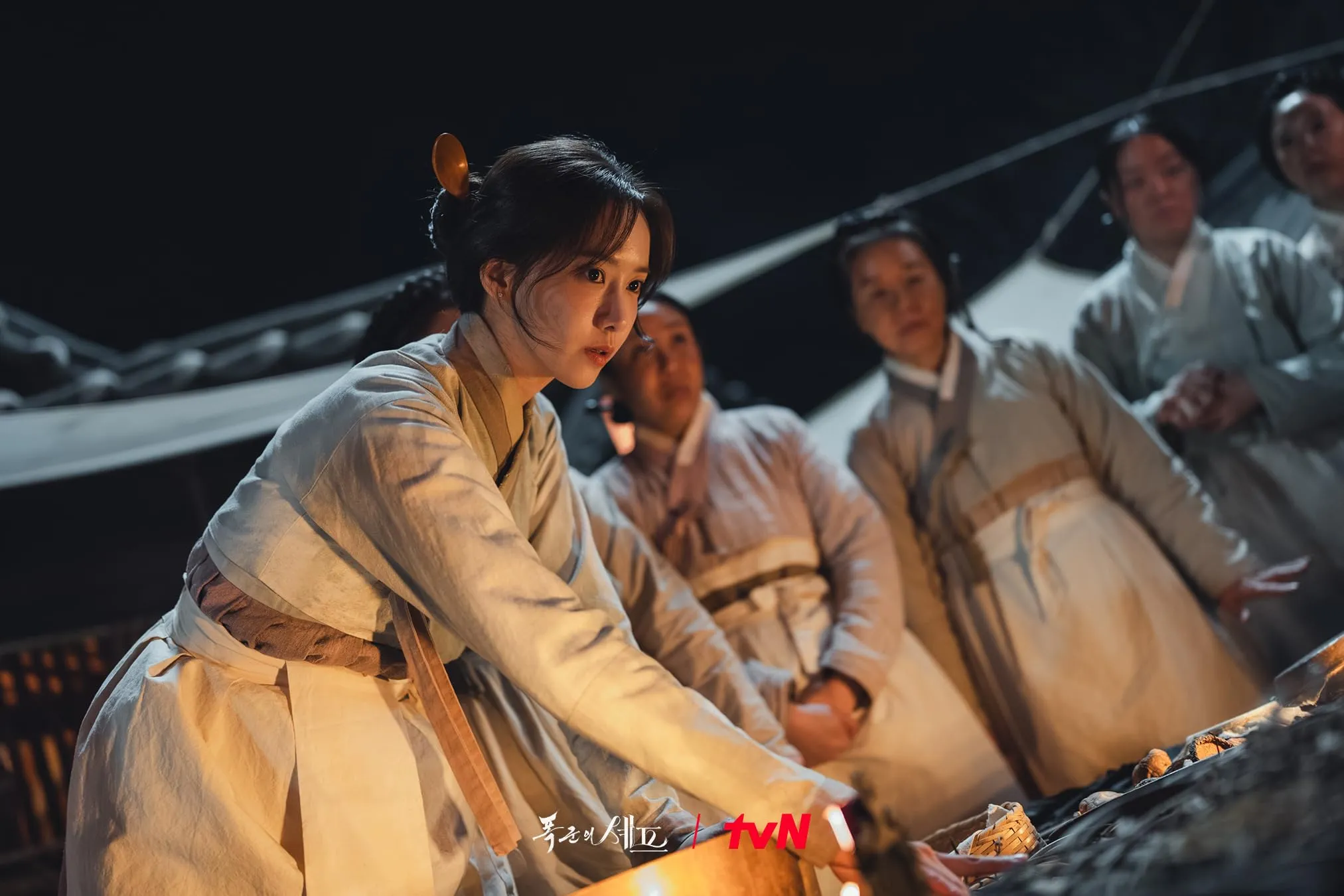
Yeon Ji-yeong arrives in Joseon not as a damsel but as a consummate professional. Her identity is forged in the high-pressure kitchens of 2025, defined by a confidence and sense of self-worth that are alien to the era she now inhabits. This narrative choice is a quiet but significant revision of the historical drama heroine, whose value is traditionally tied to lineage, beauty, or marital eligibility.
Ji-yeong’s worth is rooted in her demonstrable skill, a distinctly modern form of currency. The series finds considerable humor in the resulting cultural collision, as her modern vocabulary and casual demeanor repeatedly clash with the stifling court etiquette. This friction is more than a comedic device; it functions as a tool for social critique. Her confusion over Joseon’s rigid hierarchies allows the show to question those structures from a contemporary viewpoint without overt moralizing.
Her professional skills translate directly into a form of power. When faced with poorly stocked kitchens, she adapts, improvising a version of the sous-vide method to tenderize tough meat. This is not simply clever cooking; it is the application of modern scientific principles to solve an ancient problem, a potent metaphor for the entire series. Her palate becomes a tool for analysis, her knowledge of food chemistry a weapon against sabotage. Her resilience is her defining trait.
Also Read






In a powerful early scene, she stakes her life on the quality of her food when challenged by cruel noblemen, refusing to be a passive victim. Im Yoon-ah’s performance captures this spirit perfectly. Her casting is itself a meta-commentary on the show’s themes, as she is a figure who transitioned from the global pop-culture phenomenon of Girls’ Generation to a respected actor.
This mirrors the journey of Korean media itself, moving from a regional interest to a global powerhouse. Her portrayal makes Ji-yeong a compelling symbol of female agency, using her intellect to assert her value in a system designed to deny it.
Deconstructing the Tyrant
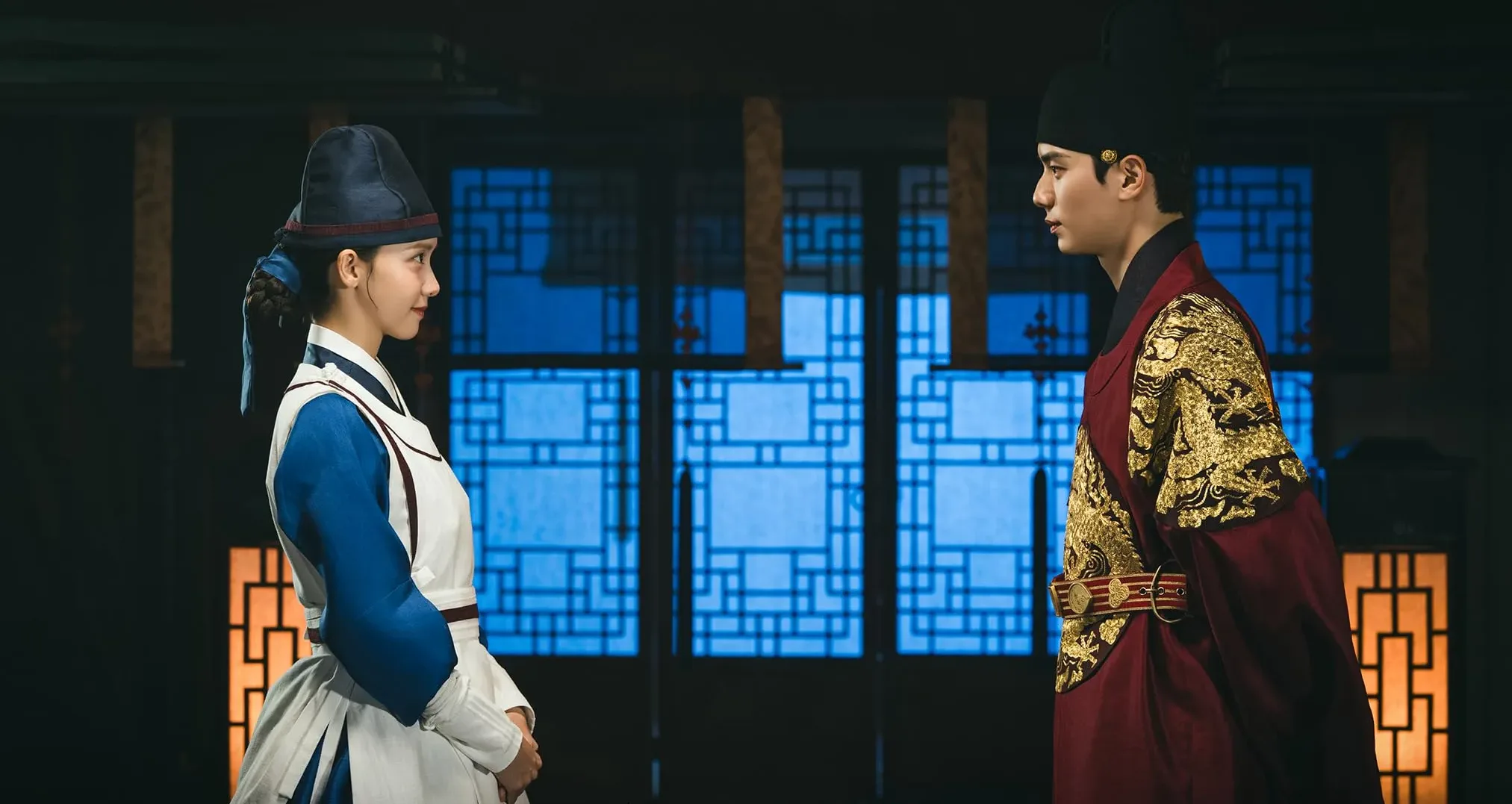
The series presents King Lee Yi Heon through the cold lens of his historical reputation. He is a merciless tyrant, an imposing figure whose sharp gaze commands absolute obedience. The initial dynamic between him and Ji-yeong is thick with this tension, his authority pitted against her bewilderment.
The show quickly begins to dismantle this archetype, however, revealing the man beneath the crown. His cruelty is not arbitrary but a calculated facade, masking a deep-seated trauma and an elaborate quest for vengeance connected to his mother’s death.
This narrative choice aligns with a broader cultural shift toward more complex and psychologically nuanced depictions of masculine power. Instead of a stoic monolith, Yi Heon is a character grappling with unresolved grief, his tyranny a desperate performance of control.
This complexity is unlocked through the unlikely medium of food. In a pivotal moment, a simple dish prepared by Ji-yeong transports him to a childhood memory, and the feared ruler is moved to tears. This act of vulnerability pierces his emotional armor, forging an unexpected connection between the king and the chef. It also creates a fascinating subversion of power.
For a moment, the monarch is emotionally dependent on the cook; the one who can nourish and evoke memory holds a unique influence over the one who holds absolute political power. His humanity complicates the power dynamic and reflects a contemporary storytelling trend that favors psychological depth over simple villainy.
The palace remains a treacherous place, filled with scheming rivals like Prince Jesan and the manipulative courtier Mok-ju. Yet the surrounding political intrigue almost feels secondary. The greatest conflict appears to be the one within the king himself, a battle for his own soul that Ji-yeong has unwittingly entered.
Cuisine as a Cultural Engine
In Bon Appétit, Your Majesty, food is the narrative’s central nervous system. It functions far beyond simple sustenance, acting as a powerful engine for plot, character, and theme. Ji-yeong’s cooking is a literal bridge between her modern world and the ancient one she occupies.

It is her primary language in a court where her words are foreign, her shield in a place where she is defenseless, and her method for influencing the powerful. The series masterfully uses dishes to trigger potent emotional responses, most notably the king’s profound reaction to a taste of his past.
Food becomes a conduit for memory, grief, and intimacy, allowing characters to communicate what cannot be spoken. The series taps directly into the global “foodie” culture, using the visual pleasure of culinary creation as a core aesthetic.
This is a savvy move for a streaming platform show, attracting viewers from both the K-drama fandom and the vast audience for cooking programs. The show’s structure reinforces this focus. Each episode is titled after a specific culinary creation, like “Course No. 1: Gochujang Butter Bibimbap,” framing the story’s progression around a series of gastronomic challenges.
This episodic format serves the binge-watching model perfectly, providing a satisfying, self-contained arc within each installment while building the larger romantic and political plotlines. This rhythm offers regular payoffs, keeping viewers engaged without resolving the main story too quickly. It cleverly reframes cooking, often seen as a domestic task, as an act of political and emotional consequence.
A Recipe for the Modern Audience
The series succeeds through its sophisticated fusion of genres, creating a product that feels distinctly of its time. At its foundation is a time-slip romance, built on the classic friction between two individuals from clashing worlds. Their relationship develops from a tense power struggle into a complex bond formed through shared vulnerability and a mutual fascination.
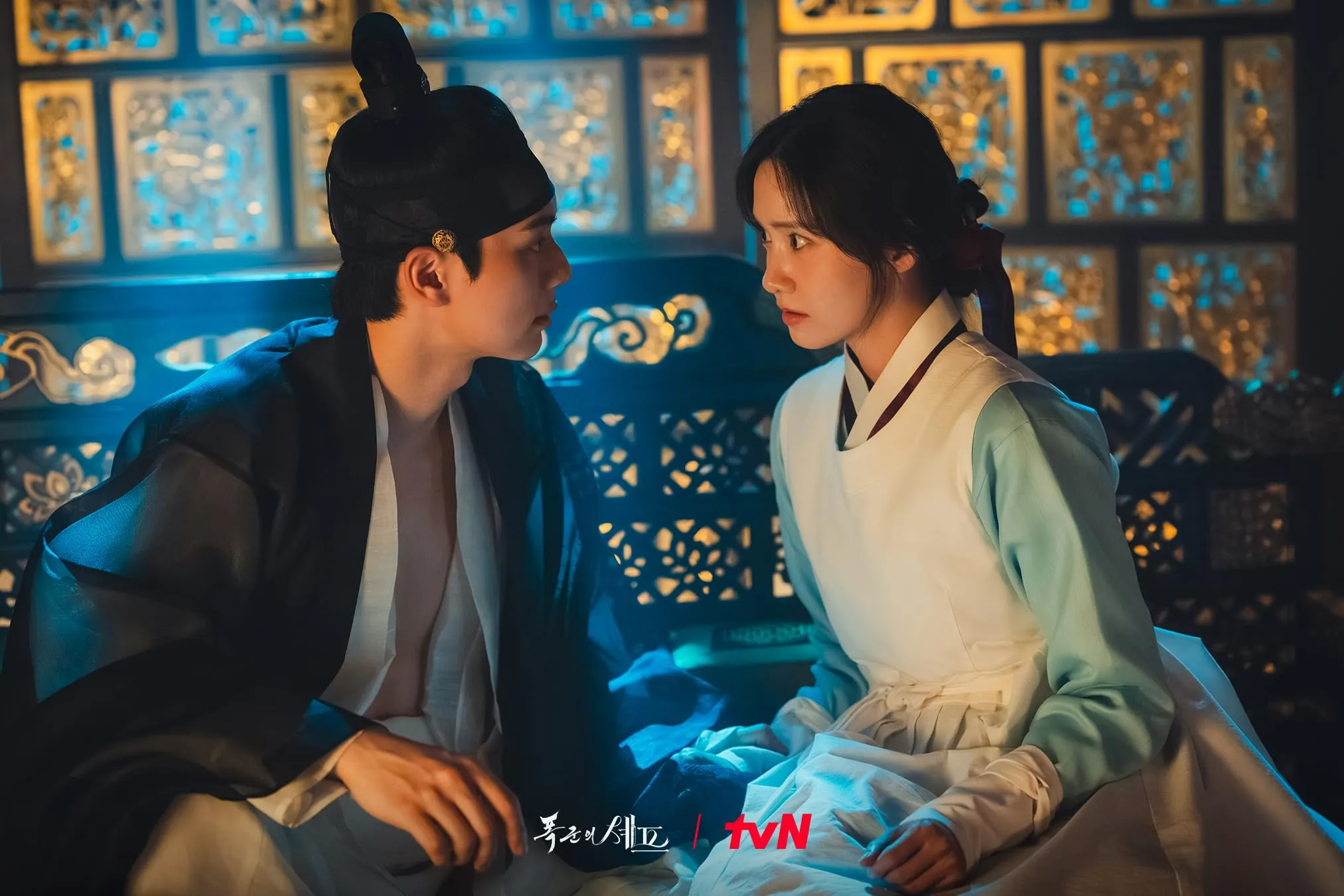
This central romance is layered with the high stakes of a historical drama. Ji-yeong’s presence in the past introduces a fantasy element, raising the possibility that she could alter history. Her growing awareness that she has landed in the prelude to the infamous Gapshin Literati Purge adds a sharp edge of suspense to her actions.
This speaks to a contemporary desire to re-examine the past, a fantasy of individual agency having the power to correct historical injustice. To balance these heavier elements, the show is seasoned with the consistent comedy of Ji-yeong’s anachronistic struggles. The result is a series that offers multiple entry points for a diverse global audience, a key strategy for success in the crowded streaming market.
Bon Appétit, Your Majesty is a South Korean fantasy romantic historical drama television series that premiered on tvN on August 23, 2025, and is also available for streaming globally on Netflix. Directed by Jang Tae-yoo and based on the web novel Surviving as Yeonsan-gun’s Chef by Park Kook-jae, the show combines historical elements with modern-day romantic and dramatic themes. It has received attention in the K-drama community for its blend of time-slip, romance, and gourmet cooking.
Full Credits
Director: Jang Tae-yoo
Writers: Park Kuk-Jae (web novel), fGRD (screenplay)
Producers and Executive Producers: Lee Hye-young (Executive Producer), Kim Tae-hoon (Producer), Heo Do-yun (Producer)
Cast: Im Yoon-ah, Lee Chae-min, Kang Han-na, Choi Gwi-hwa, Seo Yi-sook, Oh Eui-sik, Park Young-woon, Yoon Seo-ah
The Review
Bon Appétit, Your Majesty
Bon Appétit, Your Majesty is a thoughtfully constructed series that uses its time-travel premise to explore modern ideas of agency and power. By placing a skilled professional at its center and making cuisine its narrative core, the show offers a fresh and intelligent update to the historical drama. It successfully blends romance, political tension, and comedy into a satisfying whole, making it a standout example of contemporary Korean storytelling for a global audience.
PROS
- An imaginative premise that successfully fuses multiple genres.
- A strong, modern female protagonist who relies on professional skill and intellect.
- Nuanced character development that deconstructs historical archetypes.
- Clever and central use of food as a primary narrative device.
- Engaging performances from the lead actors.
CONS
- The pacing of the political subplots may feel slow for some viewers.
- Certain "fish-out-of-water" comedic moments might seem familiar to fans of the genre.
- Focus on the central romance and cooking may leave secondary character arcs less developed.