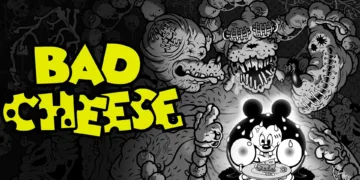


























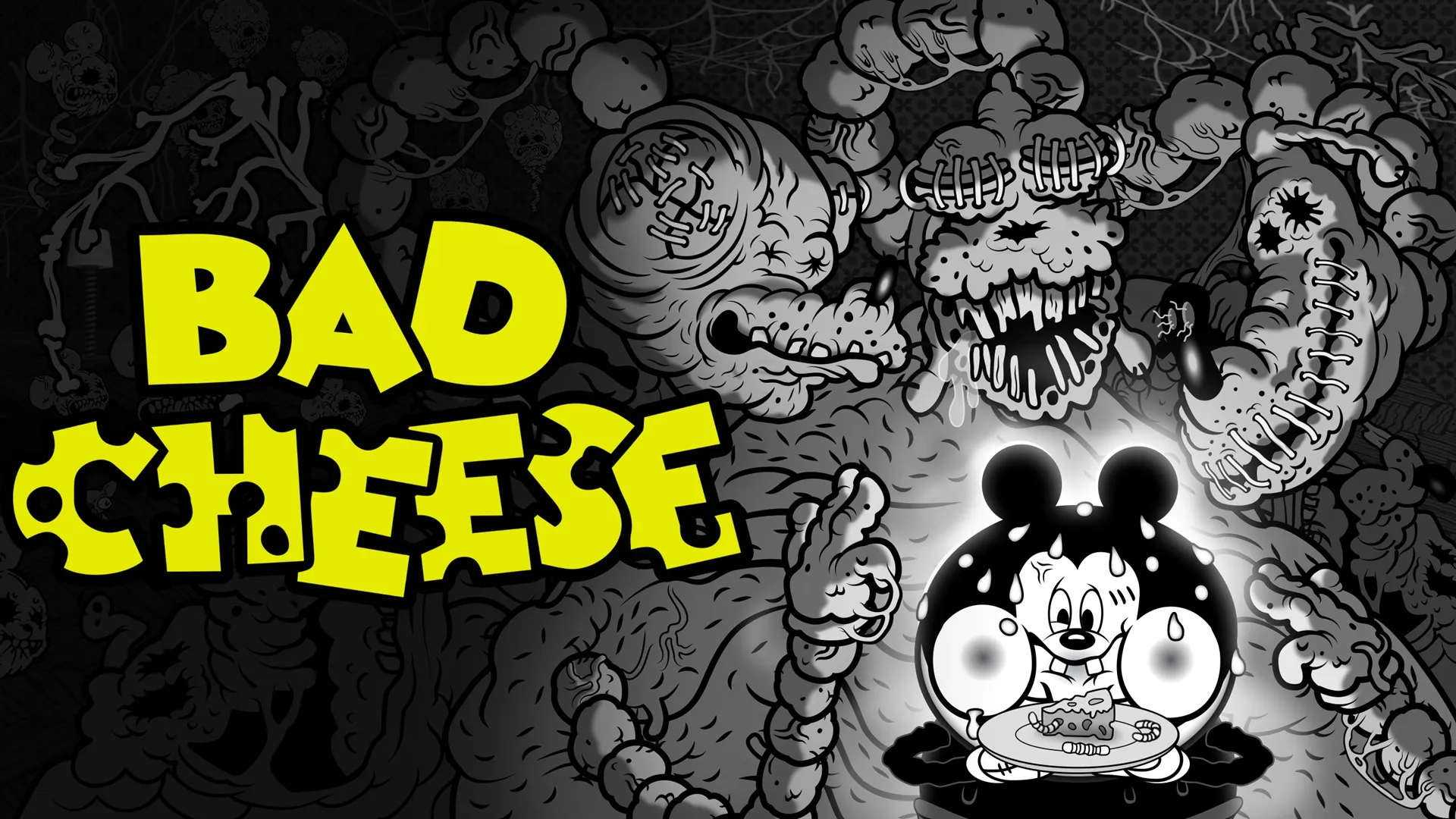

Bad Cheese presents itself with the familiar, jaunty energy of a 1920s cartoon. The rubber-hose limbs and pie-cut eyes evoke a bygone era of animation, a comfortable nostalgia that the game quickly and effectively dismantles. This is a first-person psychological horror title that uses its charming aesthetic as a Trojan horse for a deeply unsettling experience.
You are a small mouse child, tasked with completing household chores to appease a looming, terrifying father figure. The core tension is established immediately. Your simple checklist of tasks becomes a desperate bid to maintain a fragile peace in a home that feels fundamentally wrong. Every creak of the floorboards and shadow in the corner suggests that something monstrous lurks just beneath the surface of this hand-drawn world, turning a cartoon home into a surreal prison.
Style as Substance
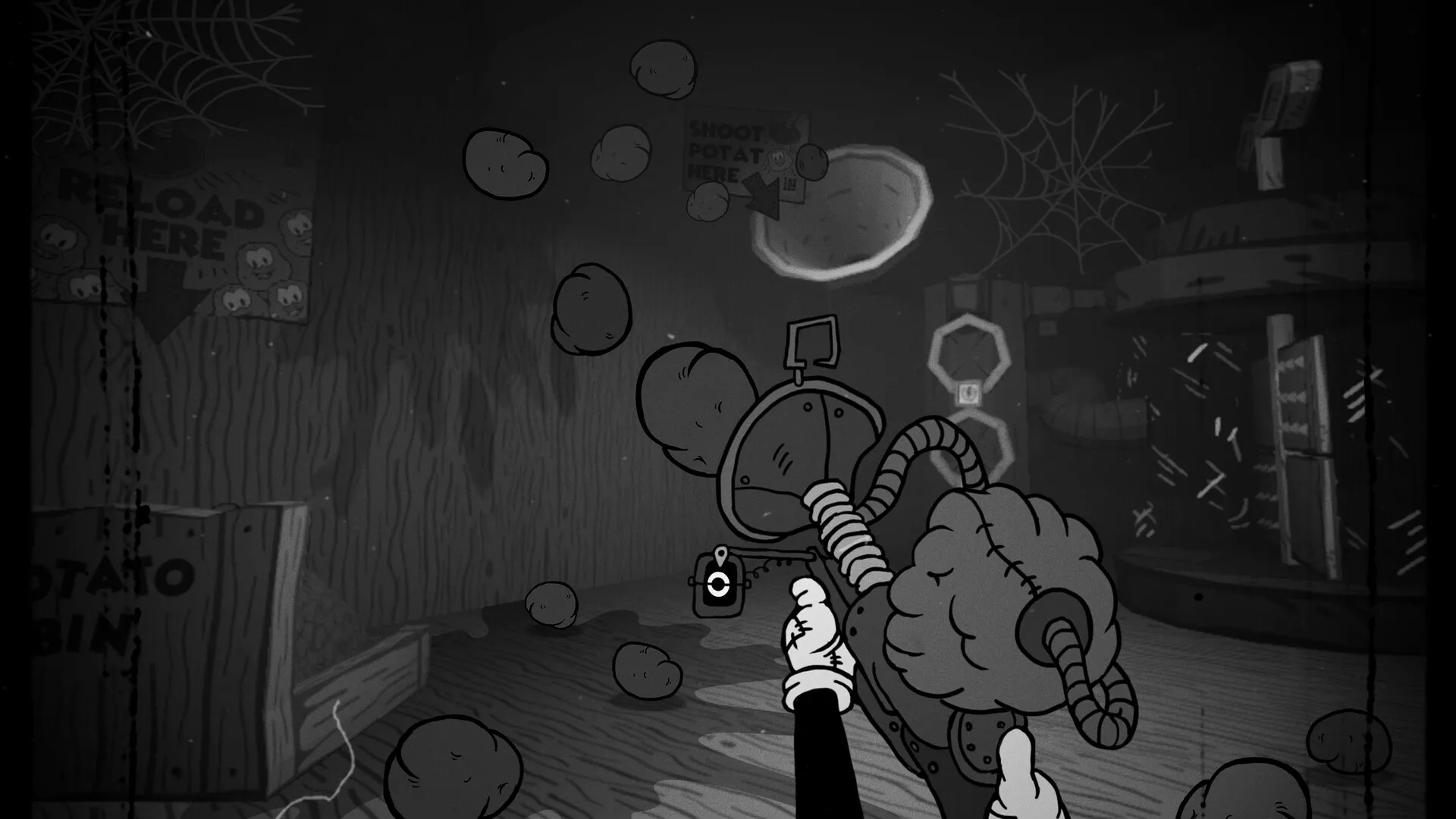
The game’s aesthetic is its most defining and successful element. It is a meticulous recreation of 1920s animation, a style that carries specific expectations of innocent, physics-defying comedy. The developers demonstrate a deep understanding of the medium they are emulating. Character movement has the weightless, “rubber hose” quality of the era, and the world is rendered in a stark, high-contrast black and white.
This faithful recreation is precisely what makes the horror so effective. When this familiar visual language is used to depict grotesque imagery, the effect is profoundly jarring. The game weaponizes the viewer’s nostalgia, creating a powerful sense of cognitive dissonance. Unlike a game like Cuphead, which celebrates this animation style, Bad Cheese subverts it at every turn.
The environmental design is a key part of this subversion. The house itself is a character, its architecture impossibly vast and inconsistent, like the shifting backgrounds of a Max Fleischer cartoon. A hallway may stretch to an absurd length one moment and feel claustrophobically short the next.
The world is filled with objects that seem benign but are imbued with a sinister energy. A grandfather clock might have a face with watching eyes, or a coat rack might resemble a skeletal figure in the periphery. These details contribute to a constant, low-level unease.
Character designs are where the art style’s horror is most apparent. The protagonist’s father is a masterclass in body horror, an unstable entity whose form reflects his mood. When he is placid, he might appear as a large, mechanical bear, his movements stiff and unnervingly deliberate.
When angered, his form dissolves into a chaotic mass of flesh, faces, and mismatched parts, a truly monstrous sight that defies the clean lines of the cartoon world. Other creatures in the house are similarly disturbing amalgamations, like a fish with a mouse’s head composed of teeth and skulls. These designs are effective because they feel like they have clawed their way out of the animator’s inkwell, corrupting the world from within.
The audio design is a perfect counterpart to the visuals. The soundtrack is composed of jaunty ragtime and early jazz tunes, upbeat music that creates a disturbing counterpoint to the on-screen horror. The cheerful piano melody that plays while you are hiding from your monstrous father is a particularly potent example of this technique. Voice acting is superb, with performances that perfectly capture the slightly tinny, exaggerated delivery of early sound cartoons.
This authenticity makes the threatening dialogue and pained sounds all the more chilling. Sound effects are sharp and visceral; the wet squish of an eaten sausage or the sharp crack of a spider being swatted are designed to be unsettling. The entire presentation is a cohesive package, where every artistic choice is made in service of twisting a nostalgic style into a vehicle for psychological dread.
Chore, Combat, and Control
The gameplay systems of Bad Cheese are intentionally simple, designed to reinforce the protagonist’s sense of powerlessness. The primary loop involves completing a linear series of chores assigned by your mother. From a first-person perspective, you interact with the world with fully extended, white-gloved hands, a visual nod to the game’s animated inspirations.
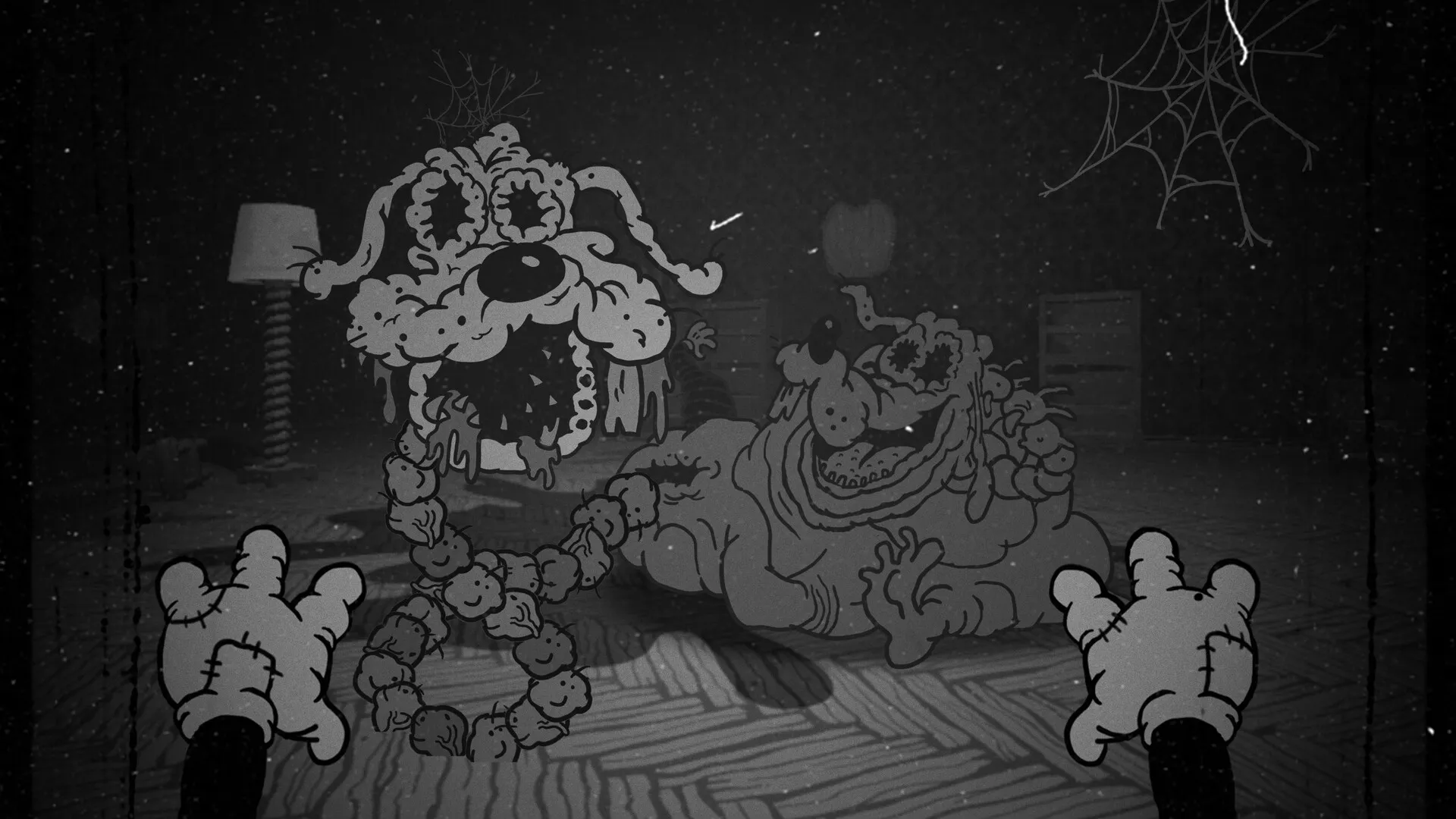
These tasks begin as mundane activities. You might be asked to sweep the floor or clean dirty plates. The game cleverly transforms these simple objectives into surreal puzzles. Cleaning cobwebs from a corner might reveal a hidden passage, leading to a confrontation with a giant spider queen. A task to fix a leaky pipe could involve navigating a labyrinthine basement where the pipes themselves seem to writhe and moan. The game’s many strange contraptions, like a turret that fires socks or a massive machine powered by potato batteries, add a layer of dark whimsy to these puzzles.
This structure means the player has very little agency. You are not exploring an open world or making meaningful choices that alter the story’s direction. You are following a strict list of commands, and failure to do so has consequences. This design choice is thematically resonant. It perfectly captures the experience of a child navigating a volatile home environment, where survival depends on obedience and invisibility. The game is not about empowering the player; it is about immersing them in the protagonist’s oppressive reality. The linear path and restrictive objectives are mechanics that serve the narrative.
Where the game’s design begins to unravel is in its combat system. Periodically, the player is forced into direct confrontations with monstrous creatures. These encounters feel disconnected from the rest of the experience. The mechanics are poorly explained and feel unresponsive. Enemies often defeat the player in a single hit, leading to repeated and frustrating restarts that break the game’s meticulously crafted atmosphere.
The combat lacks the clear telegraphing and fair challenge found in other difficult indie titles. Instead, success often feels random, a matter of luck rather than skill. This clumsy implementation turns moments that should be terrifying into tedious roadblocks. It is the one area where the game’s mechanics stop serving the narrative and start actively working against it.
Exploration is similarly limited. While the house is a fascinating and disturbing place, your ability to investigate it is constrained by the current objective. Doors remain locked until a specific task is completed, and invisible walls often prevent you from straying from the intended path. There are collectibles, like stale snacks and old toys, scattered throughout the levels.
Finding them provides a small incentive to look in corners and under furniture, but they do little to alter the fundamentally linear experience. The platforming required to reach some of these items can be imprecise, another minor frustration in an otherwise compelling world. The core of the game remains its chore-based progression, a system that brilliantly serves its story but may leave some players wishing for more direct control.
A Tale of Trauma
The narrative of Bad Cheese uses its surreal horror to tell a deeply human story about childhood trauma. The game’s monsters and shifting realities are not random; they are a direct representation of the world as seen through the eyes of a child in an abusive household. The game is an extended metaphor for the psychological experience of living in constant fear.
The father’s unpredictable transformations are a manifestation of his volatile moods. The mundane house becoming a hellscape reflects how a place of supposed safety can become a source of terror. The game’s narrative design excels at building this specific type of psychological tension.
The most effective horror in the game comes not from its jump scares, which are infrequent and poorly executed, but from its quietest moments. The anxiety of hearing your father’s footsteps approaching while your chores are unfinished is far more terrifying than any monster jumping out of a closet. A sequence where you must sneak through the house at night, trying to remain silent while adults are checking on you, is intensely stressful.
The game understands that the true horror of this situation is the threat of real-world consequences, not supernatural ones. It creates a powerful sense of empathy for the small protagonist, forcing the player to feel his vulnerability and fear. The story also touches on other related themes, such as substance abuse and unhealthy eating habits, through environmental details and strange gameplay sequences.
This makes the game’s ending a significant letdown. After building a compelling and emotionally resonant narrative, the story stops abruptly. There is no climax, no resolution, and no closure for the protagonist. The central questions raised by the story are left entirely unanswered, and it is never made clear whether the events are real or delusional.
While ambiguity can be a powerful narrative tool when used intentionally, here it feels like an absence of a proper ending. The game feels less like a complete story and more like a demo or the first chapter of a larger work. This lack of a satisfying conclusion undermines the emotional investment the player has built throughout the game. It is a critical misstep in a game that otherwise handles its sensitive subject matter with remarkable creativity and insight.
The Review
Bad Cheese
Bad Cheese is a triumph of artistic vision and atmospheric design, successfully twisting a nostalgic cartoon style into a potent vehicle for psychological horror. Its exploration of childhood trauma through its gameplay loop is brilliantly conceived. This ambition is undercut by frustrating combat mechanics and an abrupt, unsatisfying ending that leaves its compelling narrative feeling incomplete. It is an unforgettable experience that falls just short of excellence due to these significant flaws.
PROS
- Exceptional hand-drawn 1920s art style.
- Superb atmosphere and effective psychological tension.
- Thematic depth in its narrative and world design.
CONS
- Clumsy and frustrating combat system.
- The story ends suddenly without resolution.
- Strictly linear gameplay with limited interaction.