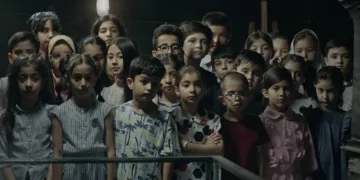
















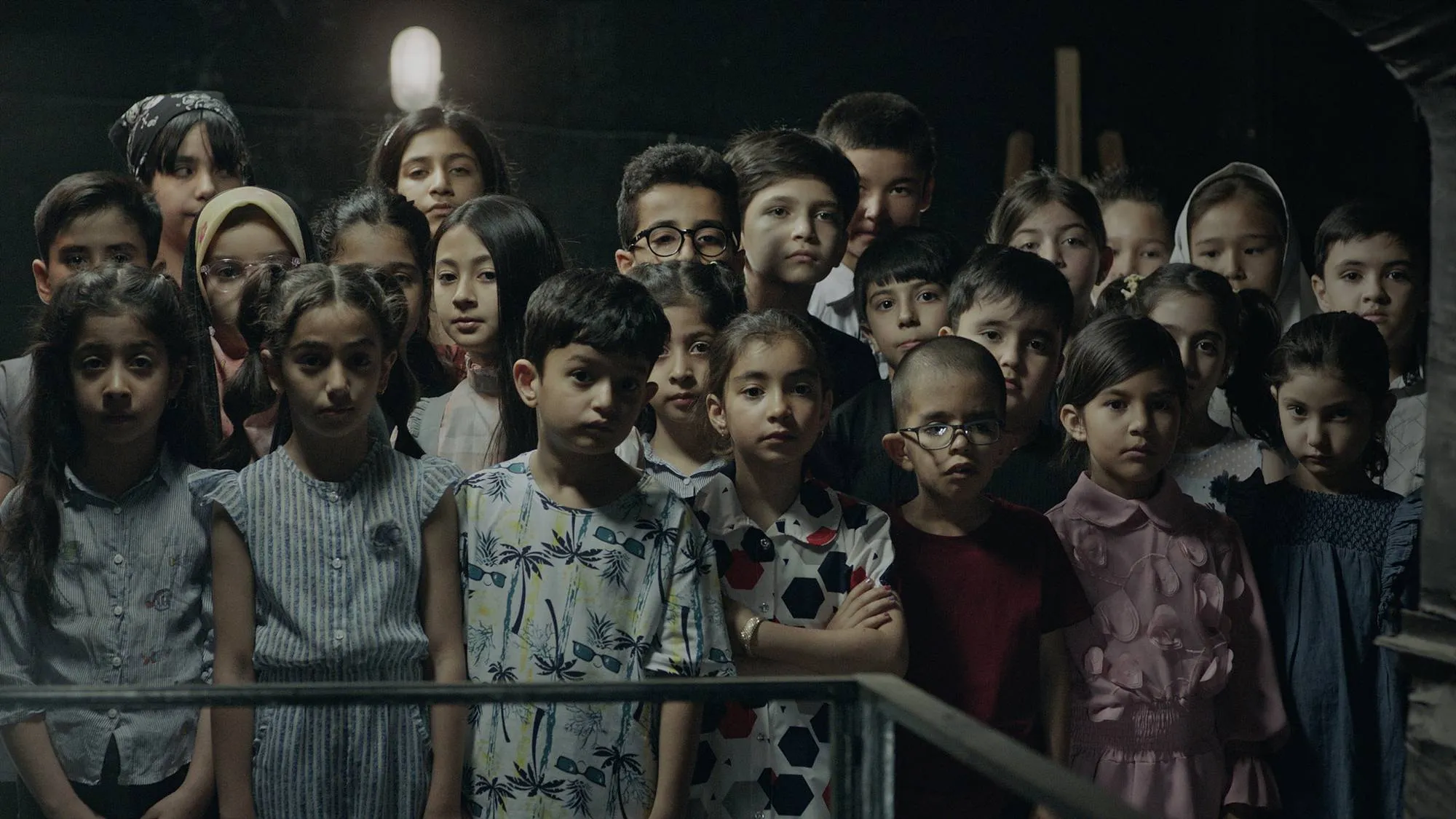

There is a distinct and quiet power in watching a film that is fundamentally about the act of watching. Without Permission opens not with a grand statement but with a simple, unsettling scenario: a man, a camera, and a room full of children. We are placed in the position of an observer to a project that feels both intensely personal and ethically fraught from its first frame.
The premise reveals itself through action. An Iranian filmmaker, returning from a life abroad, has decided to create a piece of cinema in secret, outside the bounds of official approval. His chosen subjects are the young, and his topic is the vast, complicated world of love and relationships. He sits off-screen, a disembodied voice asking probing questions to the children who face his lens.
The film immediately establishes itself as a self-aware examination of the filmmaking process, one that is less interested in providing a clean narrative and more focused on the messy, complicated, and sometimes questionable pursuit of truth. The tension is twofold: the inherent danger of creating unapproved art in a controlled state, and the more intimate, uncomfortable dynamic between a director and the young lives he is attempting to document.
A Mosaic of Form and Influence
The movie presents its ideas through a fractured, almost collage-like structure that defies conventional storytelling. Its foundation is the film-within-a-film, a choice that constantly pulls back the curtain and reminds us that everything we see is a construction. This isn’t a film that wants you to get lost in the story; it wants you to be aware of the storyteller.
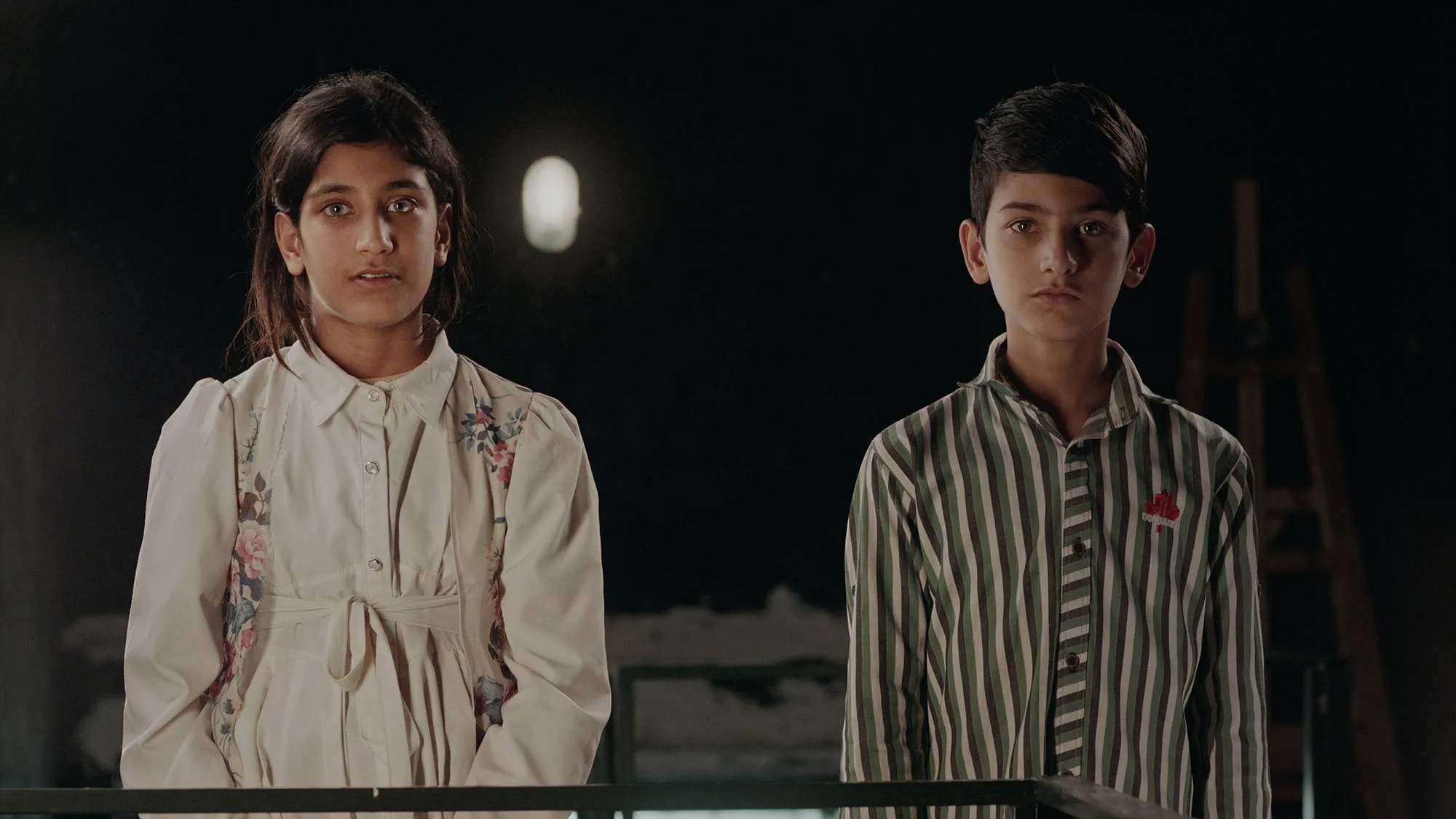
The effect is one of critical distance, making the viewer a participant in the director’s process, forced to question his choices as he makes them. The visual language deepens this feeling, drawing heavily from the rich history of Iranian cinema. When the director travels, the camera pulls back to capture his small car moving through an immense, desolate landscape. These shots are beautiful and isolating, echoing the work of masters like Abbas Kiarostami and serving to situate this small, personal project within a grand artistic tradition.
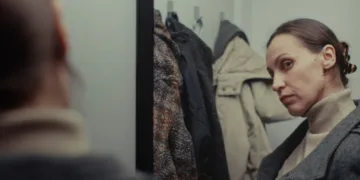
This visual style, emphasizing the vastness of the world, creates a sharp contrast with the tight, claustrophobic close-ups used in the interview room. The film braids this central making-of narrative with other disparate threads. We are shown glimpses of a bitter marital dispute unfolding in a courtroom, a story that seems to have no connection to the children.
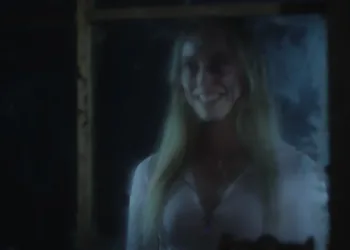
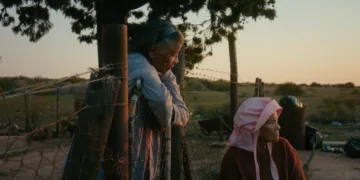
We also see brief, poetic interludes of a young boy and girl in a field, an idealized image of innocence that feels like the director’s own romantic fantasy. This mosaic of seemingly unrelated pieces forces the audience to work, to find the thematic links between the raw authenticity of the interviews, the harsh reality of the courtroom, and the artifice of the pastoral dream.
The Ethics of the Unscripted
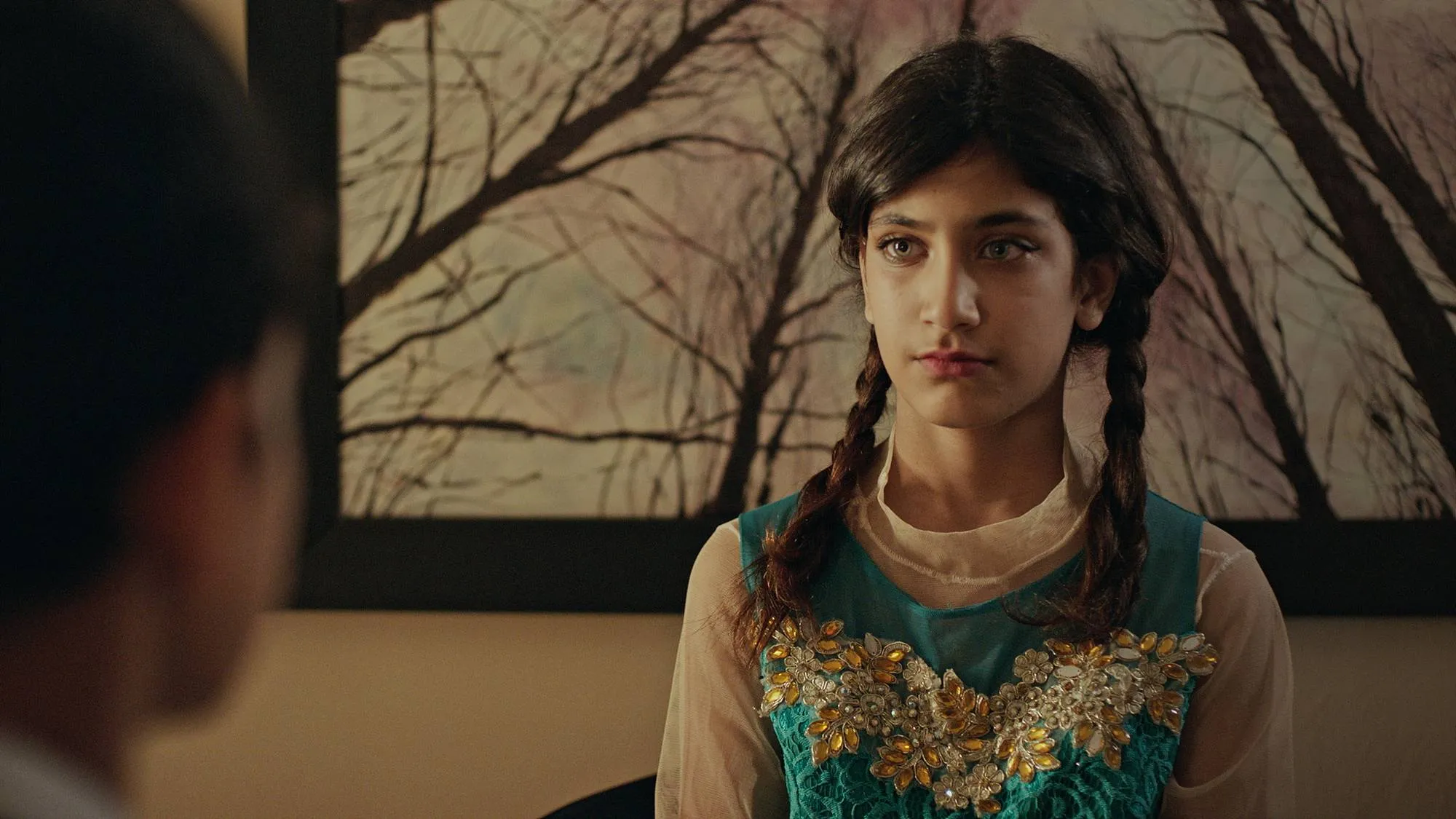
The film’s entire weight rests on the interviews with the children, and it is here that the experience becomes most complex and troubling. The director’s approach is methodical and relentless. His voice, a calm monotone from beyond the frame, gently but firmly prods the children to discuss adult matters they seem ill-equipped to handle.
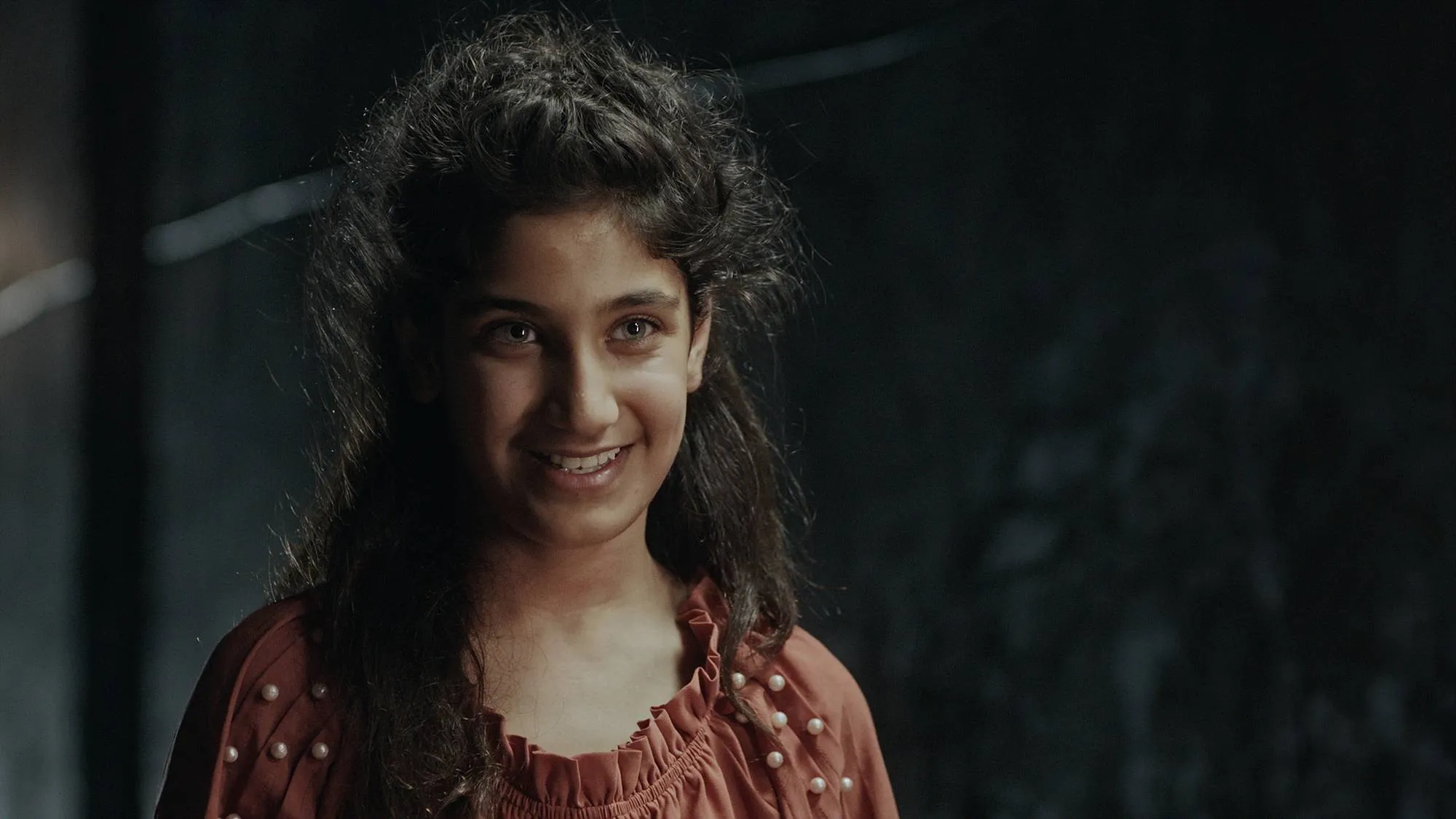
He asks them to articulate their ideas about romance, to describe their ideal partner, and to reflect on social codes like the wearing of a hijab. The camera lingers in unflinching close-ups, capturing every hesitant glance and nervous smile, amplifying the power imbalance that defines these encounters. It is a process that is difficult to watch without feeling a sense of unease. Is this a genuine effort to understand a new generation, or is it a filmmaker imposing his own obsessions on suggestible subjects?
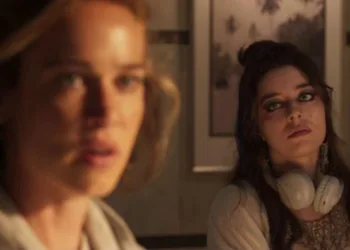
And yet, the children themselves are endlessly compelling. Their responses range from confident declarations of religious principle to shy, giggling admissions and moments of startlingly sharp insight. One older girl, in particular, seems to command the camera, fully aware of the performative nature of the situation.
The film successfully captures the contradictory ways a generation internalizes the world around them. The tension is palpable, caught between the filmmaker’s questionable methods and the undeniable authenticity he manages to capture. It is a raw and potent exchange that leaves the viewer questioning the true price of such honesty.
Art and Its Consequences
After building its world from these scattered parts, the film’s final section brings everything into sharp focus as reality intrudes. The director’s clandestine project attracts unwanted attention, and the abstract threat of working “without permission” becomes a concrete danger. It is in this climate of rising pressure that the film reveals its hidden ace: the connection between the children’s interviews and the seemingly unrelated story of the married couple.
We learn that the filmmaker has a deep, personal stake in their dispute, and his entire project is reframed as a desperate, indirect attempt at intervention. The interviews are not a sociological survey; they are a tool, a way to build a case and give voice to someone who has been silenced. This reveal transforms the film. The director’s ethically ambiguous methods do not suddenly become justified, but they are cast in a new light, born of desperation instead of cold, artistic curiosity.
The movie’s closing statement is its most powerful. A simple on-screen text reminds us that the crew’s names have been withheld for their own safety. This final gesture breaks the fourth wall completely, connecting the fictional dangers on screen to the very real risks of the film’s own production. It confirms the work as a defiant political act, one whose polemical force is undeniable, even if its methods remain unsettling.
Without Permission is a 2025 Iranian–Scottish drama film directed, written, and produced by Hassan Nazer. The film tells the story of an exiled Iranian filmmaker who, upon returning home and being denied permission to produce his scripted project, turns to secretly filming children to capture their candid voices and perspectives on love, identity, and freedom in a restricted world. The film is an 80-minute Iranian-British co-production. It had its world premiere in the Competition section of the 30th Busan International Film Festival on September 17, 2025. International sales and distribution for the film are handled by the French company DreamLab Films. At this time, details regarding a wider theatrical release or availability on major streaming platforms are not yet confirmed, as the film has recently begun its festival circuit.
Full Credits
Director: Hassan Nazer
Writers: Hassan Nazer
Producers and Executive Producers: Hassan Nazer, DreamLab Films, Screen Scotland
Cast: Behrouz Sebt Rasoul, Setareh Fakhaari, Mehdi Mehri, Reza Heidari
Director of Photography (Cinematographer): Ali Mohammad Ghasemi
Editors: Ali Navaeian, Hassan Nazer
Composer: Amin Sharifi
The Review
Without Permission
Without Permission is a brave and structurally ambitious film that succeeds as an urgent political statement about the risks of artistic creation. It is a challenging, self-aware piece of cinema that forces its audience to confront uncomfortable questions about the ethics of documentary filmmaking. However, its power is tempered by a method that often feels more intrusive than insightful, making it a film that is easier to respect for its courage than to fully embrace for its execution.
PROS
- A powerful and urgent commentary on filmmaking under censorship.
- Features genuinely captivating and authentic moments from its child subjects.
- Offers a fascinating meta-narrative on the filmmaking process.
- Structurally bold and pays clear tribute to the traditions of Iranian cinema.
CONS
- The director’s interview methods are ethically uncomfortable and feel exploitative at times.
- Its fragmented narrative can feel disjointed and slow to cohere.
- The tone of the questioning feels more like an interrogation than an empathetic inquiry.
- Some visual motifs come across as heavy-handed or overly precious.