











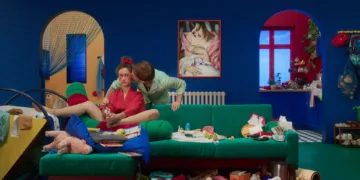















Emma Corrin and Maika Monroe helped close the BFI London Film Festival on Oct. 19 with the UK premiere of 100 Nights of Hero, a fairy-tale inflected fantasy from writer-director Julia Jackman adapted from Isabel Greenberg’s graphic novel. Festival program notes describe the film as a playful but pointed riff on storytelling and resistance, with Corrin as Hero, a quick-witted maid who protects her mistress Cherry (Monroe) from the relentless advances of a visiting aristocrat, Manfred (Nicholas Galitzine). The ensemble includes Amir El-Masry, Richard E. Grant, Felicity Jones and Charli XCX, and the Closing Night Gala took place at Royal Festival Hall.
The premiere capped a month of growing attention around the title following its Venice launch and a trailer that positioned the film as a period fable with contemporary bite. The new footage emphasized the triangle between Manfred’s wager, Cherry’s resolve and Hero’s strategic storytelling, framing the plot as a contest over agency rather than seduction. Distributors have dated a U.S. release for Dec. 5, with a UK rollout planned for early 2026.
Jackman returns to the festival after her debut feature Bonus Track screened there in 2023, and programmers highlighted 100 Nights of Hero for its “joyfully rebellious heart” and “pitch-perfect performances.” The tone extends to the production’s pop-leaning cast: Corrin leads opposite Monroe, with Galitzine as the charming spoiler and Charli XCX among the supporting players, while festival materials credit Oliver Coates with the score and Xenia Patricia with cinematography.
The closing slot continued a star-focused festival cycle that mixed awards-season premieres with high-profile galas; organizers promoted the finale as a home-turf celebration of a UK filmmaker adapting a cult favorite graphic novel with a cross-Atlantic cast. Early reactions from festival outlets described a brisk 90-minute feature that leans into folktale aesthetics while poking at patriarchal archetypes, aligning with the curators’ emphasis on storytelling as both protection and provocation.