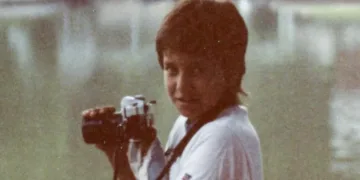













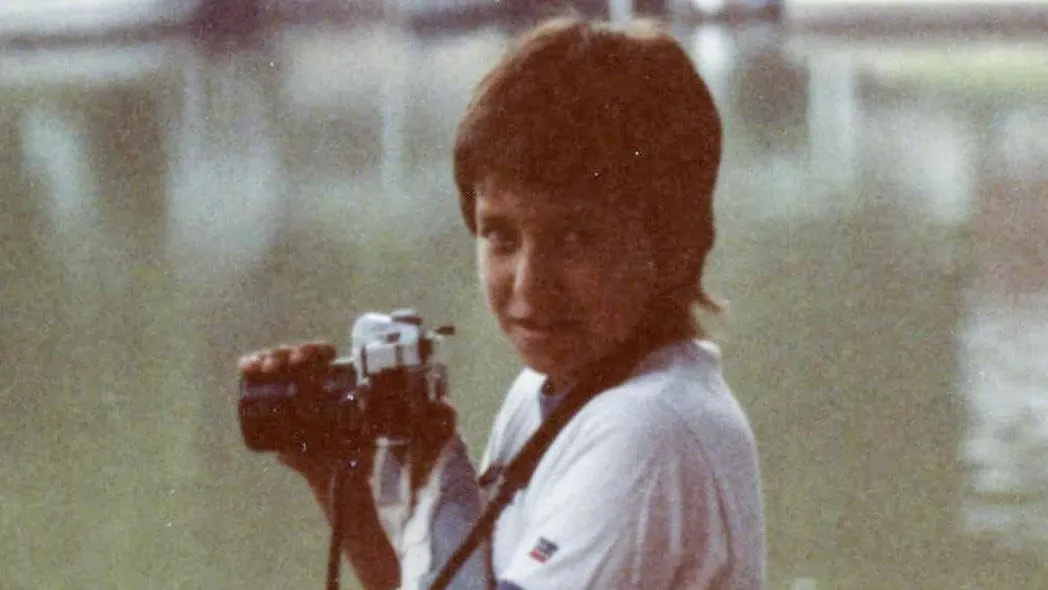

Armed Only with a Camera: The Life and Death of Brent Renaud studies the lethal meeting point of duty and fate. The short film serves as an unsentimental elegy for Brent Renaud, a respected journalist and filmmaker killed in 2022. He was shot by Russian forces in Ukraine while documenting the conflict outside Kyiv, the first international journalist fatality of that invasion. Directed by his brother and partner, Craig Renaud, the work becomes their final collaboration.
Craig threads in Brent’s last footage and brings closure to a story Brent could not complete. The tone stays personal while fixed on principle. The film’s aim is to honor Brent’s commitment to the unvarnished truth of conflict and to the lives of civilians swept into war’s indifferent machinery. The result is a descent into the cost of witness, where image becomes duty and remembrance becomes an ethical act.
The Necessity of the Lens
The documentary frames Brent Renaud’s journalism as a rigorous compassion rooted in the human experience of suffering. A Somalian man, wounded in an infirmary, names what the camera does in Brent’s hands and says it comes from the heart.
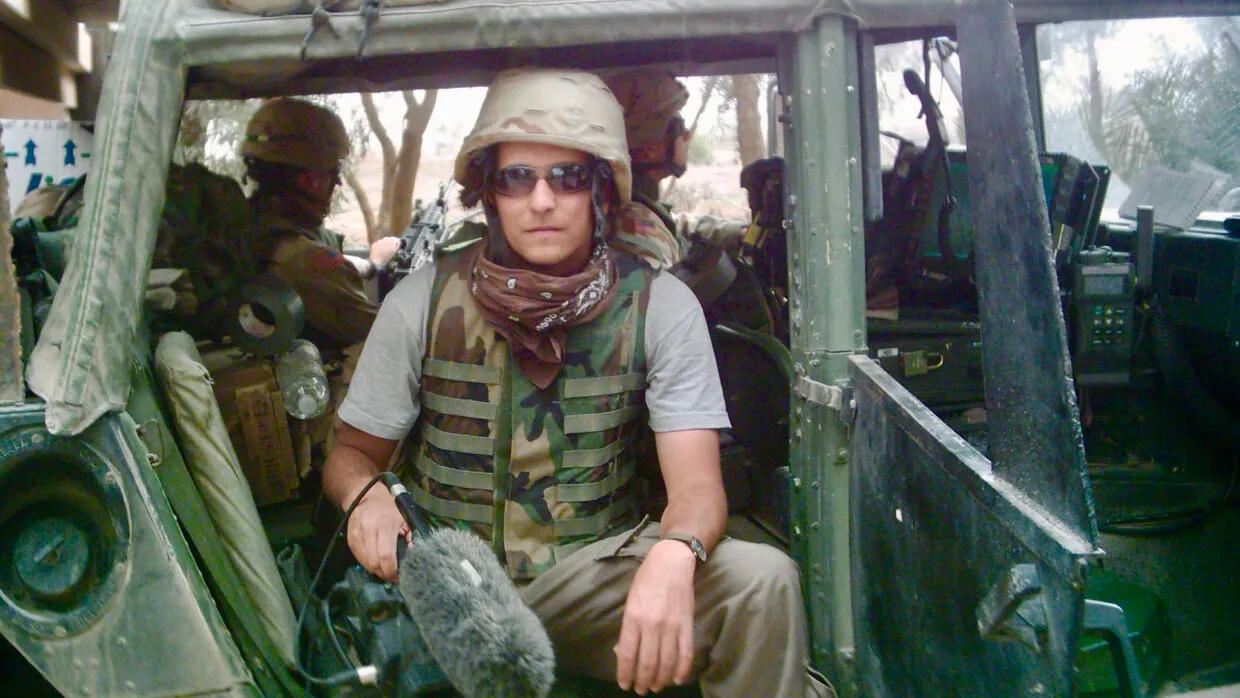
That ethic shaped a wide body of work. Assignments took him across the globe’s fractures, from the Iraq War, where he earned the trust of the Arkansas National Guard, to the Haiti earthquake, the Central American refugee crisis, and gang violence in Mexico and Chicago. The work follows the shadows people carry and the scars they do not choose.
Brent found a strange serenity in places of maximum peril. Accounts describe him as calm amid gunfire and explosions, and unsettled in ordinary social settings. Courage reads here as fidelity to vocation. The obligation to record reality overtook personal fear.
His camera held specific stories of loss: a 16-year-old at the Mexican border searching for a trace of hope, an Iraqi mother whose young son suffered permanent injury in an attack, an Afghani man mourning a family taken by an errant U.S. bomb. These images do not look away. They argue that light can be steadied against the world’s cruel ironies, even when that light is small and the night is wide.
Also Read




The Mirror of Grief
The film’s second half turns inward and records the finality of Brent’s death. Craig Renaud photographs what most families cannot bear to see. First responders handle Brent’s body and place it in an ambulance. The choice is hard to watch, and it follows a guiding tenet of Brent’s practice: truth requires sight.
Craig, shaken and present on camera, records the repatriation of his brother’s remains. He takes on this labor because he believes Brent would want the aftermath revealed. The act extends the ethic they shared and treats the aftermath as part of the story, not an epilogue outside it.
There is a scene with the photojournalist Juan Arredondo, wounded in the same ambush. Craig offers comfort and says nothing more could have been done. Out of that moment came Arredondo’s role as a producer on the film. The sequences reject abstraction and insist on the body and the witness.
We see the flag on Brent’s coffin, the tears of his mother and sister, and the words of a Chicago man at the funeral whose community work Brent once documented. Grief appears here as communal weight, a burden that presses on private life and public duty at once.
The Unadorned Aesthetic
The film’s craft follows its subject. Style remains unadorned and direct, withholding ornament and fixing attention on footage and life. The method mirrors Brent’s plain-spoken journalism, an empathy that moves through clarity. There is no distance. Craig weaves Brent’s pre-death images into a final, continuous record of their shared work.
The emotional force comes from the raw presence of people on screen and from Craig’s visible grief. The film does not stage catharsis. It offers reality and lets the viewer hold it. The piece reads as a meditation on the meaning of a free press in a world defined by conflict.
It affirms the role of journalists who show what power would prefer to leave unseen. This work of principled reporting about a principled reporter returns to a hard premise: storytelling carries risk, and telling the truth carries a price that the archive remembers and the living continue to pay.
The movie is the HBO Original documentary short, Armed Only with a Camera: The Life and Death of Brent Renaud. It is an intimate portrait of American documentary filmmaker Brent Renaud, who became the first American journalist killed while covering the war in Ukraine in March 2022. The film chronicles his dedication to capturing human stories from the world’s hot spots and details the emotional journey undertaken by his younger brother and long-time collaborator, Craig Renaud, to recover Brent’s body and his final recorded footage. The film premiered on HBO and became available to stream on Max on Tuesday, October 21, 2025.
Credits
Title: Armed Only with a Camera: The Life and Death of Brent Renaud
Distributor: HBO, Max
Release date: October 21, 2025
Rating: TV-MA or 16+
Running time: 38 minutes
Director: Craig Renaud, Brent Renaud
Producers and Executive Producers: Juan Arredondo, Christof Putzel, Tami Alpert, Stephen Bailey, Jeff Newton, Mami Kuwano Renaud, Jon Alpert, Nancy Abraham, Lisa Heller, Tina Nguyen
Cast: Brent Renaud, Craig Renaud
Director of Photography (Cinematographer): Brent Renaud, Craig Renaud, Jon Alpert, Juan Arredondo, Christof Putzel, Stephen Bailey, Andy Sarjahani
Editors: Brent Renaud, Craig Renaud, Jon Alpert, Juan Arredondo, Naomi Mizoguchi
Composer: Bonnie Montgomery, Nathan Mills, Peter Adams, Luca Mattison Tafoya, Jonathan Camps, Nicola Moneta
The Review
Armed Only with a Camera: The Life and Death of Brent Renaud
This short film is an unflinching meditation on the existential cost of truth. Craig Renaud performs a final, agonizing act of principle, documenting his brother's death to complete the narrative cycle of violence Brent sought to expose. The documentary refuses to romanticize sacrifice; it lays bare the brutal, cold reality of conflict and the immense human toll it exacts. This is essential viewing, a somber reckoning with the price of bearing witness in a world often indifferent to suffering. It is a powerful, necessary memorial.
PROS
- Unflinching commitment to journalistic principle and truth.
- Visceral and necessary documentation of the ultimate cost of conflict.
- Profoundly moving portrayal of personal grief and dedicated brotherhood.
- Effective integration of Brent’s extensive, empathetic archival footage.
- Powerful statement on the significance of a free press and accountability.
CONS
- The grim reality and raw footage of the aftermath are extremely difficult to watch.
- The compressed, short format contributes to some minor pacing unevenness.
- Fleeting references may momentarily suggest partisanship, distracting from the film's universal message.