
























![Kingdom Hearts Collection [I-III] Review](https://gazettely.com/wp-content/uploads/2026/10/Kingdom-Hearts-Collection-I-III-1-360x180.webp "Kingdom Hearts Collection [I-III] Review: KHII Holds Steady as Newer Entries Fluctuate 37")





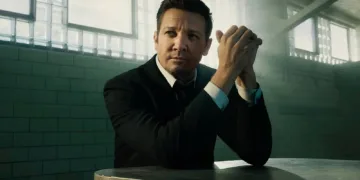
Mayor of Kingstown keeps digging into a fictional Michigan city that runs on the commerce of confinement and crime. The McClusky family functions like a reluctant royal line, with Mike McClusky, played by Jeremy Renner, serving as the unofficial Mayor. His job places him between corrections staff, police, and a lattice of syndicates that operate inside the prison and across the streets.
The premise frames the American carceral system as a machine that breeds corruption and cyclical violence. Season 4 presents a reckoning that is both civic and personal. Mike confronts a layered crisis that threatens to break him and fracture the precarious calm he has maintained.
The Erosion of Mike’s Authority
Season 4 opens by stripping away Mike’s command from the inside. The jailing of his brother, Kyle McClusky, becomes the engine for the plot and forces Mike into a posture defined by defense rather than strategy. Streaming drama keeps leaning into this pattern, removing institutional scaffolding to expose a protagonist’s soft tissue.
Pressure arrives from every quadrant. Inside the prison, Warden Nina Hobbs, played by Edie Falco, works to cut Mike’s lines of access, while the return of Merle Callahan brings a vendetta that speaks the language of spite more than commerce. The streets grow less stable. A Colombian cartel, represented by a relentless soldado, unsettles the existing order. From Detroit, Frank Moses, played by Lennie James, steps in with the patience of a city boss who reads the field and looks for leverage.
The effect is a city that feels newly perilous for everyone, including the people who once believed they understood its rules. The writing signals a real shift in stakes by letting significant characters face permanent consequences. That policy changes the viewing experience, since the possibility of loss hangs over negotiations and shootouts alike.
Mike now plays a crowded board where every piece matters and every move costs. He tries to shield Kyle while keeping Bunny Washington’s crew from getting buried by incoming forces that do not care about local custom. The show treats these developments as a reflection of a national story about power, punishment, and the steady expansion of privatized violence.
The result tracks with a broader streaming trend toward institutional critique and the erosion of traditional hero immunity. Mike’s crown sits lighter, and the room for mediation narrows into a corridor lined with bad choices.
Weariness and the Price of Proxy Power
Jeremy Renner gives Mike a specific kind of fatigue, the look of a man welded to a city he cannot stand. Season 4 lingers on quiet beats where he questions the compulsion that keeps him on the job and voices a wish to step away. Those pauses work as a commentary on labor and trauma, asking what happens to a person who absorbs a town’s worst impulses as part of the workday. The performance stays controlled, yet flashes of anger cut through and confirm the pressure he carries.

Kyle McClusky, played by Taylor Handley, provides the season’s most wrenching thread. A former officer placed among people he once arrested, he endures a stripping away of self. The prison becomes a mirror for his unresolved guilt and a grind that turns family politics into survival questions. That arc converts Kingstown’s ambient violence into household stress, which sharpens the show’s critique of systems that recycle harm. Representation here operates on two levels.
The text puts a family through the same machine it studies, and the frame suggests how institutions define identity until people see themselves only through the rules that cage them. Mike’s formal authority has slipped. He accepts the Mayor role again, yet the purpose looks narrower. Protection of kin becomes the guiding principle, and the dream of civic stability fades into maintenance of immediate safety.
Bunny, played by Tobi Bamtefa, now fights through scarcity and mounting pressure. His efforts to keep his people intact read like a street-level version of Mike’s dilemma, which turns the season into a study of parallel compromises. Merle Callahan, played by Richard Brake, embodies undiluted malice, a reminder that some players seek damage for its own reward. The season frames these figures as parts of a single economy of violence, where every deal purchases time and every favor creates debt.
Casting and the Shifting Dynamics of Power
Season 4 uses casting to telegraph authority, a common streaming tactic that trades on audience trust in recognizable performers. Edie Falco’s Warden Nina Hobbs arrives with baked-in credibility, which the show converts into quiet leverage.

Hobbs presents as a competent reformer charged with clearing rot, yet her exchanges with Mike rest on a shared truth. Everyone in Kingstown carries some degree of compromise because the structure demands it. Their scenes play like policy debates conducted through narrowed eyes, two professionals measuring acceptable harm.
Lennie James as Frank Moses introduces a different pressure set. He reads Kingstown as exploitable terrain, then senses its haunted logic and adjusts. That recognition raises the temperature for the existing order. His presence reframes the city’s criminal map and challenges Bunny’s ability to hold ground. Laura Benanti’s Officer Cindy Stephens brings a counterpoint.
She stands for the workforce that keeps the machine running while trying to maintain a basic moral line. Her vantage point matters for viewers looking for a human register inside a system built for throughput, quotas, and daily risk. The ensemble turns power into something that moves between rooms rather than something a single figure can keep.
Thematic Focus: The Corrupting Vortex
Kingstown functions like a vortex that consumes labor, hope, and allegiance. The series treats that image as social critique, arguing that large incarceration systems produce failure and graft regardless of individual intent.

Money concentrates, power calcifies, despair multiplies, and institutions drift away from care. Season 4 places Mike’s purpose under review and asks whether the city benefits from a Mayor who manages violence into temporary balance. This line of questioning matches a public mood that interrogates concentrated authority and the costs of maintaining order through force.
Production choices reinforce the thesis. The use of Pittsburgh’s industrial decay supplies steel, smoke, and chipped paint as visual shorthand for abandonment. Brief looks at quieter suburbia create a rift between safety and scarcity. Those images point to economic design that keeps the carceral sector alive and profitable. The city on screen feels like an outcome rather than an accident, which gives the season its social bite.
Pacing and the Limits of Dialogue
The season moves with intent. Focus stays tight, momentum builds, and the emotional stakes feel earned because the story allows lasting consequences. That approach gives the show impact. The writing, however, runs into trouble with dialogue. Lines lean on blunt threats and heavy profanity, a style that signals toughness yet often undercuts tension. Scenes would gain power with more restraint, letting silence and reaction do the work that shouted menace tries to do.

A smaller concern involves the logic around Kyle’s safety. Placing a former cop behind bars creates gripping stakes and exposes Mike’s softest point, yet certain beats ask for faith that strains the setting’s rules. The narrative also leaves a few factions offstage for stretches that look like convenience. These missteps register as technical noise rather than fatal problems, since the direction keeps the episodes sharp and the consequences credible.
The season’s method remains clear. Build pressure, force choices, and show the bill when the choice is made. That clarity keeps the series aligned with larger television trends that prefer consequence over reset and treat institutions as characters that shape every person who enters their orbit.
Mayor of Kingstown is an American crime thriller series co-created by Taylor Sheridan and Hugh Dillon. The show centers on the McClusky family in the fictional, prison-dependent town of Kingstown, Michigan, where the business of incarceration is the only thriving industry. The family acts as power brokers and mediators between law enforcement, prison staff, politicians, and the various gangs operating inside and outside the prisons. The series explores themes of systemic corruption, inequality, and survival within America’s complex prison system. Season 4 premiered on Sunday, October 26, 2025, and streams exclusively on the Paramount+ platform, with new episodes releasing weekly.
Credits
Title: Mayor of Kingstown
Distributor: Paramount+
Release date: October 26, 2025 (Season 4 Premiere)
Rating: TV-MA
Running time: Approximately 34–66 minutes per episode (Based on prior seasons)
Director: Christoph Schrewe (Director for Season 4 episodes), Stephen Kay, Guy Ferland, Clark Johnson, Paul Cameron, Tasha Smith (Directors for previous seasons)
Writers: Taylor Sheridan, Hugh Dillon (Creators), Dave Erickson (Showrunner/Writer)
Producers and Executive Producers: Taylor Sheridan, Hugh Dillon, Jeremy Renner, Antoine Fuqua, David C. Glasser, Ronald Burkle, Bob Yari, Michael Friedman, Dave Erickson, Christoph Schrewe, Wendy Riss Gatsiounis, Evan Perazzo, Keith Cox
Cast: Jeremy Renner, Edie Falco, Lennie James, Taylor Handley, Tobi Bamtefa, Hugh Dillon, Derek Webster, Laura Benanti
Composer: Andrew Lockington
The Review
Mayor of Kingstown Season 4
Season 4 intensifies the series' grim critique of American institutional failure. Mike McClusky's personal crisis—forced by his brother's incarceration—forces a powerful examination of the moral costs of his unofficial rule. The narrative succeeds by allowing major, permanent consequences, dramatically escalating the threat level. While the writing occasionally stumbles with heavy-handed dialogue, the stellar performances, particularly from Renner and the new additions, anchor a season that is both thrillingly focused and deeply reflective of the system's corrupting power.
PROS
- Willingness to allow fatal consequences to major characters.
- Powerful performance capturing Mike's profound weariness and complexity.
- Unflinching critique of institutional failure and systemic corruption.
- Strong additions from Edie Falco and Lennie James who elevate the tension.
- Tight focus and high intensity throughout the season's structure.
CONS
- Loose, excessive, and heavy-handed dialogue that can feel forced.
- Flaws in plot logic regarding Kyle's safety as a former police officer inside the prison.
- Minor instances of characters or factions disappearing for plot alignment.







