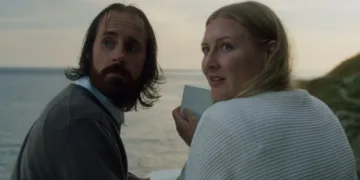










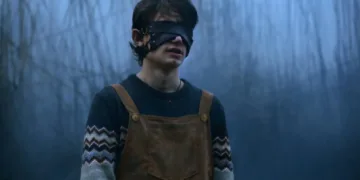













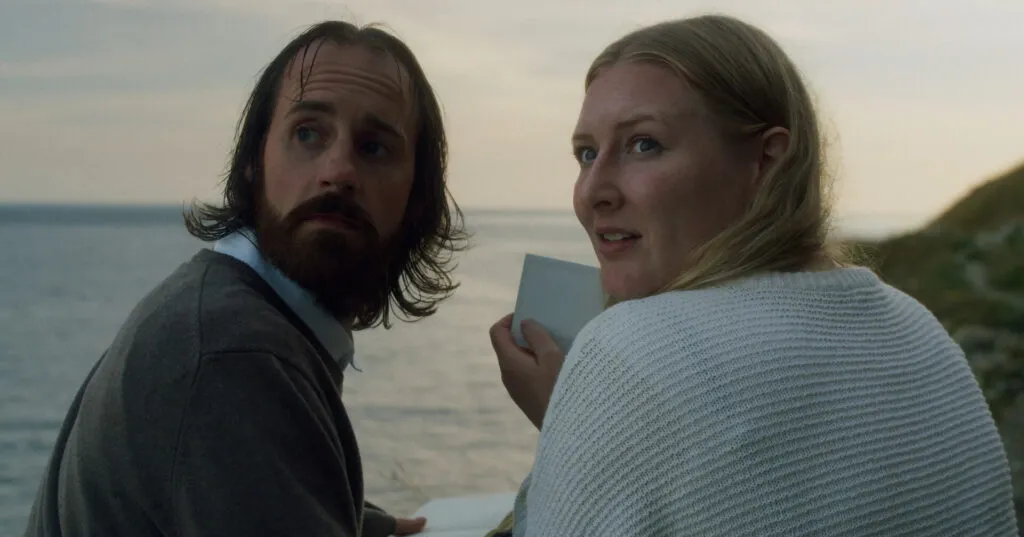

A salt-stung hush and an endless corridor fill the frame, and isolation takes hold at once. Luke Tedder’s The Caretaker plants its feet in a measured psychological mode from the opening stretch. The story follows Eddie Hartwood (Ben Probert), a withdrawn, non-verbal young man who arrives at the decaying Lockbridge Academy on the English coast after the traumatic loss of his cruel mother, a weight he carries in every movement.
The academy belongs to the Aberdeen family, a wealthy and domineering clan that meets Eddie with instant contempt. Their presence shapes the film’s threat, and the estate’s past hints at a caretaker whose fate still lingers over the halls. A single human connection breaks through: Marie (Mackenzie Larsen), a cleaner whose quiet companionship becomes essential. The film establishes a hush of suspense and a steady, haunted pulse from the first shot.
The Power of Silent Presence
The film’s architecture relies on the lead performance. Ben Probert steadies The Caretaker through the power of his stillness. As Eddie, the mute center of the film, he defines the emotional line of the narrative. Probert maps fragility, trauma, and bruised dignity with delicate control, using slight turns of the eyes, careful posture, and the most economical shifts in expression.
His non-verbal focus binds disparate strands of story, and the portrayal reads as precise and deeply felt. Mackenzie Larsen supports that center with a performance that radiates warmth as Marie, and the bond with Eddie lands with clarity and restraint, offering a needed anchor within an oppressive setting.
Against this sincerity stands the Aberdeen family, styled as aristocratic rot and unearned authority. The patriarch occasionally achieves a true gothic chill. Other members land less firmly. Charles Aberdeen (Scott Hume) sometimes slips toward a single register, closer to pantomime villainy, and that narrowness softens the film’s attempt at sustained, realistic tension.
Competing Narratives and Thematic Drift
The structure reaches for a careful balance. A substantial portion centers on Eddie and Marie’s effort to uncover the Aberdeens’ secret, a line that threads through strange incidents and possible apparitions. When this investigation leads, it creates forward drive and a steady charge of suspense.
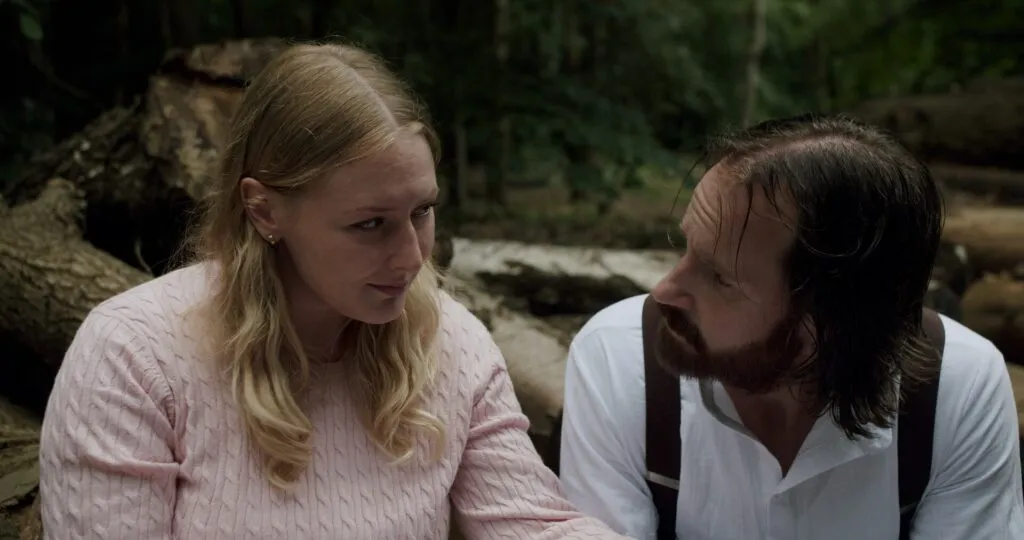
The film pairs that mystery with a personal theme of childhood and maternal trauma. Scenes that touch Eddie’s past carry force at the start and again at the end. During the middle movement, that thread loosens and slips into the background. The late revelation, while striking, feels less connected to the steps that precede it, and the emotional handoff between mystery and memory does not always hold.
The piece keeps attention across a nearly two-hour runtime through a slow-burn approach, yet recurring patterns appear, and pacing slackens at moments. The film restores energy with a final act that embraces experiment and lands with satisfying intent.
Aesthetic Control and Flawed Specters
Tedder directs with a clear sense of atmosphere and timing. The film’s strength comes through in small, intimate encounters and in an exacting use of the location. A modest budget never dampens the presence of the coast or the long, dim corridors, and the lighting carves space with confidence that reads like a “big budget vibe.”
The cinematography serves this design with close work on faces and composed contrasts of light and shadow. Sound choices heighten the mood. Silence dominates, which turns rare spikes of noise and well-timed scares into sharp accents. Within this craft, the supernatural line shows the film’s softest edge.
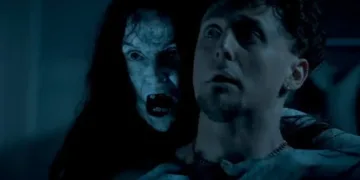
The ghostly material distracts from the sturdy human drama and the psychological tension rooted in Eddie’s interior life, and those images carry less conviction than the grounded scenes that surround them. The closing movement returns to strength, making a bold formal choice and refusing tidy closure. The film ends on a statement that feels unresolved by design, haunting in tone, and newly resonant, and that final insistence lifts the work.
The Caretaker is a 2025 British psychological thriller/horror film, written and directed by Luke Tedder. The movie follows Eddie Hartwood (Ben Probert), a mute and traumatized young man who takes a caretaker job at the isolated Lockbridge Academy, run by the secretive and sinister Aberdeen family. The film premiered at several international film festivals in 2025 and secured its UK and Ireland theatrical and VOD distribution rights with Ajamax Productions. It was notably part of the FrightFest 2025 lineup. The film has gained recognition on the festival circuit, particularly for Ben Probert’s non-verbal performance. While a specific broad release date or current streaming platform is not yet available, its distribution deal suggests it will be accessible soon.
Credits
Title: The Caretaker
Distributor: Ajamax Productions
Running time: 1 hour 57 minutes (117 minutes)
Director: Luke Tedder
Writers: Luke Tedder
Producers and Executive Producers: Andy Luther
Cast: Ben Probert, Mackenzie Larsen, Scott Hume, P G Pearson, Lauren Shotton, Chris McQuire, Livvy Dawson
Director of Photography (Cinematographer): Luke Tedder
Editors: Luke Tedder
Composer: Ollie Rann
The Review
The Caretaker
The Caretaker succeeds as a deeply felt character drama carried by Ben Probert's incredible, non-verbal performance. The film establishes a potent atmosphere of isolated dread and class tension, making expert use of its coastal setting and sound design. While the central mystery occasionally overshadows the protagonist's trauma narrative, and the supernatural elements feel less developed, the movie’s commitment to an emotionally authentic and complex final act marks it as an impressive piece of independent cinema. It delivers moody, heartfelt storytelling that leaves a powerful impact.
PROS
- Exceptional, non-verbal central performance by Ben Probert.
- Potent atmosphere created by the coastal setting and strong sound design.
- Visually impressive cinematography, giving a "big budget vibe."
- Believable and moving emotional core established by the relationship between Eddie and Marie.
- Bold, creative, and complex final act that refuses easy resolution.
CONS
- The supernatural/ghost elements are generally weak and feel like a distraction.
- The personal trauma storyline sometimes takes a backseat to the central gothic mystery.
- Some antagonists (specifically Charles Aberdeen) lack nuance and verge on being cartoonish.
- Pacing can occasionally feel repetitive or slow during the mid-section.