


























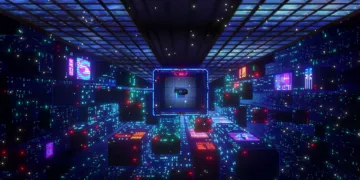




A blinding flash of white light erases your history. That is how you meet Agent I. You play a seasoned veteran who made a rookie mistake. You triggered your own neuralyzer. The story uses that self-inflicted reset to justify the tutorial phase. Your knowledge matches the character’s current state.
Agency protocols are a blank for both of you. You relearn the ropes of the Men in Black organization together. The setting immediately lands on a distinct 1990s atmosphere. The world feels analog-futurist, packed with chunky tech and the kind of bureaucratic absurdity tied to the original films.
Agent L serves as your handler, guiding you through the confusion over radio comms. The narrative wastes little time establishing the stakes. A conspiracy is forming inside the agency walls. A “Most Wanted” list of alien fugitives threatens the safety of Earth.
Your assignment is to hunt them down while carrying the suspicion that a mole exists within your own ranks. The tone keeps high-stakes espionage alongside the campy humor fans expect. You work as the cleaner for a mess that seems to originate from inside the house. The plot provides a functional framework to move you from location to location.
Espionage, Gadgets, and the Bureaucracy
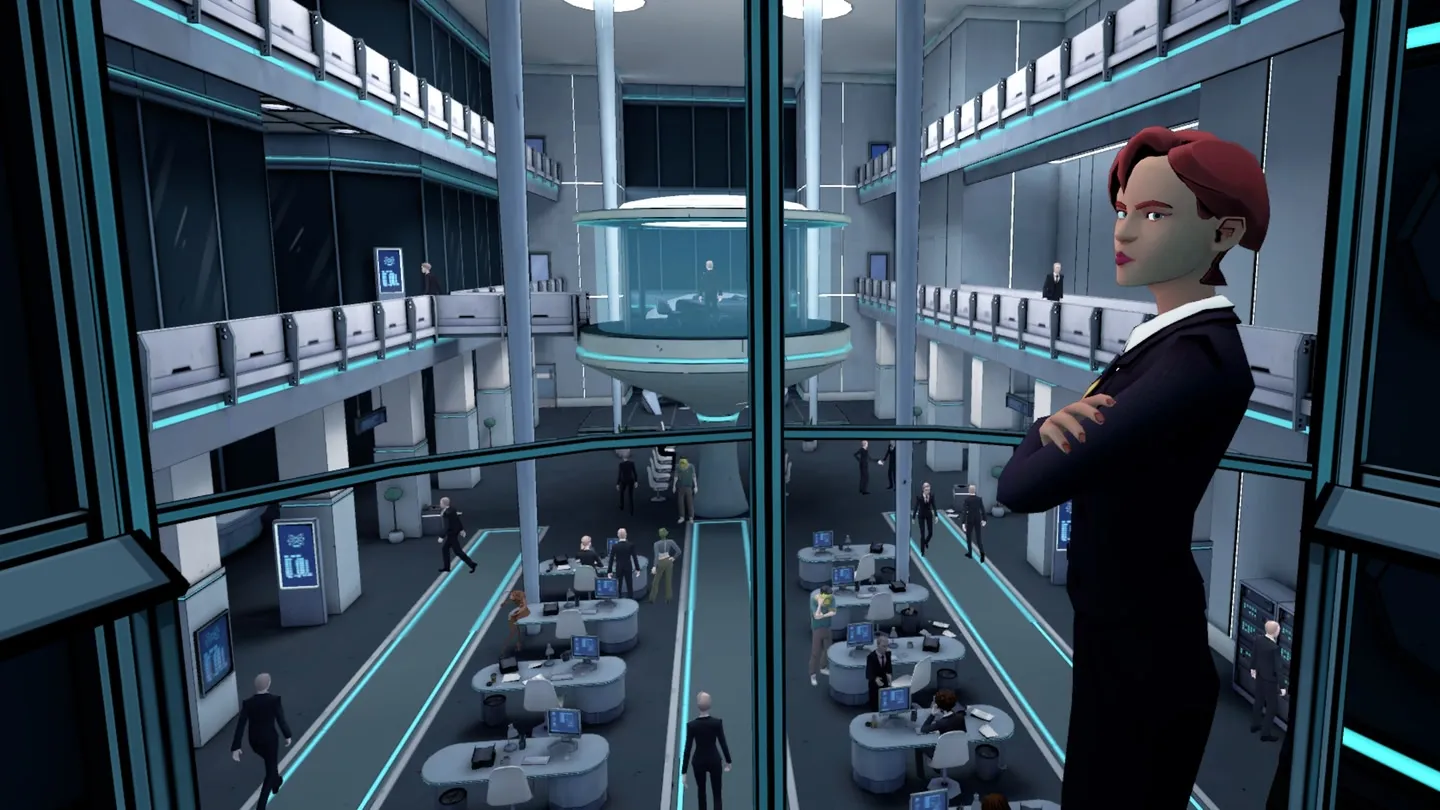
The game anchors your experience in the MIB Headquarters. The hub is a walkable space: pristine white corridors, a breakroom where coffee-drinking worms gossip, and a personal terminal that lets you customize your suit. That downtime grounds you in the world before you step out into the field. Missions usually follow a structure of infiltration and investigation. You enter civilian environments like warehouses or office buildings under a cover story. Your job is to sniff out extraterrestrial activity without alerting the local population.
Discretion drives the loop. If a human NPC catches you holding a plasma rifle or using alien tech, panic can spread fast. A “Trespassing” warning might flash. NPCs might run. You raise your neuralyzer, flash it, and scrub their short-term memory. The cycle of snooping, getting spotted, and cleaning up creates a satisfying rhythm. You feel like a secret agent sealing loose ends before they turn into real trouble.
Also Read






Your arsenal includes several gadgets built for environmental puzzle-solving. Magnet gloves let you manipulate objects with telekinesis. You pull heavy metal grates off walls or snatch keycards from a distance. The physics feel substantial, giving weight to the objects you move. The standout tool is the remote-controlled spider-bot. You toss the mechanical arachnid into vents or narrow gaps.
The view snaps to the robot’s camera, and you scuttle through pipes to solve electrical puzzles behind locked doors. These tools hint at a deeper immersive simulation approach. The execution often feels stiffer. Stealth mechanics suffer from inconsistency. Guards spot you through solid objects or from angles that do not make sense. Distractions can fail to pull attention. The game can push you into a shootout because the quiet path breaks.
Ballistics and Alien Hordes
When the cover blows, the game shifts gears completely. It turns into an unapologetic arcade shooter. The transition from sneaking to blasting happens fast. You start with a standard-issue pistol with infinite ammo. It works as a reliable backup when things get chaotic. As threats escalate, you gain access to heavier ordinance like shotguns and tri-barrel energy weapons. These weapons carry distinct weight. They feel appropriate for the over-the-top setting.
The reload mechanic is a tactile highlight of combat. You press a button to eject the spent heat cartridge. You then flick your wrist to snap the barrel back into place. That physical action connects you to the weapon and turns a routine step into a satisfying rhythmic motion. You need this firepower against the Cylathians. They appear in armored and unarmored forms, and survival depends on learning their attack patterns. Boss fights against the “Most Wanted” targets require more thought. You expose weak points or use the environment to gain an edge.
Players seeking pure action can access Invasion Mode. This separate wave-based horde mode supports solo play and cooperative play. You face increasingly difficult swarms of enemies and earn currency for every takedown. Between waves, you get a brief window to spend that cash. You buy health packs, upgrade weapon damage, or install automated turrets. The mode strips away the story to focus purely on shooting mechanics. It extends the life of the game significantly for players who enjoy the core combat loop.
Artistic Style and Technical Reality
The visual direction leans heavily into a cel-shaded, comic-book aesthetic. This choice sidesteps the need for photorealism, and realistic graphics often tax standalone VR hardware like the Quest. The developers commit to a stylized look. The image reads crisp and richly colored.
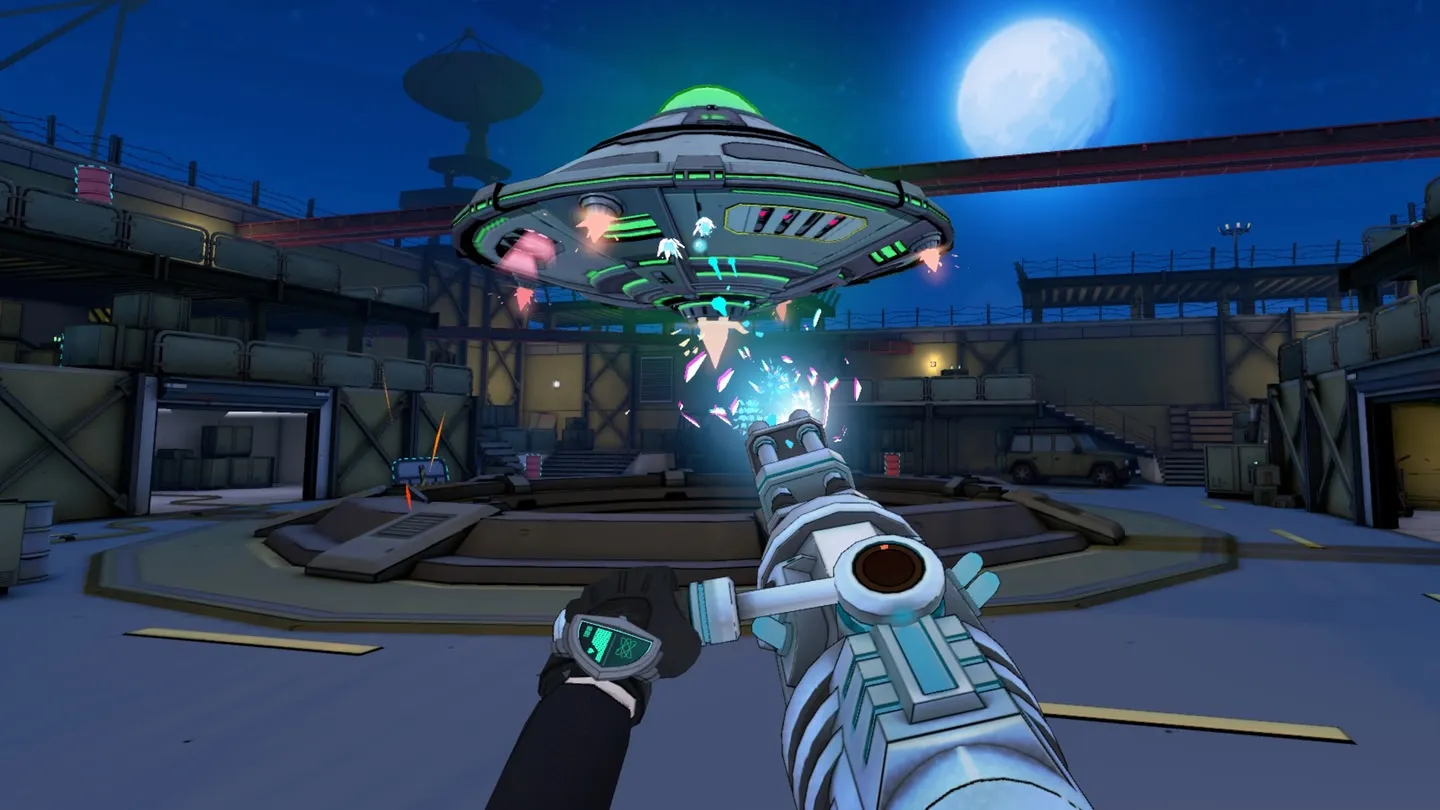
Sharp lines and bold colors fit the source material. The mundane human world uses a muted palette of greys and browns. Alien technology cuts through that dullness with neon greens and glowing purples. This visual language helps you read a space quickly. You can tell what is interactive and what exists as background dressing.
The game also offers comfort settings tied to these visuals. Brightness and contrast sliders help when moving between dark, moody mission areas and the bright white halls of the HQ.
Audio design complements the visuals effectively. Voice acting for the various aliens and agency staff brings personality to the experience. The banter between Agent L and the various aliens fills the silence of the linear levels, giving character texture where the plot can feel thin.
Technical performance is less consistent. Players may encounter bugs during a playthrough. Some are harmless visual quirks, like clipping geometry or floating objects. Others are more severe, including scripted events that fail to trigger and force a complete mission restart. The game carries a lot of charm. These rough edges can occasionally break immersion.
The Review
Men in Black: Most Wanted
Men in Black: Most Wanted acts as an entertaining VR shooter that captures the specific tone of the franchise. The gunplay offers tactile satisfaction, particularly with the manual reloading, while the comic-book visuals look sharp on the headset. The game stumbles with its stealth mechanics and frequent technical glitches, which can interrupt the flow. It succeeds as a lighthearted action romp for fans, even if it lacks the polish required to become a classic.
PROS
- Satisfying manual reload mechanics
- Vibrant cel-shaded visual style
- Authentic 90s franchise atmosphere
- Fun arcade-style combat loops
CONS
- Inconsistent stealth gameplay
- Frequent technical bugs and glitches
- Unreliable enemy AI behavior
- Short campaign duration