




























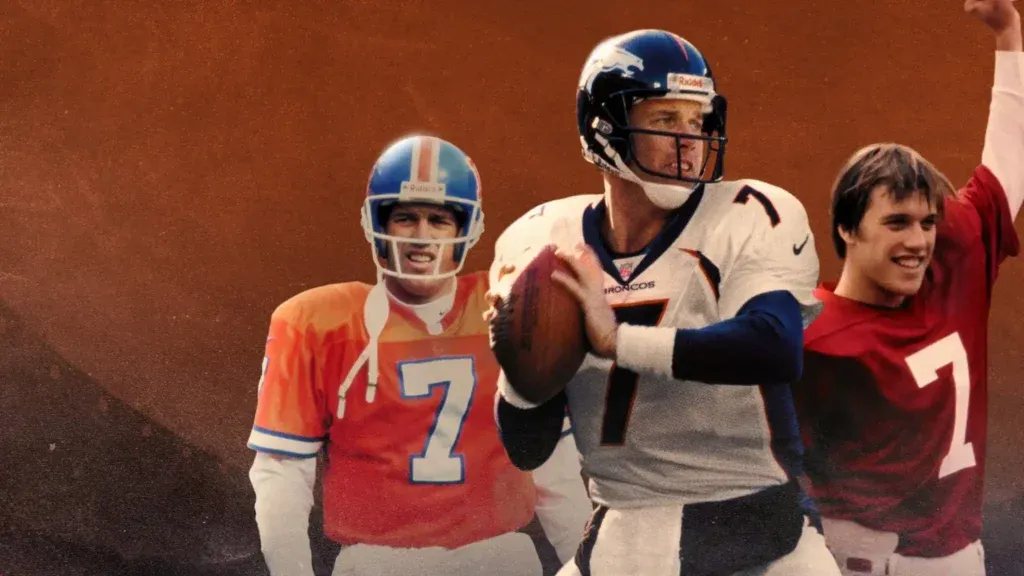

Ken Rodgers and Chris Weaver lay out John Elway’s life with a clear, ordered structure. The documentary plays like a straight timeline of a Hall of Fame quarterback, starting with his collegiate dominance at Stanford and carrying through sixteen seasons with the Denver Broncos. It treats Elway as a cornerstone of football history, pointing to him as a marker of the league’s move toward the modern mobile passer with a powerful arm. The film tracks the full arc of his playing career and keeps its attention on the raw talent that reshaped expectations for the position.
The filmmaking choices mirror that intent. There’s no appetite for sensationalist drama or tabloid-style framing. The story sticks to a clean chronology designed to stay easy to follow for casual viewers. Elway speaks for himself and guides the audience through his history, with coaches, teammates, and family members reinforcing his recollections.
That combination creates a sleek piece of sports media built around career facts and controlled reflection, keeping outside controversy at arm’s length. By the time the film settles into its rhythm, it has placed Elway as the defining face of his franchise and a steady pillar of the sport.
The Weight of Expectations and the Drive for Redemption
A lot of the tension comes from the weight placed on Elway early. He enters the professional ranks framed as a savior for a franchise in trouble, and the scrutiny arrives immediately. The film stresses how quickly the conversation locked onto one question: could he lead a team all the way to the ultimate prize, even with rare physical gifts?
Elway’s arm strength and mobility get treated as legend, and the documentary returns to those traits again and again as a kind of baseline stat line. What keeps the narrative moving is how those gifts fail to silence the doubts for a long stretch.
The film tracks a grinding run of frustration defined by multiple Super Bowl defeats, turning each loss into another mark against his legacy in the public imagination. The pressure piles up until it starts to feel like the story is being played on a single win condition: a championship as the proof required for “all-time great” status.
That goal shapes the emotional spine of the documentary. You watch Elway become increasingly fixated on the need for a title, and the film ties that fixation to the cost paid by his body. In his late thirties, his body begins to break down, and the documentary presents that decline as part of the stakes.
His competitiveness keeps him in the league, and that stubborn persistence sets up the late-career surge that shifts the tone. The championships at the end land as historical validation and the film’s emotional high point, reframing his arc into a story of a talented quarterback who finally secured the defining achievement.
A Polished Portrait of a Sporting Icon
The documentary’s main storytelling system is Elway’s voice. Making him the primary narrator brings an intimacy that feels close and personal, even while the film stays within the boundaries of what he’s willing to share. The perspective is presented as direct and sincere on its own terms, which gives the project a smooth, guided feel, like the viewer is being walked through a curated highlight reel with personal commentary stitched in.
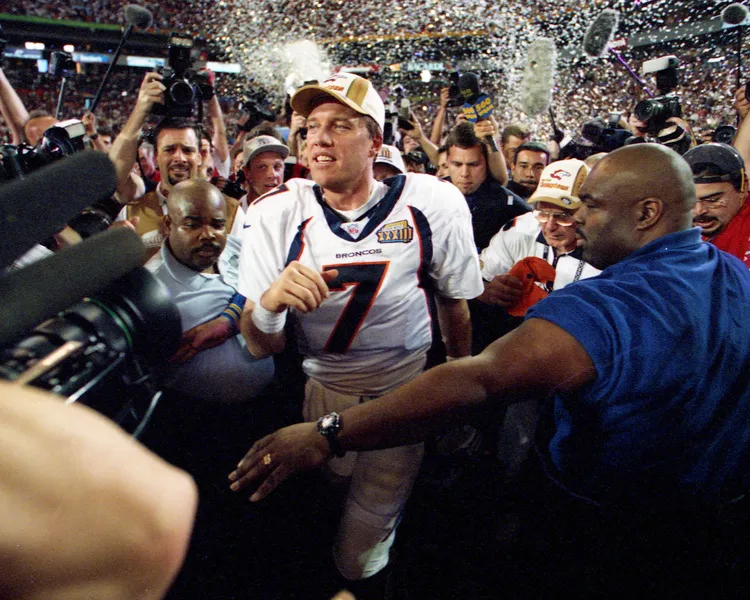
Visually and structurally, it carries the polish of a high-budget streaming profile built to celebrate athletic greatness. The tone is reverent, leaning hard into the framing of Elway as a heroic figure who clears every obstacle placed in his path. That choice shapes what the film emphasizes and what it sidelines. It gives far less space to his reputation as a villain in places like Cleveland, where some fans saw him as the smug antagonist who crushed playoff hopes year after year.
By keeping that “heel” image mostly out of frame, the documentary commits to an inspirational arc and plays it with sincerity. The filmmakers treat his accomplishments with earnest respect and aim for the rush of being inspired by perseverance. The result feels like a celebration that expects the audience to already accept Elway’s stature in the sport, then uses that assumption to keep the story moving without a lot of skepticism.
The Limits of a Managed Narrative
For all its reach across his career, the documentary often stays at surface level. It turns professional heartbreak into a simple engine for motivation and treats failure as fuel for future success. That keeps the pacing clean and forward, and it also means the film avoids spending real time on the psychological damage or personal cost that can come with that kind of pressure.
The project also carries the feel of full subject approval, which narrows what it’s willing to explore. One glaring gap is the lack of a detailed look at his years as a General Manager. The film acknowledges that period briefly, even though his executive tenure mattered to the Broncos in a way comparable to his on-field era. The documentary keeps its attention locked on the playing days, leaving that later chapter without the same weight.
That approach extends to other messy or controversial edges, which stay pushed to the margins. The framing remains safe, and die-hard fans may feel like they already know many of the stories being retold. For viewers who are less familiar with his life, it works as a high-quality recap with a confident voice guiding the timeline. It lands as an authoritative career account, while the more complicated truths that can turn a sports profile into a sharper character study remain largely out of reach.
The documentary “Elway” premiered globally on Netflix on December 22, 2025, following its world premiere as the Closing Night selection of the 48th Denver Film Festival on November 8, 2025. As of today, December 24, 2025, the film is available to stream exclusively on Netflix. This feature-length documentary offers an intimate and comprehensive look at the life and legacy of Hall of Fame quarterback John Elway, tracing his journey from his standout collegiate years at Stanford to his legendary 16-season career with the Denver Broncos, culminating in his back-to-back Super Bowl victories.
Full Credits
Title: Elway
Distributor: Netflix
Release date: December 22, 2025
Rating: TV-14
Running time: 1 hour, 38 minutes
Director: Ken Rodgers, Chris Weaver
Writers: Ken Rodgers, Chris Weaver
Producers and Executive Producers: Jason T. Reed, Angus Wall, Terry Leonard, Kent Kubena, Peyton Manning, Brian Rolapp, Ross Ketover, Keith Cossrow, Jessica Boddy, Jamie Horowitz, Jesse Sisgold, Jon Weinbach, Dan Marks
Cast: John Elway, Peyton Manning, Adam Schefter, Mark Jackson, Mike Shanahan, Dan Reeves, Mike Golic, Chris Berman
Director of Photography (Cinematographer): DJ McConduit
Editors: Carlos Haynes
Composer: David Robidoux
The Review
Elway
This film provides a professional overview for viewers curious about the history of number seven. It works as a respectful tribute while lacking the depth required for a definitive study. The high production values create a smooth experience. However, the story feels managed to prevent any real tension. It remains a satisfying look at a significant era of the sport.
PROS
- Clear linear structure.
- Personal insights from the player.
- Professional visual quality.
CONS
- Limited critical analysis.
- Neglects the executive years.
- Few surprises for longtime followers.