































The bright, sunlit opening credits of the nineties sitcom offered a polished take on displacement. This series spent four seasons tearing up that sheen. Season four arrives to complete the job. Senior year at Bel-Air Academy becomes the setting for a last test of privilege and survival. Will Smith has moved far from the carefree joker from Philadelphia. He is a young man living with the aftermath of a violent abduction and a family history that demands attention.
The Banks residence carries the heat of a pressure cooker, with little comfort left in the idea of home. Vivian and Philip face a late-life pregnancy that threatens to reorder their lives. Their children stare down graduation and the demands of an elite environment that treats expectation like law.
This season frames Bel-Air as a surveillance state. Wealth shields you, then marks you. The writing stays sharp. The stakes stay intimate. The final stretch asks what happens when the myth of the American dream collides with the reality of Black interiority. Legacy sits in every room, and so does the cost of staying on top.
Internal Fractures: The Weight of Survival
Will Smith enters this last chapter keyed up and watchful. The opening scene puts him in motion, running hard, his body acting out a mind trying to outrun the memory of his kidnapping. The trauma refuses to stay in the background. It powers his senior year and shapes the way he moves through every choice. College applications sit in front of him, untouched. The blank glow of admissions essays mirrors the paralysis created by “maybes” that never stop multiplying. He carries the fear that one wrong step will unravel the life he built in California. That fear strains his relationships with his peers and isolates him inside his own head.
Basketball becomes his attempt to reclaim agency. The court offers a place with clear rules and outcomes tied to effort, not access. He wants a future that rests on his own work, not Philip’s wealth. He needs proof that he can stand alone if the Banks’ protection breaks down. The season keeps that need close to the surface, turning even routine scenes into reminders of how quickly security can turn into performance.
Carlton Banks carries a different kind of pressure. He is working through recovery from addiction inside an academic environment built to punish weakness. He reaches for words like “mojo” and “audacity” as armor, a practiced confidence covering something fragile. The return of Amira, coming back from her own time in rehab, shakes the balance he has tried to build. Old feelings pull at him, and that pull collides with his current relationship with Marisa. The show treats the romantic tension with patience and adult clarity. It keeps its focus on what recovery asks of him when every stumble becomes public entertainment for people waiting to be proven right.
Carlton’s fight is about identity as much as sobriety. He is rebuilding himself in a space that rewards image and punishes honesty. That tension plays like a social critique in miniature: a young man expected to look “fine” in a world that mistakes polish for health. The season lets the audience see the labor behind that polish, then asks what it costs when the watching never stops.
The series also gives Carlton’s male friendships careful attention. These bonds carry intensity, jealousy, and fierce loyalty in equal measure. Carlton and his friends model a kind of platonic connection that refuses the usual high school posturing. They show up for each other in crisis. They challenge each other’s ego when it starts to run the room. The portrayal stays grounded and refuses easy clichés. As Will and Carlton move toward the finish line, the emotional stakes rise. Each of them is trying to survive the expectations attached to his name, along with the scars left by what they have lived through.
The Banks Household: Legacy and Transitions
The Banks household shifts under their feet. Vivian and Philip had been preparing for an empty nest, ready to step into a new stage with fewer daily demands. A late-life pregnancy changes the shape of that future and brings a raw sense of vulnerability into a home built on control. They are successful professionals now forced to reorganize their lives and re-evaluate what stability even means.
Philip’s attention drifts toward his latest business development. He has tied his reputation and money to a new project, and that ambition pulls him away from the routines of home. The distance shows up in his relationships, including a growing gap between him and Geoffrey. Vivian carries the physical demands of pregnancy while her anxiety sharpens, especially after the home becomes a target. The mansion stops feeling like a harbor. It reads as proof of status to people who resent what the family represents. Security becomes a daily question, and Bel-Air’s wealth starts to look less like comfort and more like exposure.
Hilary Banks moves through grief with a camera always pointed at her. She lost her husband, Lamarcus, right after their wedding, and the loss sits inside every public appearance she makes. She keeps a brave face for her social media followers, speaks at memorial events, and sustains her influencer persona. Beneath that surface, she spirals. Her relationship with Jazz turns cold and complicated, weighed down by unresolved bad blood. Hilary occupies a strange position that touches the family while keeping her at a distance, like someone invited into the frame without being allowed to take up space.
Her storyline taps into a cultural discomfort around messy mourning, especially for women expected to stay “inspirational.” The season watches her decide what to do with pain in a world that demands a clean narrative. She faces a choice between letting people see the truth of her grief or continuing a performance of perfection that keeps the algorithm happy.
Ashley Banks chases a version of herself that does not come pre-labeled by the family name. She is tired of being defined through her siblings, and that hunger for autonomy fuels conflict at school. A physical altercation with an ex-peer named Olivia becomes a flashpoint, a violent moment driven by pressure and identity colliding. Ashley wants her own people. She struggles to find a community that understands her specific experiences. She lives between the expectations of a wealthy upbringing and her own need for independence.
The show uses Ashley’s arc to stress the difficulty of growing up in a high-profile family where privacy rarely exists. Every decision becomes a statement, every mistake becomes a headline inside the halls of Bel-Air Academy. Across the household, transition becomes the season’s constant. Each person faces a shift that threatens their sense of self, and each person has to decide who they will be once the current structure falls away.
Systemic Conflict: Surveillance and the Syndicate
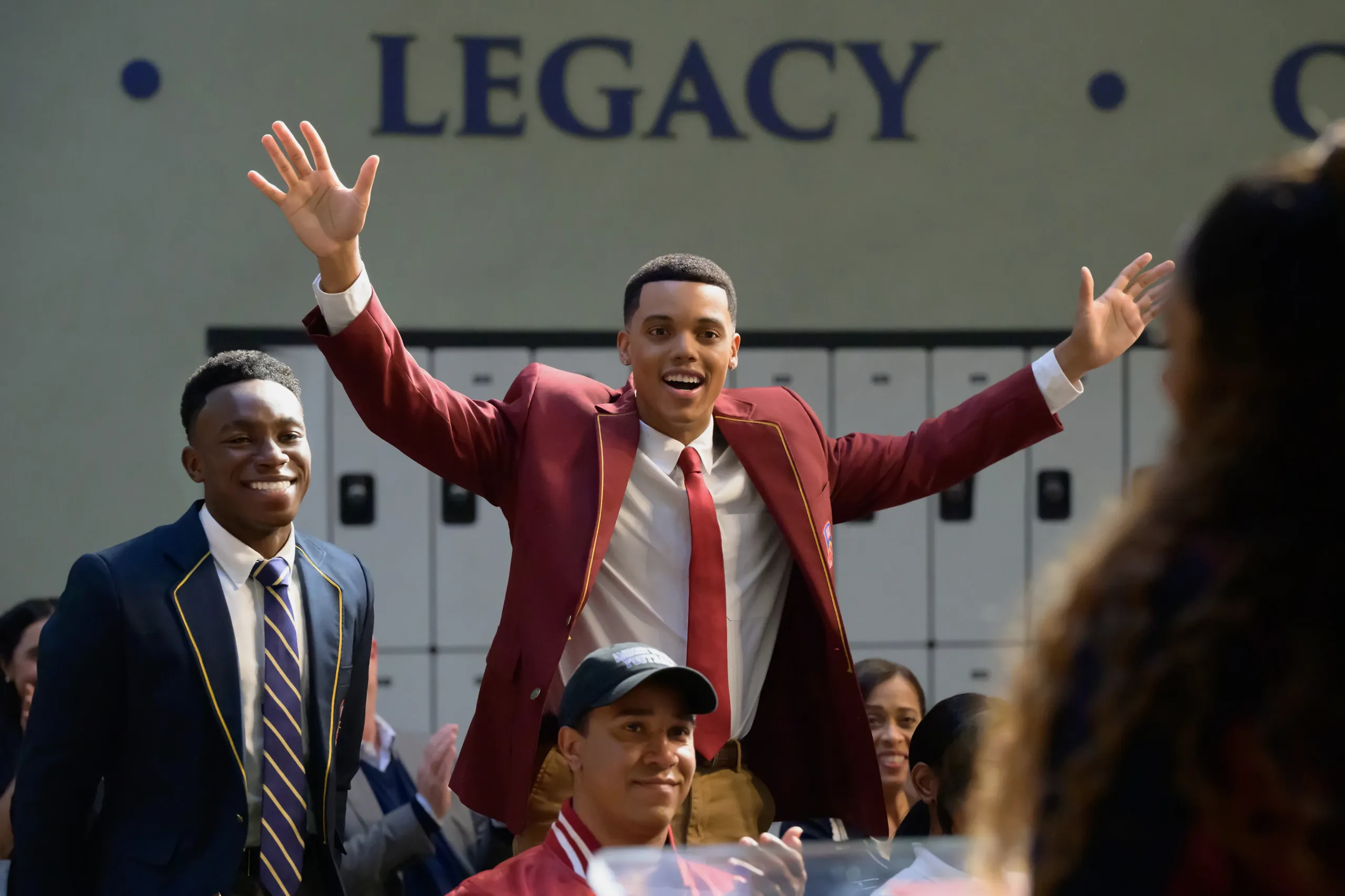
Bel-Air Academy becomes the season’s main arena for systemic conflict. The neighborhood feels like a living organism that feeds on status and control. Wealth operates as image. Wealth also functions as surveillance. The series shows characters moving through rigid structures of power and class, where visibility comes with strings attached.

The school administration pushes a policy of “oneness,” a tidy slogan with sharp edges. It is presented as unity while serving as an attempt to erase the diversity initiatives led by the Black Student Union. The conflict over “Blackccess” exposes institutional resistance to change, and the response from wealthy white students reveals a familiar entitlement. Connor mocks the effort by creating “Whitccess” hoodies, turning satire into cruelty and treating equity as a joke. Will and Carlton end up on the front lines of that fight, pushing for the right to be seen as they are rather than filtered through what the school finds comfortable.
The season’s critique lands because it connects policy language to lived consequence. “Oneness” reads like a brand, designed to look good on paper while flattening difference in practice. The show ties that flattening to the larger story it has been telling since the beginning: displacement dressed up as opportunity, control framed as care, privilege presented as neutral.
Pressure from the school meets a different kind of threat from the criminal world. Dominique arrives and raises the stakes for Philip. She leads a syndicate and carries a complicated history with Geoffrey. She demands Philip’s help laundering money. His refusal triggers retaliation. The Banks home is ransacked, and the gated community loses its illusion of safety. The event makes a blunt point: wealth offers protection, then attracts attention from forces that do not respect gates, reputations, or polite society. Dominique’s presence also pulls Geoffrey’s past into the open. She stands as a consequence made flesh, a reminder that high finance and street crime can sit closer than anyone in Bel-Air wants to admit.
The show also interrogates respectability politics through the family’s choices. The Banks have to weigh how much authenticity they will trade for social currency, and what that trade does to their sense of self. Access to elite spaces carries a cost that shows up in daily compromise. The criminal element serves as a hard reality check for the teens as well. Will and Carlton land in legal trouble after damaging a car belonging to one of Dominique’s soldiers, putting their future at risk and forcing Philip to confront the limits of his influence.
Systemic pressure comes from boardrooms and streets alike, and the season treats that pressure as relentless. Vigilance becomes a requirement for staying in power, and the family gets caught in obligations and threats that shape their daily lives. The question stays constant: how do you move through systems built to extract pieces of you without handing over your soul along the way?
Narrative Execution: A Final Bow
The final season plays with the energy of a victory lap, and it keeps its grip on craft. Morgan Cooper directs the last two episodes, bringing a sense of closure to the project he began years ago. The visual style holds steady, with glamorous, cinematic lighting that captures Los Angeles’s beauty while sustaining a tense atmosphere. The show keeps its urgency, refusing a gentle landing. The pacing across eight episodes stays tight, with scenes built to carry plot, character, and thematic weight without drifting.

This approach reflects a larger streaming-era shift toward reboots that treat familiar material as a platform for new stakes and sharper cultural commentary. The series takes a sitcom premise and reshapes it into a serious drama about the Black experience in America, using pacing and structure to keep pressure on its characters the same way Bel-Air keeps pressure on anyone who tries to live there.
The season also brings in high-profile appearances that reinforce the sense of farewell. Janet Hubert appears in a new role, a meaningful beat for fans of the original sitcom and a bridge between eras. Tyra Banks and Snoop Dogg appear as well, adding to the atmosphere of a grand finale. The cameos land as texture rather than distraction, supporting the feeling that the show sees itself as part of a major cultural moment. There is a touch of irony in how the industry tends to celebrate these victories at the finish line, after years of work making the case for taking this story seriously.
Lou’s return delivers the season’s final confrontation around fatherhood. He shows up during Thanksgiving, and the tension with Philip is immediate. Lou tries vulnerability, speaking about his past and his struggles. Philip reads it as an insult. He has been Will’s consistent father figure, and he feels Lou has no standing to challenge him. The conflict pushes toward a heart-to-heart conversation that exposes the complexity of their shared history. Thanksgiving becomes a brief reset for the household, filling in cracks in the family foundation and setting the stage for the final images.
The season closes with style and tension intact, sealing the reimagining as a successful expansion of the original concept. The Banks family exits with pride, having faced the dangers around them and found a way to hold together.
The final season of Bel-Air recently concluded its run on Peacock, delivering a high-stakes finale to the dramatic reimagining of the classic nineties sitcom. Premiering on November 24, 2025, and wrapping up on December 8, 2025, this eight-episode farewell follows Will Smith during his senior year at Bel-Air Academy. The season explores themes of legacy, mental health, and social class as the Banks family faces massive life transitions, including unexpected news for Vivian and Philip and the fallout of previous seasonal traumas. You can currently stream the complete series exclusively on Peacock.
Full Credits
Title: Bel-Air Season 4
Distributor: Peacock
Release date: November 24, 2025
Rating: TV-MA
Running time: 60 minutes
Director: Nick Copus, Morgan Cooper, Keesha Sharp, Christine Swanson, John Scott, Mo McRae, Stacey Muhammad
Writers: Carla Banks Waddles, Morgan Cooper, Felicia Pride, Des Moran, Andy Borowitz, Susan Borowitz, Andy Reaser, Justin Calen-Chenn, Colin Waite, JaNeika James, JaSheika James
Producers and Executive Producers: Will Smith, Terence Carter, James Lassiter, Miguel Melendez, Benny Medina, Quincy Jones, Andy Borowitz, Susan Borowitz, Carla Banks Waddles, Morgan Cooper, David Boorstein, Des Moran, Shukree Tilghman, Felicia Pride
Cast: Jabari Banks, Adrian Holmes, Cassandra Freeman, Olly Sholotan, Coco Jones, Akira Akbar, Jimmy Akingbola, Jordan L. Jones, Simone Joy Jones, Justin Cornwell, Alycia Pascual-Peña, Janet Hubert, Tyra Banks, Snoop Dogg
Director of Photography (Cinematographer): James Hawkinson, Christopher Soos, Keith L. Smith, Andrew Strahorn
Editors: Jeff Rafner, Douglas S. Ornstein, John Vohlers
Composer: Terrace Martin, Robert Glasper, Jacob Yoffee, Roahn Hylton
The Review
Bel-Air Season 4
Bel-Air Season 4 serves as a masterful conclusion to a risky experiment in television. It successfully transitions from a viral curiosity to a profound social commentary. The season balances the trauma of its young protagonists with the systemic pressures of their environment. While the shorter episode count creates some pacing issues, the emotional payoffs are earned. The finale provides a sense of closure that respects the legacy of the original while cementing this series as a distinct creative achievement. It is a powerful farewell to a family that redefined what a reboot can accomplish.
PROS
- Authentic portrayal of PTSD and the mental health struggles of Black youth.
- Strong performances from the ensemble cast, particularly Jabari Banks and Olly Sholotan.
- Effective use of legacy cameos that serve the story rather than just providing nostalgia.
- Sharp critique of educational institutions and the politics of diversity.
- High production value with a distinct, cinematic visual language.
CONS
- The shortened eight-episode run leads to some rushed narrative resolutions.
- The criminal syndicate subplot occasionally feels disconnected from the central family drama.
- Certain secondary character arcs receive less focus in the final push toward the end.