

















A single feather drifts through the stale air of a quiet chicken coop in Overijssel, then a massive shadow swallows the yard. Gaby’s days run on repetition: hotel rooms scrubbed clean, farm tasks stacked without mercy, silence carried like another tool. Survival sets the tempo until a hot air balloon rips across the sky and crushes her livelihood in an instant.
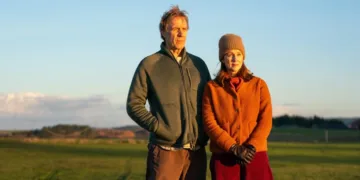
The pilot, Arnaud, steps into the wreckage as a sudden and unwanted presence. He arrives with immediate consequences, leaving ruined livestock and a charge of disorder in a life built on routine. The film frames a collision between a woman bound to the soil by duty and a man accustomed to drifting above it. The farmhouse in Diepenveen sits in the grit of rural poverty, while a soft light rounds off the sharpest edges of hardship.
Early scenes lean into the friction between a defensive farmer and the intruder who has upended her yard. Arnaud behaves like a destabilizing force in a household where every hour has already been claimed by caretaking. His landing breaks a stagnant peace and starts an unwelcome shift in how this family holds itself together.
The Architecture of a Damaged Family
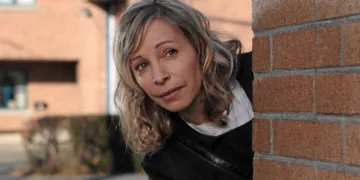
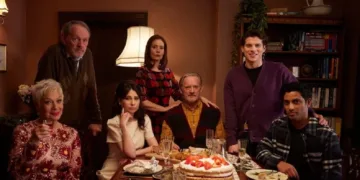
Sallie Harmsen plays Gaby with guarded stillness, a posture that suggests years of pain packed away and sealed shut. The performance lives in tension: a clenched jaw, movements cut to the quickest line, efficiency used as armor. This Gaby moves through the world like someone who no longer knows how to accept kindness or speak a need aloud. The rigidity loosens in small degrees as the story advances, and the change reads through posture and breath before it reaches dialogue.
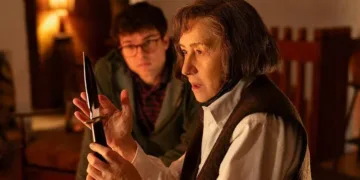
Frieda Pittoors delivers a striking performance as the grandmother, Mientje. A brain hemorrhage has taken her speech, so communication arrives through birdlike clicks and a sharp economy of glances. The character carries a quiet lyricism that hovers near the family’s daily realism, giving the household a second register of feeling without breaking it.
Kuif, the young son, channels grief as volatility. His bursts of energy feel like weather inside the home, a living marker of his father’s absence. Into that space steps Arnaud, occupying the outline of a possible paternal figure, his Flemish charm reading as slightly alien against this Dutch landscape.
One scene crystallizes the shift: Arnaud and Kuif build a chicken coop in a modernist style, working side by side with a focus that turns labor into shared creation. The structure becomes proof of connection made tangible, a bond assembled plank by plank. Pieter Embrechts gives Arnaud a rugged warmth that stands out against the home’s heaviness, offering a human temperature the household has not had the strength to generate on its own.
The Aesthetic of Pastoral Hardship
Director Tim Oliehoek brings a refined visual sensibility to working-class struggle, treating hardship with care rather than spectacle. Production design leans into 1970s elements, using a precise color palette that makes the farmhouse interior feel lived-in and considered. The spaces look worn by use, then arranged by necessity, and the film lets both truths sit together.

Tight framing gathers the expansive greenery of Overijssel into intimate compositions, turning open land into something close and pressing. The cinematography treats the rural environment as an active participant in the drama, a presence with its own patience and weight. A lingering musical score moves alongside the film’s slow pace, inviting attention to the quiet mechanics of domestic life: the pauses, the glances, the work that fills a day even when words fail.
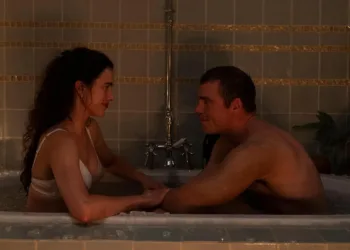
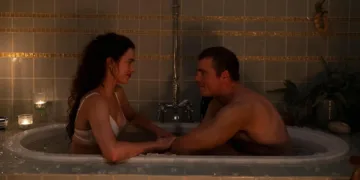
Nudity appears without artifice, filmed with a plainspoken attentiveness to bodies that need care and bodies that seek closeness. These scenes emphasize vulnerability and physical reality in moments of caregiving or intimacy, keeping the camera aligned with tenderness rather than performance. The direction holds to a deliberate tempo, pushing back against the frantic editing that dominates much modern cinema. The pacing echoes the seasonal rhythms of farm life, with time shaped by tasks and weather rather than plot acceleration. The film commits to observation and lets sensation take a back seat.
The Metaphor of the Upward View
The narrative studies the slow return to emotional health after major loss, tracing how recovery demands contact with other people and a step away from isolation. The hot air balloon works on two levels: a literal disaster that shatters stability and a figurative device that changes how the characters look at their lives. It offers height, distance, and the chance to see beyond the tight concerns of the ground.
The plot follows a familiar route, and the film earns depth through an earnest attention to human frailty. The hostility between neighbors shifts into a quiet passion that grows out of shared labor, built through the daily acts that keep a farm running and a household afloat. Late sequences return to images of flight, framing lift and open sky as signs of rising above old wounds. The visuals carry a sense of release from the burdens established in the opening movement, without pretending those burdens vanish.
Connection becomes resilience here, and community matters as something practical, not decorative, in the face of private trauma. Love functions as the engine of change, warming spaces that have long stayed cold. The film holds to a hopeful belief that damaged souls can find warmth again, and the final images linger as a reminder that perspective can alter the shape of a life.
The Balloonist premiered globally on October 3, 2025, marking a significant milestone as the first Dutch-language original feature film for Disney+. This heartfelt tragicomedy follows the story of Gaby, a heritage chicken keeper whose life is disrupted by the literal and figurative arrival of a balloonist. For viewers in the United States, the film is available to stream on Hulu and the Disney Bundle, while international audiences can watch it exclusively on Disney+.
Ful Credits
Title: The Balloonist
Distributor: Disney+, Hulu
Release date: October 3, 2025
Rating: TV-MA
Running time: 1 hour 48 minutes
Director: Tim Oliehoek
Writers: Benny Lindelauf
Producers and Executive Producers: Elbe Stevens, Floor Krooi
Cast: Sallie Harmsen, Pieter Embrechts, Beau Minnaert, Frieda Pittoors, Nazanin Taheri, Léon Ali Çifteci, Thomas Höppener, René Groothof
Director of Photography (Cinematographer): Martijn Cousijn
Editors: Joost van de Wetering
Composer: Bart Westerlaken
The Review
The Balloonist
The Balloonist succeeds as a quiet study of emotional recovery rather than a typical romantic drama. Its predictable plot is anchored by strong performances and a refined visual style that finds beauty in the mundane. While the pacing feels slow and certain characters are intentionally difficult to embrace, the film offers a sincere look at the weight of responsibility. It is a thoughtful exploration of how human connection can offer a necessary lift after a period of heavy grief.
PROS
- Exceptional physical performance by Frieda Pittoors as the grandmother.
- Rich, 1970s-inspired production design and immersive Dutch cinematography.
- Mature and natural handling of nudity and human intimacy.
- Sincere exploration of trauma and the healing process.
CONS
- The narrative follows a highly predictable and well-trodden path.
- Certain characters, particularly the son, can feel abrasive to the viewer.
- The transition from a neighborhood feud to romance feels slightly rushed.