

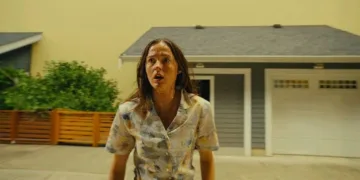

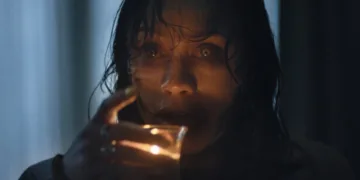










Ehrland Hollingsworth delivers a stark entry in the found footage canon with his low budget feature, Dooba Dooba. Set inside the tight confines of a secluded residence in May 2022, the film follows Amna, a musician looking for extra income through a babysitting job. She meets the homeowners, Wilson and Taylor, and their home carries the weight of a decade old tragedy like a permanent stain in the wallpaper.
Their teenage daughter, Monroe, lives with the aftershock of her brother Roosevelt’s violent murder. That grief has hardened into a house rule, the “Dooba Dooba” protocol. Everyone must speak the phrase while moving from room to room, announcing presence and intent like a verbal keycard.
The place becomes a psychological bunker where safety language turns into a rhythmic chant, catchy in the way bad slogans always are. Hollingsworth sets suspicion early. The parents move with a cold steadiness that reads as practiced. Their devotion to rigid rules plays like grief calcified into something ugly. The property’s isolation seals the premise: once the door shuts, Amna stands inside a ritual system with its own private logic, and the film dares her to learn it fast.
Chiaroscuro of the Closed Circuit
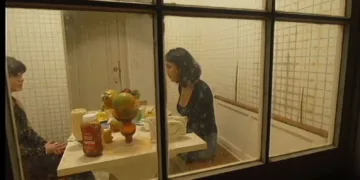
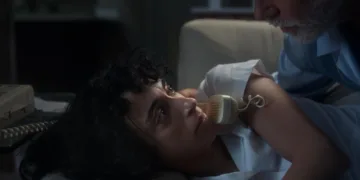
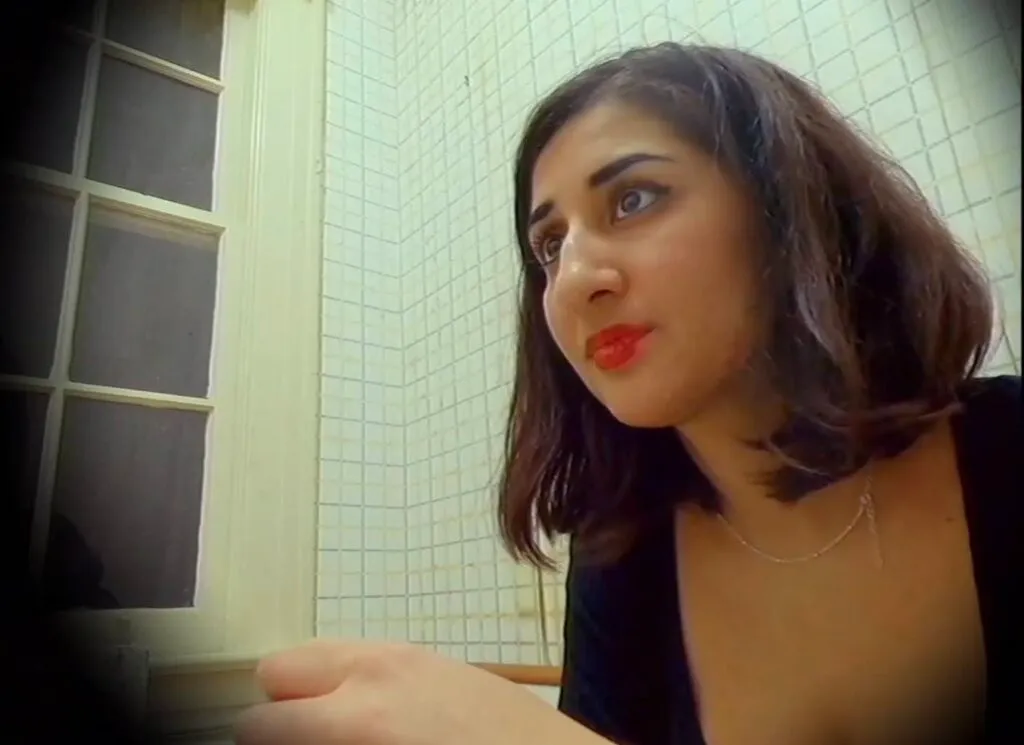
The visual design of Dooba Dooba leans on the oppressive voyeurism of in home security cameras. Hollingsworth avoids the slick cleanliness people expect from contemporary surveillance and chooses a grainy, lo lo-fi texture that feels oddly out of time for 2022. The image recalls 1990s home video and the kind of illicit tape you wish you had never found.
It removes the comfort of shaped lighting and trades it for the blunt glare of static lenses. The camera positions feel almost accusatory. Angles from ceilings and dining tables flatten space, widen faces, and hide bodies at the edge of the frame. Actors slip behind doorways, furniture, and blind spots, and the compositions keep the viewer working to assemble what the house refuses to show.
This is noir discipline translated into suburban infrastructure: hard pools of brightness, pockets of shadow, and a geometry that traps people in rectangles. The viewer’s role becomes passive and complicit. You watch through a digital scrim that reveals enough to feed dread, then withholds enough to let dread do the rest. The sound design reinforces the visual grime with constant mechanical residue.
Also Read




Electrical hums press against the ear, low frequency buzzes linger under dialogue, and sharp clicks cut through like a nervous tic. The audio never relaxes. It keeps the body tense even during quiet domestic beats. The imperfect framing and technical flaws sell a gritty verisimilitude. The film plays like material pulled from a case file, and the house feels like it has already decided what it wants the footage to prove.
The Nonlinear Geometry of a Fever Dream
Hollingsworth fractures the narrative with abrupt structural breaks. The primary security footage keeps getting interrupted by archival clips and public domain fragments. The U.S. Army Band appears. Black and white medical procedures flash in without immediate explanation. These inserts behave like intrusive thoughts, cutting through household tension and replacing it with a sense of historical sickness that hovers over the story.
The strangest intrusion comes via amateur digital slides: a PowerPoint centered on U.S. presidents and notorious serial killers. The file presents itself as a high school project by Monroe Jefferson. The choice carries a sour joke, the kind that lands with a tight smile, because even the educational format feels weaponized.
The stacking of media creates distance. It reminds you that you are watching a collage of systems recording other systems. Time gets bent as part of the method. Hollingsworth rewinds and fast forwards the security footage, and the edits interrupt any stable viewing rhythm. The pace lurches, then snaps, then stalls. It keeps the viewer slightly seasick, alert for missing beats.
The film’s cadence turns haunted through repetition, as if the house has learned to replay its own damage. That structure nudges the story toward determinism. The interruptions hint at characters pinned to a track of violence they keep circling, with the camera acting as both witness and mechanism. In the process, a familiar home invasion setup shifts into something more abstract: a study of national identity, broken memory, and the way institutions leak into private life through screens and names.
Racial Hierarchies and the Performance of Trauma
The film’s impact depends on the naturalistic work from Amna Vegha and Betsy Sligh. Their scenes swing between genuine connection and sudden spikes of hostility, and the rhythm of those shifts becomes the film’s pulse. Vegha plays Amna with grounded sense and alert intelligence, which sharpens the force of her growing awareness that the rules are not protective rituals. They are instruments. Sligh makes Monroe frightening through volatility. She can present as shy and damaged one moment, then move into violence with startling speed. The performances feel raw, close to improvisation, and that texture steadies the film when the structure turns surreal.
A deeper social horror sits inside the casting and the household’s symbolic order. Amna is a brown woman working inside a home of white people carrying names linked to American presidents. The naming choice reads as blunt by design, a signpost pointing at historical power and entitlement. The film frames those figures as people who treat the labor and bodies of others as theirs to control.
When the final act slides into depravity, the themes of racial exploitation and generational malice surface with brutal clarity. The antagonists treat Amna as a resource. The camera’s cold eye makes that reduction feel clinical, like a procedure carried out under fluorescent light. The discomfort does not evaporate when the footage ends. It lingers, held in place by the film’s fusion of private trauma and systemic cruelty, and by the sense that the house has been rehearsing this performance for years.
Dooba Dooba is a recently released indie horror film that made its debut in limited theaters and on digital platforms on January 23, 2026. The story follows an aspiring singer named Amna who takes a babysitting job that quickly spirals into a psychological nightmare. This production gained significant traction through the film festival circuit throughout 2024 and 2025 before its official wide release. You can currently find it through Dark Sky Films on various video-on-demand services.
Full Credits
Title: Dooba Dooba
Distributor: Dark Sky Films
Release date: January 23, 2026
Running time: 76 minutes
Director: Ehrland Hollingsworth
Writers: Ehrland Hollingsworth
Producers and Executive Producers: Joshua Sonny Harris, Ehrland Hollingsworth, Michelle Sabella Sligh, Amna Vegha
Cast: Amna Vegha, Betsy Sligh, Winston Haynes, Erin O’Meara, Billy Hulsey
Director of Photography (Cinematographer): David Wright
Editors: Ehrland Hollingsworth
Composer: Ehrland Hollingsworth
The Review
Dooba Dooba
Ehrland Hollingsworth delivers a transfixing piece of experimental horror that thrives on its technical limitations. By weaponizing the aesthetics of surveillance and the rhythmic nonsense of a broken family, the film bypasses standard tropes to reach a more visceral, psychological dread. While the abstract editing and bleak narrative shifts may alienate those seeking a traditional resolution, the film remains a chilling achievement in visual storytelling and social commentary. It is a gritty, uncomfortable exploration of power that lingers in the mind like a half-remembered nightmare.
PROS
- Visceral, lo-fi analog aesthetic that enhances dread.
- Exceptional, naturalistic performances by the lead duo.
- Unique and unsettling use of sound and camera angles.
CONS
- Intentional pacing issues and jarring interruptions.
- The final act lacks sufficient narrative clarity.
- Social commentary feels slightly underdeveloped.