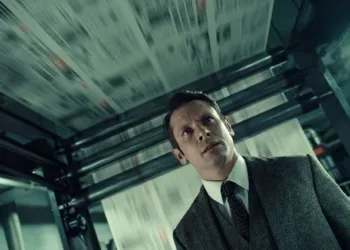



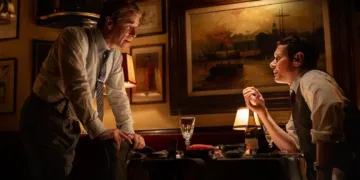














Leslie Iwerks frames Disneyland Handcrafted as a historical artifact with teeth. Positioned as a centerpiece for the Anaheim park’s 70th anniversary celebrations across 2025 and 2026, the documentary focuses on a grueling 365-day sprint into uncertainty.
In 1954, the project sat on 160 acres of dusty orange groves in California, and the surrounding chorus of critics and financial institutions treated it like a reckless gamble, an impossible dream destined to bankrupt its creator. Iwerks treats that skepticism as part of the record, then follows the raw manual labor and creative stubbornness that turned dirt into a cultural phenomenon.
The result plays like a close-up on foundation work: frantic assembly, compromised choices, and the stubborn will to keep building. The documentary is widely accessible to the public on Disney+ and YouTube, and that accessibility carries a sting. The icon looks fixed in the modern imagination, yet the film keeps returning to a moment when success remained uncertain.
A Legacy Etched in Celluloid
Iwerks’ approach draws force from an ancestral connection to the material. As the granddaughter of animator Ub Iwerks and daughter of technician Don Iwerks, she handles the studio archives with a sensitivity that feels earned. The film sidesteps familiar contemporary documentary habits and keeps the visual current uninterrupted by modern experts and talking heads.
It leans on a trove of 16mm reels and restored footage made for mid-century television segments, letting the past speak in its own textures: grain, glare, and the occasional bluntness of period framing. Time-lapse photography compresses months of earth moving into fluid motion, so the land seems to reshape itself in real time.
The sound design stays aligned with that immersive intent through period-accurate interviews from the 1950s. The voices belong to the creators themselves, including vehicle designer Bob Gurr and model maker Harriet Burns. The documentary’s authority emerges from proximity, not from a present-day referee explaining what the images “mean.”
The Brutal Grace of Analog Labor
The construction footage carries the shadow of “Walt’s Folly,” with skepticism radiating from banks and internal partners like Roy Disney. Iwerks fills the screen with the variety of manual problems that had to be solved by hand and by improvisation. Workers dredge swamps for the Jungle Cruise. Others assemble the Mark Twain Riverboat from the ground up.

The film places viewers alongside labor performed at speed, often under conditions that reveal how thin the safety net could be. Cameras catch laborers sliding down high beams with bare hands, and a driver leaping from an overturning dump truck. That risk registers as part of the price of acceleration. Craft emerges through process and logistics as much as artistry: Autopia cars take shape off-site and arrive piece by piece for final assembly.
Even “preservation” enters through tangible salvage, including a rescued merry-go-round from Toronto. The crews exist in a world of white bread sandwiches, cigarettes, and relentless California sun, an environment that defines the rhythm of the work. The film treats craftsmanship as physical endurance paired with imagination, with each reinforcing the other.
The Fragile Birth of a Kingdom
The documentary’s final movement turns to July 17, 1955, a debut remembered for infrastructure failures. A plumbing strike forced a choice between working toilets and drinking fountains, and guests paid for it in heat and thirst. Fresh asphalt on Main Street became a literal trap as high heels sank into the melting surface.
A live ABC broadcast captured the chaos, hosted by figures such as Art Linkletter and Ronald Reagan, and the footage preserves the unpolished reality of the first character costumes alongside the youthful energy of the Mickey Mouse Club members. The film acknowledges the scale of what came later, noting that 900 million visitors have since passed through the gates, then anchors that number in the disorder of day one.
This framing recasts the park as a hard-won victory built through human effort, with sweat and perseverance presented as the engine of the “magic.” The documentary closes on the simple, bracing idea that an unprecedented plan can survive its own difficult birth, provided the people behind it keep moving, keep hammering, and keep accepting the cost of making something real.
Disneyland Handcrafted premiered on January 22, 2026, marking a significant entry in the documentary catalog of Disney+ and the official Disney YouTube channel. Directed by Oscar and Emmy-nominated filmmaker Leslie Iwerks, the film provides an immersive, fly-on-the-wall perspective of the one-year construction sprint that transformed Anaheim’s orange groves into the world’s first modern theme park. By utilizing restored 16mm archival footage and period-accurate audio recordings, the documentary eschews modern narration to allow the original craftsmen and Imagineers to tell the story of “Walt’s Folly” in their own voices. Viewers can currently stream the full feature on Disney+ or watch it for free on YouTube, making this historical exploration of the park’s 70th anniversary widely accessible to a global audience.
Full Credits
Title: Disneyland Handcrafted
Distributor: Disney+, YouTube
Release date: January 22, 2026
Rating: TV-G
Running time: 79 minutes
Director: Leslie Iwerks
Writers: Leslie Iwerks
Producers and Executive Producers: Leslie Iwerks, Mark Catalena
Cast: Walt Disney, Bob Gurr, Harriet Burns, Herb Ryman, John Hench, Milt Albright, Bill Evans
Director of Photography (Cinematographer): Not Applicable (Archival focus)
Editors: Mo Stoebe
Composer: Skywalker Sound (Sound Design)
The Review
Disneyland Handcrafted
Disneyland Handcrafted serves as a vital historical correction to the polished mythology of the park. By prioritizing the voices of the original laborers over modern corporate commentary, the film captures the tangible sweat and high stakes of a reckless gamble. It succeeds as a rigorous study of human determination and analog craftsmanship, transforming a familiar tourist destination into a monumental achievement of grit. While the short runtime leaves some details unexplored, the immersive archival footage provides an essential perspective on the cost of building a dream.
PROS
- Never-before-seen 16mm archival footage.
- Avoids modern "talking head" interruptions.
- Honest depiction of construction dangers.
- Captures the genuine chaos of opening day.
CONS
- Short runtime prevents a deep timeline analysis.
- Limited presence of Walt Disney himself.
- Minimal focus on certain "lands" like Tomorrowland.
- Some footage quality varies between sources.