
























![Kingdom Hearts Collection [I-III] Review](https://gazettely.com/wp-content/uploads/2026/10/Kingdom-Hearts-Collection-I-III-1-360x180.webp "Kingdom Hearts Collection [I-III] Review: KHII Holds Steady as Newer Entries Fluctuate 40")
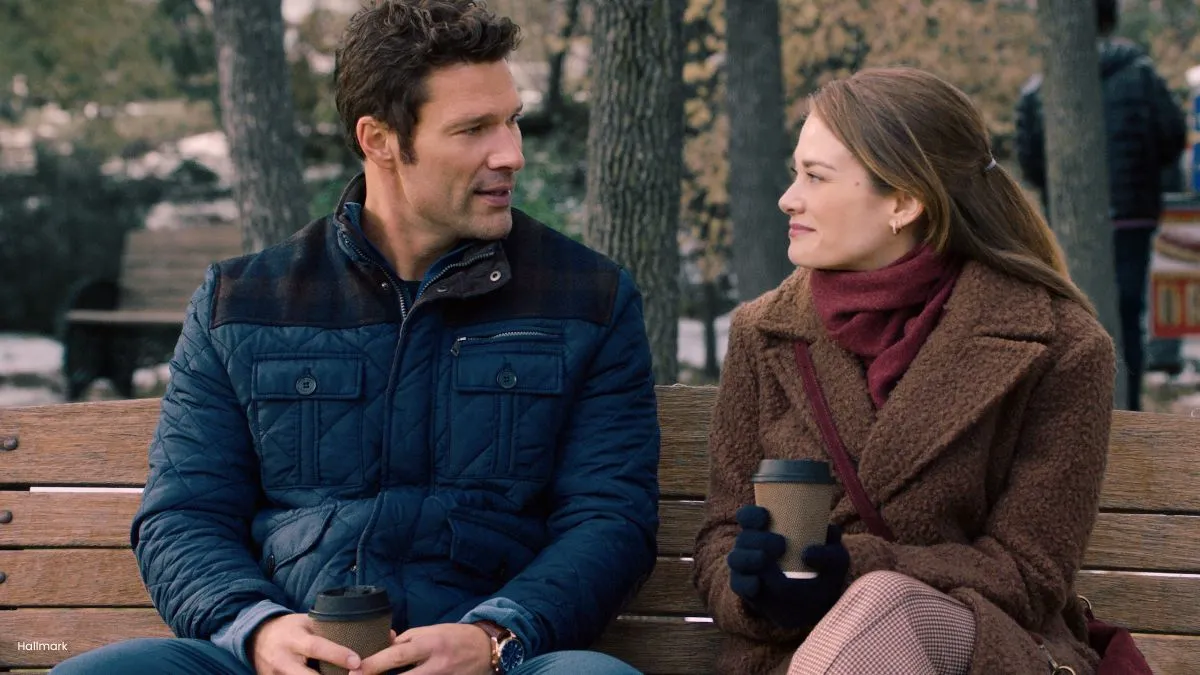

The Way To You opens with the familiar hum of a New York City subway, a setting where millions of people exist in a state of collective solitude. I’ve spent enough time in that commuter hush to recognize how routine can turn into a kind of private bubble, even with strangers inches away. The film uses that everyday rhythm as a backdrop, then ruptures it with a sudden power outage that plunges a train car into darkness.
In those few minutes of shared uncertainty, strangers are pushed to abandon their screens and engage with the person sitting across from them. Emma, a gallerist with a passion for pottery, feels a spark with a man during the blackout, while Conrad, a focused investment banker, experiences his own jolt of kismet with a mystery woman.
When the lights flicker back on, the magic dissolves and the riders separate without exchanging names. Conrad, guided by a belief in fate, places a public notice to find his lost connection. Emma responds to the ad under the impression that it was written by her own mystery stranger. Their eventual meeting brings the truth into focus: they were never each other’s intended partners. They still choose to form an alliance, helping one another track down the people they meant to find.
Trading Worlds and Perspectives
The narrative runs on the deal these two strike and the way it trades their daily worlds. Emma promises to work through the art scene to identify Conrad’s architect, while Conrad offers to introduce Emma to stable, high earning men in finance. The arrangement highlights the professional silos that define modern city life, where careers can lock people into separate circles even while they share the same streets.
Emma reads as a creative spirit who finds solace in the tactile nature of clay. Conrad represents the rigid discipline of corporate success, complete with a grueling 7 a.m. running schedule that signals how tightly he organizes his life. As they help each other, the dividing lines in their personalities start to soften. Conrad begins to see the value in artistic expression, and Emma finds herself waking up for early morning jogs.
The arrival of secondary partners, including the stoic Aaron and the elegant Simone, works as a mirror for the leads, reflecting what each thinks they want when the deal begins. I found the skepticism toward modern art genuinely funny, especially in moments where Aaron questions the purpose of a giant rodent clock. That lack of whimsy in the secondary characters sharpens the growing warmth between Emma and Conrad and gives it real importance.
Grounded Charm and Relatable Bonds
The success of this story relies heavily on the performances of Kim Matula and Aaron O’Connell. They bring a natural ease that lets the banter feel like a genuine conversation, with an everyday rhythm that keeps the romance approachable. Matula gives Emma a grounded quality that makes her feel like a person you might actually meet at a local gallery.
Her performance sidesteps the genre’s common exaggerations and stays close to a human touch that is easy to support. That sense of reality extends to the supporting cast, with the bond between Emma and her sister, Hazel, carrying much of the film’s emotional weight.
Their relationship captures the shorthand shared by siblings, where a history of shared life sits inside even the smallest exchanges. Sid and Lance fill out a social circle that feels inhabited and lived in, shaped by routines and familiar hangouts. Watching characters with normal hobbies like classic literature and pottery feels refreshing, and it helps the viewer connect with them as regular people. That grounded approach also makes the development of Emma and Conrad’s feelings register as earned and authentic across the runtime.
Moving Parts and Internal Maps
This film explores themes that reach beyond a simple search for a partner by paying attention to the internal rules Emma and Conrad start with, and the way those rules bend under pressure. Both characters begin trapped by rigid definitions of love. Emma craves the safety of stability, while Conrad waits for a lightning bolt of instant recognition.
Those expectations get challenged by the shifting reality of their lives, and the film keeps returning to how a plan can provide comfort while still narrowing what someone allows themselves to feel. A significant subplot involving Hazel and Sid moving to a different borough highlights the anxiety of being left behind, as relationships change shape and the city keeps pulling people in new directions. That transition forces Emma to face a crossroads about her own future and the loneliness that can come with a changing social landscape.
The moral integrity of the characters also gets tested when Emma helps Conrad find Simone while her own feelings develop. That choice brings a level of maturity that mainstream romances often skip, because it asks the characters to act with care even when it costs them emotionally. The growth of Emma and Conrad’s relationship feels non-linear and resists easy resolutions. They are pushed into real conversations about their goals and the choice between following a pre-written plan and trusting their own hearts.
The Way To You premiered on February 7, 2026, as the lead title for the Hallmark Channel’s annual “Loveuary” programming event. Set against the vibrant backdrop of New York City, the film tells the story of two strangers whose lives intersect following a subway blackout and a series of missed connections. You can currently watch the movie on the Hallmark Channel, or stream it on-demand through Hallmark+ and the Hallmark Amazon Channel.
Full Credits
Title: The Way To You
Distributor: Hallmark Channel, Hallmark+
Release date: February 7, 2026
Rating: TV-G
Running time: 1 hour 24 minutes
Director: Norma Bailey
Writers: Nicole Baxter
Producers and Executive Producers: Elizabeth Yost, Laurie Pozmantier, Nicole Baxter, Norma Bailey
Cast: Kim Matula, Aaron O’Connell, Sarah Luby, Eugene Baffoe, Jacob Blair, Chelsea Brown, Ryan Mah, Carolina Campos
Director of Photography (Cinematographer): Pieter Stathis
Editors: Richard Schwadel
Composer: Hamish Thomson
The Review
The Way To You
The Way To You succeeds by grounding a whimsical premise in the tangible realities of New York life. It avoids the usual frantic pacing of urban romances, opting instead for a steady development of character and chemistry. The lead performances elevate the material, making a predictable path feel like a fresh discovery. It is a thoughtful look at how shifting our expectations can lead to the most authentic connections.
PROS
- Natural chemistry and effortless banter between the leads.
- Grounded, relatable characters with realistic hobbies.
- Strong emotional stakes involving family and life transitions.
- Refreshing focus on mature, honest communication.
CONS
- The central plot remains fairly predictable for the genre.
- Limited development of the secondary subplots.