




























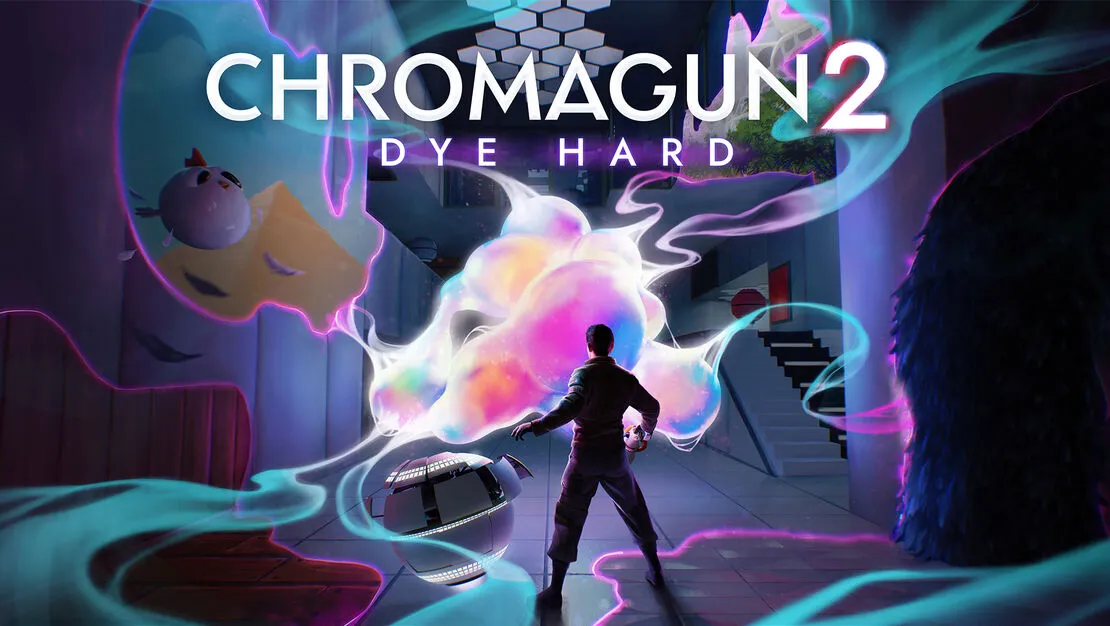

The shift from winning to being locked up again hits fast. This sequel begins exactly ten seconds after the last game ends, with you facing a questionnaire that claims it will set you free from ChromaTec. Richard Gearhart II, the CEO, dangles that promise long enough to get you to relax, then yanks it away with a literal trap door. You drop into the lower testing facility, landing in a dark, cold space that immediately breaks your main gear. Now you are hunting for a replacement gun while sterile white walls press in from every side.
That space carries a kind of clinical indifference. The labs stay bright and polished, and the cleanliness makes the isolation feel louder. The story leans on voices instead of cutscenes. Richard Gearhart II fills the air with mocking corporate jokes that keep circling back to the absurdity of your contract.
Later, Mildred arrives, a British presence with a sharper edge that tightens the mood. They talk at length while you move, reacting to your progress like you are performing on a stage built for their entertainment. The labor satire stays pointed. You exist as a number in a system where your survival ranks low.
The Physics of Color Attraction
Your lifeline is the ChromaGun, which lets you manipulate the world with red, yellow, and blue paint. Each puzzle runs on Magnetoid Chromatism, a rule set where objects that share a color pull toward each other. Paint a wall red and any red spherical WorkerDroid nearby drifts toward it. The game asks you to think like an artist and a physicist at the same time, because progress depends on mixing the right colors for the next obstacle.
Yellow plus blue creates green. Red plus blue creates purple. Red plus yellow creates orange. Fire a fourth shot of any color and the target turns black, becoming neutral. That black paint changes the rhythm of puzzle-solving in a meaningful way. It works like a reset tool, letting you strip color away and rebuild your plan without needing to restart the whole room.
Many chambers hinge on using attraction to place WorkerDroids on pressure plates or floor buttons. You end up tuning forces across the space, lining up pulls so a droid slides where it needs to go. Sometimes that means painting two separate walls with the same color so the droid gets dragged into a precise corner. When a stubborn robot finally snaps into position, the payoff feels crisp. Painting stops being a simple interaction and turns into spatial reasoning with real bite.
Dimensions of Cardboard and Hostile Machines
The scale opens up once interdimensional portals enter the flow. These gateways drop you into alternate versions of reality where the visual rules shift, moving you away from the white lab look and into themed spaces like the Interdimensional Space Station. Chromamaché Paperworks stands out by swapping cold metal surfaces for environments made entirely of cardboard. That change gives the early hours room to breathe, and the new texture helps the worlds feel distinct.
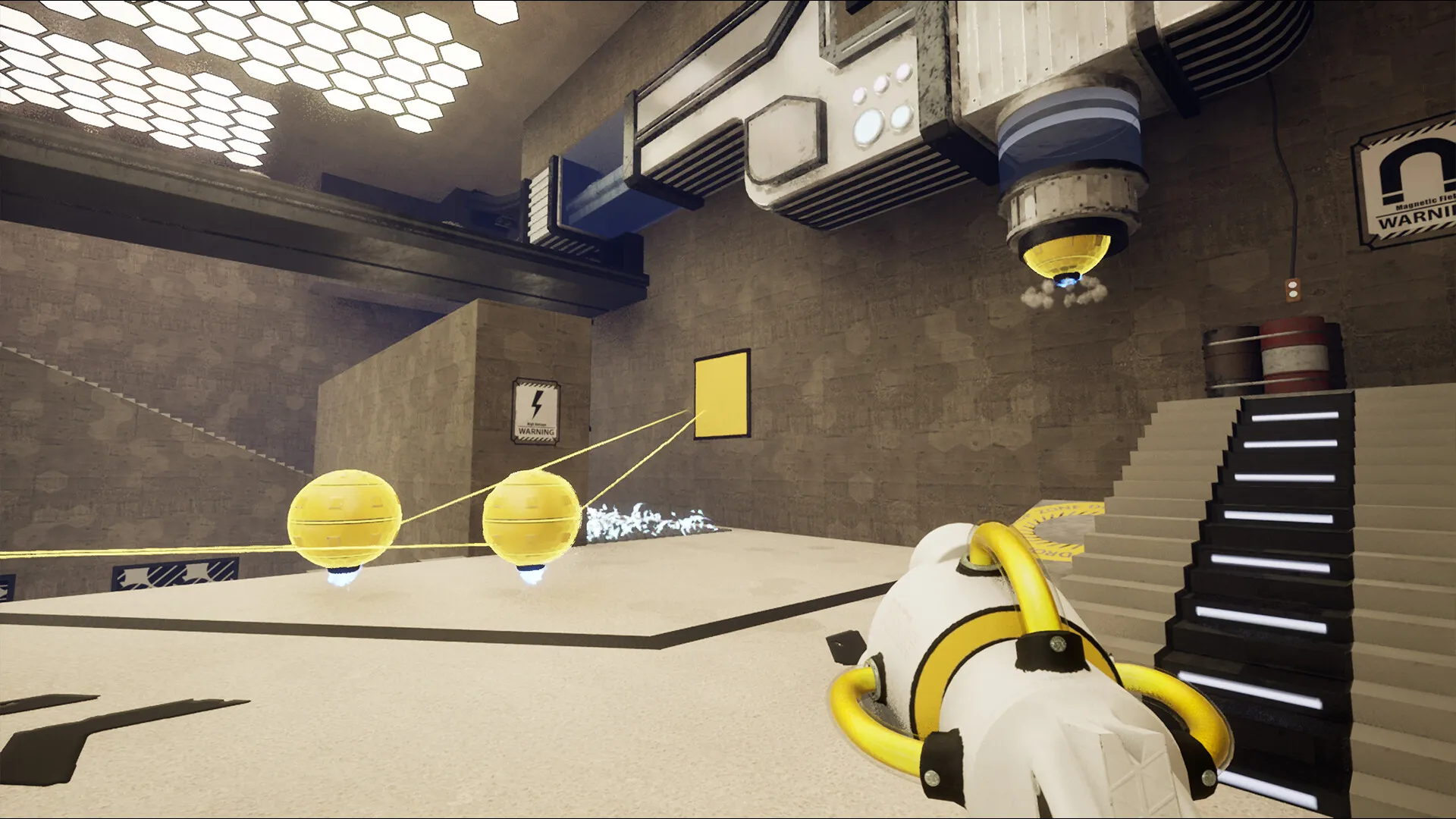
As you move between these settings, the game adds more physical pressure. Timing matters on vertical lifts and moving platforms. Some floors pulse with electricity, so you need to locate a switch or use a droid to block the current. Paint waterfalls complicate the problem-solving by stripping or changing colors on anything passing through. WorkerDroids grow more varied, too. Some sit quietly until you disturb them. Others wake with hostile intent and chase you with blades once they spot you.
Failure never becomes a death state. You take hits and get a visual flinch or a position reset, which keeps the emphasis on puzzles instead of survival. The route through the campaign stays linear, and there is still room to poke around. Secret alcoves hold golden ChromaGuns, giving you a reason to check corners and peer behind the staging of the multiverse.
Accessibility and the Analytical Grind
The difficulty climbs at a steady pace. Early chambers teach basic attraction, then later rooms ask you to manage multiple droids inside large, layered spaces. It is easy to spend thirty minutes on a single puzzle, cycling through color combinations until the logic clicks and the room suddenly feels readable.
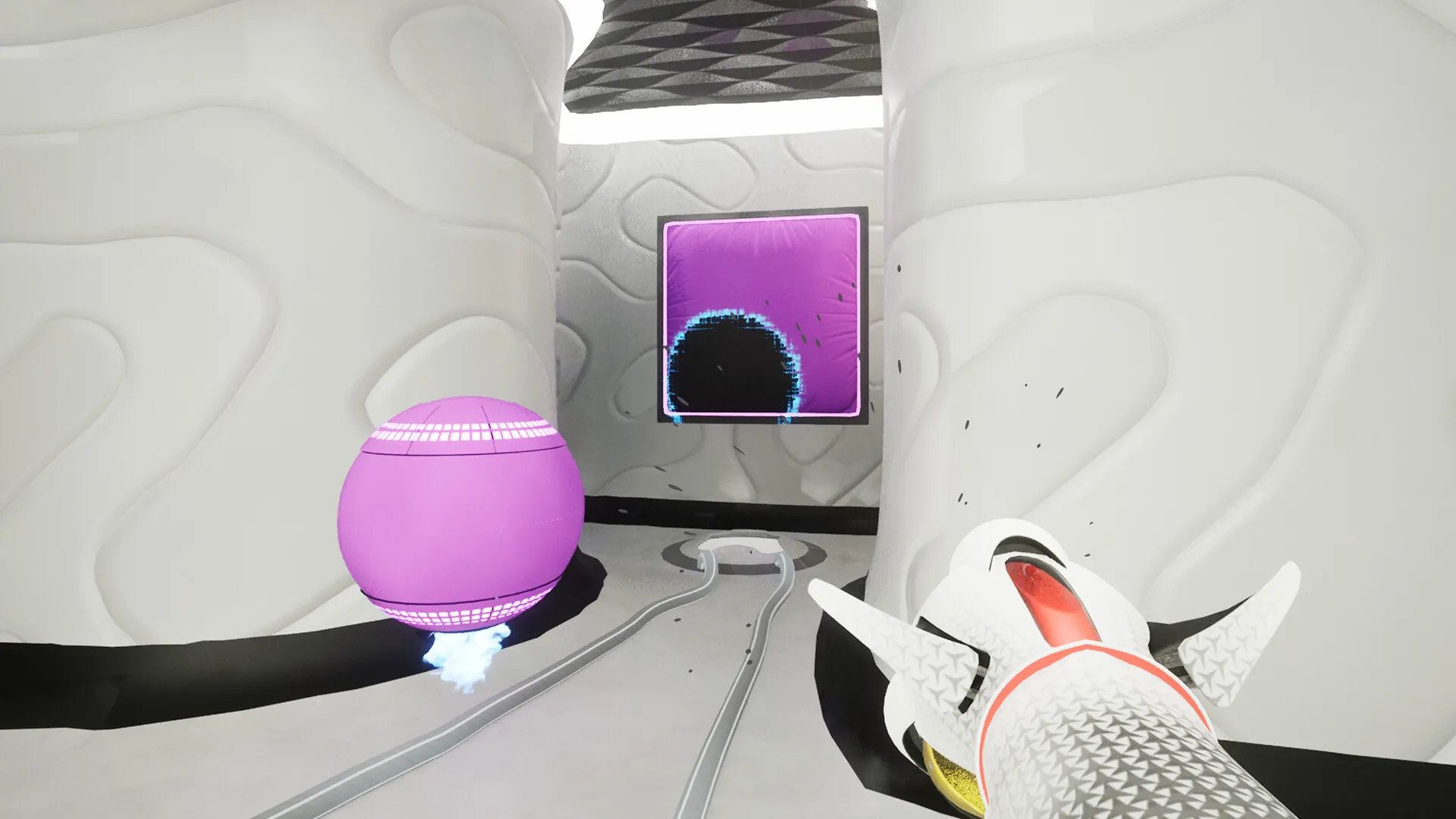
Accessibility support gets real attention through a shape-based mode. Each color gains its own symbol, so players with color vision deficiencies can match shapes instead of relying on hue. A color wheel on the pause screen backs that up as a quick reference when the mixing rules slip your mind. On the technical side, performance stays stable and the controls feel precise, which helps the first-person perspective stay comfortable during long stretches of experimentation.
Sound design supports the mental work. Meditative synths sit underneath the slow puzzle pace, helping you hold focus. When rooms push you into faster movement, the soundtrack pivots into energetic classical pieces like Mozart to reflect the rising tension.
Technical problems still show up during play. Autosaves trigger infrequently, and a sudden crash can erase twenty minutes of progress. The final chapters can produce softlocks when droids get caught in moving geometry, forcing a restart. Visual elements such as paint waterfalls can flicker. Even with those issues, the game lands as a solid mental workout. It rewards thinking through a system step by step and keeps reflex demands on the sidelines.
The Review
ChromaGun 2: Dye Hard
This sequel succeeds by refining its core logic while expanding the visual scale. The addition of black paint fixes the frustrations of the past. The satirical writing remains sharp. Technical hiccups like infrequent saves and occasional glitches hold it back. The experience remains a satisfying mental exercise for fans of the genre.
PROS
- Satisfying color mixing logic
- Sharp corporate satire
- Excellent accessibility features
- Varied multiverse environments
CONS
- Frustratingly infrequent autosaves
- Occasional technical softlocks
- Dated visual presentation







