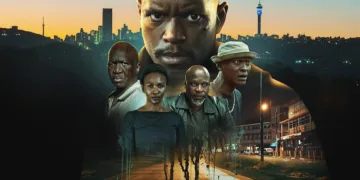














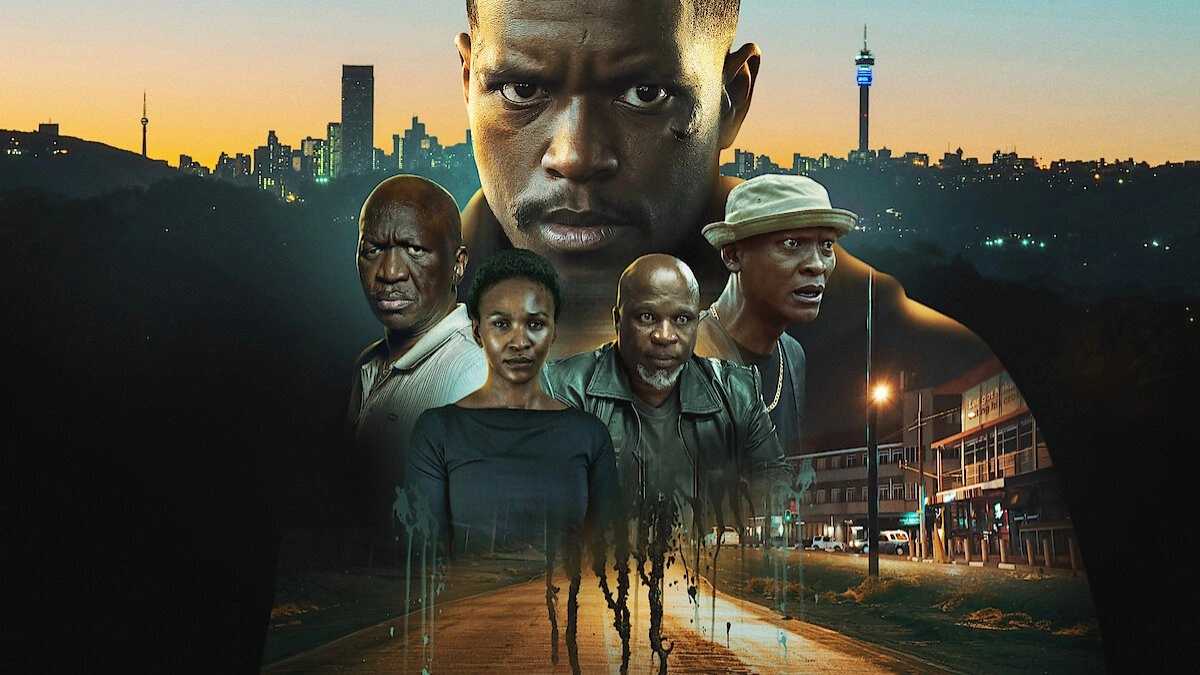
180 opens inside the charged urban pressure of Johannesburg. Zak Sigcawu is a successful businessman and father who runs a chain of burger restaurants. He has built a comfortable life with his wife Portia and their young son Mandla. Daily stability defines him until an ordinary commute becomes fatal. Zak witnesses a daylight execution carried out by a criminal group. Soon after, a small traffic collision with a van erupts into violence.
The van belongs to the crime boss Eezy. His enforcer, Lerumo, provokes Zak into a fight. Zak answers with aggression and fails to step away. During the struggle, a gun goes off and strikes Mandla in the chest. The incident shifts the film from road-rage thriller into parental nightmare.
Zak is trapped inside a crisis where his own temper helped create his child’s suffering. The film presents him as a man whose settled life rotates into terror within minutes. This opening incident becomes the hinge for a story about a father forced past every safe limit he once knew.
Institutional Failure and the Bureaucratic Nightmare
The narrative examines how South Africa’s social structures fail ordinary citizens. Zak meets an immediate financial barrier when he discovers that his family health insurance has lapsed. The film presents customer service representatives with chilling indifference as Mandla fights for his life in intensive care. The hospital bill exposes a sharp gap between the nation’s constitutional promises and the lived reality of its people. The state’s failure becomes the story’s most powerful threat.
Detectives Floyd and Layla stand for a judicial system marked by delay and vulnerability to manipulation. The investigation stalls through missing files and legal procedures that give criminals room to breathe. Zak tries to identify the shooter in a police lineup and fails under fear and pressure. A corrupt police insider protects Eezy’s criminal operation and works against Zak. These obstacles push Zak toward vigilantism. He feels deserted by every institution designed to protect him.
The story frames violence as the product of a damaged environment. Urban life in a major African city produces tension through crowded roads and daily economic dispossession. Frustration with inefficient bureaucracy becomes the main force behind Zak’s transformation. American and European versions of this story often lean toward individual heroism. 180 places greater weight on the historical burden of institutional collapse. The system that strips Zak of options frightens more than any gangster.
Johannesburg becomes a pressure chamber where one mistake can trigger catastrophe. Zak becomes an ordinary man imposing his own idea of justice because the law has vanished from his practical world. The narrative studies a society where revenge becomes the clearest available language of justice. His shift carries emotional force without heroic grandeur. Zak loses faith in established structures and begins moving through crisis by instinct.
Character Dynamics and the Anatomy of Grief
Zak Sigcawu is a flawed protagonist, hot-headed and prone to reckless choices. His arc is a ragged descent into desperation. He carries heavy guilt because he ignored Mandla’s plea to stay in the car during the first argument. His poor ability as a vigilante makes every moment of survival feel unstable.

He lacks combat skill. He is an everyday person terrified by the road he has chosen. Prince Grootboom gives a raw performance that captures the helplessness of a parent. Zak moves between restraint and fury with alarming speed.
The supporting characters carry the tragedy’s emotional weight. Portia embodies the immediate pain of the situation. She experiences the crisis through quiet suffering as Zak becomes consumed by his pursuit of justice. The screenplay uses her grief to give the stakes a human pulse.
Karwas is the film’s most complex figure. As the driver of the gang’s van, he represents the cowardice and guilt of people caught inside violent systems. He did not fire the weapon, yet he cannot detach himself from the act. Through him, the film shows remorse and self-preservation existing in the same person.
Lerumo and Eezy embody a sociopathic criminal force that operates without fear of legal consequence. They are bullies whom society cannot restrain. The subplot involving Mandla’s school bullies echoes this larger pattern of violence. Mandla refuses to fight back because of his principles.
Zak’s advice to his son about using force is tested against the reality of gang violence. This moral split shapes the film’s central conflict. The story studies what a man can lose beyond the obvious. Zak is a man acted upon by events. He responds to escalating circumstances without a clear inner strategy. His temper triggers the first confrontation and later contributes to the death of his brother Zuko.
Visual Language and Technical Direction
Alex Yazbek uses visual technique to communicate the characters’ inner pressure. Tight, claustrophobic framing reflects Zak’s mental state. Handheld camera work during the road-rage sequence creates immediate danger and chaos. Shadows build a psychological terrain around the characters. This visual intelligence creates the dread that the script tries to generate through plot. The cinematography is genuinely accomplished.
Johannesburg’s urban geography functions like a living presence. Rainy nights and orange streetlights create a gritty cinematic texture. The visual contrast between Zak’s comfortable home and the dark junkyards of the criminal underworld marks his loss of status. Yazbek captures the city with an eye for the way environment shapes character. The neon green of a bus shelter and the hazy glow of a street lamp deepen the mood.
The film keeps a serious, steady tone. Yazbek favors realistic, uncomfortable tension over exaggerated action. Slow-burning sequences allow Mandla’s condition to remain emotionally present. The director uses a few moments of visual overstylization to stress the nightmare quality of Zak’s ordeal. The film carries a constant sense that anything can go wrong at any moment. Its realism grows from the environment itself.
Tight shots and dark colors mirror Zak’s mindset. This mood works its way under the viewer’s skin. As the plot moves forward, the visual language keeps attention on the psychological battle. The film gains distinction through atmosphere. Yazbek gives the work a cinematic polish suited to its streaming frame. Technical precision brings fresh texture to a familiar genre shape.
The Deconstruction of the Revenge Model
The title 180 refers to the sudden reversal of Zak’s life and moral compass. It signals how one mistake can rotate a life into a completely unrecognizable direction. The revenge film often becomes a philosophical argument about the limits of institutions.
This film focuses on revenge’s cost and gives little space to satisfaction. Vengeance damages the person seeking it with the same force it directs at the target. Zak lacks the skills of a fighter or tactical genius. His clumsy mistakes produce deeper tragedy.
His ineptitude marks a clear departure from genre patterns. In films like Prisoners or Death Wish, protagonists often display rigid consistency or a calculated fall. Zak drifts through events with little command over them. His survival feels like authorial mercy because he is so badly suited for violence.
A blindfolded man escaping bullets in darkness demands a major leap of faith from the audience. The narrative moves away from simple good-versus-evil resolution. It leaves the viewer thinking about justice in a society where the law has lost practical authority.
The story suggests that the second grave in the Confucian warning carries the greater terror. Zak turns 180 degrees, yet the film gives limited weight to the version of him that existed before the turn. His new path lands with less force because his character foundation feels thin. The ending restates the tragedy of the situation. It presents the consequences of rash decisions with direct emotional force.
The film is stronger in emotional impact than in originality. Familiar ideas gain energy through promising talent. The narrative becomes an emotionally gripping account of an ordinary man’s relationship to violence. It does not reinvent the wheel. It offers sincerity and intensity that keep the viewer engaged. The cycle of violence closes with a hollow form of satisfaction.
180 is a gritty South African crime thriller that premiered on Netflix on April 17, 2026. Directed and written by Alex Yazbek, the film centers on Zak Sigcawu, a father whose life is irrevocably shattered by a violent road rage incident that leaves his young son in critical condition. As he navigates a landscape of institutional failure and bureaucratic indifference, Zak spirals into a dark, emotionally charged pursuit of vengeance. The film has quickly climbed the global streaming charts, earning praise for its atmospheric tension and the raw, powerful lead performance by Prince Grootboom.
Where to Watch 180 (2026) Online


Full Credits
Title: 180
Distributor: Netflix
Release date: April 17, 2026
Rating: TV-MA
Running time: 94 minutes
Director: Alex Yazbek
Writers: Alex Yazbek
Producers and Executive Producers: Kutlwano Ditsele, Ten30 Pictures
Cast: Prince Grootboom, Noxolo Dlamini, Danica De La Rey Jones, Warren Masemola, Desmond Dube, Fana Mokoena, Bongile Mantsai, Zenobia Kloppers, Kabelo Thai, T.J. Mokhuane, Makhaola Ndebele, Mpilo Sithebe
Editors: Nicholas Costaras
Composer: Chris Letcher
The Review
180
180 succeeds as a gritty examination of systemic neglect and the fragility of middle-class security in Johannesburg. While the screenplay relies on familiar tropes and occasional plot contrivances, the central performance by Prince Grootboom carries the emotional weight of the story. It is a somber reminder that the path to vengeance is paved with incompetence and collateral damage. The film prioritizes atmosphere and psychological realism over genre-typical empowerment. It offers a grounded perspective on how ordinary lives rotate into chaos when institutional protection vanishes.
PROS
- Strong lead performance by Prince Grootboom
- Evocative South African setting and cultural context
- Excellent cinematography and atmospheric use of shadows
- Moral ambiguity in supporting characters like Karwas
CONS
- Predictable plot beats and genre clichés
- Underdeveloped supporting cast beyond the protagonist
- Occasional lapses in narrative logic and character consistency
- Frustratingly passive lead character during key transitions