























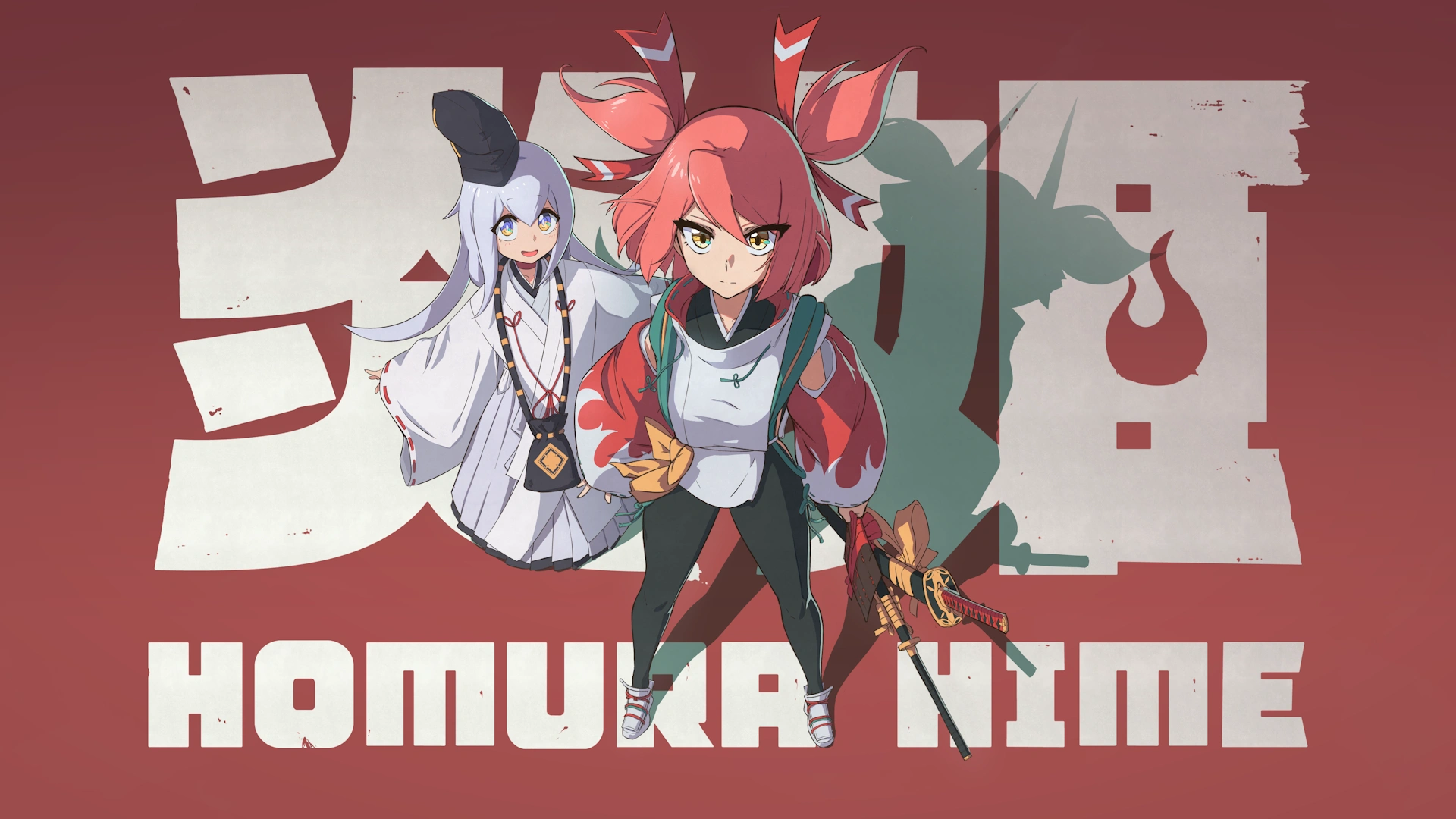

Homura Hime is a 3D action game shaped by Japanese folklore and mythology. Players take the role of Homura, the Flame Princess, a formidable exorcist assigned by Jinguu, the High Priestess, to purify archdemons. These enemies are corrupted spirits born from severe human emotions, and their existence endangers the natural world.
With Ann, her mechanical aide, Homura moves through several realms to hunt and defeat five major archdemons. The game fuses brisk hack-and-slash combat with bullet hell pressure, asking players to read projectile waves during close-range sword strikes. Its structure follows a linear sequence of stages, with each one building toward a large boss encounter.
Progress depends on collecting currency, then spending it on upgrades and new skills at a specialized shop. The title is built around speed, timing, and spectacle, aiming squarely at players who enjoy stylized action games with a sharp mechanical pulse.
The Divine Duty of the Flame Princess
Homura Hime frames its story in a world that feels familiar through genre language and grounded through cultural tradition. As the Flame Princess, Homura acts under the strict command of Jinguu, the High Priestess. Her order is direct: locate the archdemons and exorcise them.
These opponents embody extreme human suffering and regret. The setting rests in a damaged spiritual balance, where humans and demons once shared the same space. That balance has broken, leaving Homura to deal with the spiritual wreckage left behind.
The emotional spine of the mission comes from Homura’s bond with Ann. Homura is stoic, disciplined, and visibly burdened by duty. She rarely lets that weight slip, yet small reactions reveal insecurity, especially when others mention her intimidating presence.
Ann gives the dynamic a different texture. As a mechanical companion, she brings lighter energy to the space between fights, helping the player breathe after difficult combat beats. Secondary figures such as Kushinada the shopkeeper give the central shrine a communal quality, turning it into a brief pause between purification assignments.
As the plot progresses, the clean shape of the exorcism mission grows less certain. Every boss encounter reveals a tragic history behind its target. The demon girls emerge as victims shaped by their circumstances. That knowledge creates moral pressure for Homura, whose obedience to the High Priestess begins to feel increasingly unstable.
The narrative questions the righteousness of that obedience without abandoning the directness of the mission structure. By the final act, several shifts work to alter the player’s view of the task. Some plot devices feel convenient, yet the tension between fixed duty and growing empathy remains one of the game’s stronger dramatic elements. The pacing of these revelations matters. It asks the player to reconsider their role long before the credits arrive.
The Rhythm of Blade and Bullet
Combat in Homura Hime plays like a rhythmic exchange between player input and environmental pressure. The melee foundation uses light and heavy attacks to create clean, flowing strings of damage. Those fundamentals connect with special fire skills placed on the face buttons.
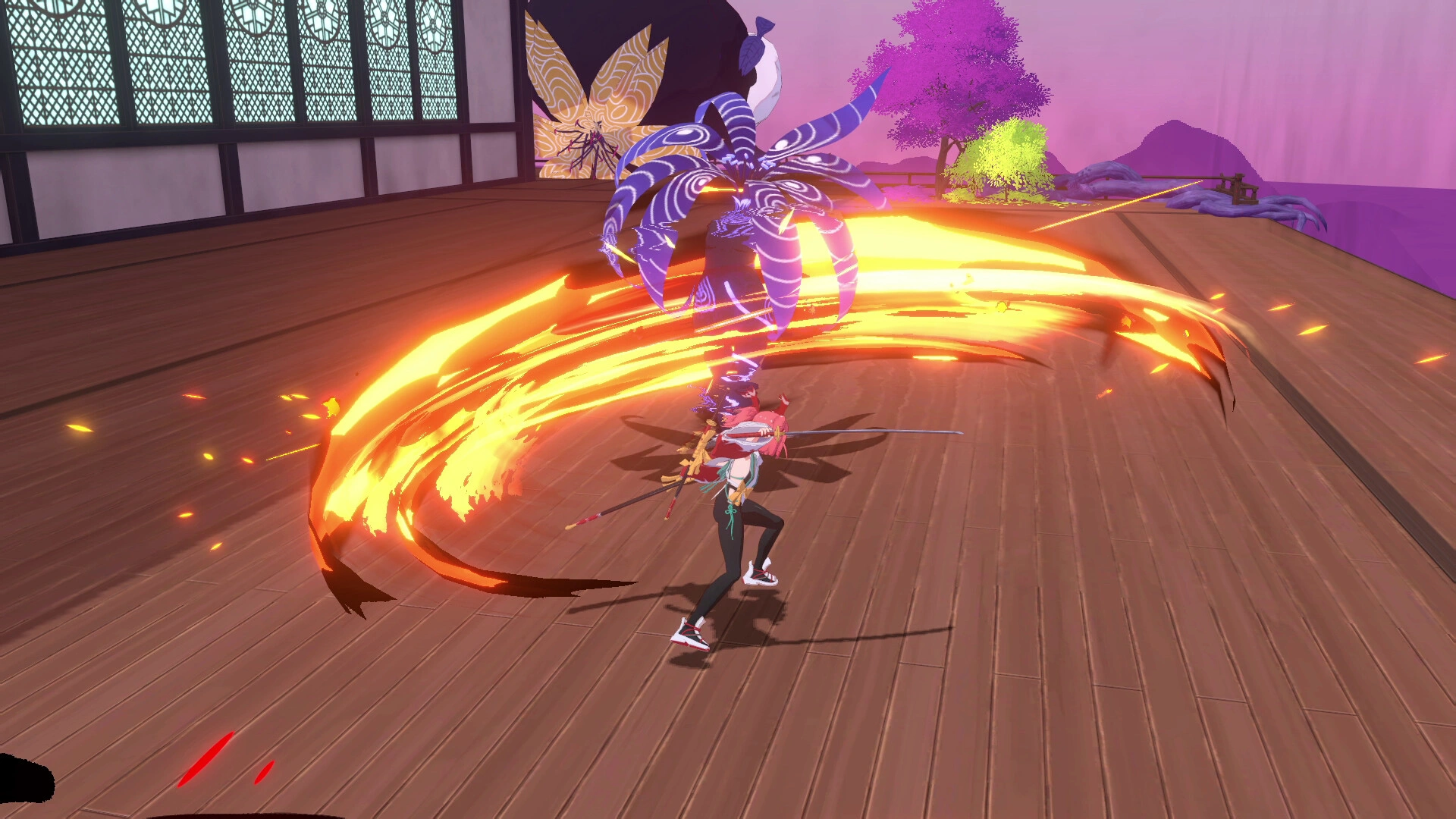
The key design choice is simple: power comes from active participation. Hanging back and waiting weakens your options. Recharging your strongest abilities requires sword hits or successful parries, so the system keeps pushing you into danger. That persistent aggression suits the title’s speed and theatrical style.
Defense gives the game its clearest mechanical identity. The parry system supports nearly every encounter. Enemies signal attacks through sharp red flashes and distinct audio cues. A successful parry protects your health and grants a brief surge of strength, turning timing into both defense and momentum.
Unblockable attacks, including massive beams and ground slams, demand a swift dash or teleport move. This creates a constant positional rhythm, where each moment asks you to judge the danger of a parry against the security of movement. The dango system softens the steep learning curve. Carrying these items grants a full revival after death, reducing frustration during the most crowded bullet hell sequences.
Ann expands combat past swordplay in a meaningful way. She acts as a specialized ranged weapon, firing holy projectiles at distant enemies. Her presence changes the combat vocabulary, pushing the game toward a 3D bullet hell format.
Bosses often cover the screen with detailed patterns of energy spheres. Reaching melee range through those patterns asks for strong spatial awareness. The genre fusion works because the player must track two pressures at once: the immediate threat in front of Homura and the larger field of incoming projectiles.
The enemy hierarchy supports that layered design. Standard foes function like mechanical tutors, teaching basic parry and dodge timing through repeated patterns. Mini-bosses raise the tension with hybrid attacks that test those lessons under heavier pressure. The archdemon fights deliver the game’s main spectacles.
These multi-phase battles use cinematic staging and high-stakes Quick Time Events to keep players active during transitions. Each boss operates like a combat puzzle, solved through pattern recognition, reflexes, and a clear understanding of how Homura’s kit fits the situation.
Traversing the Realms of Corruption
The level structure follows a linear design philosophy. Each stage creates a focused route toward its boss encounter. This keeps the narrative momentum steady. The player has limited space for deviation. Gated combat arenas frequently stop progression. In these zones, players defeat specific enemy waves before the route opens again. The structure gives the developers firm control over difficulty, making each stage a training ground before its climax.
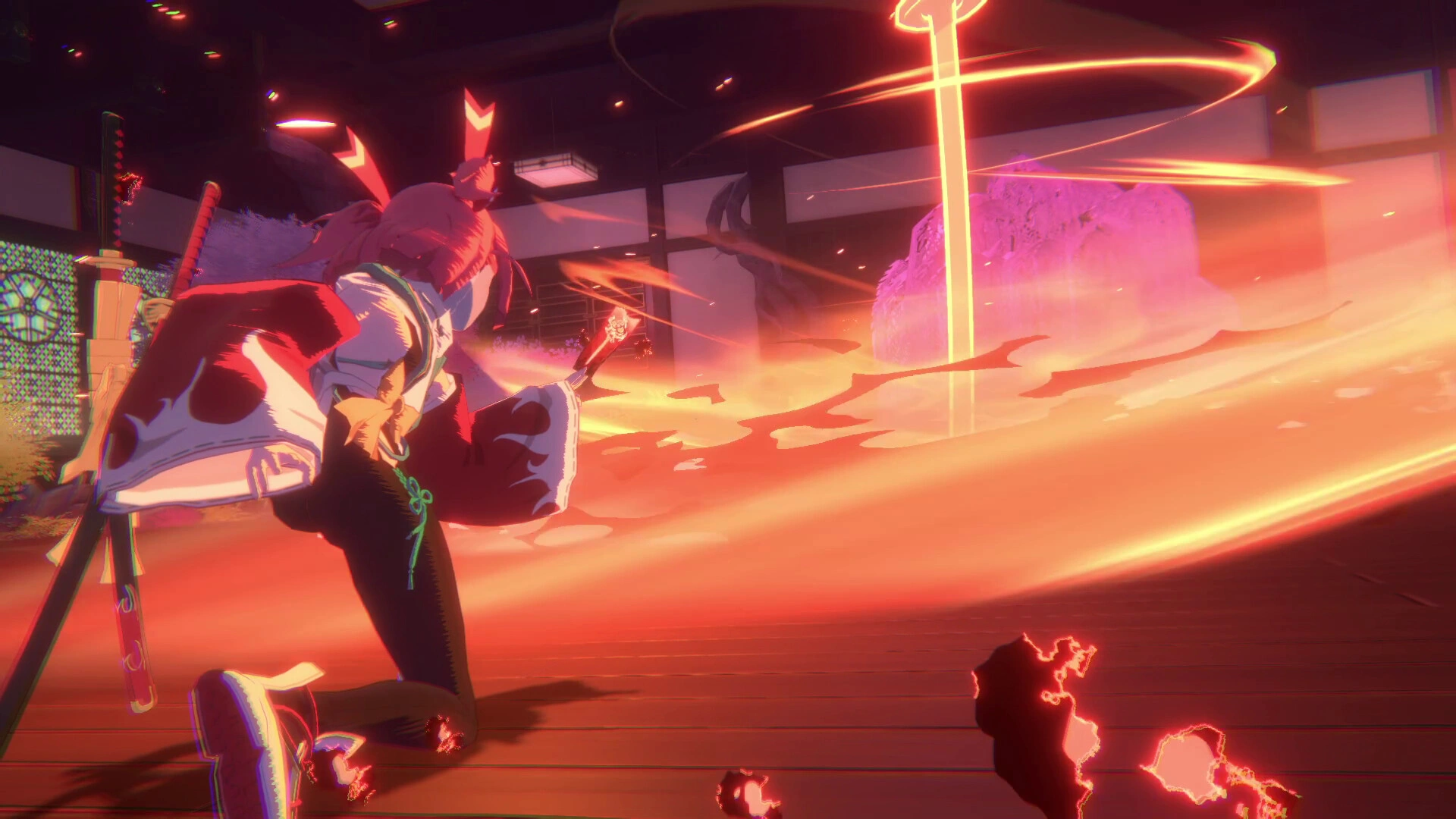
Platforming connects those combat spaces. Homura uses a dash and a teleport move to cross wide gaps, with certain levels adding environmental features that change the tempo. The rail-grinding sections, for example, create a high-speed break from the precise timing of standard combat. Movement can feel rigid during vertical climbs, yet these traversal moments still serve the world-building.
They give the player time to take in the scale of each realm. Rewards are scattered along these paths for careful players. Lore entries provide deeper background for the archdemons, and hidden mascots tied to the merchant encourage closer exploration.
The hub area, built around a serene shrine, works as the game’s emotional and mechanical anchor. Here, players process the previous mission and prepare for the next one. NPC interactions give the experience a sense of purpose beyond combat. At the shop, currency earned during stages can be spent on essential upgrades.
Customization includes stat boosts and accessories that alter battle habits. Some items raise health. Others improve parry timing or ability damage. This system lets players tune Homura to their preferred style, making each return to the dangerous realms feel like a deliberate tactical step.
The Brilliance of Japanese Folklore
Homura Hime’s visual design celebrates stylized beauty. The cel-shaded art brings its characters to life with the same bright intensity that drives the combat. Environments draw heavily from traditional Japanese architecture, creating spaces rooted in history and charged with fantasy.
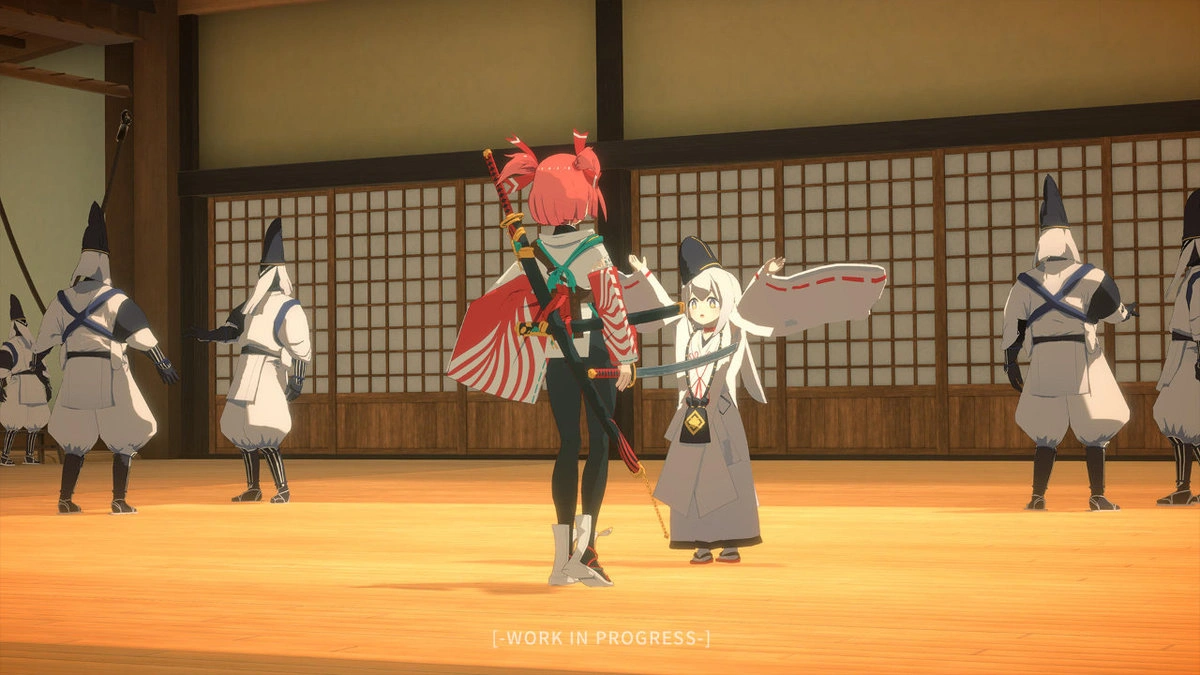
Homura’s animations stand out. Her movements carry a fluid, choreographed quality, making each parry look like a deadly dance step. Boss fights push the presentation further, filling the screen with striking particle effects. Orange flame against purple demonic energy creates a strong visual signature.
The sound design is equally purposeful. Keeping the voice acting exclusively in Japanese preserves the setting’s cultural texture. The performances for Homura and Ann are handled by professionals who capture the nuance of their relationship. The score moves across different moods.
Traditional woodwind instruments shape exploration scenes, then high-energy tracks reminiscent of Eurobeat bring sudden adrenaline to certain fights. Audio cues have a mechanical role too. The parry sound is sharp and distinct, giving clear feedback when the player’s timing lands correctly.
Technically, the game stays stable across different platforms. Testing on high-end PCs and handheld devices like the Steam Deck shows that the title scales well. The hub can feel heavy because of its dense environmental detail, yet combat sections remain smooth.
That stability is essential for a game built on frame-perfect timing. Loading transitions between the shrine and the realms are quick, helping the player stay inside the rhythm of play. The polish keeps attention on skill-based challenges, freeing the experience from distracting performance issues.
The Review
Homura Hime
Homura Hime succeeds as a stylish tribute to the character action genre. It delivers boss encounters that feel cinematic and mechanically rewarding. The integration of swordplay and bullet hell patterns creates a distinct rhythm that demands precision. The experience loses momentum during repetitive platforming and standard enemy waves. The narrative touches on fascinating moral questions but lacks the depth to fully land its emotional beats. It remains a striking debut from Crimson Dusk that fans of high speed action should experience strictly for the boss fights.
PROS
- Spectacular and mechanically deep boss encounters.
- Satisfying parry system with strong visual and audio feedback.
- Stunning cel-shaded art style inspired by Japanese folklore.
- Original integration of 3D bullet hell mechanics into hack and slash combat.
- Energetic and diverse soundtrack.
CONS
- Repetitive standard enemy encounters between bosses.
- Frustrating and occasionally imprecise platforming sections.
- Pacing issues that make the short runtime feel padded.
- Narrative development lacks emotional impact.