





























Kim Go-eun returns as Kim Yumi, a writer whose life now carries the polished finish of the romance novels she creates. Three years have passed since her last relationship, placing her in a controlled solitude that supports her career goals.
She is rich, secure, and professionally respected, even leaping from planes to capture the physical details needed for her next success. The shine of achievement conceals an emotionally sterile routine. Her studio and quiet neighborhood become the setting for a life that has grown alarmingly predictable.
Shin Soon-rok, a production director replacing someone after a workplace accident, interrupts that stillness. His brief, detached manner of speaking creates instant tension inside Yumi’s carefully arranged world. This season moves past the restless romantic searching of her twenties and presents her as a woman who has reached the modern fantasy of financial independence, then found an emotional vacuum waiting behind it. The story treats that shift with a sharp eye toward success inside a high-pressure industry.
The Architect of Stagnation and the Thaw
Yumi’s inner world has changed dramatically. A huge freezer now holds her dormant emotional functions, turning professional hyper-focus into an image of personal decay. Writer Cell rules from a tower of logic, yet that command has produced creative paralysis. Reason and Emotion remain as the skeleton crew of a city that once buzzed with activity, preserving the calm Yumi has mistaken for contentment.
A fierce debate over the intelligence of Maltese dogs sparks the first crack in the ice. Soon-rok’s fussy criticism of her research wakes Dislike Cell and Profanity Cell, suggesting that annoyance can become the earliest sign of genuine feeling. The key moment arrives on a train to Busan. A figurative lightning strike devastates the village and announces Love Cell’s return. That inner event reshapes Yumi’s view of Soon-rok.
The qualities she once read as cold or socially awkward begin to look like clear displays of honesty. The series uses this inner mythology to study how people manage emotional access. It argues that defenses built against hurt can shut down inspiration completely. By making the frozen heart literal, the story offers a sly critique of emotional safety and its hidden cost.
Introversion as a Narrative Engine
Shin Soon-rok fits a recognizably modern type: the capable introvert who runs on limited social energy. He moves through work spaces in low-power mode, using large headphones as a shield from social drain. His Cell Village runs on a battery system that recharges inside his home, where cinema and baseball can exist free from the labor of sociability.
This dynamic creates a rich ego clash with Yumi, who must process the social meaning of their age gap. She is in her thirties, and he is twenty-nine, a difference that triggers internal worry about social rules and workplace rank.
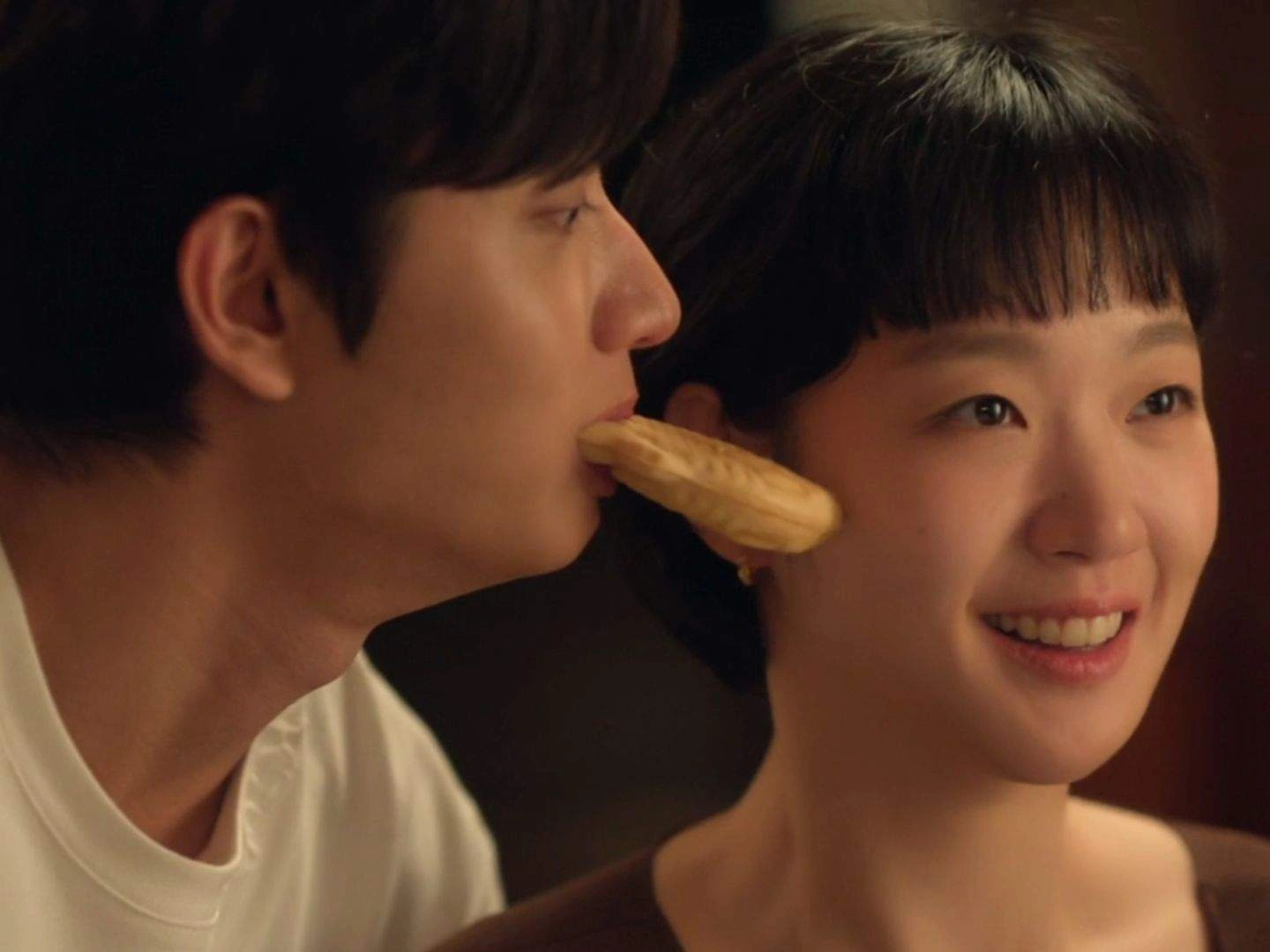
Their connection grows through small, contained moments. A petty contest over fish-shaped pastries and a tense parking-lot maneuver reveal his quiet dependability. His professional ethics also surface through his editing. He gives exacting feedback that challenges Yumi’s artistic pride.
A late-night gaming session in her studio captures their changing chemistry through shared space and quiet activity. This domestic closeness pushes against the usual K-drama dependence on heightened crisis. It favors a grounded view of two career-driven people finding rhythm through respect and shared interests.
The Quiet Revolution of Emotional Maturity
The series reaches a phase of thematic maturity, leaving the stormier heartbreaks of earlier years for a grounded study of adult connection. Kim Ju-ho enters as a pointed foil to Soon-rok, trying to bond with Yumi through shared generational nostalgia. He uses age as a tool to isolate the younger Soon-rok, yet Yumi refuses that shallow alliance. She accepts herself as an experienced woman who values plain speech over social games.
A movie-theater confrontation becomes a defining moment in her growth. Yumi scolds both men for their lack of professional manners, asserting her independence with icy precision. The moment signals her break from old people-pleasing habits. The narrative sidesteps a forced love-triangle trap and keeps attention on Yumi’s inner recalibration.
Her growing attraction to Soon-rok feels earned because it comes from her own choice to lower her guard. Their chemistry blooms in sweatpants and over late-night snacks, marking a shift toward emotional ease over romantic performance. Kim Go-eun handles this transition with careful restraint, catching the slow return of color to a life that had gone grey. She moves through these episodes with calm assurance, signaling a new era for Yumi.
Yumi’s Cells Season 3 made its debut on April 13, 2026. Viewers can watch the series on the TVING streaming platform in South Korea or via Rakuten Viki for international audiences. The story continues to follow the life of Kim Yu Mi as she encounters professional and romantic shifts. This season marks the introduction of the editor Shin Soon Rok, played by Kim Jae-won. The production maintains a distinct style by combining live action performances with 3D animated cells that represent the internal thoughts of the protagonist. Episodes air weekly, providing a look at the evolving relationships and career growth of the lead character.
Where to Watch Yumi’s Cells Season 3 Online

Full Credits
Title: Yumi’s Cells Season 3
Distributor: TVING, Rakuten Viki, Disney+, HBO Max
Release date: April 13, 2026
Rating: TV-14
Running time: 60 to 70 minutes per episode
Director: Lee Sang-yeob
Writers: Song Jae-jung, Kim Kyung-ran
Producers and Executive Producers: Joo Moon-soo, Jo Moon-joo, Song Jae-kwon, Kwon Mi-kyung, Jang Woo-sik, Han So-jin, Yoo Seul-gi
Cast: Kim Go-eun, Kim Jae-won, Choi Daniel, Jun Suk-ho, Cho Hye-jung, Mi Ram, Lee Yoo-bi, Sung Ji-ru
Director of Photography (Cinematographer): Kim Ji-kwang
Editors: Kim Tae-young
Composer: Kim Tae-seung
The Review
Yumi's Cells Season 3
Season 3 offers a mature evolution, trading high-stakes melodrama for a grounded exploration of introversion and professional burnout. The domestic chemistry between Yumi and Soon-rok feels authentic and earned. It successfully highlights the struggle of maintaining emotional vitality in a successful career. Kim Go-eun anchors the story with profound vulnerability. This installment proves that quiet growth is as effective as grand romance.
PROS
- Authentic depiction of adult introversion and energy management.
- Strong, nuanced lead performance by Kim Go-eun.
- Clever visual storytelling regarding burnout and emotional stagnation.
- Assertive character development for the protagonist in professional settings.
CONS
- Deliberate pacing may feel slow for viewers seeking high drama.
- Reduced screen time for certain established supporting characters.