






















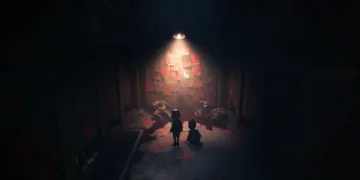



History can resemble an autopsy table: coordinates laid out with casualties, fronts reduced to numbers, pain scrubbed into administrative cleanliness. Juri Rechinsky resists that sterile distance in his latest work. His gaze settles on the domestic rituals of disaster, where catastrophe enters rooms, trains, clinics, vans, and roadside villages.
The film ignores the roar of the front line and studies the anatomy of loss through motion. Two kinds of transit shape its moral design. Frail elderly people are carried toward temporary safety. Fallen soldiers are brought back to their families in cold silence. Here, catastrophe has become daily rhythm, a schedule written by fear.
The absence of traditional narration gives the images their own severe gravity. The audience must look without the shelter of an explaining voice. A bundled baby carries weight through the screen. A heavy coffin carries equal visual force. Rechinsky understands conflict as a record inscribed on bodies moving through space. Dignity survives inside terrible logistics. The film catches the shiver of a society uprooted, presenting the home front as a place where ordinary gestures and monumental grief collide under the pressure of survival.
The Unsteady Intimacy of the Displaced
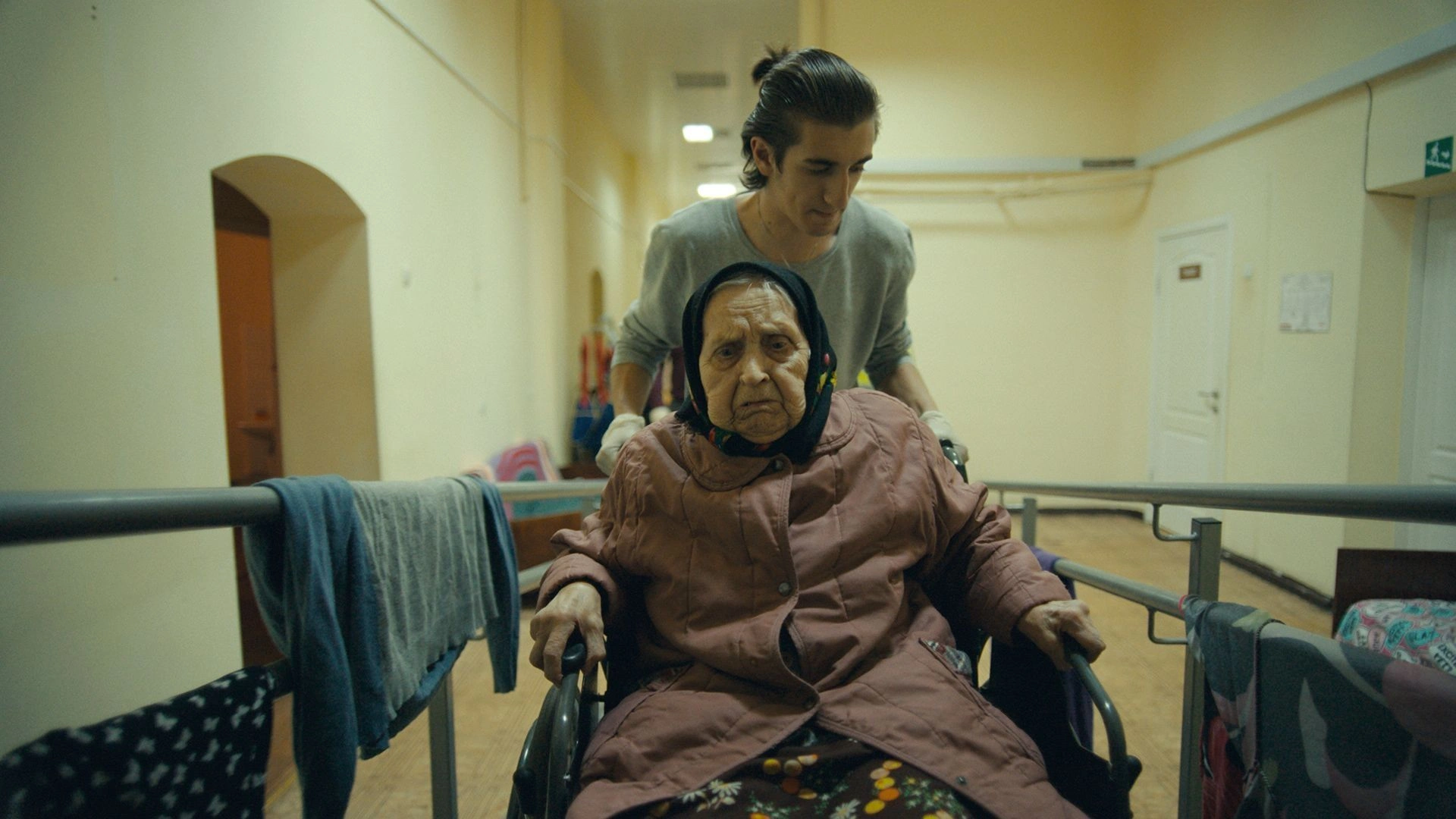
The camera trembles with the living. Serhiy Stetsenko and Serafin Spitzer use handheld frames during the evacuation of the infirm, and that choice creates an unstable closeness to the people onscreen. We feel the physical tremor of those whose homes have been taken from them.
English volunteers like Elizabeth move through the war zone with a gentleness that feels almost spectral. They hold hands. They smile. They treat a medical processing center as a refuge, a brief human shelter inside historical violence.
One volunteer calls the group “comrade grannies,” softening displacement through tender absurdity. The sensory world around them is thick with uncertainty. One woman worries about her messy hair, speaking as if beauty might still stand between her and the bombs.
Also Read






Two blind women speak of their darkness, and their condition becomes a bleak metaphor for the unclear destination ahead of them. Movement has become survival’s demand. Their agency has been stripped down to endurance.
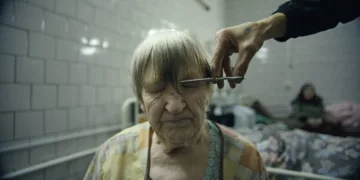
A hairdresser cutting hair in a makeshift clinic offers a fragile reprieve. It feels like a shard of a lost world, a small ritual of selfhood performed under siege. This intimacy carries discomfort. It asks the viewer to witness the human body in its exposed dependence, to watch what happens when history reaches down and moves people by force. The lens refuses to blink during physical frailty. Its gaze is uneasy, compassionate, almost accusatory.
Static Reverence and the Transit of the Fallen
The film’s visual grammar changes when the lens turns toward the dead. The shaken handheld movement gives way to static shots. Rechinsky uses tripods to film the retrieval of the fallen, and the shift creates a clinical distance that feels like reverence before death’s sovereign silence. The still frame answers the still remains. The image becomes a ritual space.
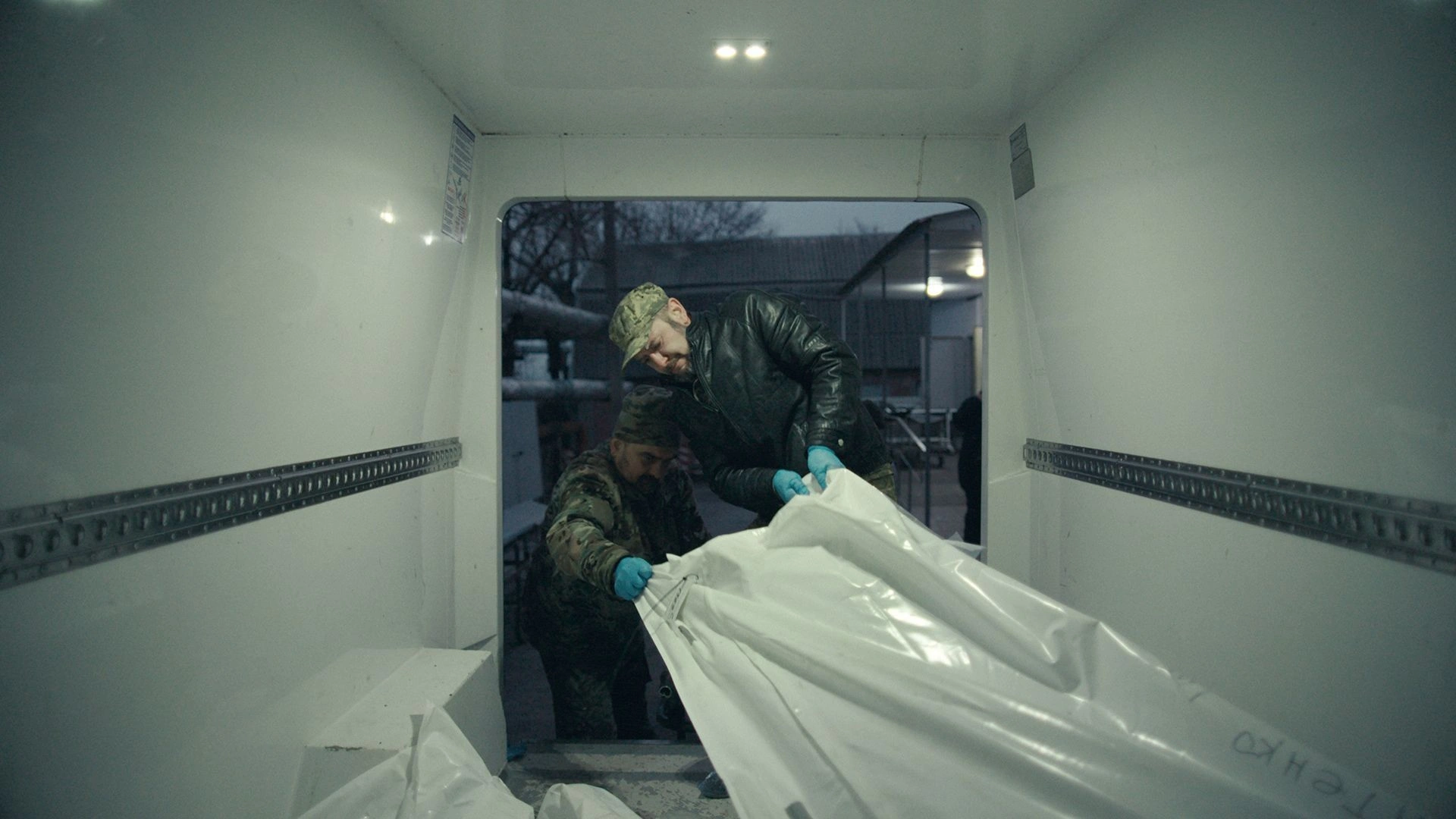
We follow Oleksandr, nicknamed Bulldozer. He drives a white Transit van marked with angel wings and the sign Cargo 200. His work is visceral, bureaucratic, and brutal in its plainness. He carries heavy bags. He fills out forms. He builds order inside the chaos of decomposition. The passage from field to funeral becomes a descent into private agony.
Villagers kneel by the roadside as the van passes. Their silence turns into collective recognition of a sacrifice that belongs first to a family and then to a nation’s wounded memory. The mortuary scene carries grave ethical pressure. The camera sits in the room as a body is prepared for a coffin.
Music is absent. The ringing quiet remains until a mother arrives and strokes the cold face of her son. The alien machinery of process meets the raw heat of maternal grief. This portion of the film honors the dead by recording the labor needed to give them rest.
The Final Syntax of Human Persistence
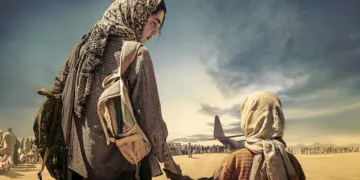
The film lives between these journeys. Andrea Wagner intercuts the living and the dead, forming one portrait of a society in violent motion. War becomes a grammar of transport: the evacuated, the returned, the carried, the protected, the mourned. Mothers and children huddle on a train to Budapest, forming a third thread of displacement.
The title works as a soft address to everyone trapped inside the storm. It is love spoken to a son in a coffin. It is love spoken to a child on a train. The emotional weight bends toward endurance, fragile yet stubborn. During the night journey, a young mother sings a lullaby to her child. Her voice becomes a small defense against darkness, a human sound placed against the abyss.
The burning sunset and the frost of dawn frame these moments with severe beauty. They give scale to intimate gestures. Rechinsky avoids ideological argument and stays with concrete acts of care. Compassion appears as physical effort: a hand clasped, a body lifted, a coffin carried, a child soothed.
The movement of war seems endless, yet the act of holding one another remains the available anchor. The final image of sleeping children carries the film’s hardest demand. The future must be guarded with the same ferocity granted to the honored past.
The film had its world premiere at the Locarno Film Festival on August 14, 2024. It later appeared at major international festivals including IDFA and the Viennale. As of 2026, the documentary is available to watch on streaming platforms such as True Story and through the iwonder channel on Apple TV and Prime Video. It remains a significant work documenting the logistical and emotional challenges faced by civilians and volunteers within Ukraine.
Where to Watch Dear Beautiful Beloved (2024) Online


Full Credits
Title: Dear Beautiful Beloved
Distributor: Filmdelights, Horse & Fruits, iwonder
Release date: August 14, 2024
Rating: 16+
Running time: 93 minutes
Director: Juri Rechinsky
Writers: Juri Rechinsky, Kseniya Kharchenko
Producers and Executive Producers: Thomas Herberth, Florian Brüning
Cast: Juri Rechinsky, Elizabeth, Jonny, Oleksandr, Kseniya Kharchenko
Director of Photography (Cinematographer): Serhiy Stetsenko, Serafin Spitzer
Editors: Andrea Wagner
Composer: Anton Baibakov
The Review
Dear Beautiful Beloved
Juri Rechinsky delivers a profound meditation on the physical and spiritual mechanics of displacement. The film captures the terrifying weight of history through the simple movement of bodies. It balances the clinical stillness of death with the frantic, handheld pulse of the living. By avoiding political rhetoric, the work uncovers a deeper, existential truth about our capacity for compassion in the face of annihilation. This is a vital, somber record of human endurance.
PROS
- Stark visual contrast between handheld and static cinematography
- Profoundly respectful treatment of both the living and the deceased
- Focuses on individual human experiences rather than political rhetoric
- Effective use of silence and natural light to establish atmosphere
CONS
- The proximity to intense grief and physical suffering might be difficult for some
- The lack of conventional narrative pacing requires significant patience