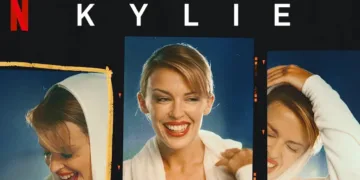















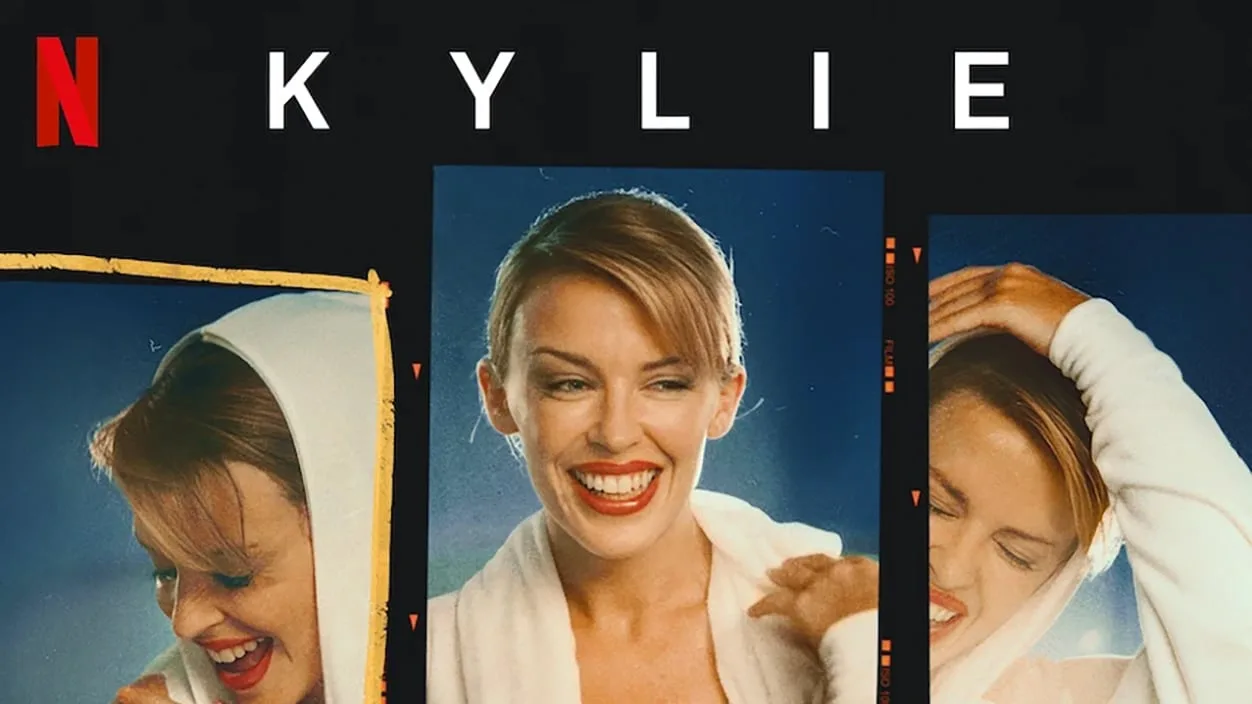

Kylie Minogue has sold 80 million records, released 17 albums, won two Grammys and 18 ARIA Awards, and accumulated over 5 billion streams. She is Australia’s bestselling female artist of all time. Netflix’s three-part documentary Kylie, directed by Michael Harte (the editor behind Beckham and Still: A Michael J. Fox Movie), was shot over two years and attempts something genuinely difficult: to get behind the sequins.
The series draws on personal archive footage, home movies, and new interviews with Minogue, her family, former collaborators, and close friends. What emerges is a portrait shaped by a central friction. Minogue is among the most recognisable performers alive, yet she is, by her own admission and by the clear evidence of those around her, intensely private. That tension holds the documentary together. What begins as a familiar pop career retrospective, the kind streaming platforms now produce at industrial scale, gradually becomes something harder to shake. The series earns its emotional weight by the end, even if it takes a while to get there.
Three Chapters, One Complicated Career
Harte structures the series chronologically, each episode covering a distinct phase of Minogue’s public life. The first opens in 1987, with a young actress flying to London to record what would become I Should Be So Lucky, knocked out in a frantic two-hour session. The title came from a throwaway line thrown across the studio. Stock Aitken Waterman had no idea who she was; Neighbours had yet to air in the UK.
This opening episode is as revealing about the era as it is about Minogue herself. The tabloid treatment she received, dismissed as the “singing budgie,” having Loyd Grossman sneer at a cardboard cutout of her on television, being labelled “raunchy” in a tone dripping with contempt, lands now with the full weight of documented misogyny. The second episode shifts into the turbulent territory of her relationship with Michael Hutchence, her ill-fated attempt at indie credibility, and the improbable intervention of Nick Cave. The third covers her comeback, her 2019 Glastonbury appearance, and the health battles that shadow everything.
Harte’s most effective directorial instinct is knowing when to put the formal interview aside. The scenes that reveal most tend to be the looser ones: a late-night family gathering around a bonfire, a candid studio session with longstanding collaborators. The opening episode drags at points. By the third, that barely registers.
Lovers, Critics, and a Prince of Darkness
Jason Donovan appears throughout the first episode with a quality that is hard to name precisely, sitting somewhere between warmth and unresolved grief. He jokes about needing therapy after filming his segment, and the joke lands because it is only a joke by the thinnest margin. He recalls accompanying Minogue backstage at an INXS concert and watching Michael Hutchence focus his attention entirely on her. “I could sniff that one a mile away,” he says.
Also Read




Hutchence is the emotional axis of episode two. Minogue describes him as “hilarious, cultured and tender,” a man who wanted her to discover herself rather than perform a curated version of herself for his benefit. She admits she has “probably been looking for something like that ever since.” His death in November 1997 brought another first: the first funeral she had ever attended. The weight of a relationship compressed into roughly eighteen months of her early twenties is one of the documentary’s more striking subjects.
Nick Cave’s contributions are some of the sharpest in the series. He describes Minogue as a “joy machine,” argues that true joy is the capacity to rise out of suffering, and insists her connection with audiences is entirely genuine. Cave was also, improbably, the man who talked her out of her indie detour and back toward pop, making him the unlikely architect of Spinning Around and the extraordinary run that followed.
Dannii Minogue and the wider family appear throughout, visibly uncomfortable on camera and all the more affecting for it. Dannii’s quiet recollection of fearing her sister might not survive the first cancer diagnosis carries more weight than many of the series’ more polished moments.
The Secret She Kept
Late in the final episode, a title card reading “One More Thing” appears against a black screen. The shift in register is immediate. Minogue, sitting with her songwriting collaborators in a London studio, falters. Biff Stannard takes her hand. She reveals that her cancer returned in early 2021, a second diagnosis she kept entirely private. “I was just a shell of a person,” she says. “I didn’t want to leave the house at one point.”
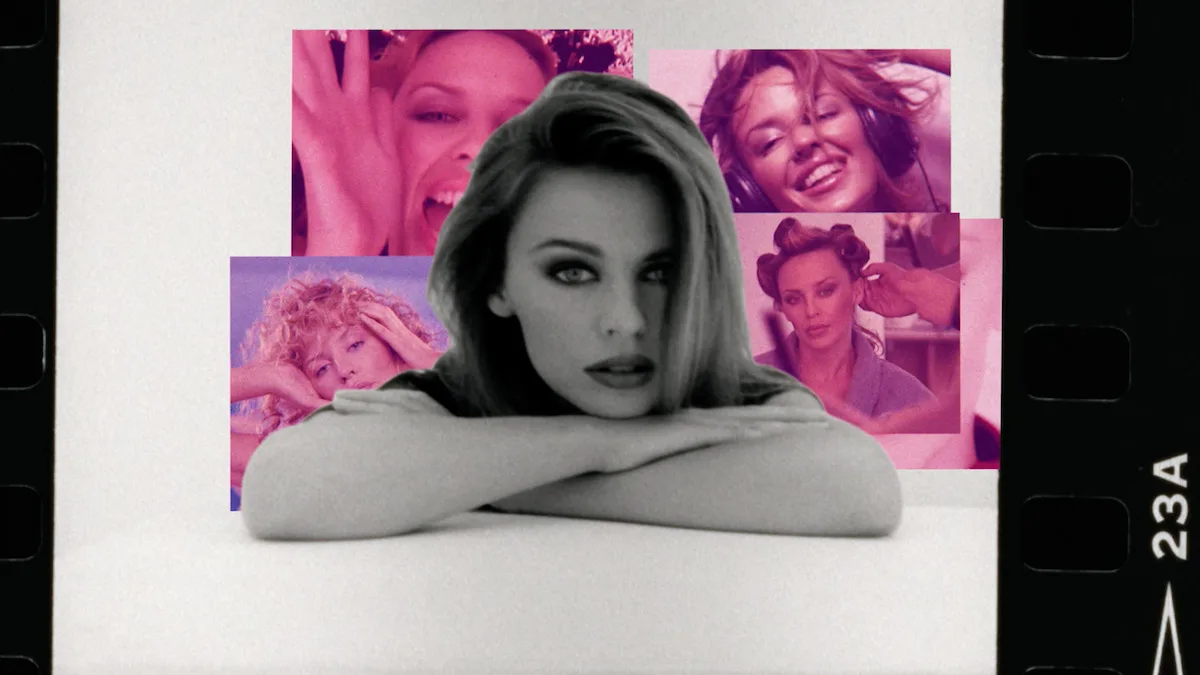
What makes this land so hard is the context. She was keeping this secret while publicly riding the wave of Padam Padam, a song that would win her a Grammy and launch a Las Vegas residency. The closing track on her 2023 album Tension, a song called Story, is where she finally gave the experience form, singing it haltingly with her collaborators in the studio.
The contrast with her 2005 diagnosis is pointed. That first battle played out in full public view: press intrusion, the surge in mammogram bookings dubbed the “Kylie effect,” and the devastating revelation that she had undergone IVF before beginning chemotherapy. The grief she carries over not becoming a mother remains palpable throughout. The second time, she told almost no one. She simply endured it.
Kylie ends up being a documentary about what a woman in the public eye is permitted to keep for herself, and what the act of finally sharing costs her. Minogue has spent four decades giving outward, to pop music, to audiences, to an industry that spent years mocking her before crowning her an icon. The gap between the most private woman in the room and the woman who agreed to make this documentary is where the whole thing lives.
Kylie is a compelling three-part documentary series that offers an intimate, unfiltered look at the life and career of global pop icon Kylie Minogue. Premiering globally on Netflix on May 20, 2026, the series chronicles five decades of pop history, tracing her evolution from her breakout role on the Australian soap opera Neighbours to her status as a resilient, chart-topping superstar. Through a combination of rare archival footage, personal home movies, and candid new interviews, the documentary explores her professional triumphs, her battle with breast cancer, and the complex personal relationships that have shaped her public and private legacy.
Full Credits
Title: Kylie
Distributor: Netflix
Release date: May 20, 2026
Rating: TV-MA
Running time: Three-part limited series
Director: Michael Harte
Writers: Michael Harte
Producers and Executive Producers: John Battsek, Alex Black
Cast: Kylie Minogue, Dannii Minogue, Jason Donovan, Pete Waterman, Nick Cave
Editors: Michael Harte
Composer: Camilo Forero, Kim Tae Hak
The Review
Kylie
Kylie is an emotionally rewarding documentary that earns its place among streaming's better celebrity portraits. It stumbles early, leaning too heavily on familiar archive material, but builds toward a final act of genuine, unscripted vulnerability. The revelation at its close reframes everything that came before. Harte trusts his subject enough to let silence and hesitation do real work. The result is a rare thing: a pop documentary that respects both the icon and the person behind her.
PROS
- The second cancer revelation is genuinely shocking and handled with restraint
- Nick Cave, Jason Donovan, and Dannii Minogue offer candid, emotionally honest contributions
- Looser, unguarded moments outperform the formal interview segments
- The contrast between Minogue's public warmth and private pain gives the series real depth
- The Hutchence material carries unexpected emotional weight
CONS
- Episode one paces slowly and prioritises nostalgia over insight
- Some formal interview segments feel stiff and overly managed
- Several significant relationships in her personal life go largely unexamined
- The misogyny of the tabloid era is documented but not deeply analysed