








Joshua Z. Weinstein’s Here I’m Alive, co-written with Brian Perkins, compresses a restless New York into roughly 76 to 81 minutes, following a scattered ensemble through one night of digital hunger and physical exhaustion. Migrants, shut-ins, sex workers, influencers, and strivers pass through the city as if carried by the same invisible current, each seeking contact in a world that has made contact strangely abstract.
The film works in a docufiction mode, drawing on non-professional actors who play lightly fictionalized versions of themselves. That choice gives the drama a bruised immediacy. These people do not feel invented for a thesis. They feel found, caught mid-breath, still deciding how much of themselves to reveal.
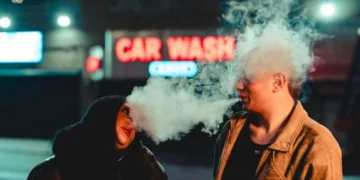
New York is filmed as an organism: neon arteries, cramped rooms, delivery routes, shelters, backroom clinics, screens glowing like private altars. Weinstein’s gaze is gritty, patient, and faintly mournful. The city keeps everyone close, yet distance blooms everywhere.
Lives in Fragments
Majora, played by Cheyenne Gallagher, may be the film’s saddest prophet. An agoraphobic technophile surrounded by screens, he lives inside a cave of circuitry, offering kindness to strangers he may never meet. His attempts to help a suicidal online acquaintance carry real suspense because the film understands how digital intimacy can become frighteningly sincere. A username can become a lifeline.
Krystaly Figueroa’s Krystaly carries a different kind of voltage. She is a shelter resident trying to escape the dead-end gravity of a Target job through a TikTok-style dating show. In a social worker’s office, she appears exposed and cornered. In front of a phone, she becomes director, performer, judge, and prize. That shift is thrilling, then sad, since the power may vanish the second the stream ends.
Eddie Torrenegra’s Eddie moves through the city with the weary grace of someone whose labor is visible only when it is late. A Venezuelan delivery driver hoping to reunite with his children, he lives between FaceTime affection and bodily fatigue. Felix, played by Caleb Zuzga, chases cosmetic transformation and sugar-daddy salvation with a desperation that feels foolish, tender, and painfully human.
The anthology structure cuts among these lives in brief bursts, with title cards marking the hours. The rhythm can feel choppy. Some scenes end before they fully breathe. Still, each character has a distinct ache, and the fractured form mirrors a city where attention itself has become a scarce resource.
The Algorithm and the Abyss
Here I’m Alive is haunted by a simple question: what happens when hope is outsourced to platforms? The film is filled with Discord messages, TikTok performances, livestreamed flirtation, social-media recognition, and screens that promise escape while tightening the room around their users. Technology here is a lens, a mask, a marketplace, and a confessional booth.
Weinstein resists scolding his characters for believing in these systems. That restraint gives the film its philosophical weight. Krystaly, Eddie, Felix, and Majora are not foolish because they dream through screens. They are trying to survive in a city where old routes to stability have cracked. The internet sells fantasies of sudden visibility because visibility may be the only currency within reach.
The film’s framing device, built around Marc Andreessen’s techno-optimist rhetoric, gives the drama a bitter pulse. Silicon Valley speaks in futures. These characters live in unpaid bills, shelter requirements, broken bikes, bodily risk, and loneliness. The gap between manifesto and lived experience becomes the film’s moral wound.
Yet Weinstein keeps returning to small acts of care. Majora’s concern. Eddie’s longing for his children. Krystaly’s refusal to accept the life assigned to her. Felix’s belief that his body can still become a doorway. Their dreams may be distorted, yet the desire beneath them is plain: to be seen before disappearing.
A City Heard Through Static
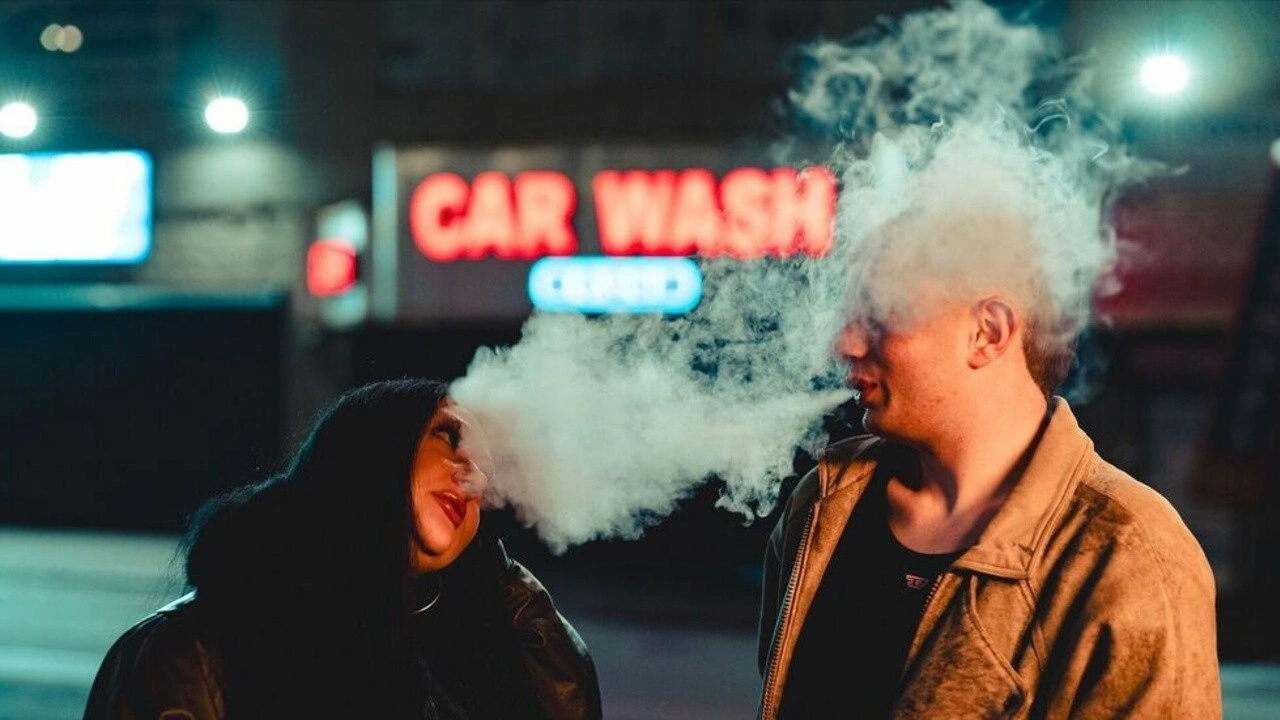
Visually, Here I’m Alive has the rough texture of something captured before it could compose itself. Handheld movement, slow zooms, neon interiors, cluttered apartments, and nighttime streets create a city that appears both immediate and flattened, like real life pressed into a feed. Screens often dominate the frame, turning faces into reflections and rooms into terminals.
Weinstein’s observational style gives the film its strongest charge. He is alert to peripheral motion: workers behind counters, strangers passing through the background, small urban frictions that other films might smooth away. The result is a New York that feels lived in rather than curated. Its glamour has been stripped down to fluorescent light and pavement shine.
The sound design is equally vital. Ambient noise, passing cars, Bluetooth speakers, street chatter, and diegetic music form a dense nocturnal cloud. The use of original songs from DIY New York artists gives the film a pulse that feels local, unstable, and alive. Music drifts in and out, sometimes central, sometimes nearly swallowed by the city.
The editing can frustrate. Its rapid shifts create emotional distance at moments when intimacy seems close. Yet that restlessness belongs to the film’s design. Here I’m Alive captures a city where everyone is connected, everyone is alone, and every glowing screen whispers the same fragile lie: someone out there is watching.
Here I’m Alive is an American independent urban docufiction drama that celebrated its world premiere at the Tribeca Festival on June 6, 2026, competing inside the prestigious U.S. Narrative Competition. Directed, photographed, and co-written by acclaimed filmmaker Joshua Z. Weinstein, the narrative follows a diverse ensemble of city dwellers, including shelter residents, gig-economy delivery drivers, and adult content creators, over the course of a single night in New York City. Utilizing a cast of non-professional actors discovered across internet forums like TikTok and Reddit, the storyline tracks their individual struggles to find genuine human intimacy while trapped within the dizzying and isolating realities of modern social media culture, algorithmic hookup apps, and digital side hustles. Because the production is currently making its debut run on the international film festival circuit, domestic streaming availability and formal theatrical distribution details are expected to follow the conclusion of its festival screenings.
Full Credits
Title: Here I’m Alive
Distributor: Washington Square Films, Cinetic Media (Sales and press agents)
Release date: June 6, 2026
Running time: 81 minutes
Director: Joshua Z. Weinstein
Writers: Joshua Z. Weinstein, Brian Perkins
Producers and Executive Producers: Joshua Z. Weinstein, Daniel Finkelman, Han West, Josh Blum, Brian Perkins, Britta Joy Peterson
Cast: Cheyenne Gallagher, Eddie Torrenegra, Caleb Zuzga, Krystaly Figueroa, Emira D’Spain
Director of Photography (Cinematographer): Joshua Z. Weinstein
Editors: Joshua Z. Weinstein, Kate Abernathy
Composer: Eben D’Amico
The Review
Here I’m Alive
Here I’m Alive is a rough, restless, and piercing New York ensemble piece about people trying to survive inside systems that promise connection while deepening isolation. Joshua Z. Weinstein’s fragmented structure can keep some emotional moments at arm’s length, yet the film’s authenticity, sound design, and nocturnal atmosphere give it a strange, mournful force. It sees digital life as both shelter and trap, locating fragile humanity in people the city barely pauses to notice.
PROS
- Strong docufiction authenticity
- Rich New York atmosphere
- Excellent sound design and diegetic music
- Distinctive ensemble of marginalized characters
- Sharp critique of digital aspiration and isolation
- Philosophically charged without becoming preachy
CONS
- Fragmented pacing may frustrate some viewers
- Certain storylines feel underdeveloped
- Rapid scene shifts limit emotional attachment
- Brief runtime leaves some characters wanting fuller arcs