



























Dongnan Chen’s Whispers in May begins with movement before it offers explanation. Qihuo runs through tall grass. She plays computer games. She cooks alone in a small, smoky room, tending maize over fire with the weary competence of someone who should still be learning how to be carefree. The film does not announce her loneliness. It lets the room announce it first.
Qihuo is 14, living in the Liangshan Mountains of Sichuan, where her parents have gone away as migrant workers and her grandfather has recently died. The empty family home becomes both shelter and wound. She likes being there because no one is watching her too closely.
She should be staying with relatives, helping with younger siblings, keeping up at school, preparing for the kind of life adults have already imagined for her. Her mother’s phone calls pierce this fragile solitude. A voice from far away can still command a body.
The crisis arrives quietly. Qihuo has begun menstruating. In her Nuosu/Yi community, this means the Changing Skirt Ceremony, the ritual garment marking her passage into womanhood. It also means marriage can be discussed, factory work can be expected, and childhood can be treated as a debt that has come due. The horror of the film is not sudden. It is administrative.
The Shelter of Girls
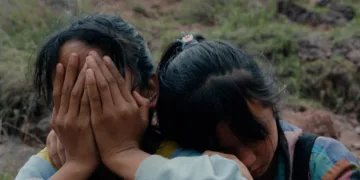
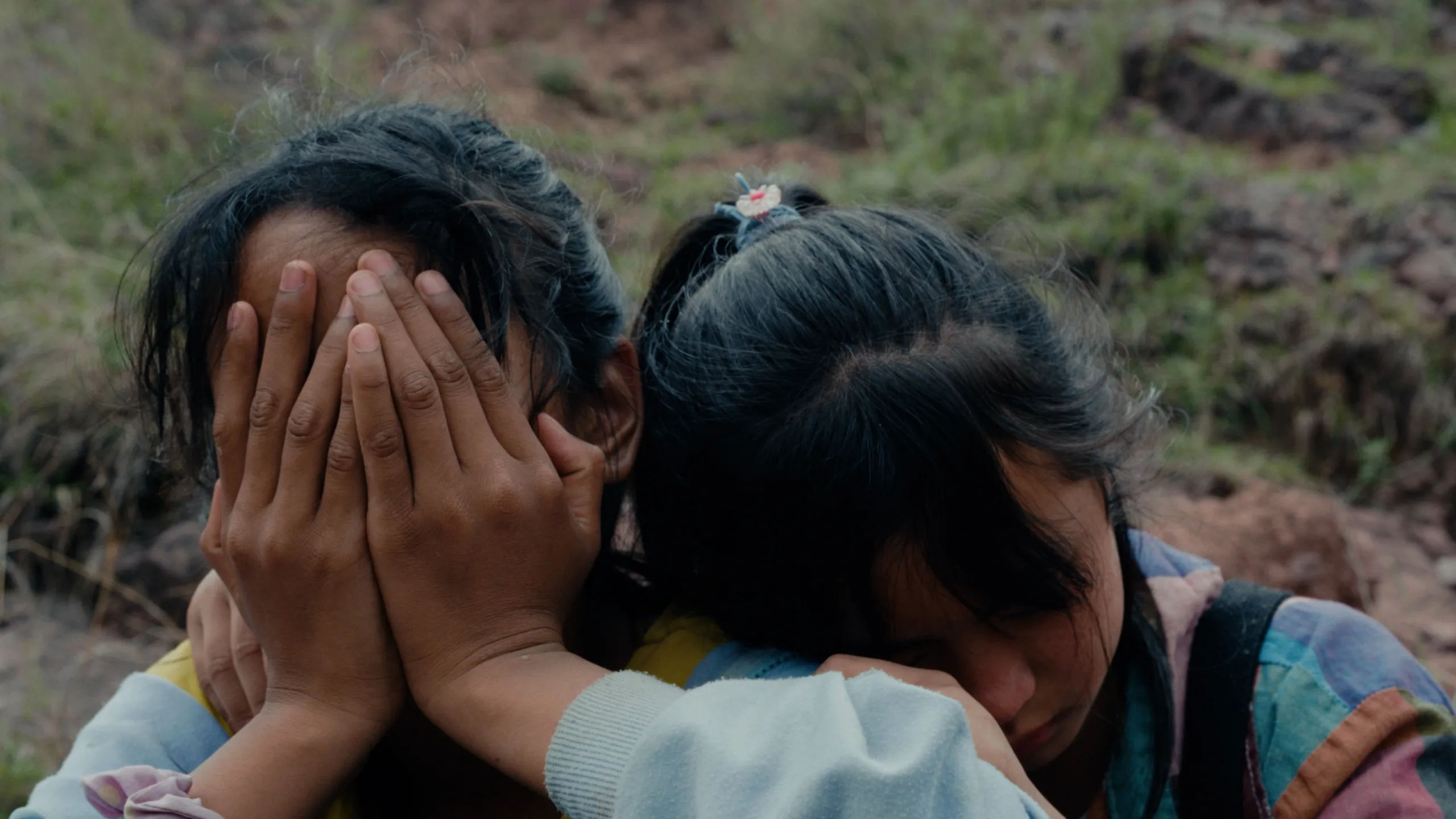
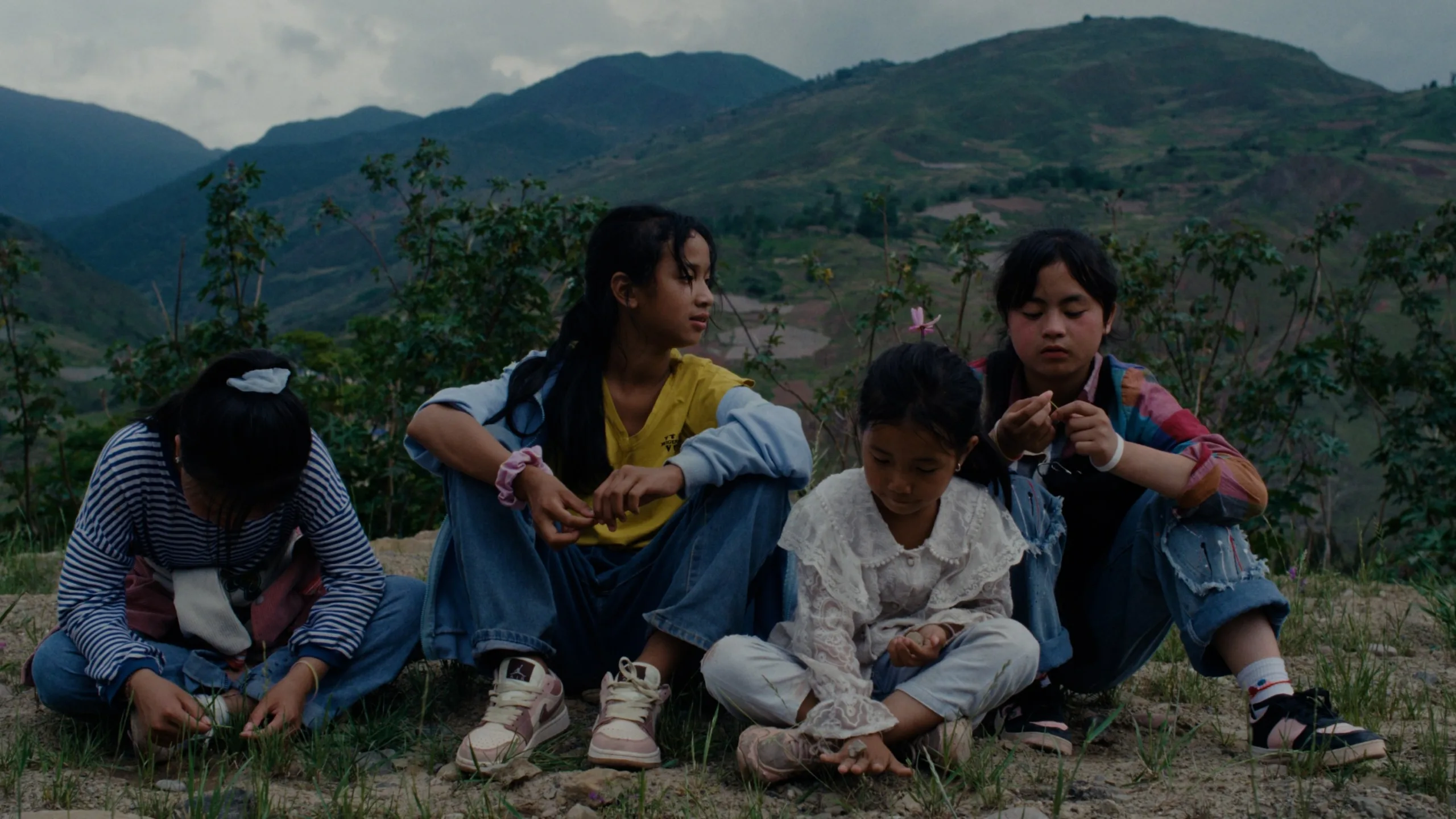
Chen’s camera is most alive when it stays close to Qihuo, Atnyop, Itgop, and the younger Itsi, watching the small social weather of girls who understand each other through teasing before confession. When Qihuo tells her friends about her period, the moment begins with laughter and ribbing, then softens into responsibility. They do what children often do when adults fail to arrive. They become the adults for one another.
Their friendship gives the film its warmth. After school, they swim in the river, flirt awkwardly with boys, gossip, joke about periods, count money, and treat the world with a bravado that keeps cracking at the edges. The scenes have a looseness that cannot be faked easily. One girl speaks too quickly, another looks away, a joke lands half wrong, a silence follows. These are not polished dramatic beats. They are fragments of trust.
The skirt costs too much in the nearby market, so the girls decide to search for a cheaper one in a distant town. The plan sounds absurd and entirely believable. Children understand distance differently when they want something badly enough. They pack snacks and money, take to the mountain roads, and turn necessity into adventure because the alternative is admitting that necessity has already won.
The film’s tenderness lies in how briefly that illusion holds. A child can decide to walk for days to buy a ceremonial skirt. A child can also stop because flowers appear by the road.
Roads Without Mercy
Once the girls begin their long walk, Whispers in May shifts into a road film stripped of engines. There are feet, rain, hunger, cold, mud, and the stubborn rhythm of bodies moving through mountains. Chen keeps the frame close enough for intimacy and wide enough for fragility. The girls look tiny against the valleys and wet roads, their bright talk swallowed by terrain that seems older than any rite.
Some encounters deepen the film’s spell. A fortune teller predicts bright futures, and the scene carries the uneasy sweetness of a blessing no one can guarantee. A funeral stops the girls in place as a dead woman’s belongings, including her skirts, are burned with her. For Qihuo, who seeks her first adult skirt, the image is almost too exact: fabric as fate, clothing as a record of a life spent under rules made before birth.
An elderly herder speaks of monsters in the mountains, and the girls listen with that half-believing attention children give to fear. A driver offers them a ride, but they choose to get out early to see flowers. That choice is one of the film’s purest gestures. For a moment, the errand loses authority. Beauty interrupts duty.
The middle stretch is not always as precise. A night spent with an older villager drifts without the same emotional pressure, and a few episodes feel arranged rather than discovered. The film sometimes mistakes wandering for mystery. Still, its looseness has meaning. The girls are not walking through a clean metaphor. They are tired, distracted, hungry, bored, amused, frightened, alive.
The Ogress in the Hills
The film’s hybrid form carries its own quiet risk. Chen draws from documentary observation, family reality, local custom, and improvised fiction shaped with the girls themselves. The skirt quest may be constructed, yet the nervous laughter around it feels lived. The collaboration works because Chen does not force the girls into polished symbols. She leaves room for awkwardness, for pauses, for the rough texture of speech.
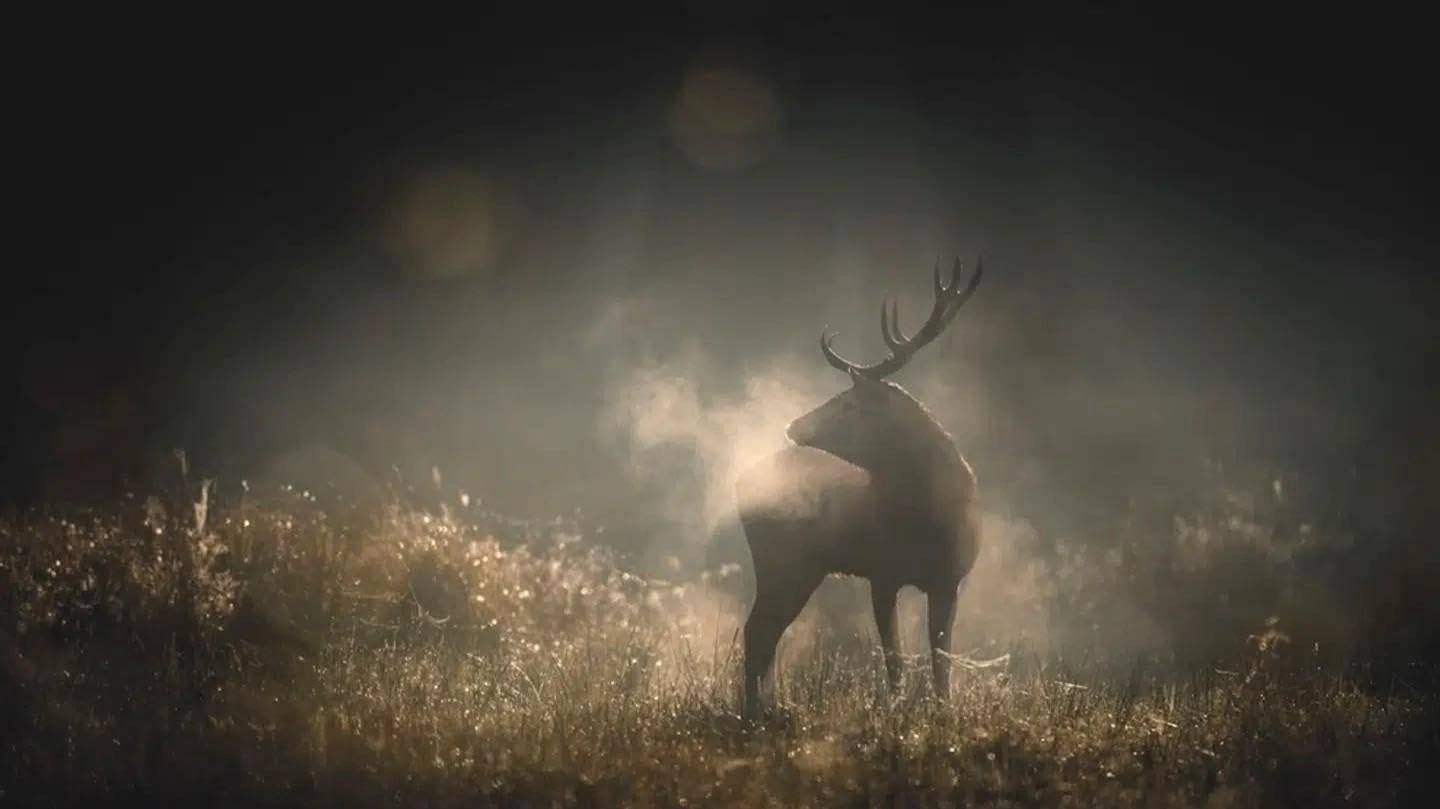
The animated segments about Coqotamat, the thousand-faced ogress who preys on abandoned girls, give the film its darker pulse. The story of children left vulnerable to a monster does not sit outside Qihuo’s life. It shadows the phone calls from her mother, the absent parents, the economic pressures that send adults away and leave girls to inherit the consequences. Folklore here is not decoration. It is memory speaking in teeth.
The score, with its chime-like shimmer, gives the mountain passages a delicate unreality, almost as if the air has frozen into sound. Yet Chen’s images keep pulling the film back to physical fact: smoke in a room, wet shoes on a road, a girl’s face held in close-up while she absorbs a future she did not choose. Qihuo rarely explains herself. The film trusts the tremor before explanation.
Whispers in May is strongest when it watches childhood being thinned by ordinary demands. No single moment steals it. A phone call takes some. A ceremony takes some. A market price takes some. A mountain road takes some. What remains is laughter, brief and bright, moving ahead before the adult world catches up.
The international independent docudrama Whispers in May (originally titled Chun Ri Huan You) celebrated its global world premiere on March 15, 2026, at the CPH:DOX festival, where it took home the prestigious top prize, the DOX:AWARD. The hybrid narrative follows a fourteen-year-old girl living in China’s remote Liangshan Mountains who, after experiencing her first period, sets off on an impromptu mountain road trip with her two closest friends to purchase a traditional ritual skirt marking her transition into womanhood. Audiences eager to experience this lyrical coming-of-age feature can follow its mid-2026 screenings across the international film festival circuit, including showcases at Hot Docs, Visions du Réel, and the Margaret Mead Film Festival.
Full Credits
Title: Whispers in May
Distributor: Muyi Film, Tail Bite Tail Films
Release date: March 15, 2026
Running time: 95 minutes
Director: Dongnan Chen
Writers: Dongnan Chen
Producers and Executive Producers: Jia Zhao, Kay Xu, Heejung Oh, Malin Hüber, Jenny Jin
Cast: Jjippupmop Qihuo, Mathxiemop Atnyop, Lhithxamop Itgop, Lhithxamop Itsi
Director of Photography (Cinematographer): Ming Xue, Xiao Xiao
Editors: Sisi Chen, Tao Gu
Composer: Chad Cannon
The Review
Whispers In May
Whispers In May holds childhood at the instant it begins to vanish: Qihuo’s smoky room, the girls’ jokes about periods, the funeral fire, the flowers by the road. Chen’s hybrid form sometimes drifts, and a few roadside encounters feel too placed, yet the film’s silence and folklore give its coming-of-age story a rare ache. It is tender without pretending tenderness can save anyone.
PROS
- Qihuo’s expressive silences
- Natural friendship scenes
- Folklore with real bite
- Shimmering sound design
CONS
- Uneven middle stretch
- Some arranged encounters
- Occasional loose pacing