

























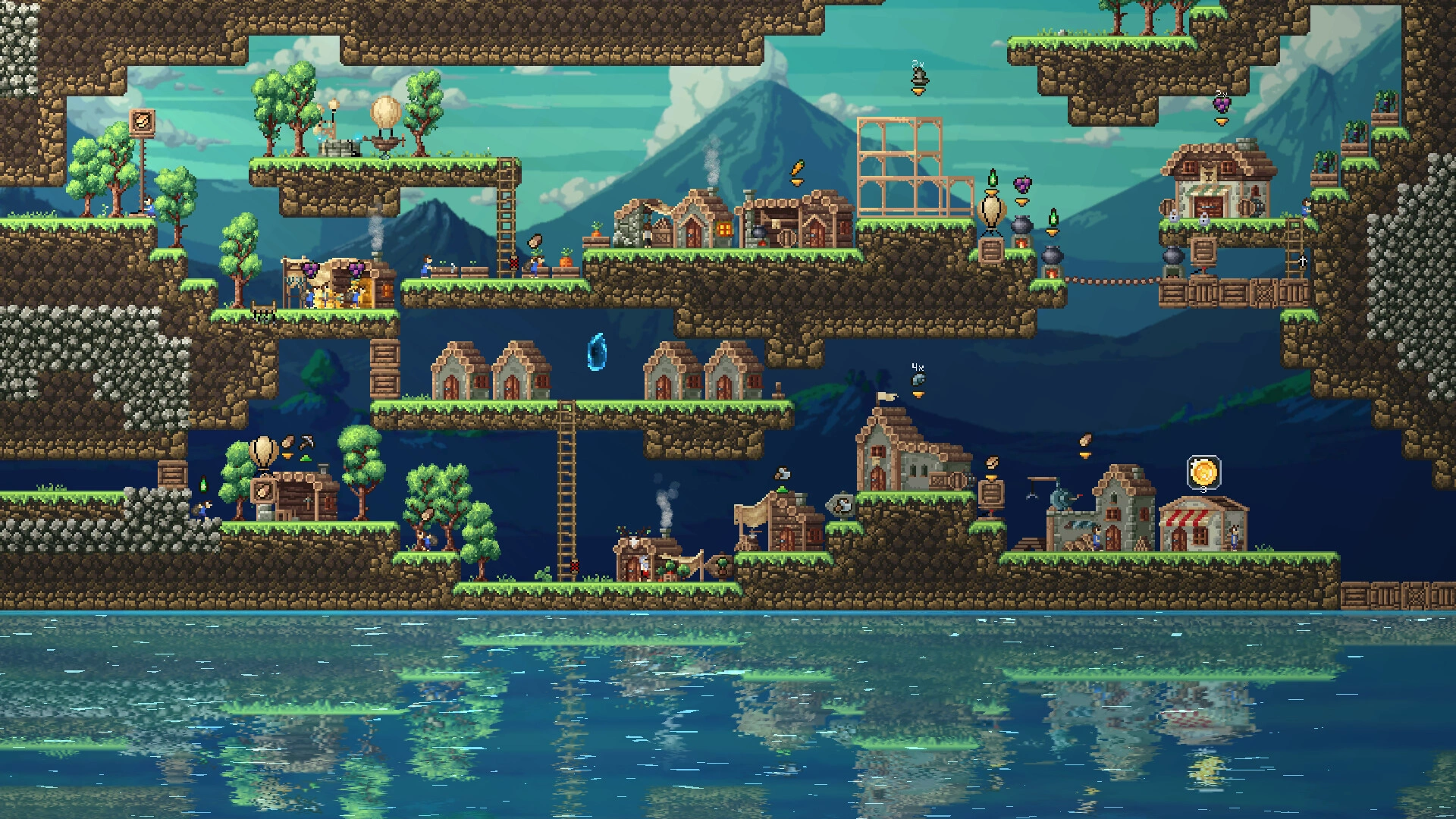

Wood, stone, elevators, and one dangerously confident little worker can turn a tidy plan into comedy in about ten seconds. Craftlings, from ARIANO Games, understands that tiny autonomous creatures are funniest when they are useful, doomed, or both. Its lineage is obvious: the blind forward march of Lemmings sits in its bones, while the uneven terrain and slapstick danger sometimes recall Worms. Yet the comparison only gets you to the front door.
This is a puzzle-strategy game built around settlement management, resource loops, light automation, and battlefield preparation. Across 12 independent stages, the player guides small workers through tightly arranged maps, each one asking for a practical solution rather than a perfect machine. Every level is available from the start, which gives the game a welcome confidence. It trusts players to get stuck, wander elsewhere, learn a trick, and return with a better plan.
The Family Tree Has Grown Machinery
Veterans of Lemmings will recognize the basic anxiety immediately. Craftlings walk with no survival instinct, and the player’s job is to make the world safe enough, or productive enough, for their habits to serve a goal. The old rescue-puzzle idea is still present, especially when a unit strolls toward a drop as if gravity were a rumor. The difference is that Craftlings asks the player to think like a foreman, road planner, and slightly tired parent.
The main tools are indirect. Wooden signs push workers left or right. Their submenus can filter who passes based on role and current task. Stop statues pause the flow. Ladders can be marked for up, down, both, or blocked. Terrain can be reshaped, buildings moved, and transport systems added. These are simple tools in isolation, yet they create wonderfully dense questions once the stage starts moving.
One of the best examples arrives when resources sit across vertical layers. Workers chop wood below while stone waits above. A freight elevator can move materials upward; a cargo balloon can carry them back down. When those pieces finally sync, the map stops looking like a platform puzzle and starts behaving like a tiny industry. That shift is where Craftlings finds its identity. It borrows the panic of Lemmings, then feeds it through production chains.
The game is smart enough to let ugly solutions work. You do not need the cleanest village or the most efficient route. If a clumsy chain gets the pitchforks to the right workers before a monster ruins the plan, the game accepts it. That puts it closer to a goal-based puzzle box than a full management sim. The question is rarely “How do I make this settlement beautiful?” It is “How do I make this mess function long enough?”
Also Read





Learning by Breaking the Village
The first four stages teach the basics of building, gathering, movement control, and mission structure. They are not rigid tutorials. The game points toward the door, hands you tools, and lets you discover how many ways a Craftling can ignore your intention. That choice gives early success a satisfying texture. You are not following instructions; you are learning by watching the system misbehave.
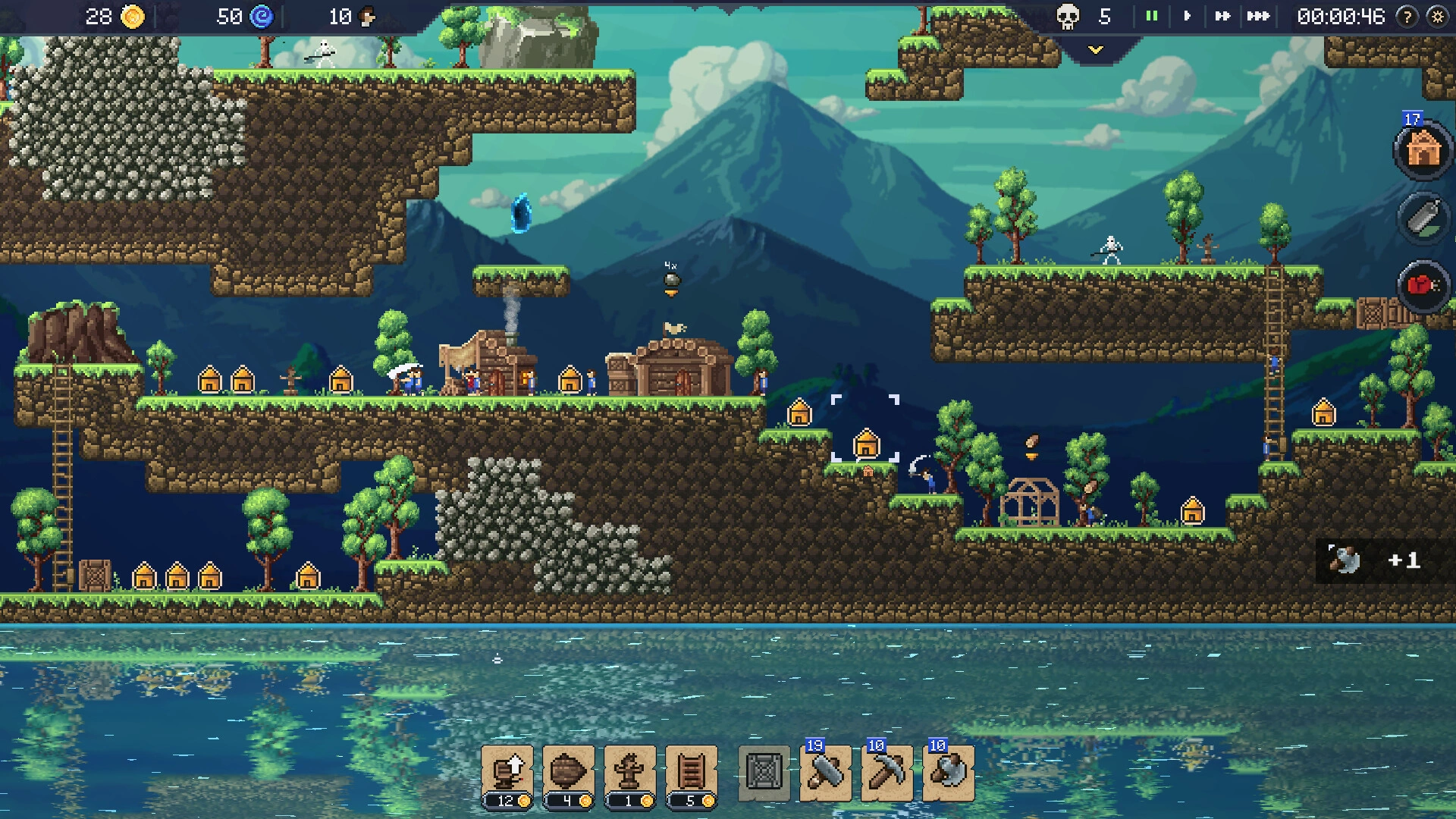
That freedom has a cost. Sign filtering becomes essential before the game fully communicates how vital it is. A player can spend an early stretch wondering why resources are stalled, why workers are looping, or why everyone seems busy with the wrong thing. Pausing the game to inspect every route becomes part of the rhythm, and often a useful one. Still, the opening hours could use clearer nudges around key items and role restrictions.
Ladder control is the sharper frustration. Marking a ladder up, down, both, or blocked sounds precise, yet complex stages often need finer sorting than that. When several Craftlings cross the same vertical space, the available controls can feel too blunt for the puzzle being asked. It is the rare case where the game’s charming indirectness rubs against its own demand for planning.
The difficulty curve also has a few hard angles. Early maps encourage calm experimentation. Later ones fold in tighter space, enemies, longer transport routes, and boss preparation. Training warrior types to protect the settlement gives the game a broader tactical shape, especially when a monster can erase a plan that took several careful minutes to prepare. Failure is softened by free respawns and the ability to pause, which keeps frustration from becoming defeat. The sting remains when a route fails because the interface could not quite express the player’s intent.
Grading each cleared level with Platinum, Gold, or Silver gives the game a useful second life. A rough first clear can become a cleaner second run, with fewer wasted buildings and shorter routes. That fits the game’s design nicely. Craftlings is at its best when the player returns to a map with one new idea and turns yesterday’s chaos into today’s workable machine.
Bustling Pixels and Small Disasters
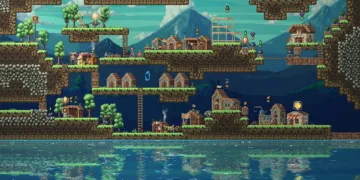
The pixel art is colorful, readable, and practical in the way this kind of game needs. Winter maps, Egyptian-inspired stages, hills, trees, platforms, buildings, and resource nodes all have clear functions at a glance. Some backgrounds could carry richer detail, yet the game wisely favors legibility. In a puzzle built around flow, pretty confusion would be a terrible trade.
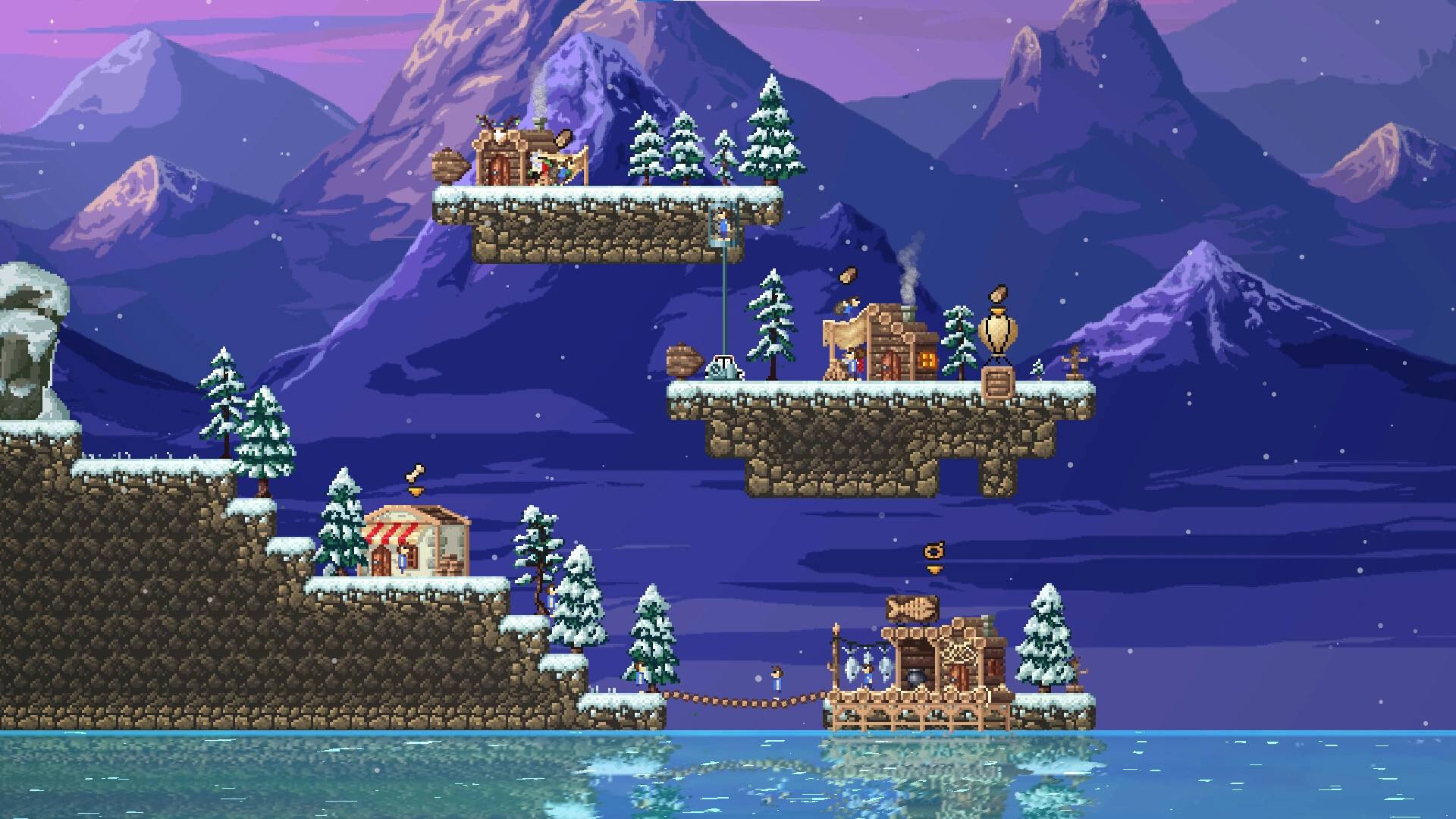
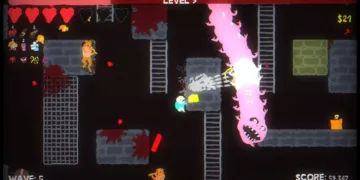
The screen can still get crowded. When workers, enemies, buildings, ladders, and moving resources overlap, especially when zoomed out, individual Craftlings can blur into the activity around them. This matters because a single misplaced worker can break a chain. The game is never unreadable for long, but its busiest moments expose the limits of its visual language.
Sound does plenty of quiet labor. The music keeps a steady, concentration-friendly rhythm, closer to a thinking companion than a command to hurry. Effects for chopping, elevators, balloons, and resource handling give useful feedback without turning the village into noise. The funniest touch is the little death sound when a Craftling falls and ascends, absurd and oddly sweet. Failure gets a punchline, which helps when the same plan has collapsed for the fifth time.
There is no conventional character story here, and the game is better for not pretending otherwise. The story is the failed elevator, the misplaced sign, the sudden monster attack, the desperate spell that lifts armed Craftlings toward danger, and the small miracle of seeing them finally pick up the right tool. In the family tree of games about little beings who walk where they should not, Craftlings is the branch that learned logistics. It still trips over itself, but its best machines are a pleasure to repair.
The Review
Craftlings
Craftlings takes the old Lemmings anxiety of tiny workers marching toward disaster and grafts it onto logistics, production chains, and compact strategy puzzles. Its best stages make every sign, ladder, elevator, and balloon feel like part of a small machine that the player has personally rescued from stupidity. Some early guidance is too thin, and the control tools can feel blunt in crowded maps, yet the game’s charm and puzzle logic carry it far.
PROS
- Smart Lemmings-style evolution
- Rewarding logistics puzzles
- Flexible stage solutions
- Charming pixel presentation
- Strong replay grading
CONS
- Rough early onboarding
- Blunt ladder control
- Crowded screen readability
- Some repeated stage rhythms