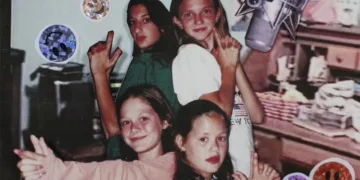



























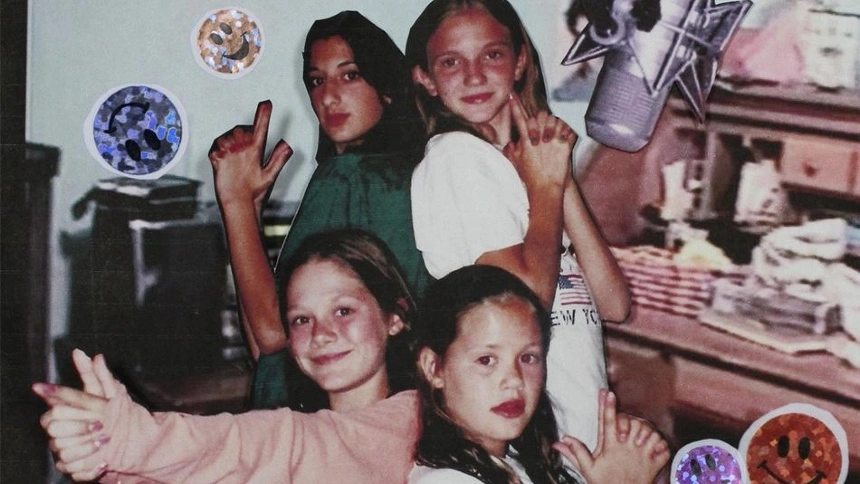

Childhood rarely preserves itself with this much enthusiasm. Ayden Mayeri, Jessica Hall, Janet Kariuki, and Mary Washburn spent their Santa Rosa years pointing a home-video camera at songs, dances, mini-dramas, and breathless conversations about the pop culture of 2000. Two decades later, the tapes have acquired an accidental severity. The girls were playing. The adults are studying the evidence.
Summer 2000: The X-Cetra Story, Mayeri’s directorial debut, returns to the eight-song album the four friends recorded as X-Cetra when three of them were eleven and Mary was nine. Janet and Mary’s musician mother, Robin O’Brien, produced the record, layering the girls’ imperfect singing over strange electronic beats. Their imagined path toward Spice Girls-style pop produced something considerably eerier.
The album was buried, quietly rediscovered online, discussed by music obsessives, and eventually courted by a record label. Mayeri could have made a brisk documentary about accidental cult fame. Instead, she keeps rewinding. The crucial material is not the music itself. It is the sight of four children occupying the frame without asking permission.
The Fracture in the Group Portrait
The reunion gives the film a deceptively clean structure. X-Cetra’s adult members reconnect, discuss the strange resurrection of their album, and return to recording. Songs about fabric softener and aardvarks are revisited by women with partners, children, careers, and twenty years of private history between them. The comedy is easy. Mayeri knows this and distrusts ease. Her camera keeps turning toward the gaps.
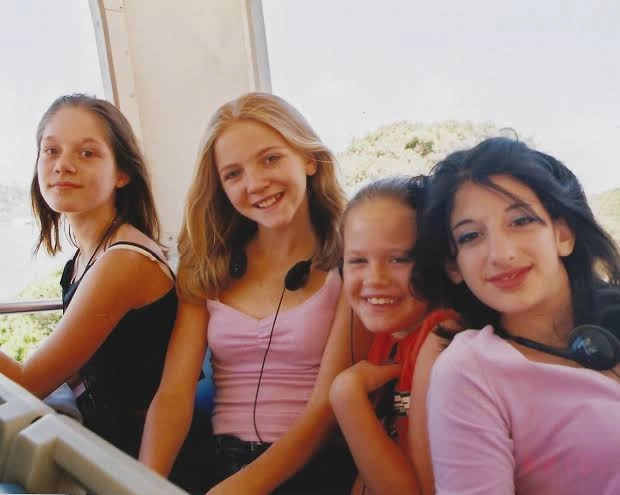
Ayden, Jessica, and Janet moved into adolescence together while younger Mary found herself increasingly outside their orbit. Boyfriends arrived. Drugs and alcohol entered the story. Abusive relationships and family trauma changed the emotional geography of the group.
None of these revelations are staged as courtroom testimony, and Mayeri wisely avoids editing their conversations into accusation and rebuttal. A reality series would have placed two chairs opposite each other and dimmed the lights. Civilization survives.
The documentary’s sharper psychological idea appears during the women’s discussions of feeling most like themselves when they were young. Their adult reunion cannot recreate that state, because self-consciousness has already entered the room. You can hear it during the recording sessions.
Each woman approaches the microphone with a different posture and degree of assurance, while O’Brien comments on their performance habits with the confidence of someone who has known these voices since childhood. Those old group roles have not disappeared. They have learned better manners.
Mayeri’s editing repeatedly places present-day reflection beside footage of the girls running wild for the camera. The juxtaposition does not prove that childhood was happier. It shows how little the girls yet understood about being watched, judged, or ranked. Once that knowledge arrives, the friendship begins to change.
Memory, Produced by Robin O’Brien
Robin O’Brien occupies the film’s most morally unsettled space. She helped make X-Cetra possible, supplying musicianship, production knowledge, and the electronic textures that turned the girls’ pop ambitions into an accidental piece of outsider music. The album’s present cult status owes plenty to her choices. The girls sang one record. O’Brien heard another.
Her position in the documentary is harder to classify. She was Janet and Mary’s mother, a maternal presence around the wider group, and the adult shaping a creative project made by children. During present-day discussions, she analyzes the women’s different performance styles and confidence levels. The comments can sound affectionate, perceptive, invasive, or all three within the same exchange. Mayeri refuses to assign a clean moral key light here. That restraint matters.
The material concerning Janet and Mary’s family history complicates O’Brien’s image without flattening her into an antagonist. Affection survives beside discomfort. Creative encouragement exists beside the weight of parental influence. The documentary never produces a single explanation for the Washburn sisters’ memories, because family history rarely cooperates with tidy blocking.
Mayeri’s own diaries deepen this problem of evidence. Entries written in middle school can be funny, petty, melodramatic, and painfully direct. The film does not treat them as definitive records. Editors Phil Rosanova and Audrey Leach place them beside interviews and VHS footage, creating three versions of the past: what a child wrote, what a camera captured, and what an adult now believes happened. None is fully reliable. Together, they get uncomfortably close.
The Strange Light of Embarrassment
The original X-Cetra album sounds strange because the girls lacked polish and O’Brien’s production bent their voices through off-kilter beats. Its later internet fame changes the social meaning of those imperfections. What embarrassed the group in adolescence becomes the quality strangers value twenty years later.
The film is strongest when it lets that reversal sit against its images of girlhood in 2000. The women grew up around pop culture obsessed with polished female bodies, controlled femininity, and strict ideas about how girls should look when seen. Their home videos preserve the opposite condition.
They pull faces, perform odd characters, sing badly, and commit themselves completely to jokes that make sense only within their friendship. Today, such footage would probably be described as cringe within thirty seconds of appearing online. A useful word, cringe. It allows embarrassment to pose as criticism.
Mayeri gives the material 104 minutes, which is sometimes too generous. Several present-day conversations circle ideas already made sharper by the archival footage. Once viewers have watched Mary gradually slip outside the older girls’ trio, another verbal explanation can feel like the documentary filing paperwork after the crime has been witnessed.
Yet Mayeri’s proximity gives her access a detached filmmaker could never reproduce. The same intimacy that loosens the pacing also permits the women to speak about resentment, abandonment, family pressure, and affection without performing an artificial reconciliation. Even the reunion itself carries an unresolved question. Did the album bring them together, or did making a documentary give the reunion its shape? The camera cannot answer because the camera is part of the event.
That uncertainty belongs in the film. X-Cetra’s old tapes were made by children trying to preserve play. Mayeri returns to them as an adult searching for motive, consequence, and lost time. Somewhere between those two impulses, four girls remain on VHS, singing before embarrassment learned how to light the room.
The nostalgic independent musical documentary Summer 2000: The X-Cetra Story made its widely acclaimed world festival debut on March 15, 2026, at the South by Southwest (SXSW) Film & TV Festival, where it captured both the Documentary Feature Competition Jury Award and the Audience Award. Audiences following its post-festival run can currently catch special screenings via select independent theater showcases and international cinema festival events. The film archives a remarkable turn of fate, tracking four childhood friends who reunited over two decades after a lo-fi, bedroom pop album they recorded as preteens unexpectedly resurfaced and built a passionate cult following online.
Full Credits
Title: Summer 2000: The X-Cetra Story
Distributor: SXSW Film & TV Festival, Numero Group
Release date: March 15, 2026
Running time: 94 minutes
Director: Ayden Mayeri
Writers: Ayden Mayeri, Barry Rothbart
Producers and Executive Producers: Rachael Fung, Audrey Leach, Barry Rothbart, Phillip Rosanova
Cast: Ayden Mayeri, Jessica Hall, Janet Kariuki, Mary Washburn
Director of Photography (Cinematographer): Barry Rothbart
Editors: Phil Rosanova, Audrey Leach
Composer: X-Cetra, Achim Treu, Robin O’Brien
The Review
Summer 2000: The X-Cetra Story
Summer 2000: The X-Cetra Story turns warped beats, VHS grain, and adolescent embarrassment into evidence from a vanished crime scene: childhood itself. Ayden Mayeri's proximity occasionally softens the documentary's structural discipline, and several reflective passages linger after the footage has made the point. Yet the film understands that memory is rarely a neutral witness. Every diary entry and recording session shifts the meaning of X-Cetra's old songs, until creative awkwardness becomes a record of four girls briefly living without shame.
PROS
- Excellent archival editing
- Candid friendship dynamics
- Rich visual record of girlhood
- Productive emotional ambiguity
CONS
- Occasional pacing drag
- Repetitive reflective passages
- Some family tensions remain hazy