




























Thirteen years disappear every time Jan Scientist closes the cryosleep chamber. That single rule gives The Alters: Last Variable its new rhythm. The base game turned survival into a race against the sun, with Jan Dolski pushing a mobile wheel-shaped base across a hostile planet. This expansion removes the wheel, buries the operation underground, and asks a different question: what happens when escape is replaced by study?
An elderly Jan Scientist, left behind after the original campaign, creates a younger copy of himself moments before dying. The new Jan inherits a damaged bunker, incomplete notes, and a whiteboard full of theories that may already be wrong. His target is the Oasis, a green patch of land that survives the solar devastation destroying everything around it.
He still mines, researches, builds, and creates Alters. This time, every new worker branches from Jan Scientist, producing four specialists in biology, chemistry, geology, and physics. The expansion is built around copies of a copy, yet its best ideas appear first in the machinery rather than the people.
Cycles of Pressure
The original game’s moving base gave every resource decision a visible deadline. Last Variable replaces that forward motion with repeating solar cycles. Jan has a short window to gather organics, repair systems, open routes, and finish research before the team enters cryosleep. The sun then burns for thirteen years. Anything outside the bunker or the Oasis is erased.
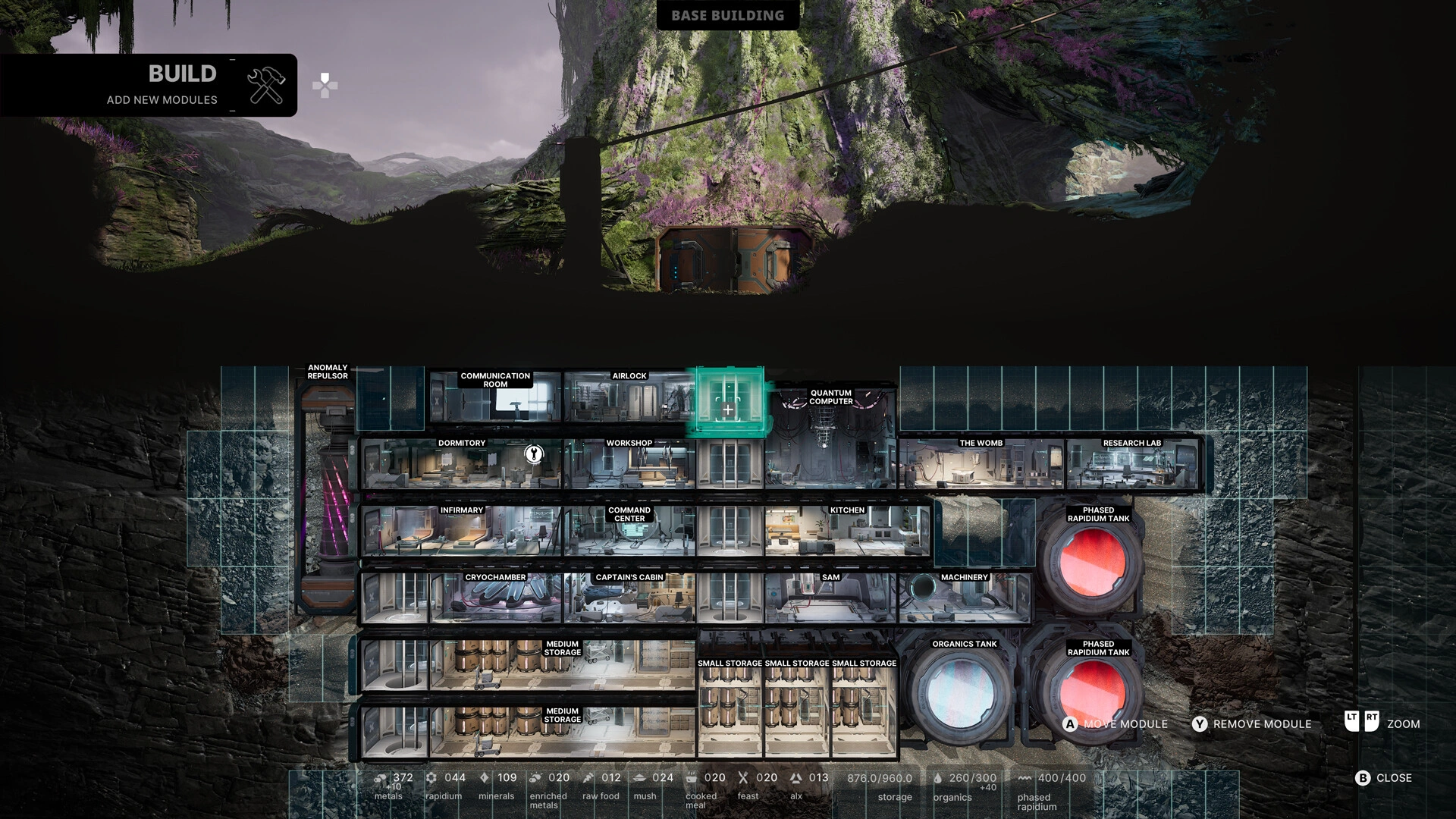
This structure creates a cleaner planning loop. Each cycle becomes a checklist shaped by distance, battery capacity, storage space, and the order of new research. An early Illuminator and partly developed bunker remove much of the original campaign’s slow grind. It also creates a different problem: the fixed base can become awkward to expand, especially once storage, research rooms, and support modules compete for limited space.
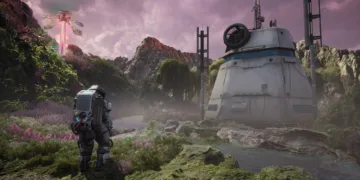
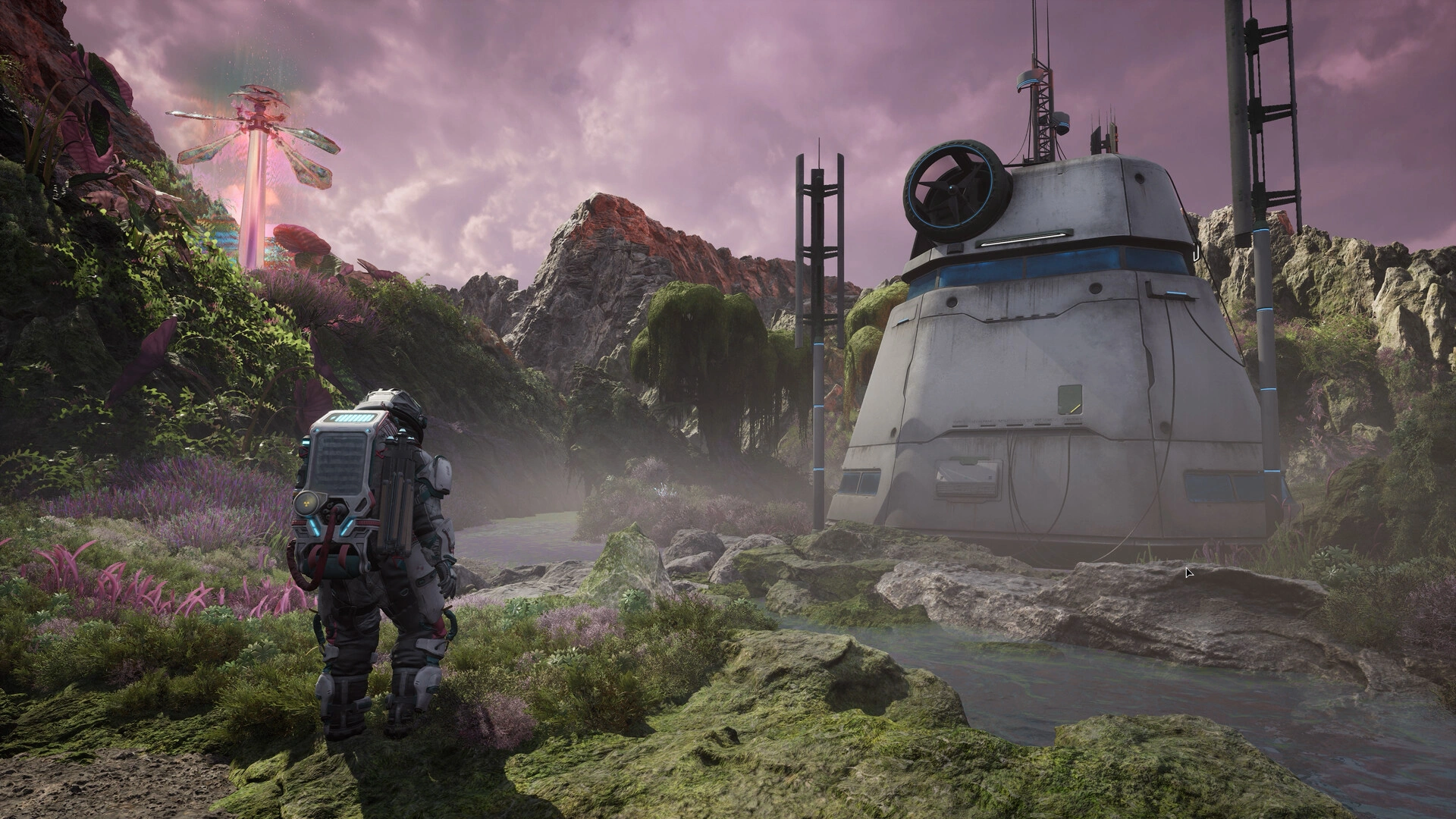
Terraforming gives those cycles direction. Bio-network nodes let Jan open new sectors, collect samples, and establish safe areas where equipment survives future solar phases. Routes blocked by terrain or tool requirements gradually become shortcuts.
Suit upgrades and climbing routes turn familiar ground into a map that keeps changing function. The result resembles a restrained science-fiction Metroidvania, where backtracking matters because infrastructure has changed what a location can do.
The production chain supports that idea with mixed success. Extractors pull red and blue Substances from the ground. Connectors carry them into Phasers, Doublers, and Mixers, producing the materials required for higher research tiers. The system asks for deliberate placement because each Connector supports only two structures. It is satisfying to untangle at first, yet the limited range of useful final resources leaves much of its apparent complexity idle.
Copies Without Consequence
The four scientific Alters should be the expansion’s source of conflict. Each arrives with a profession, a personal history, and a temperament that affects how he reacts to work. The Physicist behaves like a celebrity forced onto a minor project. The Geologist brings restless energy, then bristles when his expertise is treated as a convenient mining bonus. Janbot, the bunker’s AI assistant, slips into absurdist responses that puncture the mission’s self-seriousness.
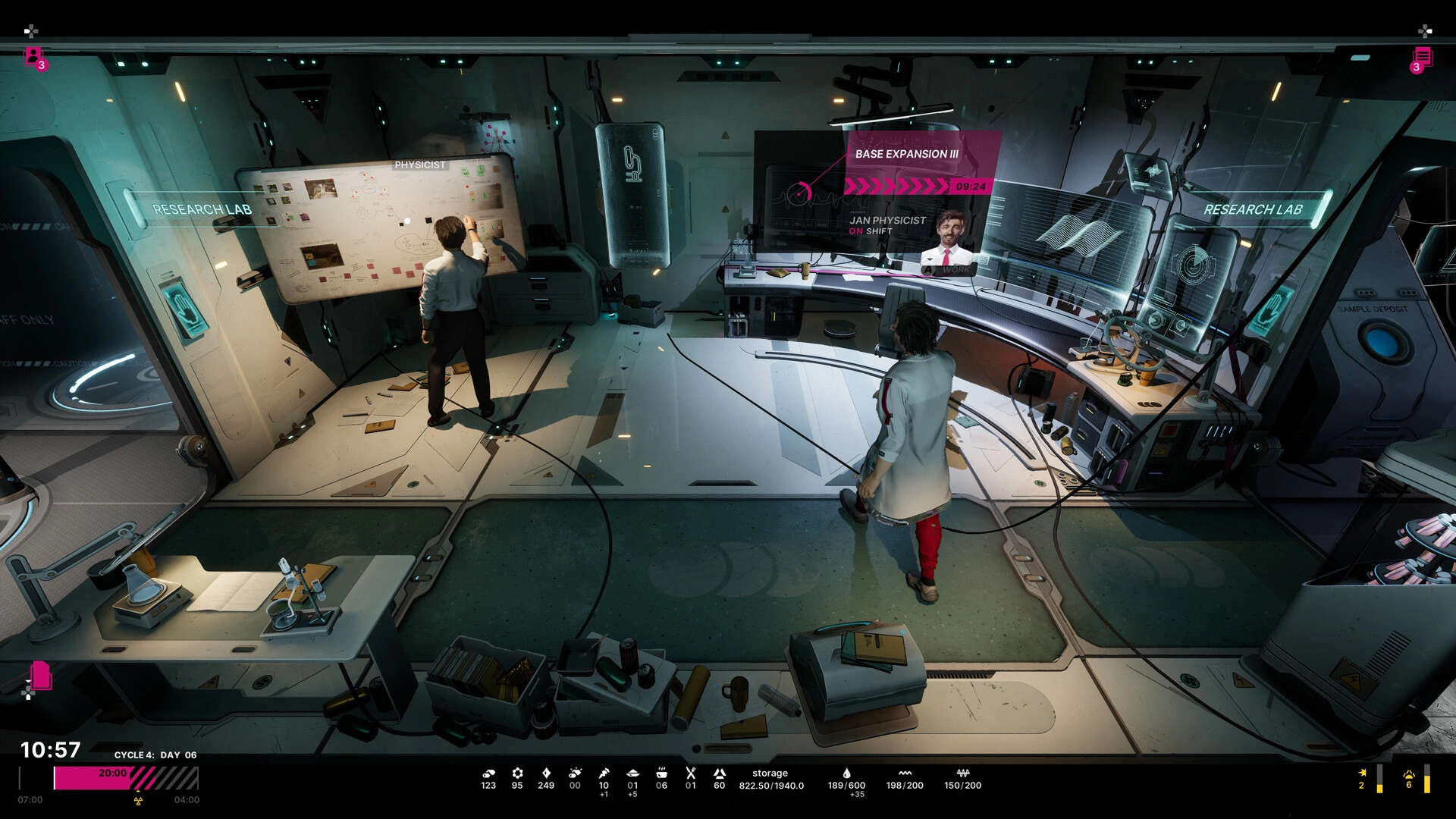
Alex Jordan gives each version of Jan a distinct cadence. A pause, a clipped answer, or a burst of excitement is often enough to separate one Alter from the next. The performances help routine base conversations feel like meetings between people rather than menu screens with faces.
The systems surrounding them promise deeper consequences. Alters request new assignments, react to facilities, join games and feasts, and can rebel when morale collapses. Field Labs carry the sharpest cost. Assigning an Alter to one means leaving him on the surface for thirteen years while everyone else sleeps. He ages, changes outlook, and never returns to regular base duty.
That should be a devastating choice. It rarely is. The selected Alter offers little resistance, the remaining crew barely responds, and the aged researcher produces only a modest piece of insight. Jan can then create a younger replacement from the same branch. The game permits two versions of one life to exist at different ages, yet it seldom asks them to confront each other. A mechanic with enormous ethical weight becomes an efficient staffing decision.
The Variable Left Unsolved
The first half sustains curiosity because every expedition produces a tangible change. A new shortcut reduces travel time. A terraformed sector protects machinery. A sample grants a permanent efficiency bonus through the SAM. The whiteboard fills with hypotheses, and the Oasis keeps suggesting that the planet’s rules are less stable than Jan believes.
Near the midpoint, the narrative pressure weakens. Dialogue choices rarely alter later relationships. The science-focused crew remains emotionally contained, which fits their personalities but flattens the colony. Research stations that should create resentment instead remove characters from daily life with little protest. The game tracks age, labor, and replacement with precision, then treats the personal cost as background noise.
The final mystery leans on a familiar science-fiction reveal and ends before its implications can reshape the campaign. A second run may expose different events, yet the first playthrough leaves major decisions feeling observational rather than consequential. The revised survival loop remembers where every pipe, lab, and resource belongs. It is far less attentive to what one Jan owes another.
The Review
The Alters: Last Variable
The Alters: Last Variable rebuilds the original game’s survival pressure around solar cycles, terraforming, and permanent Field Lab assignments. Those systems give exploration fresh purpose and turn each stretch above ground into a planning problem with real costs. The character layer cannot keep pace. Aging Alters, replacement copies, and thirteen years of forced isolation should produce painful consequences, yet most decisions fade into brief dialogue. A strong expansion, carried by systems that understand its premise better than its story does.
PROS
- Rewarding terraforming loop
- Smarter exploration structure
- Distinct scientific Alters
- Excellent voice performances
- Meaningful resource planning
CONS
- Thin choice consequences
- Underused production chains
- Weak late-story payoff
- Occasional performance issues