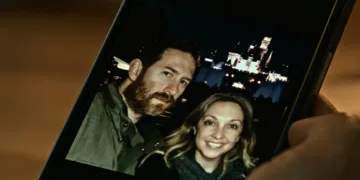


























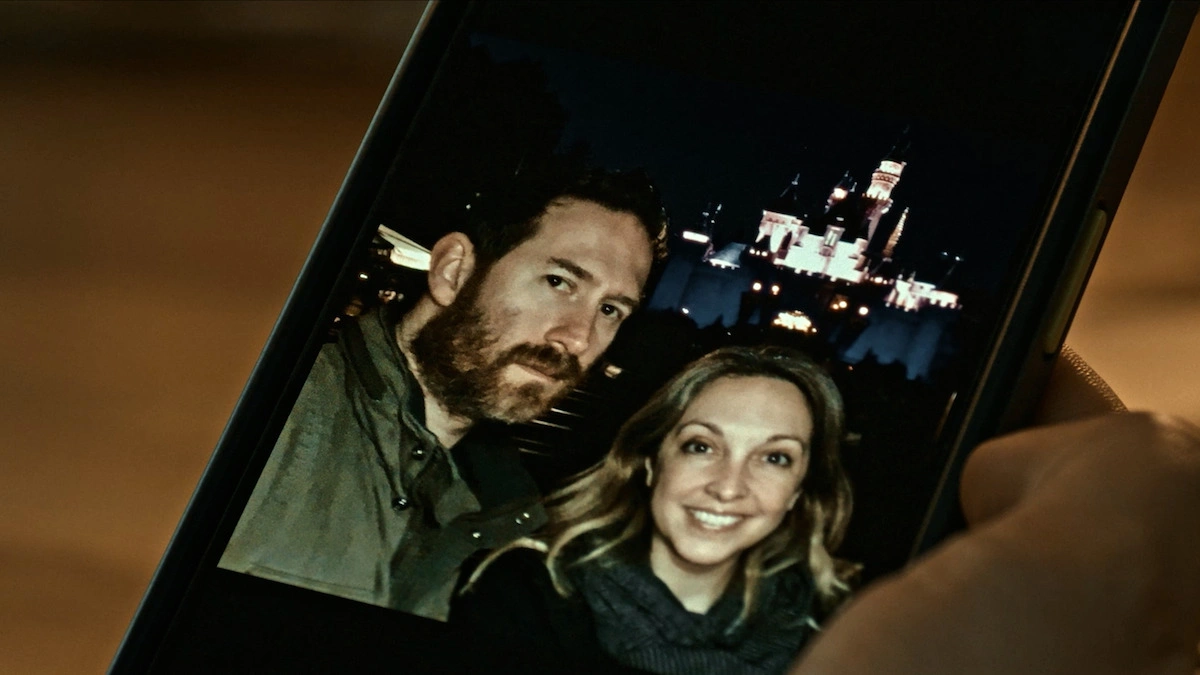

Eighty-eight days in jail is a brutal amount of time for a story built on fabricated emails. Michelle Hadley’s imprisonment gives Alexandra Lacey’s documentary its emotional weight, yet the film initially keeps that damage outside the frame. It asks us to follow the account offered by deputy US marshal Ian Diaz and his new partner, Angela Connell, letting their fear set the rhythm before exposing how badly that trust has been misplaced.
A Toxic Love Story recounts the Anaheim cyberstalking case in a focused 88 minutes. Ian and Angela’s rapid romance leads to marriage and a home in the condominium Ian once shared with Michelle. Soon, Angela begins receiving threats from an account named “Lilithistruth.” The messages contain images of corpses and aborted fetuses. Later, Craigslist advertisements present Angela as someone seeking violent sexual encounters, sending men to her home and placing her in immediate danger.
Lacey understands the emotional force of accumulation. Each email makes the next one easier to believe. Each new account appears to confirm the jealous-ex explanation. By the time Michelle is arrested, the case feels horrifyingly neat. That neatness is the trap.
The Story We Expect
True-crime documentaries often teach viewers to distrust everyone while quietly guiding them toward a preferred suspect. Here, the familiar image of the obsessive former partner does most of the work. Ian has professional authority. Angela has visible fear. Michelle has history with the man between them. Police attention turns these ingredients into a ready-made narrative long before the digital evidence has been tested with enough care.
The film’s first movement is effective because it captures how belief can become a system. Ian repeatedly pushes authorities to act. Threatening messages grow uglier. A Craigslist response leads to an attack. The seriousness of each event makes skepticism feel cruel, which is exactly why the case becomes so dangerous. Emotion starts moving faster than verification.
Lacey supports this section with police footage, recordings, documents, and reconstructions. The technique is familiar, complete with reflective shots of interviewees moving through ordinary spaces while ominous music does some heavy lifting. Yet the clarity matters.
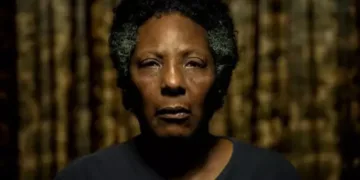
There are several accounts, identities, devices, and competing timelines to track, and the film rarely lets the viewer lose the thread. Then Ian calls his friend Leslie at two in the morning and admits that the twins Angela claimed to be carrying never existed. The documentary’s emotional map changes in a single sentence.
When the Evidence Turns
The fabricated pregnancy does not solve the case. It changes the direction of every question. Fake sonograms, Angela’s earlier cancer claim, conflicting statements, and account records begin to weaken the version of events that sent Michelle to jail. Digital details that once looked decisive start pointing elsewhere. Lacey handles this reversal with restraint, resisting the urge to treat each discovery like a game-show reveal. The facts are sensational enough.
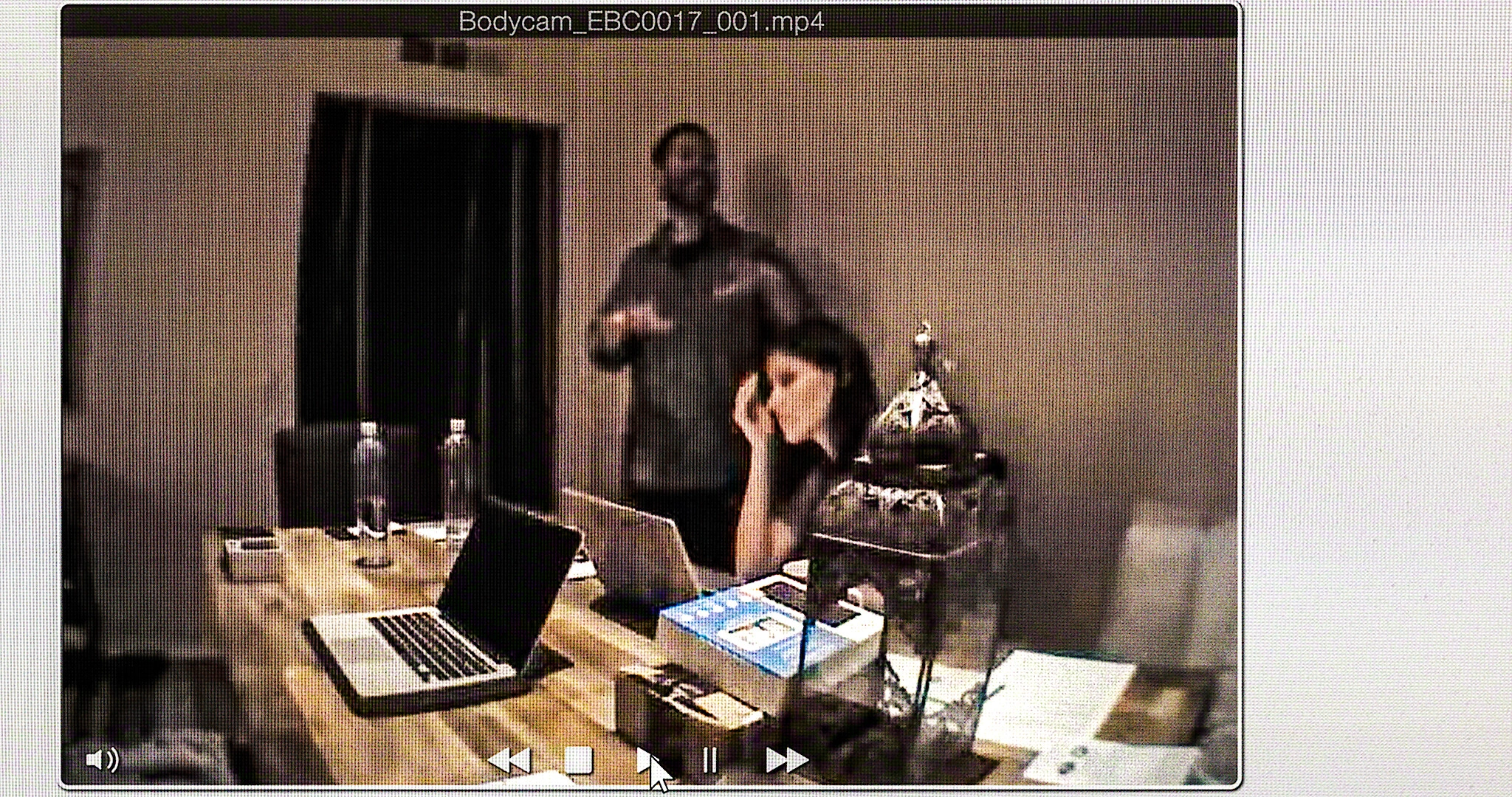
Michelle’s interview shifts the film from puzzle to injury. Her account of Ian describes a relationship shaped by control and warning signs she was encouraged to dismiss. Her tears carry anger, exhaustion, and the strange distance of someone explaining an experience that other people turned into entertainment before she had recovered from it.
Her 88 days in custody stop feeling like a statistic. She faced the possibility of life in prison while investigators treated denial as further proof of guilt. The authority attached to Ian’s badge gave his story momentum. Michelle had only her insistence that the story was false, and the system had already decided what kind of woman she was.
Former DOJ agent Jason Higley and the forensic examination of the accounts help expose the scheme. Their work is presented clearly, but the film leaves a painful question hanging over every corrected detail: why did this scrutiny arrive after Michelle had lost nearly three months of her freedom?
The Human Cost of a Digital Trail
The film is strongest when it treats electronic evidence as human action rather than abstract data. An IP address represents someone choosing where to send a threat. A false account represents a person borrowing another identity. A Craigslist post becomes dangerous the moment strangers are directed toward a woman who never consented to any part of it.
That mechanism widens the case beyond Ian, Angela, and Michelle. Men responding to sexual-fantasy advertisements believed they were participating in consensual scenarios. Angela was placed in physical danger as part of the deception. Michelle’s name became the tool that connected each event. Online anonymity gave the scheme reach, while institutional confidence gave it power.
The closing discussion of Lilith gives Michelle space to reclaim an identity chosen to portray her as threatening and disobedient. The mythological reference could have felt too tidy, yet her reading of it lands because the case depended on punishing a woman for refusing the role assigned to her. She was cast as the jealous ex, then jailed inside that fiction.
The polished reenactments and suspenseful editing sometimes press against the gravity of the material. Netflix knows how to package a reversal. Lacey’s film earns its anger when it looks past the surprise and stays with the person forced to live inside the lie.
This true-crime documentary film premiered on Netflix on July 22, 2026. The story explores a chilling real-life case where a seemingly ordinary situation escalates into a complex web of threatening messages and a bizarre revenge plot.
Full Credits
Title: A Toxic Love Story
Distributor: Netflix
Release date: July 22, 2026
Rating: TV-MA
Running time: 88 minutes
Director: Alexandra Lacey
Producers and Executive Producers: Curious Films
The Review
A Toxic Love Story
A Toxic Love Story turns a familiar true-crime reversal into something harder to shake: the sight of an innocent woman losing 88 days of her life because authority sounded believable before the evidence was tested. Alexandra Lacey’s clean structure keeps the case readable, while Michelle Hadley’s testimony gives every digital clue a human cost. The reenactments and suspense editing sometimes press too hard, yet the film’s anger survives the packaging. The twist hooks you. The injustice stays with you.
PROS
- Michelle Hadley’s powerful testimony
- Clear evidence-driven structure
- Focused 88-minute runtime
- Disturbing institutional questions
- Strong emotional reversal
CONS
- Familiar Netflix reenactments
- Occasionally manipulative editing
- Limited scrutiny of police failures