




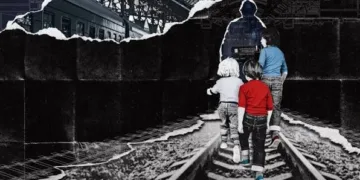









Pietro Savastano’s first steps toward power begin with stolen tires, cheap cigarettes, and the knowledge that his neighborhood has already decided what sort of future he deserves. Set in Secondigliano in 1977, Gomorrah: The Origins returns to the Neapolitan criminal world through characters who have yet to become its monsters. They are teenagers and young adults still capable of imagining lives elsewhere, though the institutions surrounding them have little interest in making those lives possible.
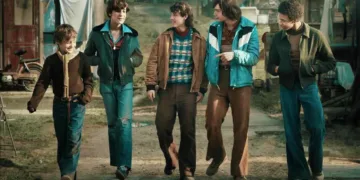
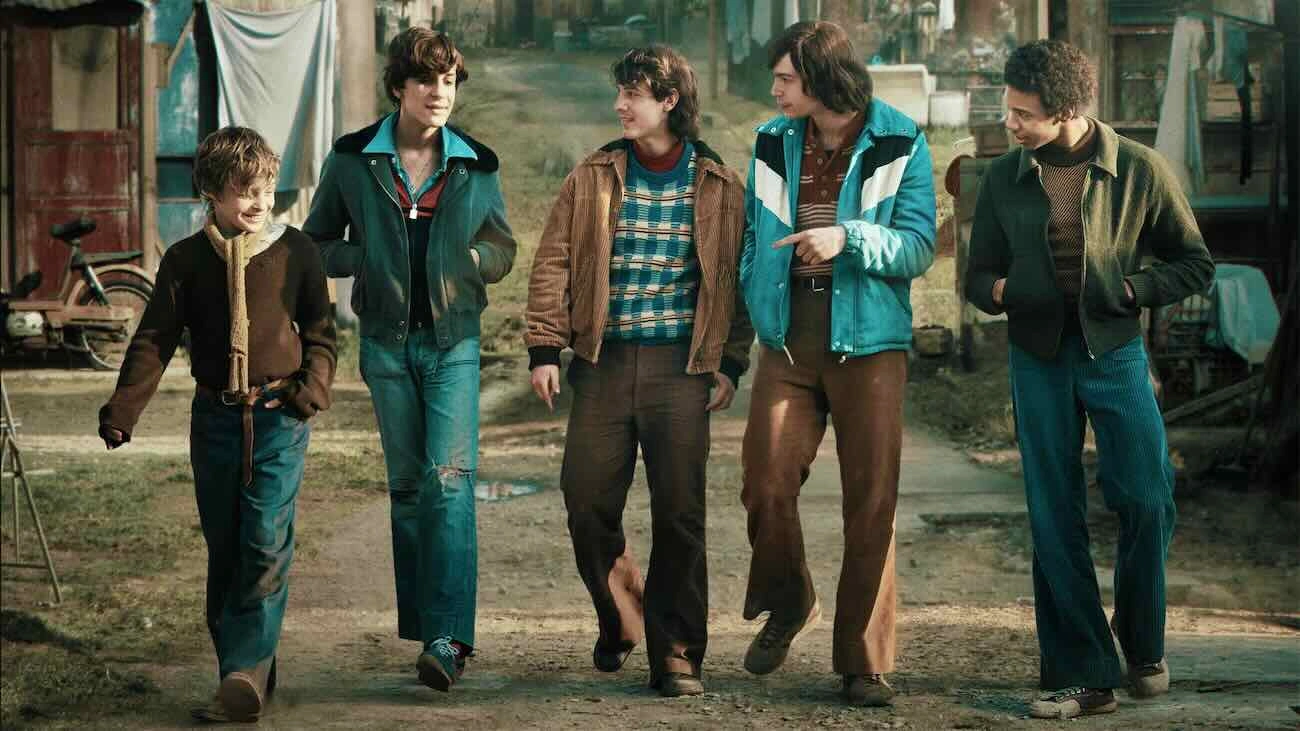
The six-episode prequel centers on Pietro, played by Luca Lubrano with nervous alertness and a convincing adolescent awkwardness. He runs petty thefts with a group of local boys while living in poverty with his mother. His intelligence quickly attracts Angelo, or Angiolè, a stylish young gangster working beneath the Villa family. Francesco Pellegrino gives Angelo the posture of a man performing authority before he fully possesses it. The leather jackets, open silk shirts, and carefully arranged hair are part armor, part campaign speech.
The series uses their alliance to show how organized crime recruits. Pietro is never handed a manifesto. He is given errands, approval, money, and access. Each step appears small enough to accept, which is how the system avoids looking like a trap until the door has closed.
Dreams with Price Tags
The original Gomorrah presented power after it had stripped away nearly every trace of innocence. This prequel is interested in the stripping itself. Pietro’s transformation gains its force from Lubrano’s ability to preserve flashes of the boy inside the future boss. He watches Angelo with admiration, studies how older men speak, and gradually learns that violence functions as a language of professional advancement.
His first killing in Episode 4 marks the season’s decisive rupture. Afterward, he tells his mother, “Your son is a killer. Today I killed a man.” The line works because it carries no triumph. Pietro sounds stunned by the permanence of what he has done, as though naming the act might separate him from it. It cannot.
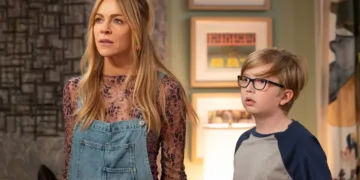
Imma offers a different route, at least initially. Played by Tullia Venezia, she lives with loving parents, studies music, and dreams of attending Juilliard. When she asks Pietro about his dream, his silence reveals the class divide between them with greater precision than a speech could manage. Imma has been taught to treat desire as a plan. Pietro has been taught to treat survival as sufficient ambition.
The series refuses to preserve Imma’s world as a safe alternative. Criminal influence reaches her family too, while her friend Annalisa faces violence inside her own home. Social mobility, domestic safety, and artistic aspiration all prove vulnerable to the same local power structure. Television loves telling viewers that talent provides an escape. The Origins has seen the transport links out of Secondigliano and remains unconvinced.
Style as Social Currency
The period recreation is lavish enough to create a productive discomfort. Secondigliano is filled with dust, failing buildings, gambling dens, crowded streets, and young men dressed as though every pavement were a nightclub entrance. Costume becomes a visible hierarchy. Pietro’s oversized corduroy coat places him beneath Angelo before either speaks, while the older bosses announce their status through double-breasted suits and enormous tinted glasses.
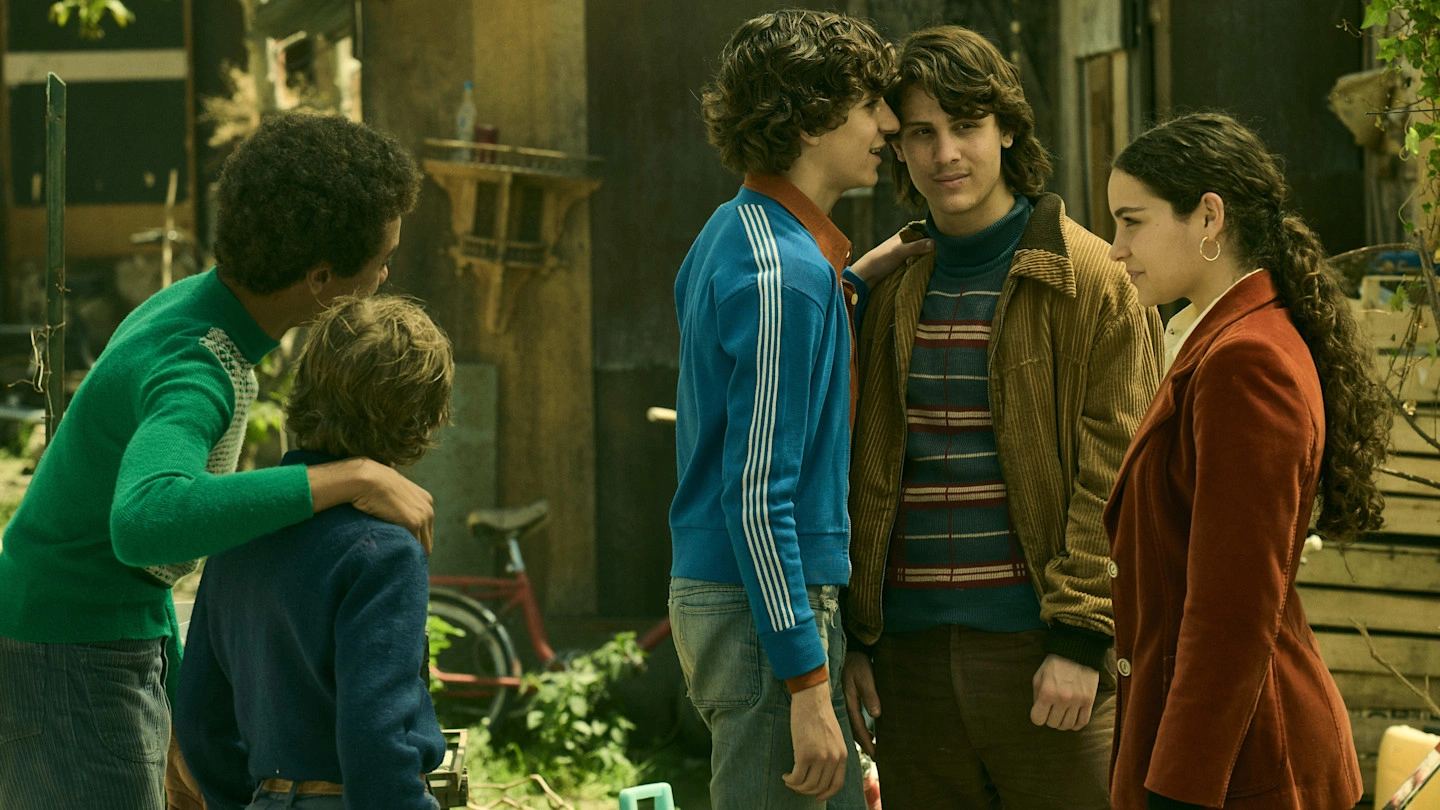
There is pleasure in this design, and the show occasionally risks allowing that pleasure to overpower its social argument. Angelo’s entrances are staged with such confidence that the distinction between examining criminal glamour and participating in it grows thin. The Camorra has rarely suffered from insufficient screen charisma.
Yet the direction repeatedly pulls the image back toward consequence. During a rain-soaked confrontation at the home of a thief who stole from Angelo’s operation, thunder and a crying baby turn the threat of violence into something domestic and inescapable. Mafia funerals are staged as public rituals where grief, suspicion, and collective complicity occupy the same room. A garden party gives the rival families food, music, and elegant surroundings, then lets hostile glances expose the negotiations taking place beneath the hospitality.
The dock heist supplies the season’s cheekiest sequence. Angelo and Pietro use a football and a crowd of children to distract security guards, turning neighborhood play into criminal logistics. The scene is funny, fast, and deeply bleak. Even recreation has been absorbed into the local economy.
Pasquale Catalano’s score supports that tension between vitality and doom. Its whistled main motif recalls the Italian cinema of the era while giving the series a faintly mythic register. A communal scene in Episode 5, where neighbors gather around a small television to watch Sandokan and sing its theme, briefly allows popular culture to create fellowship rather than aspiration. The room is crowded, imperfect, and alive. Crime has not claimed every shared experience yet.
A Future Already Waiting
The season is strongest when it remains close to Pietro and Angelo. Pellegrino’s performance gives Angelo wounded vanity, strategic patience, and sudden menace, particularly as his loyalty to Don Antò turns into rivalry. Antonio Incalza brings lively energy to Fucariello, while Ciro Capano makes the Villa patriarch frightening through restraint rather than theatrical cruelty.
Momentum weakens when the story repeatedly cuts to O Paisano in Poggioreale prison. Flavio Furno plays him with ferocious conviction, gathering criminals around the idea of a new Camorra, but these scenes operate mostly as preparation for a second season. Their historical and political importance is clear. Their dramatic connection to Pietro remains faint. Streaming television has discovered endless ways to turn setup into content, then ask audiences to admire the scaffolding.
Still, the prequel earns its place by treating criminal succession as a generational process rather than a collection of origin-story revelations. The repeated promise of “freedom” exposes the central fraud. Foot soldiers hear that loyalty will release them from poverty, dependence, or humiliation.
Power stays with the men already seated at the table. Pietro, Angelo, Imma, and Annalisa are surrounded by adults who call their confinement opportunity. The tragedy lies in how quickly the younger generation learns the vocabulary.
Gomorrah: The Origins is a crime drama television series that premiered on Sky and streaming service NOW on July 28, 2026. Set in 1977 Naples, the series serves as a prequel tracing the early criminal education of a young Pietro Savastano amid cigarette smuggling and the dawn of the heroin era. Viewers can stream the series on Sky and NOW.
Full Credits
Title: Gomorrah: The Origins
Distributor: Sky Atlantic, NOW, Beta Film
Release date: July 28, 2026
Rating: TV-MA
Running time: 50 minutes
Director: Marco D’Amore, Francesco Ghiaccio
Writers: Leonardo Fasoli, Maddalena Ravagli, Roberto Saviano
Producers and Executive Producers: Riccardo Tozzi, Giovanni Stabilini, Marco Chimenz, Nils Hartmann, Sonia Rovai
Cast: Luca Lubrano, Francesco Pellegrino, Flavio Furno, Tullia Venezia, Fabiola Balestriere, Mattia Francesco Cozzolino, Antonio Incalza, Biagio Forestieri
Director of Photography (Cinematographer): Vittorio Omodei Zorini, Matteo Carlesimo
The Review
Gomorrah: The Origins
Gomorrah: The Origins finds fresh dramatic territory by showing its future crime lords before power hardened them. Pietro’s first killing, Angelo’s restless rebellion, and Imma’s shrinking musical ambitions expose organised crime as a system that recruits young people by making ordinary futures inaccessible. The 1970s styling occasionally lends this brutality an uncomfortable glamour, while the scattered O Paisano scenes feel like trailers for another season. Still, the performances, period detail, and mournful attention to stolen possibility give this prequel an identity beyond franchise expansion.
PROS
- Strong young ensemble
- Rich 1970s production design
- Angelo’s magnetic presence
- Pietro’s credible moral decline
- Sharp class and generational themes
CONS
- Later episodes lose momentum
- O Paisano remains disconnected
- Excessive setup for Season 2
- Stylish imagery risks romanticising crime