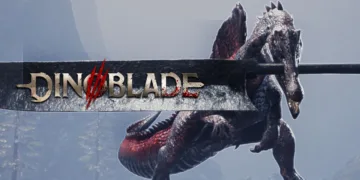

























Parrying a halberd swung by a Tyrannosaurus restores stamina, refills resonance, and pushes its stagger meter toward a breaking point. That mechanical chain explains why Dinoblade survives beyond its viral premise. Team Spino has turned Jean Nguyen’s animation experiment into a compact Soulslike whose strongest ideas live between enemy wind-up, player reaction, and resource recovery.
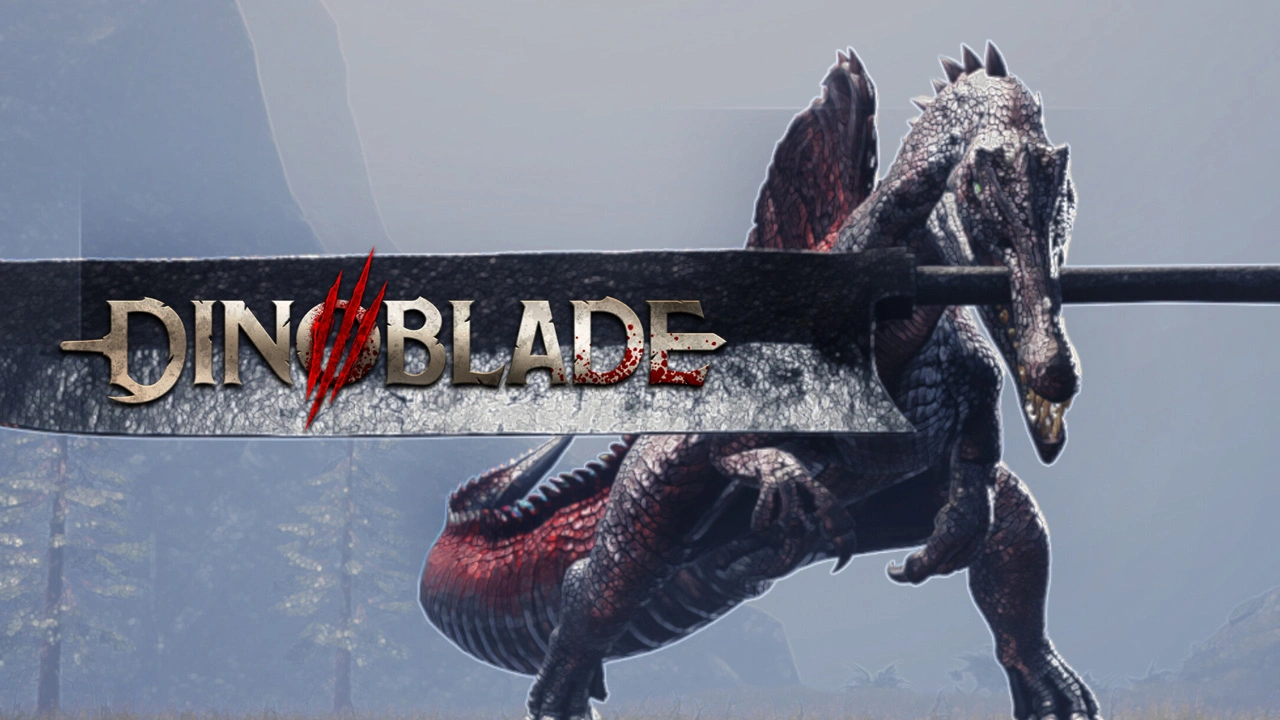
The opening gives its Spinosaurus hero the barest excuse to pick up a blade. After an ambush sends the creature into a cavern, a wounded dinosaur pierced by several weapons explains that survival requires commitment to the sword. The Spinosaurus pulls a greatsword free, dispatches its pursuers, and begins cutting through an armed prehistoric population.
The plot mostly recedes from there. Save-point images depict human duels, bosses mutter fragments about earlier conflicts, and the world hints at some forgotten reason for dinosaurs adopting weapons. Little develops into a meaningful narrative thread.
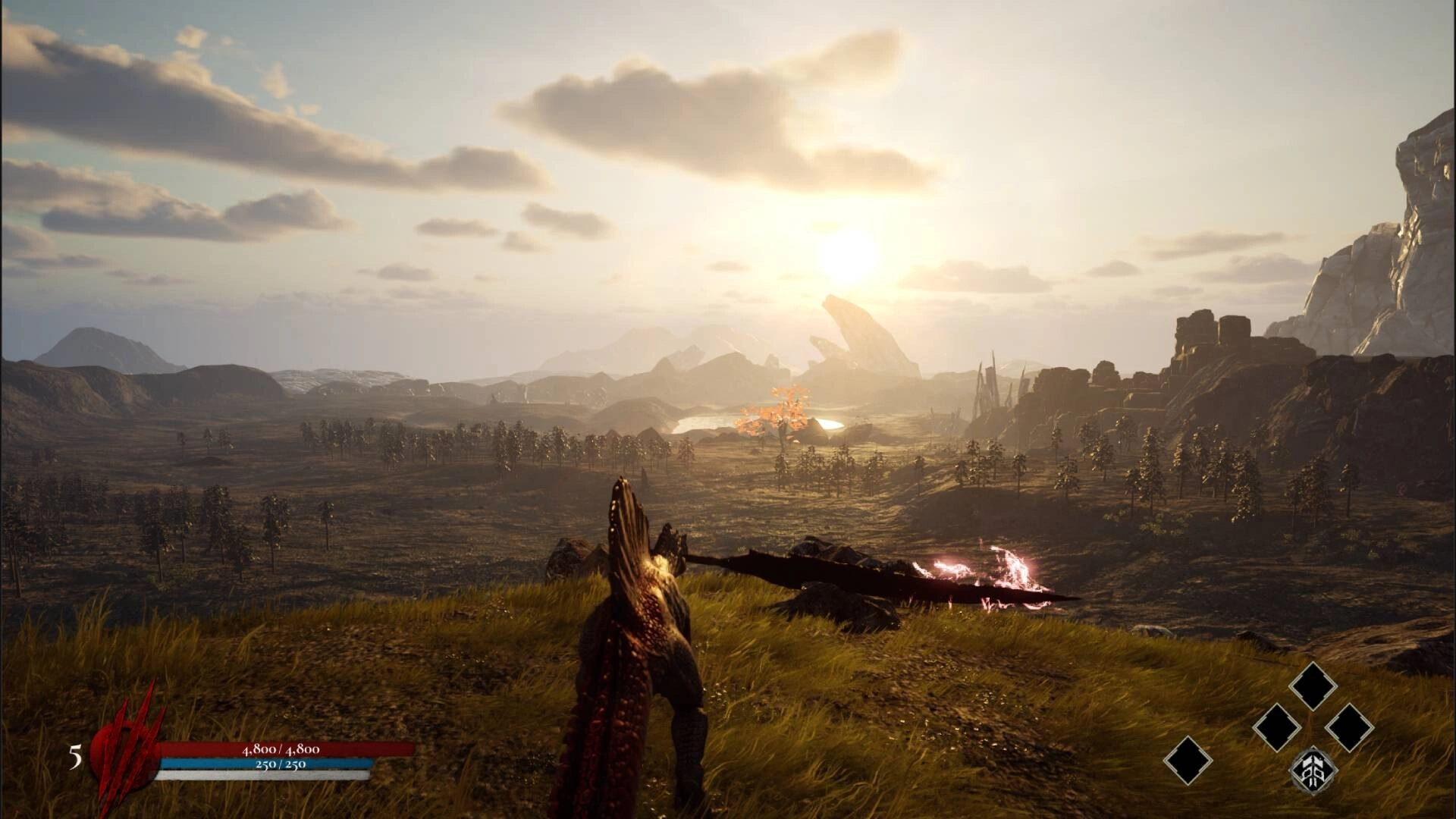
This restraint keeps the campaign moving. Tyrant’s Canyon, The Great Lake, Darkclaw’s Forest, Red Ash’s Swamp, and a late snowy region function primarily as routes toward boss arenas. The world feeds the combat loop, and that loop carries most of the weight.
The Parry Economy
The familiar pieces are present: light and heavy attacks, stamina-limited dodges, blocking, refillable healing charges, checkpoint resets, and stat upgrades. The important distinction is how parrying links those pieces together.
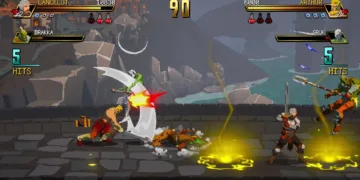
A successful parry restores stamina and resonance while building the enemy’s stagger meter. Fill that meter, land another clean deflection, and the opponent opens for a heavy counterattack. Blocking spends stamina. Dodging protects position but offers no immediate resource gain. Parrying turns defense into fuel for offense.
Resonance can then be spent on skills such as Meteor Slice or Meteor Zone, so one well-read attack can begin an entire offensive sequence. Roar is the best example of the upgrade system changing behavior instead of raising a number. It begins as a short stun, then grows into a rage state with altered attacks that lasts while stamina remains.
Other abilities prove less practical. Several leave the Spinosaurus exposed long enough that their visual spectacle comes with a poor tactical exchange. The combat repeatedly asks players to choose between flashy damage and maintaining enough stamina to survive the next sequence.
Progression is unusually forgiving for the genre. Standard SP improves health, strength, resonance, and stamina, while Boss SP unlocks and upgrades abilities. Neither currency disappears on death, stat prices stay fixed, and every attribute has steady value.
The tradeoff is limited specialization. There is little reason to build a glass cannon, tank, or resonance specialist when balanced spending solves most problems. Weapons create some variation through faster swings, shockwaves, and wider arcs, yet their shared moveset prevents them from developing distinct identities.
Boss spirits follow a similar pattern. Stick expands the parry window, Shield rewards successful deflections with faster stamina recovery, and each summon delivers a quick attack. Their passive effects shape play. Their active use often feels like another damage button waiting off cooldown.
Bosses Teach the Game
The boss roster gives each system a purpose. Stick demands repeated parry timing. Shield punishes careless spacing. Mokusei uses slow, crushing attacks that make premature dodges expensive. Speed turns the same combat model into a rapid blade exchange.
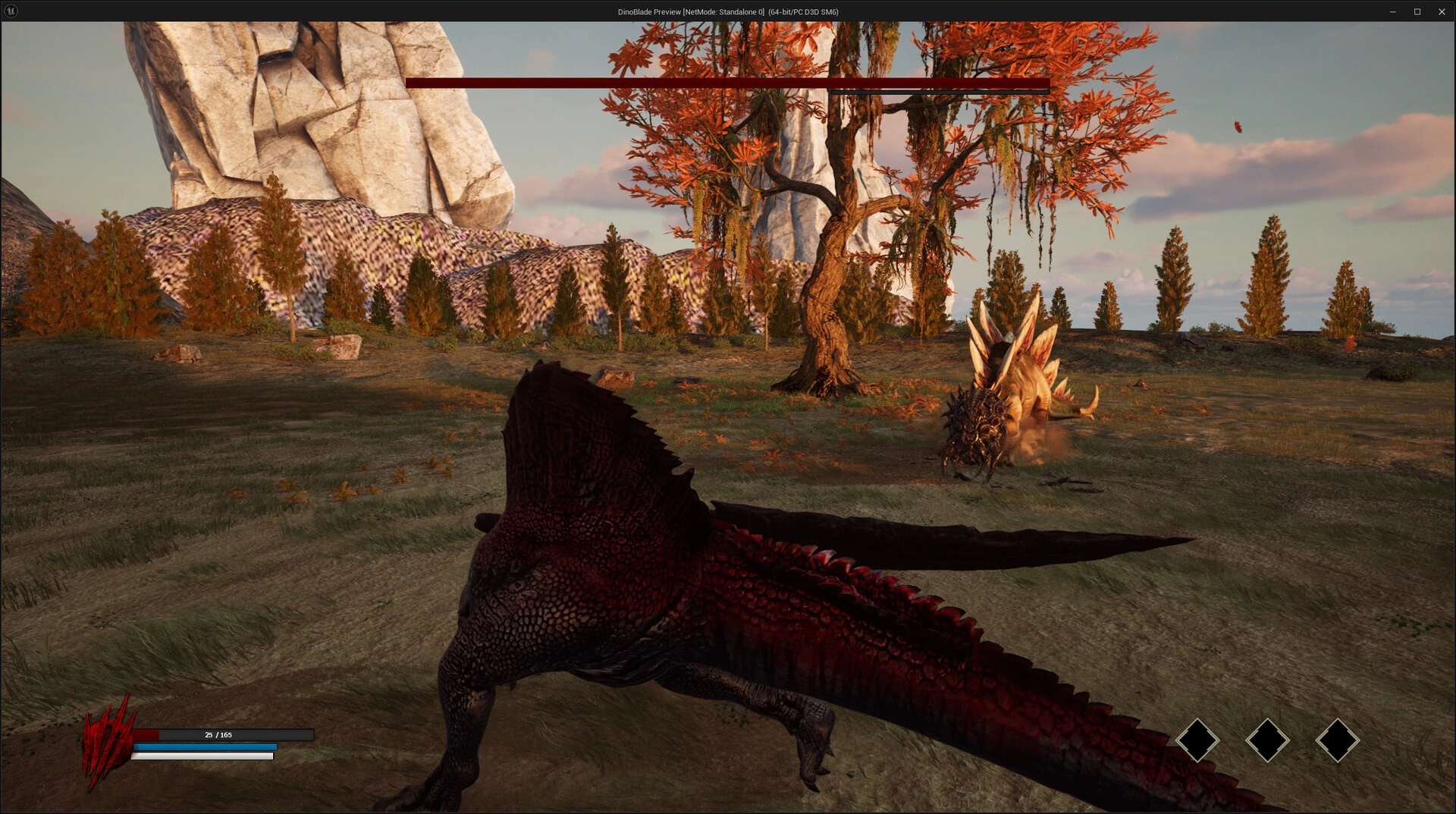
The stranger encounters give the game its identity. One opponent swings an Ankylosaurus like a club. A huge sauropod fights inside a pool of blood and bones, casting magic with a tree trunk clenched in its jaws. These designs treat the prehistoric premise as a source of mechanical ideas rather than decoration.
The fights work because the animation communicates weight and rhythm. Attacks flow into recovery without stiff breaks, and large bodies still telegraph their intentions through shoulders, tails, and weapon position. Red flashes identify attacks that cannot be blocked, though some can still be parried. A smaller group must be dodged, forcing players to read each animation instead of treating every threat as another timing prompt.
Ordinary enemies rarely receive the same care. Many fall to one or two light-attack strings, and their small frames make their weapons difficult to see against muddy terrain. Late encounters place groups of them near bosses, where weak telegraphs and an unreliable lock-on turn visibility into a greater threat than damage values.
Boss Rush mode understands the design hierarchy perfectly. It removes the linear paths, weak mobs, and thin exploration rewards, then provides direct access to the fights where Dinoblade feels most precise.
Motion Against the Scenery
Nguyen’s animation background is visible in every leap, parry, stagger, and aerial finisher. Meteor Zone and the larger sword flourishes borrow the visual grammar of battle anime and samurai fantasy, giving the Spinosaurus speed without erasing its mass.
The score makes the same tonal choice. Quiet, mournful exploration music snaps into heavy metal once an Alpha enters the arena. The shift gives each boss fight an immediate sense of occasion before the first attack lands.
The environments cannot match that confidence. Textures look flat up close, several routes are narrow corridors with optional SP tucked into side paths, and the menus resemble placeholder assets. The camera can lose smaller targets, lock-on may jump to the wrong enemy, and reported glitches include bosses clipping into rocks or trees. Performance also appears inconsistent across PC hardware, ranging from stable high frame rates to sharp drops during selected encounters.
The production split is difficult to miss. The dinosaurs move like the product of a team with a precise combat language. The ground beneath them sometimes behaves like it missed the meeting.
The Review
Dinoblade
Dinoblade turns a joke premise into a focused combat loop where parries restore resources, build stagger, and create satisfying counterattack windows. Bosses such as Stick, Shield, and the tree-wielding sauropod test distinct parts of that system, while upgraded skills and spirit summons offer useful tactical adjustments. The limited weapon movesets, unreliable lock-on, weak enemy telegraphs, and occasional technical failures prevent the mechanics from reaching their full precision. Team Spino built sturdy Soulslike bones around an unforgettable dinosaur fantasy. The surrounding world still needs sharpening.
PROS
- Responsive parry-driven combat
- Excellent creature animation
- Distinctive boss encounters
- Energetic metal soundtrack
- Forgiving progression system
CONS
- Limited weapon identity
- Unreliable camera and lock-on
- Thin narrative development
- Weak standard enemies
- Noticeable technical roughness