


























Rory Kennedy keeps returning to people who tried to stop unsafe work from leaving the factory. That choice gives Freefall: A Reckoning for Boeing its strongest material. Technical failures matter here, yet Kennedy keeps translating them into decisions made by managers, inspectors, engineers, and workers who understood that an improperly fitted component could eventually carry hundreds of passengers through the sky.
The Netflix documentary continues Kennedy’s 2022 Downfall: The Case Against Boeing, which examined the Boeing 737 MAX crashes in Indonesia and Ethiopia that killed 346 people. Freefall revisits that history, so anyone watching the two films consecutively will encounter repetition surrounding MCAS, Boeing management, and the company’s changing production culture. The newer film earns its existence through what happened afterward.
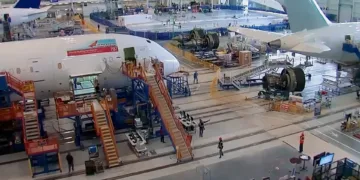
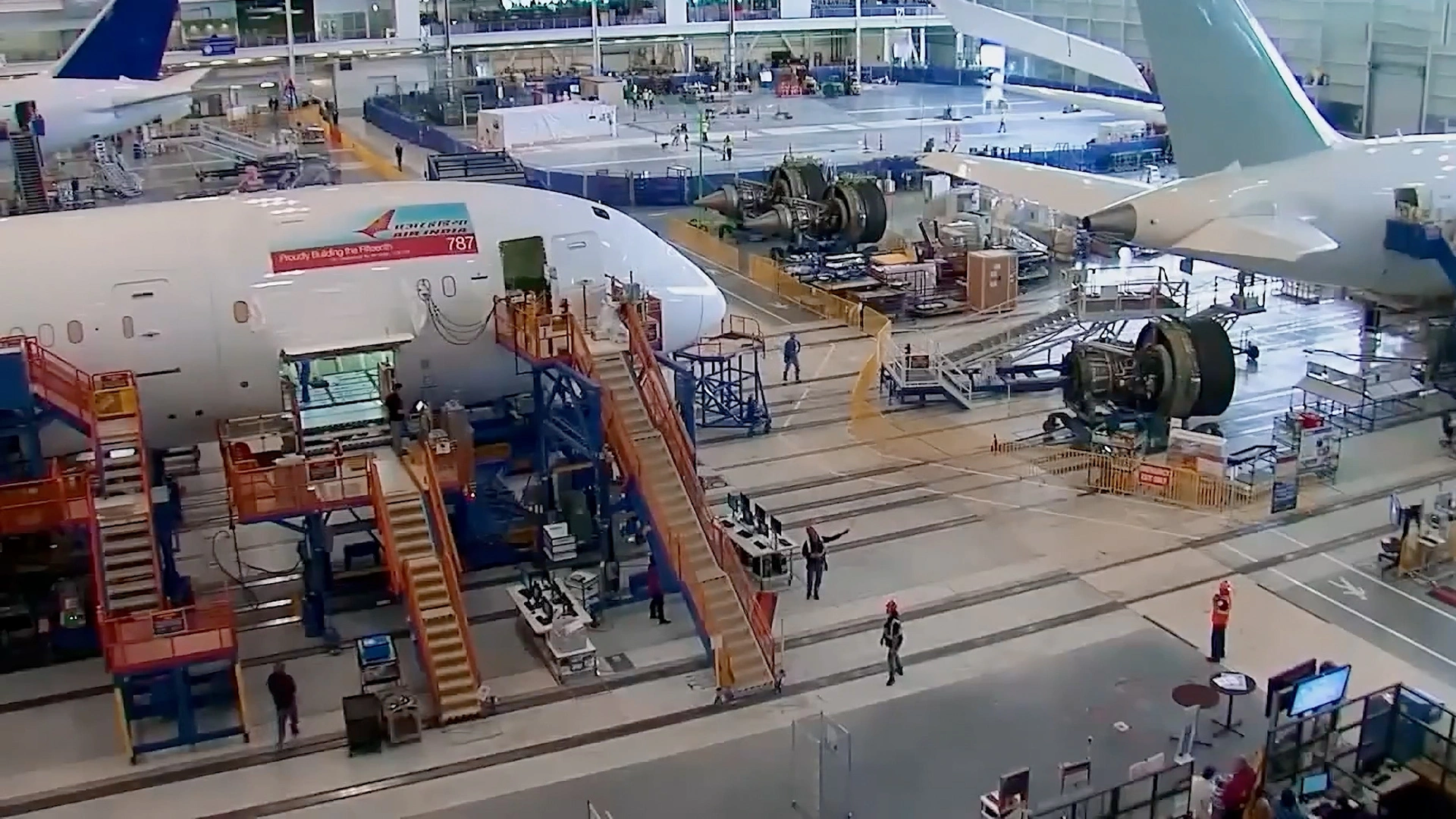
Its central figure is John Barnett, who spent 32 years at Boeing and worked in quality control. Kennedy follows his transfer from Boeing’s established Seattle operation to the company’s newer 787 Dreamliner plant in Charleston, South Carolina, where Barnett encountered manufacturing practices he believed compromised safety.
His job was built around saying no. If a component failed inspection, quality control was supposed to stop it from reaching an aircraft. The frightening idea running through Freefall is what happens when the people responsible for applying those brakes begin encountering pressure to release them.
The Cost of Saying No
Barnett’s allegations turn abstract corporate language into physical details. Workers describe inexperienced hires entering production, outsourced parts arriving with problems, components intended for scrap returning to use, and employees being pushed toward production targets that could conflict with their safety responsibilities.
Kennedy knows that a documentary about aviation manufacturing could vanish into acronyms and engineering diagrams. She avoids that trap by letting workers explain what these decisions meant at ground level. When someone describes seeing questionable work continue after concerns were raised, the manufacturing process becomes easy to understand. A plane is assembled through thousands of individual approvals. Weakening the authority behind those approvals changes the entire system.
Barnett repeatedly raised concerns and, according to the film, faced retaliation during a dispute with Boeing that lasted years. His death by suicide in 2024 gives those sequences enormous weight. Kennedy handles him less like a convenient symbol of corporate misconduct and closer to the human endpoint of a system where speaking up could become an exhausting professional battle.
Other employees strengthen his account. Their interviews keep the documentary from resting its case on one man’s experience, with several describing similar conflicts between quality standards and management pressure. The repetition works here because each voice makes the pattern harder to dismiss.
How Boeing Changed
Kennedy traces those factory-floor problems upward through Boeing’s leadership, particularly the periods associated with W. James McNerney Jr., Dennis Muilenburg, and David Calhoun. The documentary argues that a company once closely identified with engineering excellence gradually placed heavier emphasis on cost reduction, outsourcing, stock performance, and shareholder returns.
The Charleston facility becomes one of Kennedy’s clearest examples. Veteran workers contrast Seattle’s accumulated manufacturing knowledge with a newer operation staffed by people who sometimes had far less experience. One employee’s description of hiring standards is cutting because it strips away corporate terminology. Building aircraft depends on knowledge that develops over years. You cannot manufacture institutional memory on a quarterly schedule.
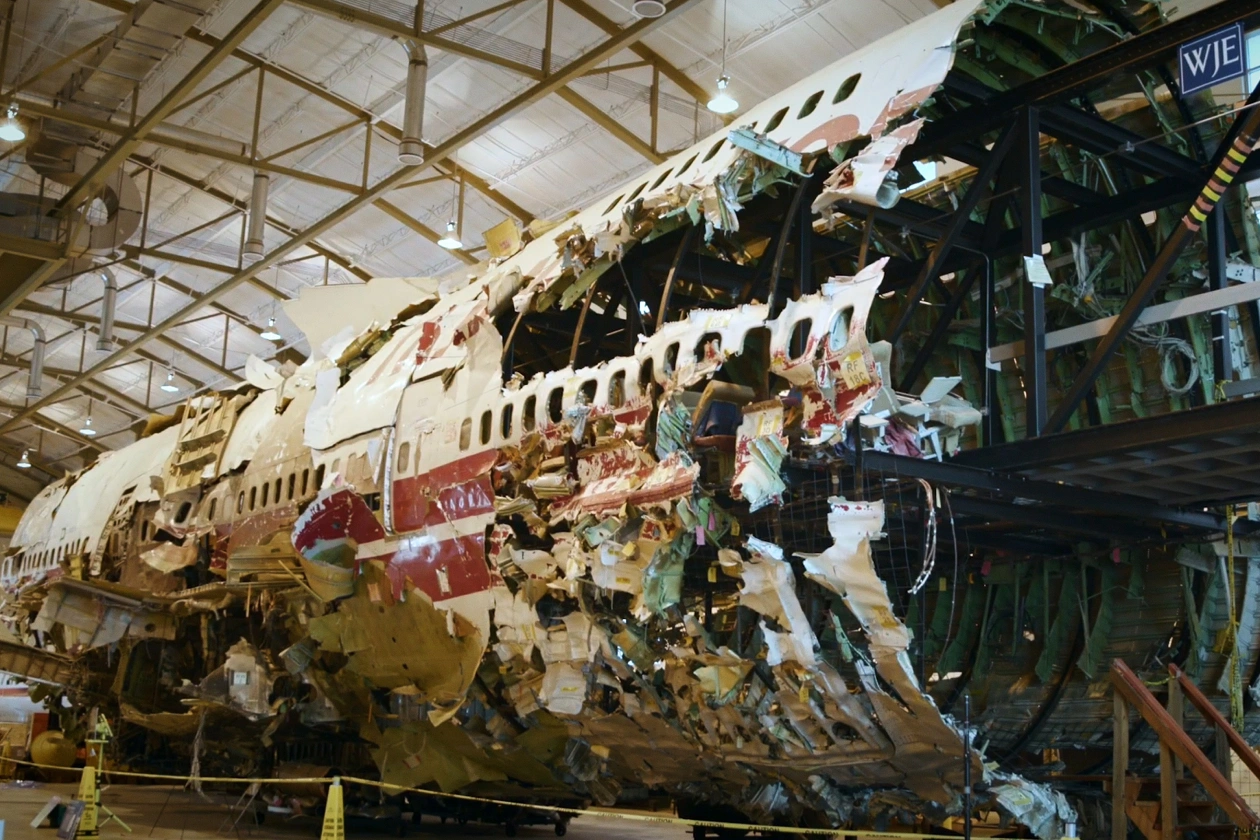
The film also returns to MCAS, the automated system implicated in the two fatal 737 MAX crashes. Kennedy explains its function without turning the sequence into an aviation lecture: the software could push the aircraft’s nose downward, while pilots had not received sufficient preparation for dealing with the system. Archival material, technical explanation, and testimony are arranged so the viewer understands both what happened and why the decisions surrounding training mattered.
This is where Freefall overlaps most noticeably with Downfall. Viewers familiar with Kennedy’s earlier film already know much of the MAX history. The repetition slows sections that otherwise move with considerable purpose.
Accountability With an Asterisk
Kennedy brings the timeline forward through later incidents, including the 2024 Alaska Airlines 737 MAX emergency, using them to question Boeing’s insistence that its safety culture has changed. The footage lands differently after workers have spent much of the documentary describing pressures that they believe remained unresolved.
Her editing repeatedly pairs institutional assurances with evidence that complicates them. Congressional hearings place executives under hostile questioning. Lawsuits and fines establish financial consequences. Families of crash victims return the discussion to the people erased whenever corporate accountability becomes a conversation about settlements, stock prices, and regulatory procedure.
Kennedy also avoids reducing the story to one political party. The documentary moves across congressional scrutiny, the FAA, the Justice Department, and decisions made under different administrations. That breadth strengthens her case because the failure she is describing is institutional. A regulator can miss something. A corporation can resist responsibility. Prosecutors can make compromises. Put enough of those failures together and accountability begins to look strangely optional.
Her filmmaking remains accessible throughout. Archival clips establish chronology, interviews provide firsthand detail, and technical explanations arrive only when they clarify the human stakes. The craft is rarely flashy because it has no reason to be. Kennedy’s most effective editing choice is often simply placing a corporate claim beside the worker testimony that challenges it.
The uncomfortable question left hanging after all those hearings, crashes, settlements, whistleblowers, and promises is remarkably simple: how many warnings does a system need before listening becomes part of the job?
Freefall: A Reckoning for Boeing premiered on August 19, 2026, and is available for streaming globally on Netflix. Serving as a direct follow-up to the 2022 documentary Downfall: The Case Against Boeing, the investigative documentary follows the tragic death of Boeing whistleblower John Barnett while detailing new allegations from factory insiders who claim the aviation giant continues to prioritize corporate profit over passenger safety.
Where to Watch Freefall: A Reckoning for Boeing (2026) Online


Full Credits
Title: Freefall: A Reckoning for Boeing
Distributor: Netflix
Release date: August 19, 2026
Rating: TV-MA
Running time: 1 hour 33 minutes
Director: Rory Kennedy
Writers: Mark Bailey
Producers and Executive Producers: Rory Kennedy, Mark Bailey, Sara Bernstein, Justin Wilkes, Viva Van Loock, Alexandra Korba
Cast: John Barnett, Merle Meyers, Rory Kennedy, Mark Bailey
Director of Photography (Cinematographer): Ronan Killeen, Antonio Rossi
Editors: Don Kleszy, Jesse Overman
Composer: Gary Lionelli
The Review
Freefall: A Reckoning for Boeing
Freefall: A Reckoning for Boeing turns corporate failure into something painfully understandable by tracing technical shortcuts back to the people forced to live with them. Rory Kennedy is strongest when John Barnett and other workers explain how production pressure entered the factory floor, where a reused part or ignored warning could carry enormous consequences. Some material repeats Downfall, yet the newer testimony gives the investigation fresh urgency. Kennedy explains aviation systems clearly while keeping the human cost visible, leaving Boeing’s promises of reform under a deservedly unforgiving spotlight.
PROS
- Powerful whistleblower testimony
- Clear technical explanations
- Strong archival construction
- Effective focus on John Barnett
- Sharp institutional scrutiny
CONS
- Significant overlap with Downfall
- Some familiar MAX material
- Limited space for Boeing’s counterarguments