


















Milcho Manchevski makes one decisive choice with Good People: the catastrophe in Kočani will be remembered through Macedonian voices before it is processed through institutions, headlines, or legal language. That choice gives his 86-minute documentary a character closely tied to the place that produced it. The March 16, 2025 fire at the Pulse nightclub killed 63 people and injured 193, many of them teenagers and young adults. Manchevski approaches those numbers by returning them to faces.
The survivors reconstruct how indoor pyrotechnics ignited flammable ceiling material during a concert. Several initially mistook the sparks for part of the performance. Then smoke spread, hundreds rushed toward the same exit, and a crowded night out became a mass-casualty event within minutes.
European documentary cinema has a long history of trusting oral testimony over reconstructed spectacle, and Manchevski works firmly within that tradition. Yet the film’s Macedonian setting matters. This happened in a small community where victims, rescuers, parents, officials and witnesses existed within overlapping social circles. The tragedy belongs to a place before it becomes an international news story.
Voices From the Fire
Manchevski organizes over 20 testimonies into a loose chronology. One person remembers the first flames. Another recalls bodies collapsing near the exit. A survivor describes seeing so many horrors that her mind could barely process what her eyes were registering.
The accumulated detail is brutal. People describe losing shoes and clothes during the crush, choking on toxic smoke, climbing across bodies and finding themselves trapped beneath others. Some survivors still bear burns on their hands and necks. One interviewee explains that birthday candles now provoke memories of the nightclub.
That last detail says a great deal about how Good People understands trauma. The fire has ended physically, yet ordinary objects keep reopening it. Flame has migrated from the ceiling of Pulse into birthday celebrations, family gatherings and private memory.
Also Read





The rescuers complicate the picture further. Some people escaped and then returned inside to pull others out. Manchevski refuses to convert these actions into polished tales of heroism. Witnesses also describe kicking, clawing and pushing during the stampede as survival instinct took over. The film permits generosity and terror to occupy the same human body. This gives the title its tension. “Good people” are not saints imported into catastrophe from some morally cleaner world. They are frightened people making decisions while smoke fills a room.
Nothing Between Us and Them
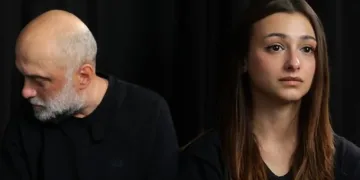
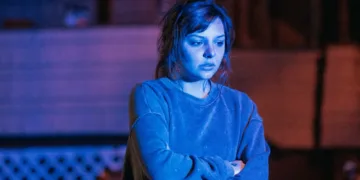
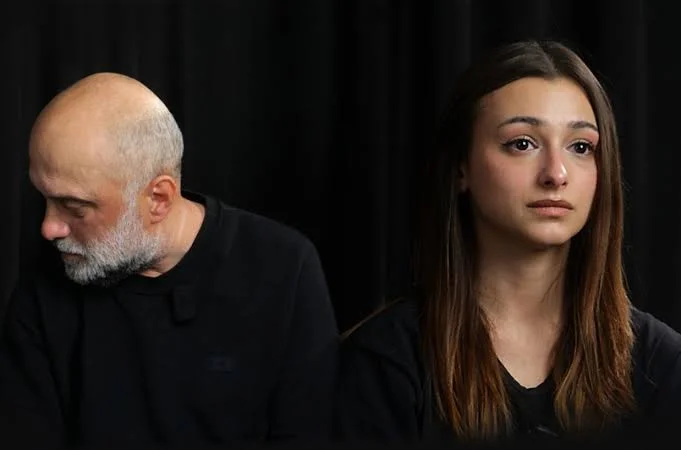
The filmmaking is severe by design. Interviewees sit against black backgrounds, usually framed from the chest upward and filmed at eye level. There is little visual decoration and almost no material capable of distracting from a trembling voice or an unfinished sentence.
Two pieces of phone footage briefly break that pattern. One records sparks near the ceiling before the disaster fully erupts. Another shows smoke surrounding the club from outside. Neither provides the comprehensive visual record audiences have become accustomed to receiving from contemporary disasters. That absence becomes part of the film’s identity.
International true-crime and catastrophe documentaries increasingly rely on surveillance clips, animated diagrams, maps, archival montages and explanatory narration. Good People strips most of that grammar away. Manchevski asks viewers to construct Pulse from memory instead. A doorway becomes frightening because somebody describes trying to reach it. The density of the crowd becomes visible through accounts of people falling across one another.
Editor Mishko Chunikhin frequently moves between speakers, creating something close to a communal oral history. The technique sometimes works against individual testimony. A painful memory may be followed by another voice before its emotional silence has fully settled. Manchevski compensates with fades to black and spare intertitles, some drawn from phrases spoken during the interviews.
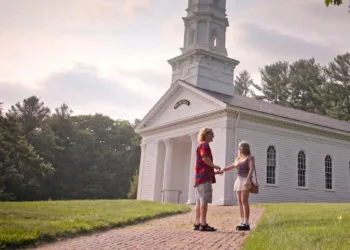
The framing drone shots of the Macedonian countryside and Novogradska’s somber cello passages provide brief relief from the dark interview space. Their restraint matters. Anything grander would risk turning mourning into presentation.
What Survives the Fire
The documentary becomes culturally revealing through what it chooses to leave outside the frame. Pulse reportedly operated without proper authorization, relied on forged documentation and lacked adequate safety provisions. Those facts place Kočani within a familiar international pattern in which entertainment spaces become lethal after regulation, enforcement and private profit fail simultaneously.
Manchevski does not build an investigative case around those failures. For viewers accustomed to political documentaries that trace responsibility upward through officials and institutions, the omission can feel substantial. The film identifies conditions surrounding the disaster without spending much time determining who allowed those conditions to persist. Its attention remains with the people forced to live afterward.
Parents speak about children they lost. Friends imagine careers and futures that will never happen. Survivors describe guilt beside gratitude, while rescuers remember bodies they could save and others they could not. The collective structure makes grief feel distinctly communal, shaped by a town in which one person’s loss repeatedly intersects with somebody else’s memory.
That local quality is what separates Good People from a generic documentary about nightclub safety. The film records Kočani speaking to itself after something irreparable. It preserves individual memories before statistics can flatten them, while leaving the unanswered political questions hanging beyond the black curtain.
Good People had its world premiere at the 32nd Sarajevo Film Festival on August 16, 2026. The documentary film chronicles the devastating aftermath of a tragic nightclub fire in North Macedonia, focusing on the endurance and stories of the survivors.
Full Credits
Title: Good People
Distributor: Banana Film
Release date: August 16, 2026
Running time: 1 hour 26 minutes
Director: Milcho Manchevski
Writers: Milcho Manchevski
Producers and Executive Producers: Milcho Manchevski
Director of Photography (Cinematographer): Ivan Ivanovski
Editors: Mishko Chunikhin
Composer: Igor Vasilev Novogradska
The Review
Good People
Good People turns the Kočani nightclub fire into an act of national remembrance, trusting survivors, parents and rescuers to reconstruct the catastrophe through voices that still carry its shock. Milcho Manchevski’s black-backdrop interviews and scarce archival footage can make the structure feel severe, while the rapid cutting occasionally interrupts testimonies that deserve extra room. Yet that austerity keeps attention fixed on lives rather than spectacle. Its limited engagement with institutional responsibility leaves a significant question outside the frame, but its portrait of communal grief remains devastating.
PROS
- Unfiltered first-hand testimonies
- Respectful, restrained direction
- Powerful portrait of communal grief
- Effective fades and silences
- Refuses easy hero narratives
CONS
- Institutional failures receive limited scrutiny
- Some interview transitions feel choppy
- Austere format may test some viewers