




























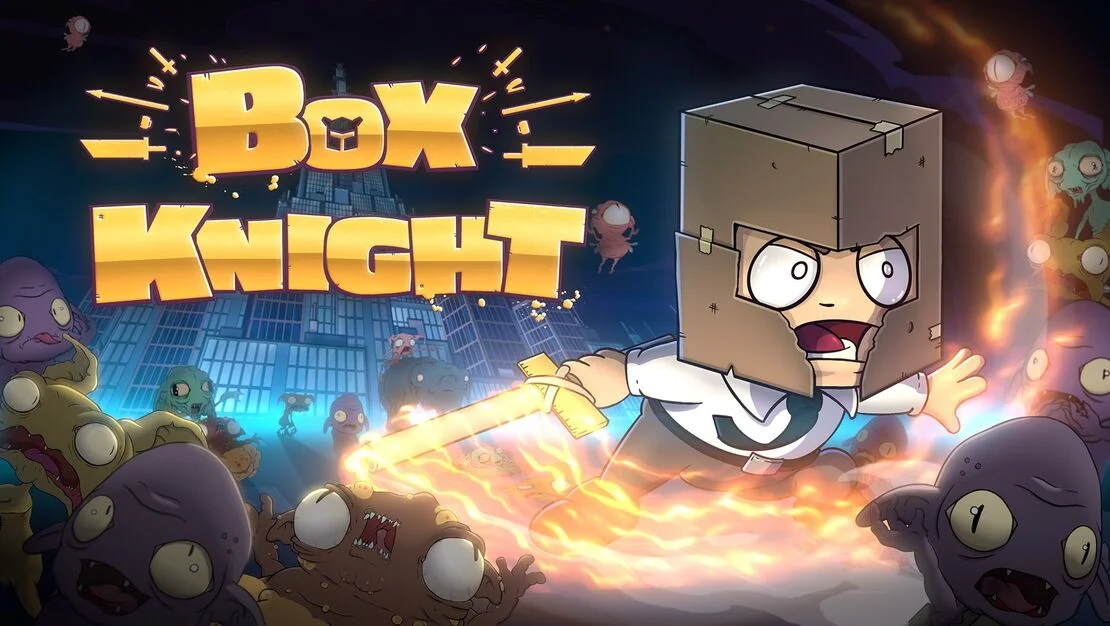

By the third office floor, the joke has already proven it can survive repetition better than the combat can. Employees have become fantasy monsters, cardboard has become armor, and your ordinary worker has been promoted into the latest Box Knight, which may be the worst internal transfer imaginable.
Developed by We Made A Thing Studio, Box Knight turns the corporate ladder into a literal roguelite climb. Each attempt plays like another work week as you clear corrupted departments, rescue stranded coworkers, collect upgrades, and work toward the CEO waiting at the top. Death sends you back to the hub, where surviving employees, portraits of earlier Box Knights, and persistent upgrades make the ridiculous premise feel like established office folklore.
The satire commits to small details. Coworkers outside safe zones offer health or experience. Monsters receive sarcastic descriptions built around workplace stereotypes. Weapons look like someone raided a stationery cupboard five minutes before battle. Even when the mechanics begin repeating themselves, the setting keeps finding fresh ways to make corporate misery look silly.
Cubicles With Teeth
The hand-drawn presentation gives Box Knight an immediate identity. Characters move with exaggerated cartoon energy, enemies tumble through rooms with ragdoll physics, and executions can split monsters apart without sacrificing the clean readability needed in a crowded beat-em-up.
The ruined offices help too. Fires cast warm light across damaged cubicles, corridors, and breakrooms, giving familiar corporate spaces an apocalyptic makeover. Enemy designs carry much of the visual variety, especially once healers, summoners, and stranger departmental horrors begin sharing rooms.
The scenery itself has less range. After several departments, gray corridors and office furniture begin blending together, and there are surprisingly few destructible objects. A game built around smashing workplace monsters really should let you smash a few desks along the way.
Combat offers a sword, spear, and broadsword, supported by dodges, jumps, charged attacks, ground smashes, executions, and weapon-specific specials. The spear’s reach makes it especially useful, while the sword and spear can launch projectiles and the broadsword favors an area attack. There is no dedicated ranged weapon.
On paper, enemy roles should push you toward target prioritization. A healer deserves attention before a basic attacker, and a summoner can turn an easy wave into a packed room if ignored. Yet common enemies are vulnerable enough to repeated basic strikes that stun-locking them often becomes the safest answer.
That strips fights of the decision-making stronger roguelites depend upon. Narrow lanes occasionally worsen the problem, particularly when hit detection behaves strangely or an execution targets the nearest monster instead of the one you intended. Bosses ask you to learn recognizable patterns, but some battles spend too much time making you run from attacks before another opening appears.
Performance Review Pending
Room rewards follow a smart structure. Encounters arrive in waves, usually three groups, and your performance determines how many temporary upgrades you may choose afterward. Better play creates better selection, which gives execution during combat a direct connection to build development.
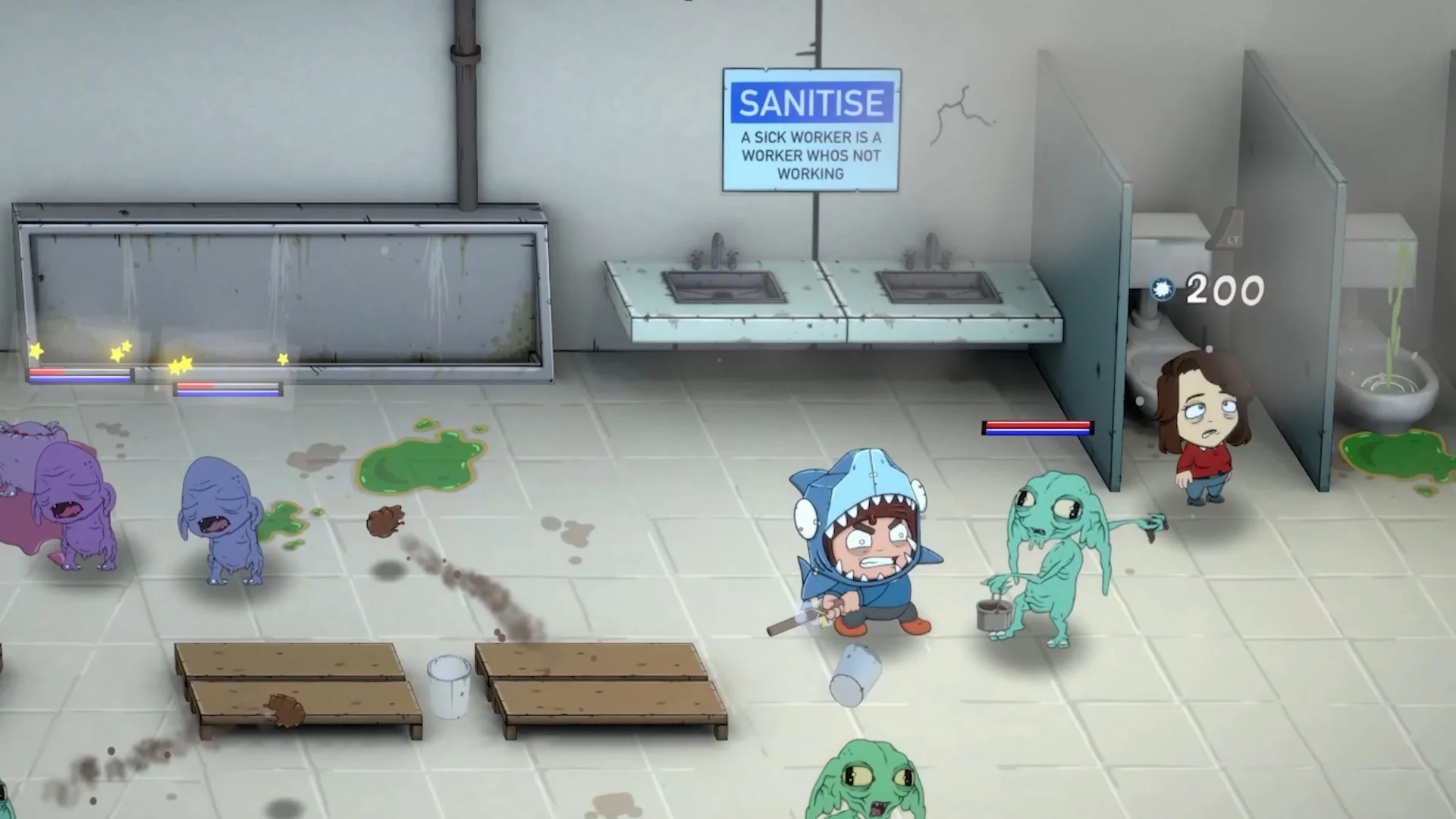
The choices themselves are less adventurous. Attack speed, weapon damage, defense, health, luck, and elemental effects all make the Box Knight stronger, yet many runs still play almost identically afterward. Compare that with genre benchmarks such as Hades, where a single boon can radically alter attack patterns or encourage an entirely different rhythm. Here, another ten percent of something frequently feels like another ten percent of the same fight.
Persistent progression is broader. Gold buys helmets, outfits, armor, and weapons. Purchasing equipment increases Prestige and opens passive bonuses. Experience produces skill points for a larger skill tree, while beer steins fund permanent improvements such as elemental abilities and better chances of finding rarer upgrades. The Janitor provides another route toward permanent growth. There is plenty to unlock. The problem is how long the game asks you to operate with a relatively plain combat vocabulary before those systems gain greater texture.
Later attempts become harsher rather than simply letting accumulated stats flatten the opening floors. Enemies encountered deeper in earlier runs can appear sooner, while random placements can produce crowded combinations that demand better positioning.
That escalation is welcome because it stops progression from becoming a straight numerical march upward. Still, difficulty exposes the same mechanical ceiling. Tougher enemies make timing and target selection matter longer, but they cannot create attacks, weapons, or synergies the player does not have.
Overtime With Company
Local co-op is an especially natural fit for this format. Side-scrolling beat-em-ups have always benefited from a second player turning controlled fights into shared chaos, and Box Knight already has the enemy density and slapstick animation to support that energy.
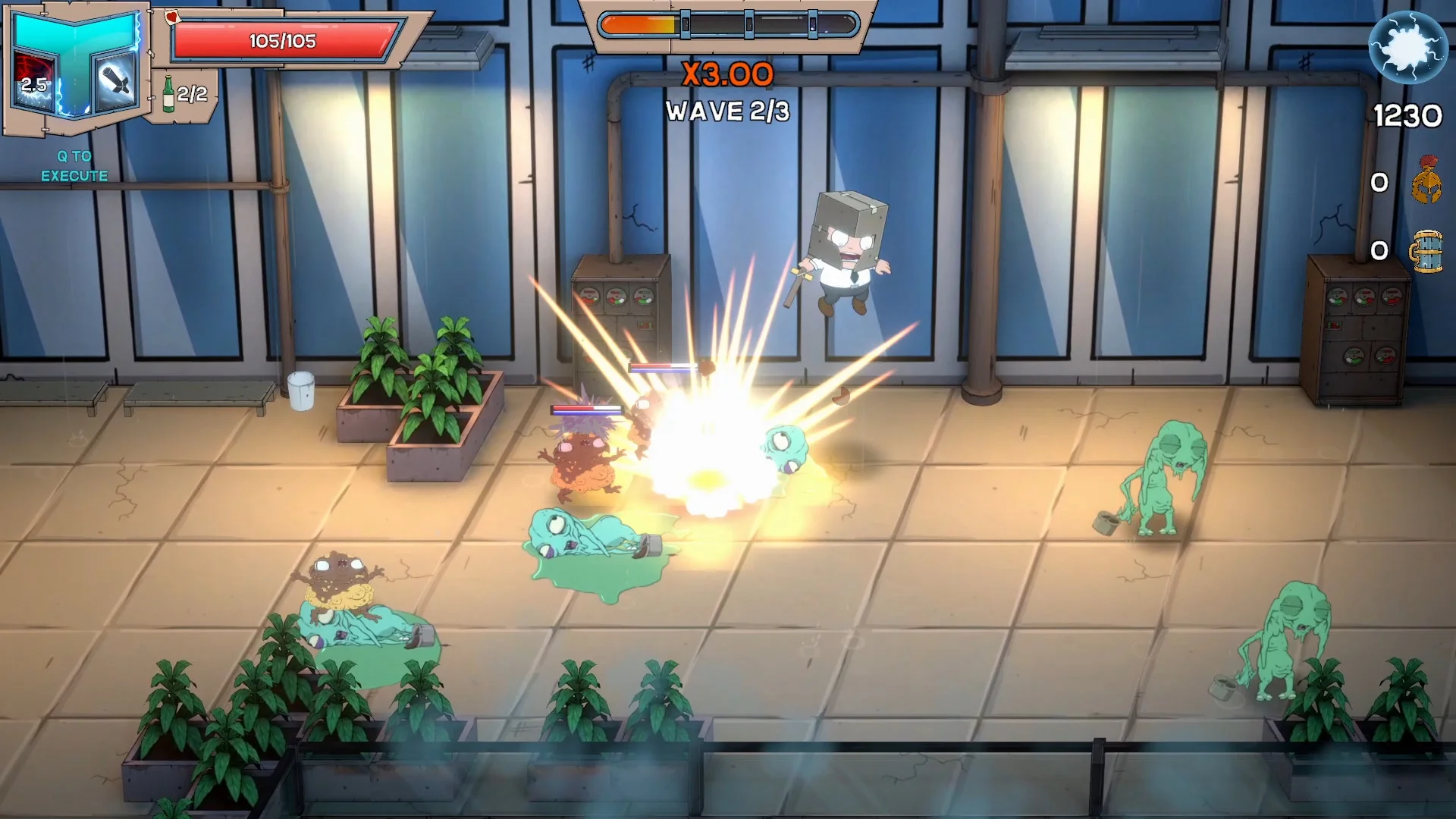
Horde Mode gives the progression another destination once it unlocks around level 15. Instead of climbing through departments, you survive escalating waves and face a risk-reward decision after mini-bosses: bank what you have earned or continue and risk losing it. Some later enemies are recolored variants with different abilities, so the mode stretches existing material rather than rebuilding the combat from scratch.
The room-based structure also suits handheld play. On the ROG Xbox Ally X, short encounters and a straightforward controller layout make it easy to complete a few floors without committing to a long session.
Those shorter sessions may be where Box Knight works best. Its office satire, strange enemies, bright animation, and steady stream of unlocks can comfortably carry a lunch break. Ask the combat system to hold up across repeated weeks of identical basic attacks, however, and the Box Knight begins feeling less like a corporate legend and closer to the employee who keeps getting assigned the same task every Friday.
The Review
Box Knight
Box Knight has the visual personality and progression scaffolding of a strong indie roguelite, yet its combat rarely develops enough to support the repetition the genre demands. The sword, spear, broadsword, elemental bonuses, skill tree, and Prestige system provide plenty to unlock, but too many encounters still collapse into basic attacks and stun locks. Local co-op and Horde Mode give the formula extra life, while the corporate satire keeps each department amusing longer than the fighting does.
PROS
- Excellent cartoon art and animation
- Funny corporate-fantasy premise
- Varied progression systems
- Creative workplace-themed enemies
- Local co-op and Horde Mode
CONS
- Repetitive basic combat
- Upgrades lean heavily on stat increases
- Limited weapon selection
- Some targeting and hitbox problems
- Office environments can blur together