
























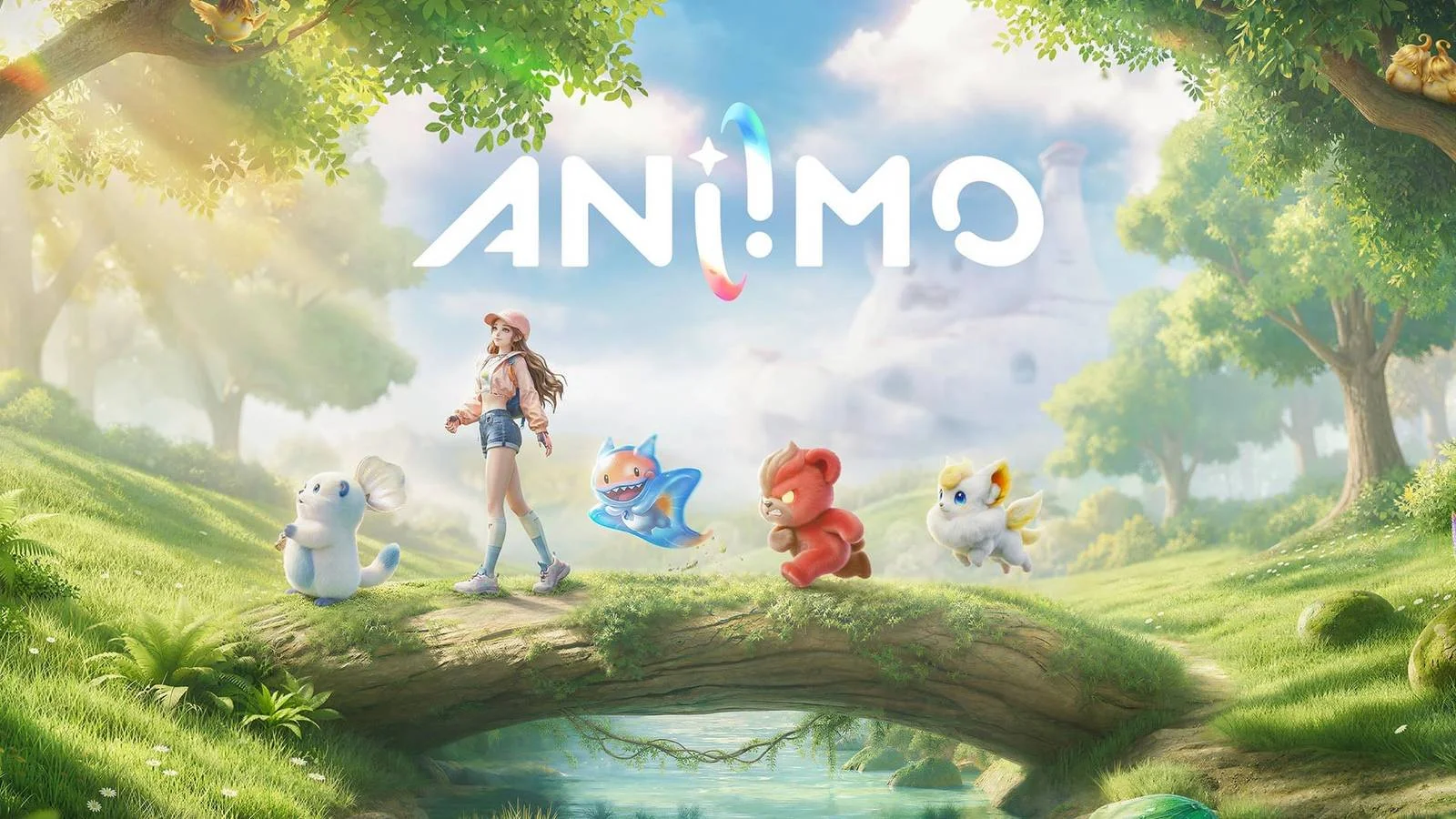

Aniimo makes its best argument the first time a captured creature changes how you move through the world. A flying Aniimo turns a drop into an opportunity. A swimmer opens a route across water. Fire-capable creatures clear environmental obstacles.
Twining lets you take direct control instead of treating the creatures in your collection as tools that disappear into a menu until the next battle. That decision gives Aniimo a mechanical identity its familiar monster-catching structure badly needs. It also exposes the game’s central problem. The cleaner and more interconnected Aniimo’s creature systems become, the stranger it feels whenever its live-service machinery drags you away from them.
The player arrives in Idyll and becomes involved with the Polaris Institute, researching the creatures that inhabit the world while pursuing a larger story connected to its legendary Aniimo. The narrative supplies enough direction, but the research framing matters because the mechanics reinforce it.
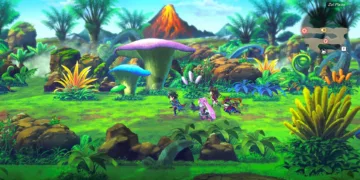
Capturing an Aniimo contributes to progression. Finding new species expands your understanding of a region. Creatures wander around the environment rather than waiting politely for battle, sometimes sleeping, interacting with one another, or doing something as small as a Shelly rolling around on its shell while happily shouting “Woah.”
Those behaviors sound cosmetic until you consider what creature collectors usually ask players to do. The genre depends on turning animals into inventory. Aniimo works harder than most to make them feel like inhabitants before they become assets.
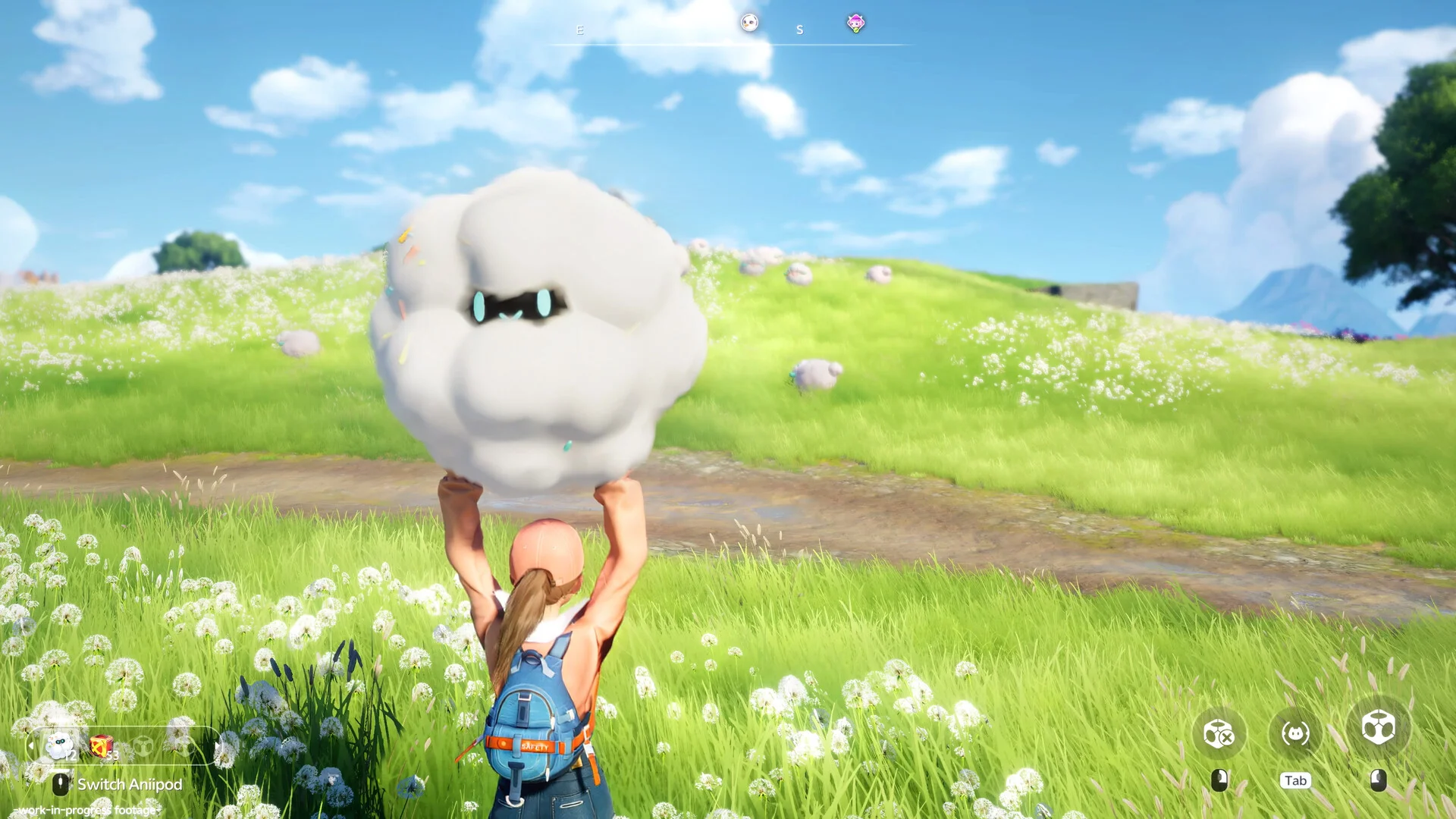
Twining is responsible for much of that success. Transforming into an Aniimo links collection to exploration, so finding another creature can mean finding another movement option rather than adding another portrait to a roster. Some actions happen contextually, which keeps traversal from becoming an endless exercise in opening menus and rearranging parties. That matters in a game already carrying a large mechanical load.
Combat initially hides much of that promise. Early encounters are so forgiving that Twining can feel like an elaborate answer to a question the game has not asked yet. Weak enemies rarely require careful role management, and elemental advantages can carry plenty of fights without much thought. The system becomes much better once team composition starts mattering.
You can bring four Aniimo into battle, with creatures filling roles such as damage, healing, buffs, debuffs, and breaking. Every Aniimo also has an individual Break Meter. Empty it and that creature becomes stunned while taking amplified damage. Certain abilities chew through those meters quickly, while sustained abilities can remain useful after swapping to another Aniimo. That persistence is the piece that makes the combat click.
Switching stops being simple character rotation and becomes sequencing. A support effect can be established, another Aniimo can apply pressure, then a breaker can create the vulnerability window that a damage specialist exploits. The game finally asks you to think about why these four creatures are together.
Systems analysis can get dangerously close to spreadsheet worship here, but Aniimo earns the attention because those mechanics affect how a battle feels. A good team develops momentum. You are setting something up, switching, preserving an effect, attacking a weakness, and trying to prevent your own Break Meter from collapsing. The same creatures that solved environmental problems five minutes earlier now form a combat machine. The problem is that Aniimo keeps attaching machinery to that machine.
One source describes opening the menu to find 16 selectable icons. That sounds almost funny until the reward systems start demanding attention. Achievements produce claims. Claims produce splash screens. Stores use separate currencies. Progression systems introduce additional materials. Login events, passes, daily tasks, upgrades, notifications, and other reward tracks keep appearing as the game expands.
The damage here is not complexity by itself. Aniimo’s combat is complex, and that complexity eventually improves it. The issue is interruption. Exploration works because one action feeds naturally into another. Spot a creature, approach it, fight or capture it, discover what it can do, then use that ability somewhere else. The live-service layer repeatedly breaks that chain so the player can inspect a menu, collect something, clear a notification, check another progression track, and then return to playing.
That distinction matters when discussing monetization. Aniimo appears relatively restrained around the creatures themselves. The supplied material describes cosmetics, premium capture items, currencies, consumables, and materials that can reduce parts of the grind, while Aniimo themselves are not being sold through a creature gacha at launch. Spending can still accelerate access to certain resources, but the harsher design cost currently comes from the reward architecture built around monetization rather than direct competitive advantage.

A shop can be ignored. Sixteen reasons to keep opening the menu are harder to ignore. Aniimo’s multiplayer design creates a similar mismatch between the experience it promises and the systems it actually prioritizes. The game carries an MMO label, yet large parts of the main adventure are structured around solo progression.
Players can meet in designated spaces and tackle activities together, including Alpha encounters, battle modes, Egg Hunt-style competition, and other cooperative challenges. The sources also describe co-op dungeons and larger group activities later in progression, while story progress remains far less cooperative.
Playing alongside a friend does not simply let both players move through the campaign together with shared progress, and trading introduces friendship requirements before two players can freely exchange Aniimo. Those restrictions make sense only if multiplayer is understood as another activity silo. They make much less sense if Idyll is supposed to function as a social world. Aniimo knows how to build multiplayer content. It seems less certain about building multiplayer life.
That leaves the game in a fascinating position because the fundamentals are rarely the problem. Idyll is visually inviting, the creatures have personality, and Twining connects systems that could easily have existed as separate gimmicks.
Even the combat grows from trivial early encounters into a role-driven system where swapping and persistent abilities reward actual planning. Technical roughness such as pop-in, abrupt animation changes, awkward follower movement, inconsistent audio, and reported performance demands can interfere with that polish, but they do not erase the design underneath.
Aniimo has already solved the difficult part of creature collecting: it gives the creatures jobs that matter after the capture animation ends. They affect movement, combat, exploration, and the player’s understanding of the world, until another notification appears with a reward waiting behind it.
The Review
Aniimo
Aniimo succeeds where creature collectors most need to: its monsters remain mechanically relevant after capture. Twining gives exploration and combat a shared language, while team roles and persistent abilities eventually produce satisfying battles. The trouble is everything surrounding those systems. Reward claims, currencies, menu clutter, solo-heavy progression, and awkward multiplayer restrictions keep interrupting a game that plays best when it simply lets you explore Idyll with your Aniimo. The foundation is strong enough to survive the friction, though I wish Aniimo trusted that foundation a little more.
PROS
- Twining meaningfully connects exploration and combat
- Aniimo feel like inhabitants rather than inventory
- Team roles give later battles real structure
- Creature abilities make collection mechanically useful
CONS
- Live-service systems constantly interrupt play
- Early combat is too forgiving
- Menu and currency clutter becomes exhausting
- Story progression makes multiplayer feel strangely limited