






























A sniper rifle is a strange tool for solving a hidden-object puzzle, which is precisely why Sniper Dan works as well as it does. Every job asks you to study a crowded scene, interpret a clue, locate the source of somebody’s problem, and then fix it with a bullet. The trigger pull is rarely difficult. Finding the right thing to shoot is where the game lives.
Dan travels between busy locations helping people who, for reasons the game wisely has little interest in explaining, have decided that a distant marksman is the ideal person to handle their errands. One request might involve a boat whose engine refuses to run. Another has you changing somebody’s television channel by firing through a window at the remote. Chickens need help crossing roads, fountains need repairs, planes need obstacles cleared. Dan has one solution for all of them.
Mechanically, that restriction gives Sniper Dan its identity. You observe every location through the rifle, switching zoom levels and sweeping across dense environments until a clue starts to make sense. A request about a clogged engine may initially send your attention toward cars before you notice the boat covered in seaweed. The challenge comes from connecting a short description to something happening somewhere in the scene.
That makes perception the real player skill. The rifle gives you precision, but the scope can work against you because it narrows how much of the environment you can absorb at once. Moving too quickly turns a level into visual noise. Slowing down reveals the joke happening behind a building, the suspicious object tucked beside a vehicle, or the tiny detail that transforms a vague clue into an obvious answer. Sniper Dan is strongest when its environments make you reconsider how you are looking rather than testing how accurately you can shoot.
The clutter earns its place here. Locations are packed with animals, background gags, strange little situations, and objects that exist mostly to distract you. Some of it is funny simply because it is ridiculous, while successful shots can trigger brief slapstick reactions of their own. All this activity creates camouflage. The game gives your eyes too much information and asks you to decide what matters.
Shooting people or animals is discouraged through penalties, and certain mistakes can interfere with a job. That rule adds a small degree of target discrimination, though the game never turns firearm handling into a serious skill test. This is still a hidden-object game wearing shooter controls rather than a shooter built around hidden objects.
That distinction becomes clearer once Sniper Dan starts trying to vary the formula. Timed emergencies force quicker decisions, such as clearing a path for an aircraft attempting to land. They change the pace because leisurely scanning is replaced by rapid identification, yet the underlying decision remains familiar: find the relevant part of the scene and shoot it. Extra activities and mini-games stretch the same input into different contexts, which helps prevent the campaign from feeling completely flat, but they rarely alter how you think about the central mechanic.
This is where the simplicity starts showing its ceiling. Sniper Dan can invent plenty of new situations, but every problem eventually collapses into the same physical response. Its puzzle variety is much stronger than its interaction variety. The designers are good at finding new reasons for you to pull the trigger. They are less successful at making the trigger mean something different.
Progression has the same problem. Jobs, ranks, collectibles, and optional objectives feed currencies that can be spent on rifle upgrades, cosmetics, office decorations, hints, and other unlocks. Some upgrades have clear practical effects. Faster reloads reduce dead time, larger magazines make multi-target sequences smoother, and stronger zoom helps with distant details.
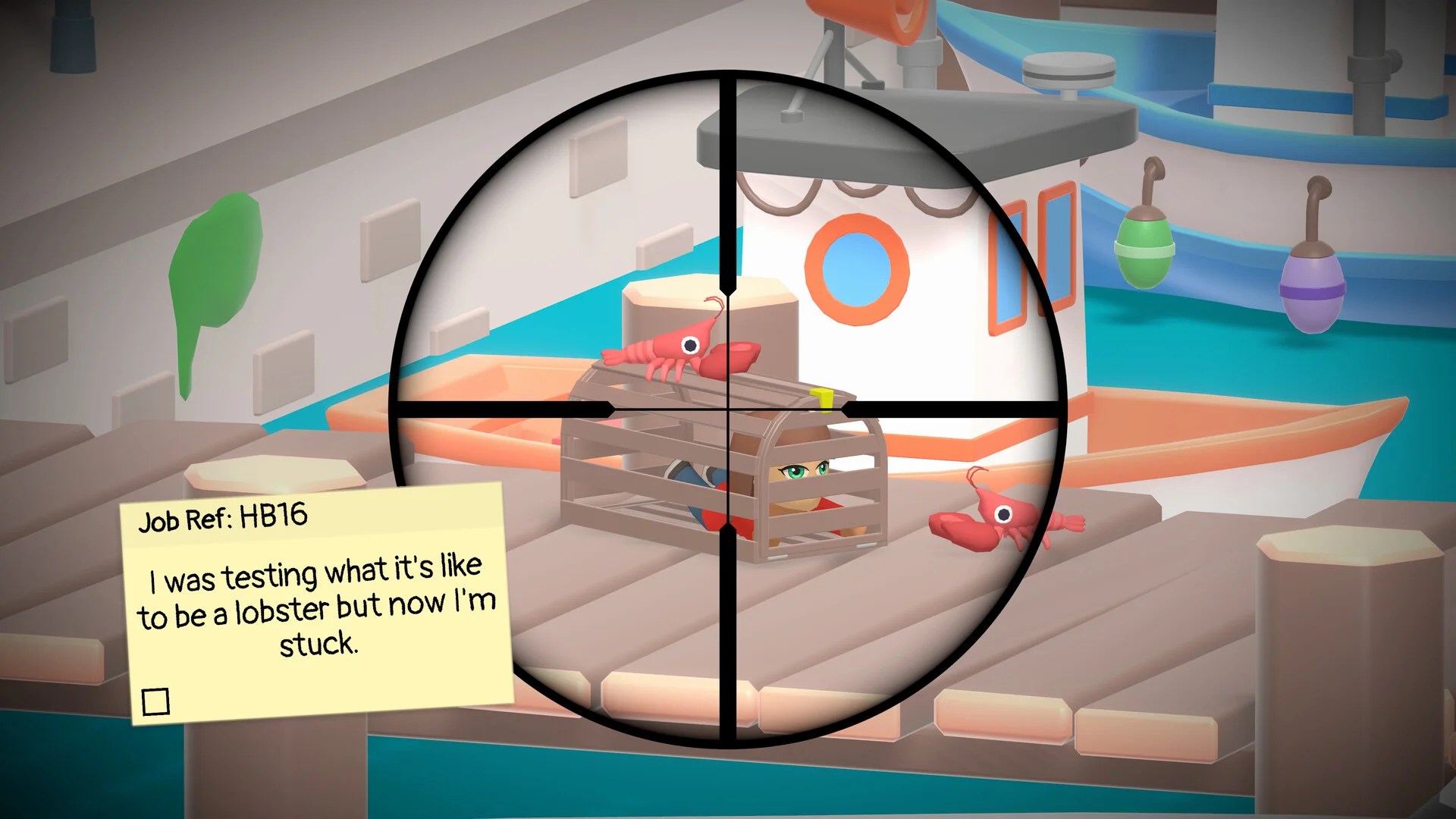
Still, Sniper Dan is not really testing mastery of the rifle. It is testing observation. Improving reload speed can make play cleaner, but it does not transform how you interpret a clue or read an environment. Decorative office items sit even farther away from the mechanic doing the heavy lifting. The game supplies plenty of things to purchase without always giving those purchases a meaningful relationship to the activity that makes earning them enjoyable.
Hints are a better fit. Some job descriptions can leave you scanning an entire location without understanding what the game wants, and hints require resources rather than functioning as an unlimited escape hatch. Here the economy directly touches the puzzle loop. Spending something you earned to resolve search friction creates a real choice, small as it may be.
Replay exposes the same design hierarchy. Returning to a map can improve your rank, uncover collectibles, finish optional objectives, or earn additional currency. What cannot be restored is the original act of discovery. Once you know which boat has the blocked engine or which part of the airport contains the answer, that space has changed. You are executing remembered information instead of interpreting the scene.
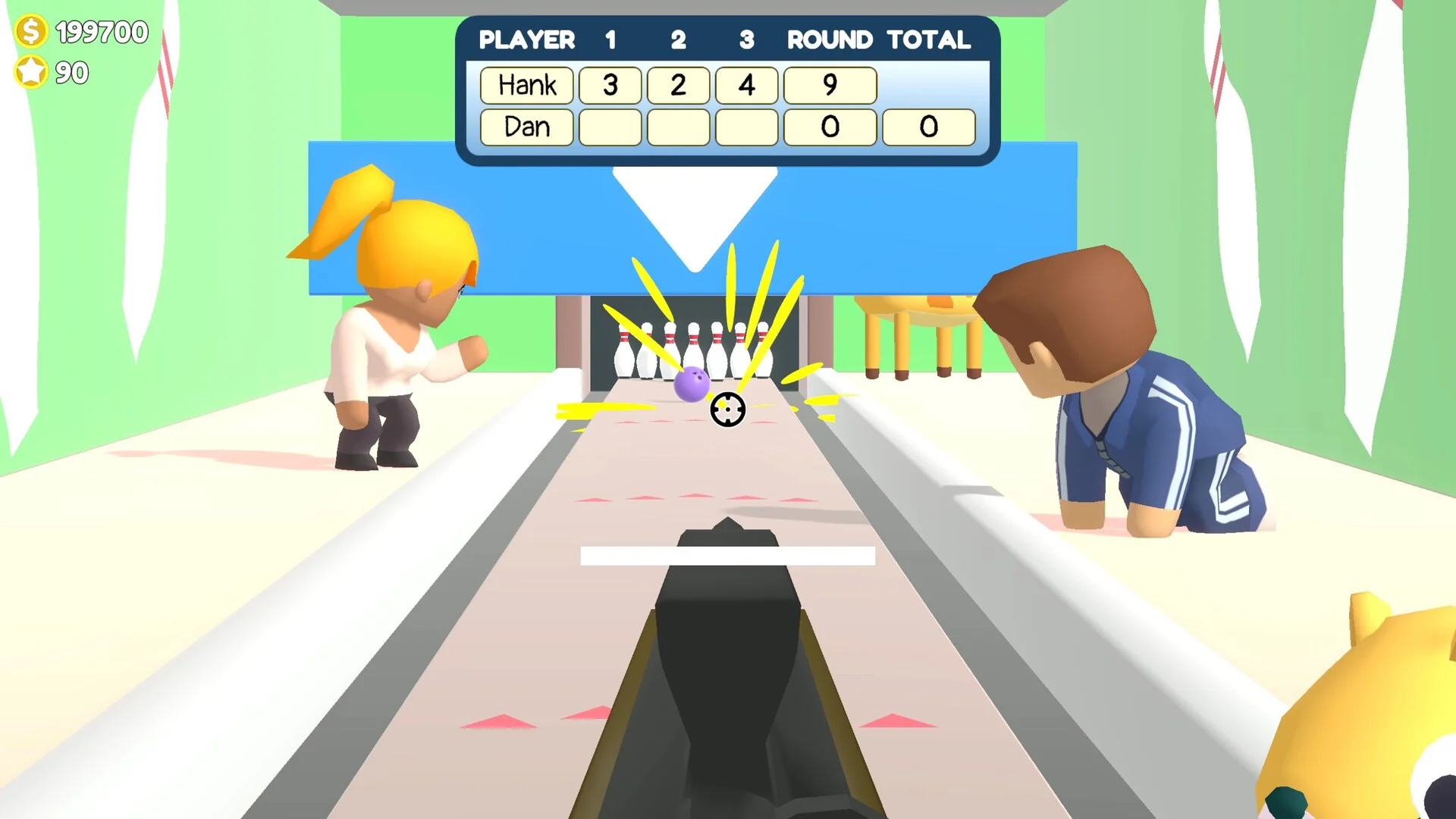
That is not automatically a flaw. Hidden-object games naturally lose some mystery once their solutions become familiar. The problem is that Sniper Dan’s secondary systems rarely replace that lost discovery with an equally satisfying decision. Better scores and extra rewards can keep a completion-minded player busy, but the first scan of a location remains far richer than the fifth.
There is something admirably disciplined about a game committing this hard to one ridiculous verb. Sniper Dan finds clever puzzles, strong visual jokes, and genuine observational challenges inside the rule that every local problem must eventually meet a bullet. Its best moments happen several seconds before you fire, when a confusing clue suddenly connects with one tiny piece of a crowded scene. Once you already know where to aim, the rifle still works. The mystery does not.
The Review
Sniper Dan
Sniper Dan turns a single absurd rule into a surprisingly effective hidden-object system. Its best puzzles reward careful observation, clue interpretation, and patience long before the trigger matters. The trouble begins when progression and replay try to extend that pleasure without adding equally meaningful decisions. Rifle upgrades smooth the loop, yet few rewards change how you actually solve problems. It remains clever, funny, and mechanically focused, even if its mysteries lose much of their power once you know where to aim.
PROS
- Strong observation-driven puzzle loop
- Dense, readable environments
- Clever use of indirect clues
- Humor supports the search mechanics
CONS
- Limited interaction variety
- Progression rarely changes decision-making
- Replay weakens discovery
- Some secondary rewards feel disconnected