



























Jane Austen adaptations have always carried a strange burden. They arrive already interpreted, already loved, already surrounded by arguments about what the author meant and how much freedom a filmmaker deserves. The danger is that a new version becomes a museum display, carefully preserving every familiar piece while leaving no evidence of a living conversation with the present.
Georgia Oakley’s Sense and Sensibility understands that Austen’s world was never simply a world of elegant dresses and restrained romance. Beneath the manners was a society built around economic dependence, inherited privilege, and the narrow paths available to women. The question is not whether this adaptation sees those pressures. It does. The question is what it discovers within them.
Diana Reid’s screenplay returns to the foundation of Austen’s novel: the Dashwood sisters are not merely unlucky in love; they are women whose futures are shaped by structures they cannot control. After their father’s death, Elinor, Marianne, Margaret, and their mother lose their home because inheritance rules favor male descendants. The familiar romantic machinery begins with a much harsher reality. A marriage proposal is never only a declaration of affection. It is also a negotiation with survival.
This remains one of Austen’s most enduring observations. The fantasy of the period romance often hides the economic system that makes romance necessary. Oakley’s adaptation places that contradiction closer to the surface. The Dashwoods’ move to a smaller Devon cottage is not presented as a charming retreat from society. It is a reduction of possibility. The film understands that the greatest threat facing these women is not a disappointing suitor, but a world where personal happiness depends on navigating rules written by others.
That perspective gives new weight to the relationship between Elinor and Marianne. The sisters have often been treated as opposing personalities, one controlled and one emotional, one practical and one impulsive. Oakley’s version finds something more complicated. Their differences are two methods of surviving the same environment.
Daisy Edgar-Jones plays Elinor as someone whose restraint has become a form of protection. Her quietness is not simply patience; it is the exhausting discipline of someone who understands the consequences of losing control. George MacKay’s Edward Ferrars becomes a reflection of that same hesitation, a man trapped between personal desire and social obligation. Their connection works because the film recognizes that silence can carry as much emotional weight as confession.
Marianne’s world is different. Esmé Creed-Miles gives her a restless intensity that reflects a generation increasingly unwilling to accept emotional compromise. Her attraction to John Willoughby is not only youthful romantic blindness. It is also a rejection of a society where feeling must constantly be measured and contained. The tragedy of Marianne is that her belief in emotional honesty exists inside a world that rewards calculation.
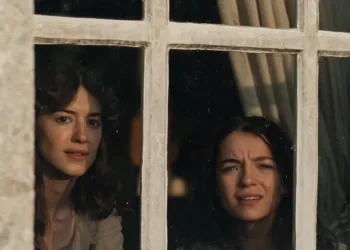
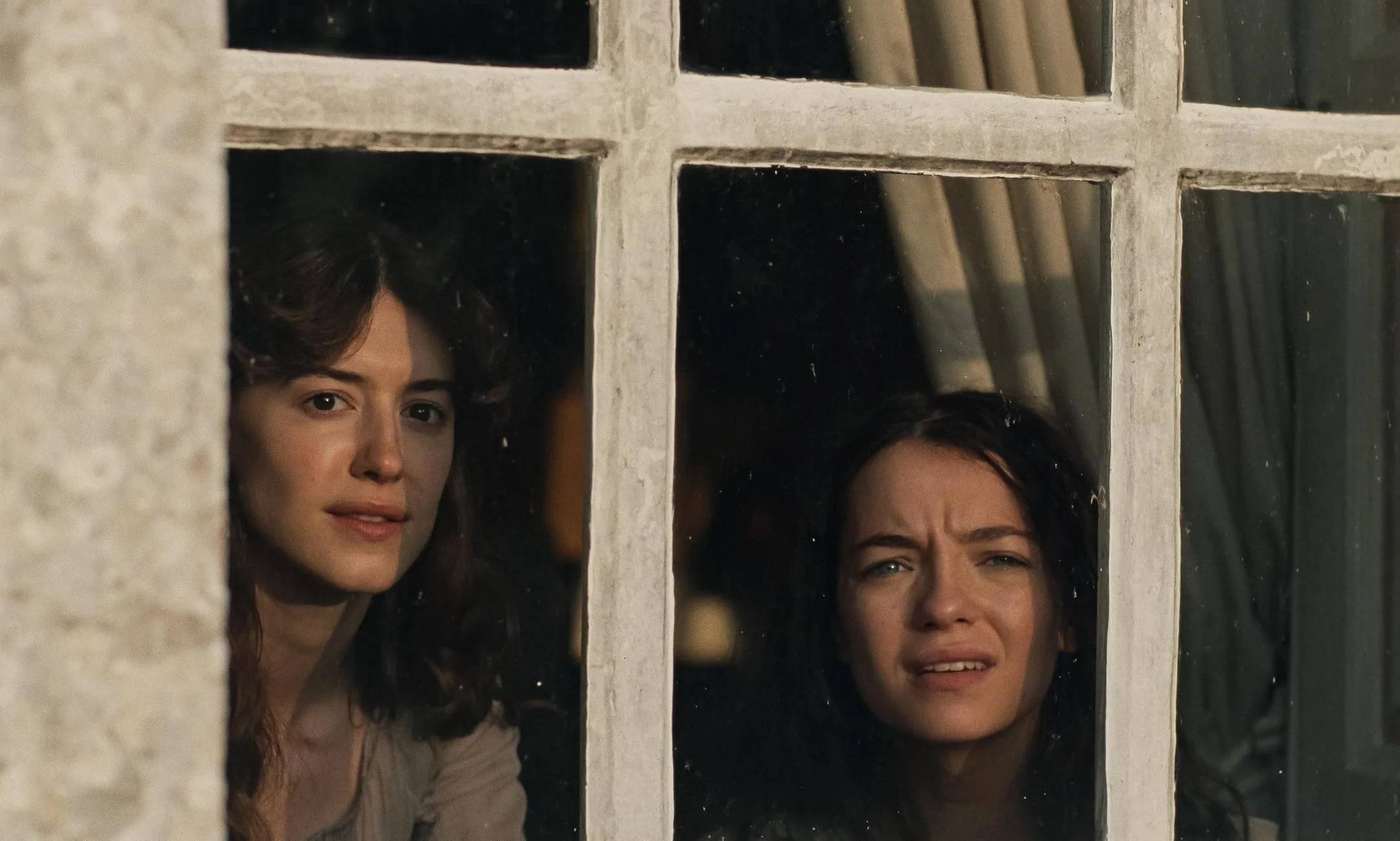
Oakley’s strongest choice is perhaps the way she visualizes this conflict. The film transforms Austen’s countryside into a place of physical sensation. Shot on 35mm, with natural light and textured landscapes, it presents a world of damp fields, open spaces, rough fabrics, and bodies moving through nature. The imagery carries a Romantic impulse, bringing the sisters closer to the landscapes associated with Brontë rather than the carefully arranged social spaces usually associated with Austen.
That shift changes the relationship between character and environment. Marianne’s emotional openness appears connected to the natural world around her, while the social interiors she enters feel increasingly restrictive. The film suggests a conflict between individual feeling and the structures designed to contain it.
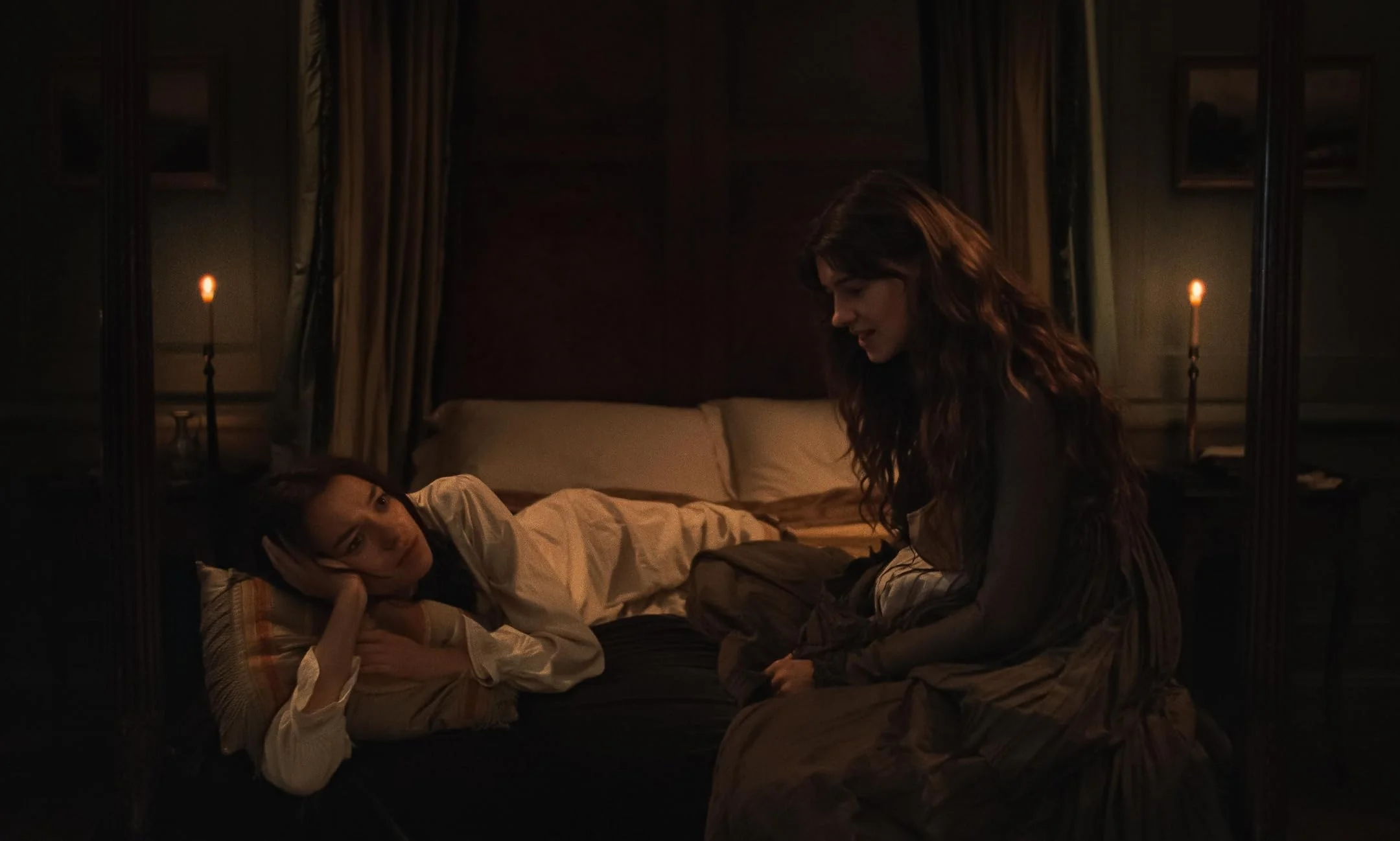
Yet this transformation creates its own tension. Austen’s power never came only from the beauty of her settings or the sincerity of her romances. Her weapon was observation. Her comedy exposed the absurdity of a society that forced people to perform politeness while pursuing money, status, and security. Some adaptations understand the injustice of Austen’s world but forget that her greatest rebellion was often hidden inside laughter.
Oakley’s Sense and Sensibility is more interested in the pain beneath the manners. The result is a version with genuine emotional seriousness, but one that occasionally softens the sharp social comedy that made Austen so dangerous. The film sees the wounds beneath the system, yet it sometimes pays less attention to the satire that revealed those wounds in the first place.
This makes the adaptation an interesting cultural document. It arrives during a period when audiences have become fascinated by stories of longing, emotional authenticity, and characters trapped by systems that refuse to change. The renewed interest in Austen and other classic romantic narratives reflects a modern desire to find freedom inside restrictive worlds. Oakley’s film speaks directly to that desire.
Oakley’s adaptation does not replace earlier interpretations or discover a completely new Austen. It understands why the story continues to survive. Behind the proposals, heartbreaks, and carefully arranged dances is a question that remains stubbornly current: how much of a person’s life can truly belong to them when society has already decided what they are allowed to have?
Oakley’s version asks that question with a different emphasis, turning a familiar romance back toward the structures that created its longing in the first place.
Sense and Sensibility arrives in United Kingdom cinemas on September 25, 2026, courtesy of Universal Pictures, followed by a United States theatrical release via Focus Features on October 16, 2026. Based on Jane Austen’s 1811 classic novel, the period romantic drama follows the Dashwood sisters as they navigate romance, financial instability, and societal expectations following their father’s passing.
Where to Watch Sense and Sensibility (2026) Online
Full Credits
Title: Sense and Sensibility
Distributor: Focus Features, Universal Pictures
Release date: September 25, 2026 (United Kingdom), October 16, 2026 (United States)
Rating: PG
Running time: 2 hours 12 minutes (132 minutes)
Director: Georgia Oakley
Writers: Diana Reid
Producers and Executive Producers: Tim Bevan, Eric Fellner, India Flint, Jo Wallett
Cast: Daisy Edgar-Jones, Esmé Creed-Miles, Caitríona Balfe, Frank Dillane, Herbert Nordrum, George MacKay, Fiona Shaw, Bodhi Rae Breathnach
Director of Photography (Cinematographer): Arnaud Potier
Editors: Izabella Curry
Composer: Roger Goula
The Review
Sense and Sensibility
Georgia Oakley’s Sense and Sensibility finds fresh relevance in Austen’s examination of wealth, gender, and emotional restraint. Its naturalistic style and thoughtful performances reveal the pressures beneath the romance, though the film sometimes loses the sharp comedy that made Austen’s social critique so distinctive.
PROS
- Strong focus on Austen’s social critique
- Rich naturalistic cinematography
- Complex portrayal of Elinor and Marianne
- Emotionally grounded performances
CONS
- Some of Austen’s wit is softened
- Serious tone occasionally limits the satire
- Familiar material remains difficult to reinvent