


















![Kingdom Hearts Collection [I-III] Review](https://gazettely.com/wp-content/uploads/2026/10/Kingdom-Hearts-Collection-I-III-1-360x180.webp "Kingdom Hearts Collection [I-III] Review: KHII Holds Steady as Newer Entries Fluctuate 40")
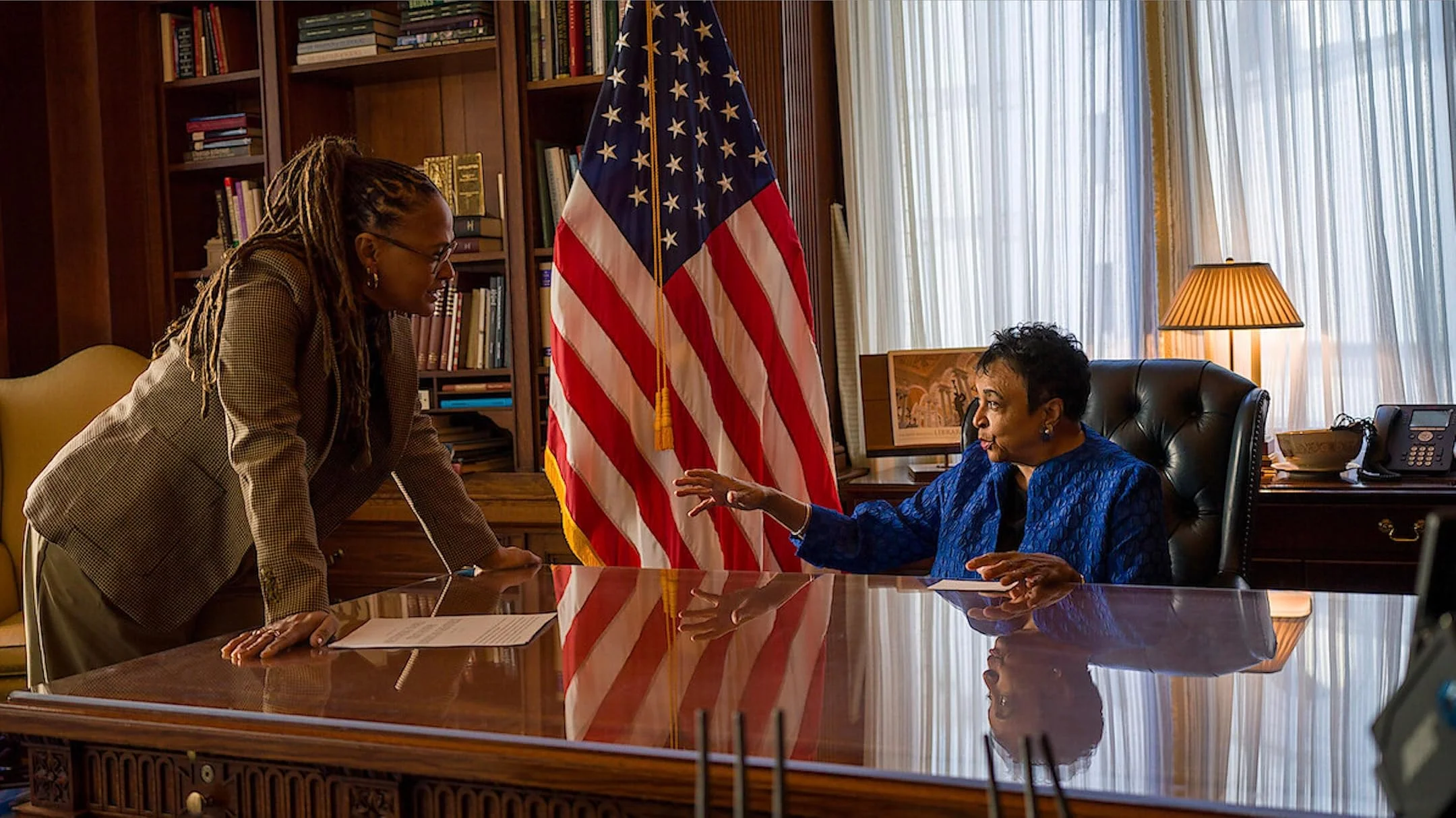

Presidential voices accumulate in the opening of Ava DuVernay’s 14th, each renewing the promise to protect the Constitution. The footage stretches from Franklin D. Roosevelt to the present, and the repeated oath gives the sequence its shape. Montage, the creation of meaning through the arrangement of separate images, turns these familiar ceremonies into a shared obligation. Different presidents inherit the same words. Before DuVernay has explained the amendment that gives her documentary its title, she has established the standard against which her history will measure political power.
Sherrilyn Ifill then helps distinguish the Constitution being celebrated from the democracy that had to be built after slavery. A constitutional-law expert and former head of the NAACP Legal Defense Fund, she makes Reconstruction understandable through the choices its architects faced.
Ratified in 1868, the Fourteenth Amendment established protections involving citizenship, due process, and equality before the law. Yet Ifill also explains Frederick Douglass’s concern that it did not explicitly secure voting rights. Her account gives the legislation a human scale: people were trying to construct a different country, and consequential gaps remained in their design.
This is a useful expansion of the method DuVernay employed in 13th, her 2016 documentary connecting slavery’s abolition to mass incarceration. An amendment supplies the organizing framework, while the film follows its consequences into everyday life. Here, animated archival photographs of Black families, schools, communities, and public participation give Reconstruction a dimension often lost in accounts dominated by its defeat.
Citizenship becomes something people use. They educate themselves, establish institutions, and enter political life. The animation gives still photographs motion, encouraging viewers to consider the activity within them rather than treating them as illustrations accompanying a lecture.
DuVernay also gives the amendment a recurring visual form: a five-pointed star representing its five sections. As protections come under attack, points are damaged or removed. This kind of graphic motif offers a reference viewers can recognize when the subject changes or the timeline jumps. Its simplicity is helpful, especially alongside Ifill’s explanations.
The treatment of Confederate imagery demonstrates how effectively DuVernay can move between legal history and popular culture. Her account of the Lost Cause examines the romantic rewriting of the Confederacy, then follows its symbols into familiar entertainment. The Confederate flag appears on the General Lee in The Dukes of Hazzard and behind rock performers.
These examples explain how an image can become comfortable through repeated exposure. A viewer can recognize the car or enjoy the music without examining the history carried by the flag. The documentary asks what gets excluded from that pleasurable familiarity, particularly the citizenship of the people the Confederacy fought to keep enslaved.
Public monuments make that question physical. The sequence involving Devon Henry, the Black contractor who undertook Confederate monument removal in Richmond after white contractors refused, changes the documentary’s mode of explanation. Someone moves through space and performs work connected to the history under discussion.
I found this shift especially valuable because it lets an action carry the argument. Removing a monument requires labor and a person willing to accept the responsibility. The sequence stretches the film’s focus beyond the amendment’s text, but it earns its place by showing how disputes over historical recognition persist in the places people inhabit.
The difficulty is that DuVernay keeps recruiting voices after she has already found speakers capable of carrying her argument. Scholars, politicians, advocates, and online commentators produce a wide range of perspectives, yet the film does not consistently distinguish their functions. Dean Withers arrives late, adding another introduction when several established voices could provide continuity.
Delayed identification captions for Van Lathan, Eric Foner, and David Blight create a smaller version of the same problem. Viewers are asked to absorb historical information while still working out who is delivering it. These are modest editorial decisions with cumulative effects on comprehension.
Ifill’s presence makes that unevenness easier to notice. Her explanations are precise without sounding fenced off from an ordinary audience, and her returns to Douglass’s warning connect historical backlash with the film’s contemporary concerns.
But she disappears for stretches, leaving the documentary to rebuild its continuity through another speaker or another example. The recurring warning maintains emotional pressure even when the argument has shifted. I wanted some of those returns to develop the connection further. Repetition can help a viewer remember an idea; it becomes less useful when remembering takes the place of examining its next consequence.
Comedy and music keep changing the temperature. Stand-up excerpts from Paul Mooney and George Carlin make racism’s persistence available to ridicule, interrupting the authority of the nostalgic stories the film has been examining. Musical passages offer a different kind of release.
The instrumental use of Kendrick Lamar’s “Alright” brings a recognizable emotional charge, though the film moves past it quickly. These choices sustain attention, but attention and absorption are separate achievements. A lively transition can make the next piece of information inviting while leaving too little time to think through the one that preceded it.
That pressure intensifies as the documentary reaches challenges to birthright citizenship, voting access, January 6, and due process. The montage of masked ICE operations gives state power an immediate, disturbing presence, while the deteriorating star connects contemporary footage to the earlier constitutional framework. DuVernay’s argument gains force from the history she has supplied: present events arrive after an account of how protections can exist alongside organized resistance to them.
The ending changes its address through Ifill’s appeal to democratic imagination and Robert Glasper and Brittany Howard’s “The Making of Tomorrow.” The song gives possibility an audible presence after so much evidence of retreat. Ifill’s appeal has substance because the Reconstruction material has already shown people attempting to write an unfamiliar future into law.
Her earlier discussion of voting rights keeps that example from becoming reassuring mythology. The people who made those changes left unfinished work, and the invitation to participate now comes with the responsibility to examine what a new democratic design might leave unprotected.
14th premiered at the New York Film Festival on October 9, 2026, and will receive a limited theatrical release on November 27, 2026, before streaming globally on Netflix on December 4, 2026. Serving as a companion documentary to 13th, the film examines the Fourteenth Amendment to the United States Constitution and its historical impact on equal protection and citizenship rights.
Where to Watch 14th (2026) Online
Full Credits
Title: 14th
Distributor: Netflix
Release date: October 9, 2026 (NYFF), November 27, 2026 (Theaters), December 4, 2026 (Netflix)
Rating: PG-13
Running time: 1 hour 40 minutes (100 minutes)
Director: Ava DuVernay
Writers: Ava DuVernay
Producers and Executive Producers: Ava DuVernay, Paul Garnes, Spencer Averick, Tammy Garnes
Cast: Ava DuVernay, Stacey Abrams, David W. Blight, Lonnie Bunch, Robert Chang
Director of Photography (Cinematographer): Cliff Charles, Michael Fernandez
Editors: Spencer Averick
Composer: Jason Moran
The Review
14th
DuVernay makes constitutional history tangible through animated archives, familiar cultural images, and Sherrilyn Ifill’s clear explanations. 14th is especially effective when it shows citizenship taking shape in ordinary lives and public spaces. Its crowded interview roster and rapid transitions sometimes leave too little room to absorb the argument, while repeated warnings can stall its development. The historical groundwork still gives its contemporary urgency real substance.
PROS
- Ifill’s accessible, precise explanations.
- Archival animation makes Reconstruction tangible.
- Sharp connections between popular imagery and historical memory.
- Monument removal translates ideas into action.
CONS
- Crowded interviews and delayed captions complicate comprehension.
- Repeated warnings sometimes replace further analysis.
- Rapid transitions limit time to absorb ideas and music.