


























Entering a dungeon does nothing to stop time outside it. While you pursue its rewards, Bastion can come under attack, leaving your attention caught between the fight in front of you and the city you cannot currently see. EverSiege: Untold Ages makes exploration feel faintly irresponsible, even though exploration supplies resources that help keep that city alive. Gold and ability fragments offer good reasons to leave. The possibility of an assault gives you an equally good reason to cut the expedition short.
Staying near the defenses brings little peace either. Each night delivers a large enemy assault, and successive days strengthen the opposition. Waiting until everything feels secure allows the enemy to grow stronger while you prepare. Rebuilding a barrier offers immediate reassurance; investing in income asks you to endure some uncertainty now for a better position later. This is where the game finds its tension: several useful actions compete for your attention, and postponing any one of them can make the next decision feel less comfortable.
The fantasy setting gives those responsibilities a clear destination. Bastion is humanity’s remaining stronghold, shielded by the Chronomancers, while Venandriel recruits construct warriors called Scyrons to push back against the invading evil. Its buildings and protective magic give way to the creatures and ruins of the Wildlands, then the corruption of the Aphotic Lands. That visual progression makes moving away from the city feel like entering increasingly hostile territory. Defeating the Guardian opens the way toward the final boss, turning a defensive struggle into an offensive you have spent the match trying to afford.
Familiar MOBA activities acquire a different emotional weight here. Clearing wilderness encounters and strengthening a hero still matter, but those actions feed into protecting a place whose infrastructure you are rebuilding yourself. Repairing ruins can improve the allied army; activating ancient pylons can weaken the horde.
The most satisfying possibility is that your developed army can eventually defeat the final boss without your direct assistance. After so much divided attention, watching the force you supported become capable of finishing the fight offers a welcome change in feeling. You have something you can finally rely on.
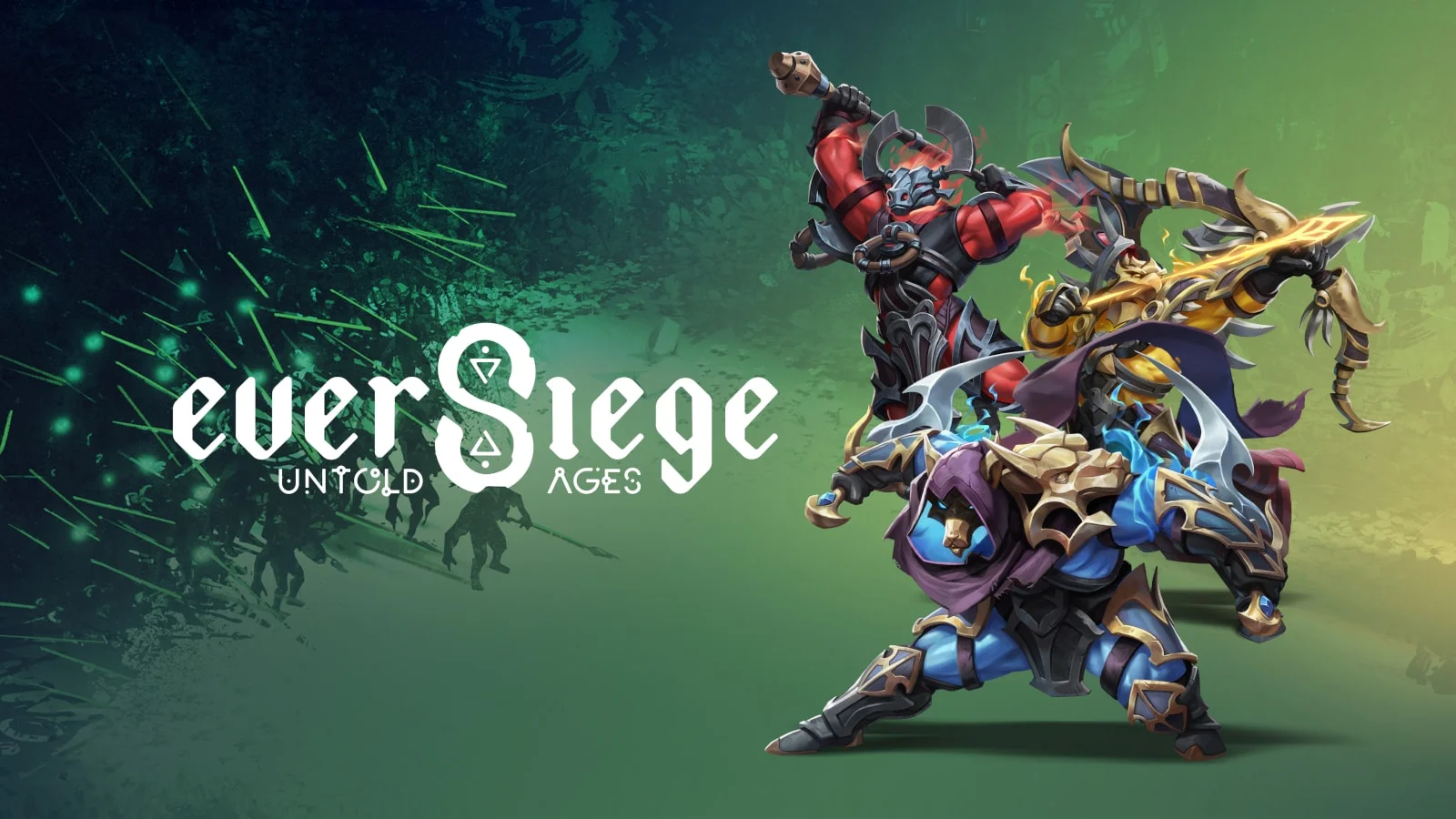
Hero customization helps make that confidence personal. Ferun’s axe-based melee combat, Zirenth’s bow, and Vanadius’s sword and shield offer different relationships with danger. Getting close, fighting at range, or absorbing punishment changes how comfortable a crowded battlefield feels.
Elemental essences, including fire and ice, can be paired with Wargear, with two equipped together; ability fragments and passive upgrades then develop the build during a run. Experimentation earns its place because it changes how you approach the next encounter. A configuration becomes satisfying when you understand what it lets you handle, rather than simply because its numbers have increased.
The city develops alongside the hero, and its progress has a quieter pleasure. Barracks strengthen the army, mines support further spending, and the Tavern continues generating gold at night. An economic investment keeps working while your attention is elsewhere, gradually easing the demand to solve everything through combat.
The Veil of Ages extends that growth between matches through improvements to starting statistics, gold, buildings, and tower defenses. Completing ages takes the campaign backward through the invasion’s history, with lore unlocking along the way. That reversal gives repeated counterattacks a useful story frame: each success lets resistance reach further into the past.
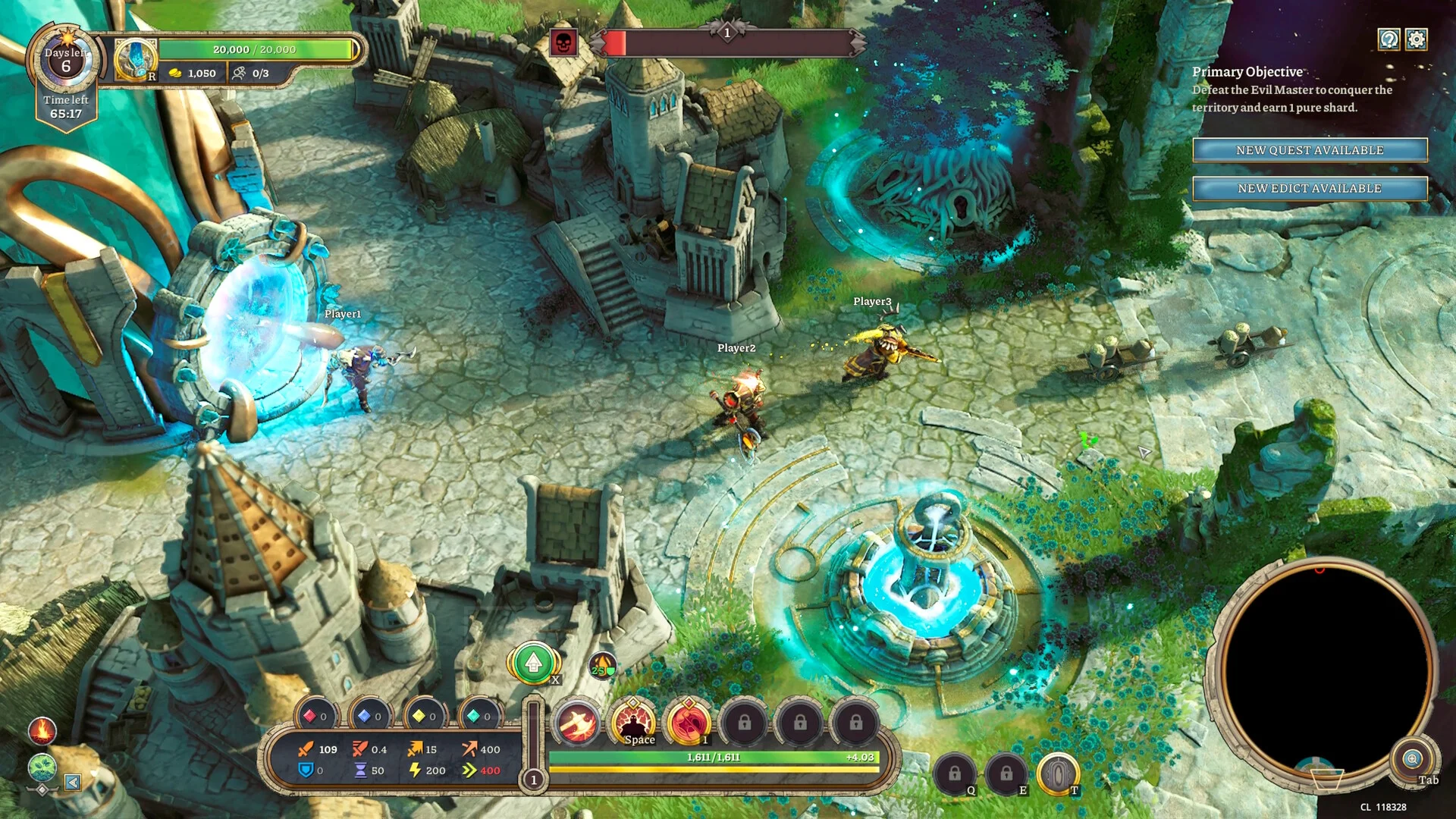
There is a substantial learning burden before these relationships become comfortable. Combat abilities, construction, income, exploration, and persistent upgrades arrive as overlapping concerns. The individual actions are understandable, but recognizing which one needs attention first takes practice. Stronger starting conditions can soften that process, though they should not be confused with learning.
Extra gold provides room to recover from a poor decision; understanding the value of a mine or an early military investment changes the decision itself. The reward is a growing ability to read the situation without treating every available task as an emergency.
Procedural generation keeps that understanding from becoming entirely automatic. Geography and strategic locations change, asking you to reconsider where resources are available and how to pursue them. Yet uneven resource distribution can make the pressure feel arbitrary, giving the enemy an advantage before your priorities have had much opportunity to matter.
Build variety also cannot indefinitely refresh the repeated business of gathering resources, improving defenses, and resisting waves. The strongest runs give you a fresh problem to understand. Familiarity sets in when the work remains busy but the decisions begin to feel settled.
Playing alone concentrates both the strain and the satisfaction. You manage the economy, develop the army, explore, and control the hero, with no companion available to absorb a neglected responsibility. That can be exhausting during a crowded defense. It also allows an unusually direct connection between intention and outcome: upgrades are yours to use, and strategic priorities remain under your control. Solo play deserves attention on its own merits, especially for players who enjoy gradually bringing a disorderly situation under control.
With up to two companions, relief comes through sharing the workload. One player can press the attack while another clears camps and a third attends to the economy. The pleasure shifts toward being useful to each other, with separate activities contributing to the same defense. This cooperative structure gives the MOBA rhythm a welcoming purpose. Hero growth, wilderness encounters, and lane pressure serve a common struggle against computer-controlled enemies, and a teammate’s attention can provide the room you need to concentrate.

Technical instability makes that reliance less secure. Frame-rate drops during large assaults interrupt precisely the moments that demand quick reactions, and freezes lasting several seconds after the Guardian’s defeat can abruptly break the match’s momentum.
Their severity varies, but disruptive cases undermine the game’s carefully sustained pressure. Unit pathfinding errors weaken confidence in the army you have invested in, while synchronization problems interfere with cooperative coordination. These faults hurt because so much satisfaction depends on preparation becoming dependable action. A demanding defense is easier to accept when you can trust the response to your choices.
Cooperative progression creates a separate disappointment even when coordination succeeds: advancement is not shared. A match encourages everyone to treat the defense as a common achievement, yet progression outside it does not preserve that achievement equally.
That matters for a game built around returning with stronger starting conditions and new possibilities. The desire to try another configuration or tackle another age belongs naturally to the group that just worked together. Unshared advancement complicates the simple pleasure of deciding to return together and continue from what everyone helped accomplish.
The Review
EverSiege Untold Ages
EverSiege: Untold Ages earns affection through the anxious business of keeping Bastion alive, then letting your preparations carry the fight. Hero builds and city development make growing confidence feel personal, while cooperation offers the relief of shared responsibility. Crowded early hours, uneven resource placement, and eventual repetition temper that pleasure. Technical faults disrupt trust in your defenses, and unshared cooperative progression leaves a common victory awkwardly divided. There is real satisfaction here for players willing to learn its competing demands.
PROS
- Exploration and defense create sustained tension.
- Flexible hero builds encourage rewarding experimentation.
- Army development delivers tangible pride and relief.
- Solo control and cooperative teamwork offer distinct pleasures.
CONS
- Overlapping systems burden the opening hours.
- Uneven resource placement can make runs feel unfair.
- Repeated tasks eventually become familiar.
- Performance, pathfinding, and synchronization faults disrupt play.
- Cooperative progression is not shared.